Angels Don’t Do TikTok
Vassos Vu
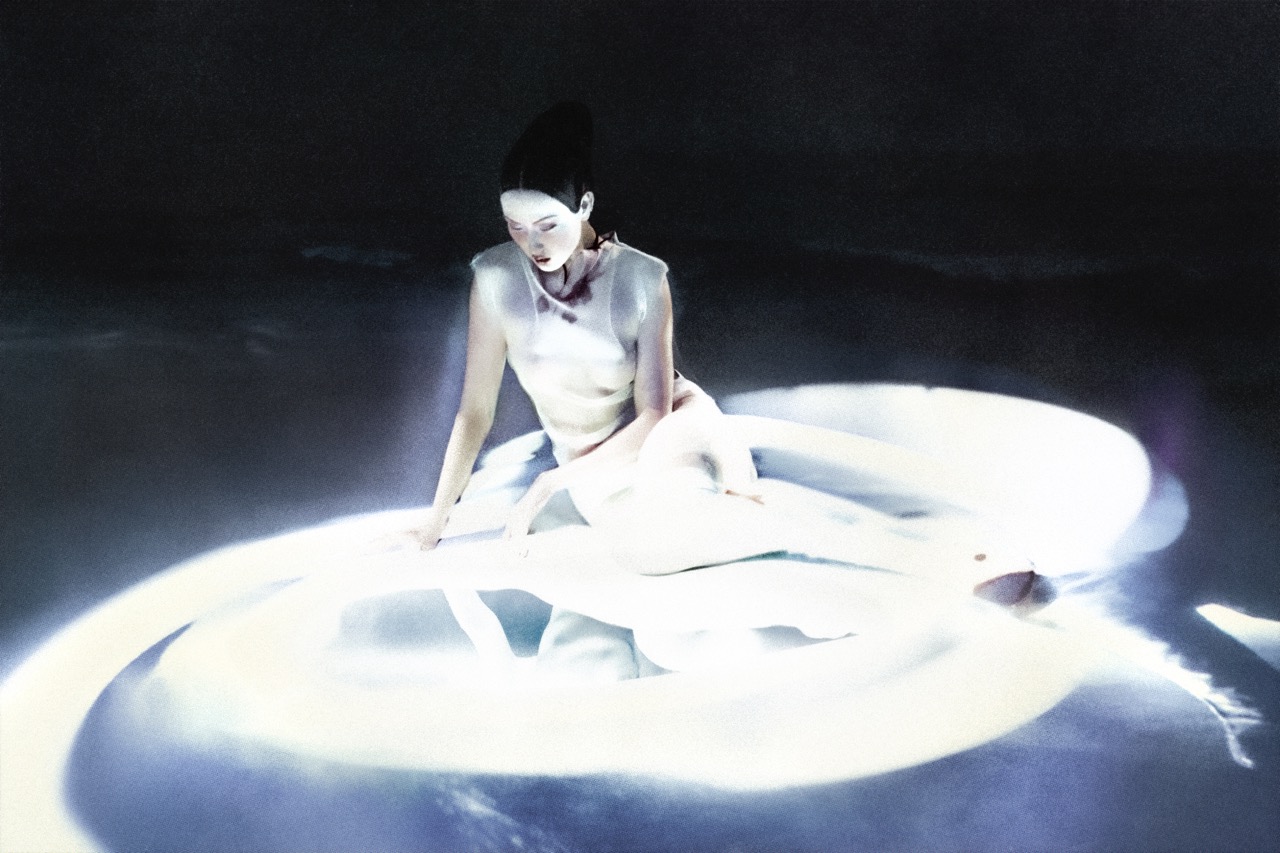
XIAOQIAO makes music that belongs in a mossy glade at midnight, possibly surrounded by a choir of translucent nymphs. The London-based harpist, producer, and occasional runway siren has released Weltschmerz, a four-track debut that glides somewhere between melancholy and hypnosis. It’s all angelic vocals, harps that bloom then decay, and ghostly electronics. The title track, lifted from one of her own poems, nods to Renaissance-era polyphonic choirs, sometimes reminding me of Holly Herndon’s early sound. In some ways, I didn’t expect to actually encounter her on a video call – she seems so ethereal, I almost felt guilty to busy her angel mind with a Zoom meeting. Her face, blurred by the wacky internet connection and her very long hair, quickly left the conversation as the video collapsed into an old-school voice call. I wasn’t even surprised that faith decided she was not to be contained by a webcam. She brings magic energy with her everywhere – carrying a different seashell to each show “because sound moves like a shell’s spiral”. One of those things you just can’t really argue with. One thing is for sure: she’s in full mythology mode, ready to swirl you into the tide with her, and we’re gladly drifting along.
Hi! How is your day?
Hi I’m here in my studio in London. I have two days of composing for a show next month, and just trying to get my head around it.
I’m in awe of how you are building this mystical empire around you, not only musically, but also visually. How did you go about building this fairy tale-like world around you? Was it something that you always lived inside, or something that you consciously created recently?
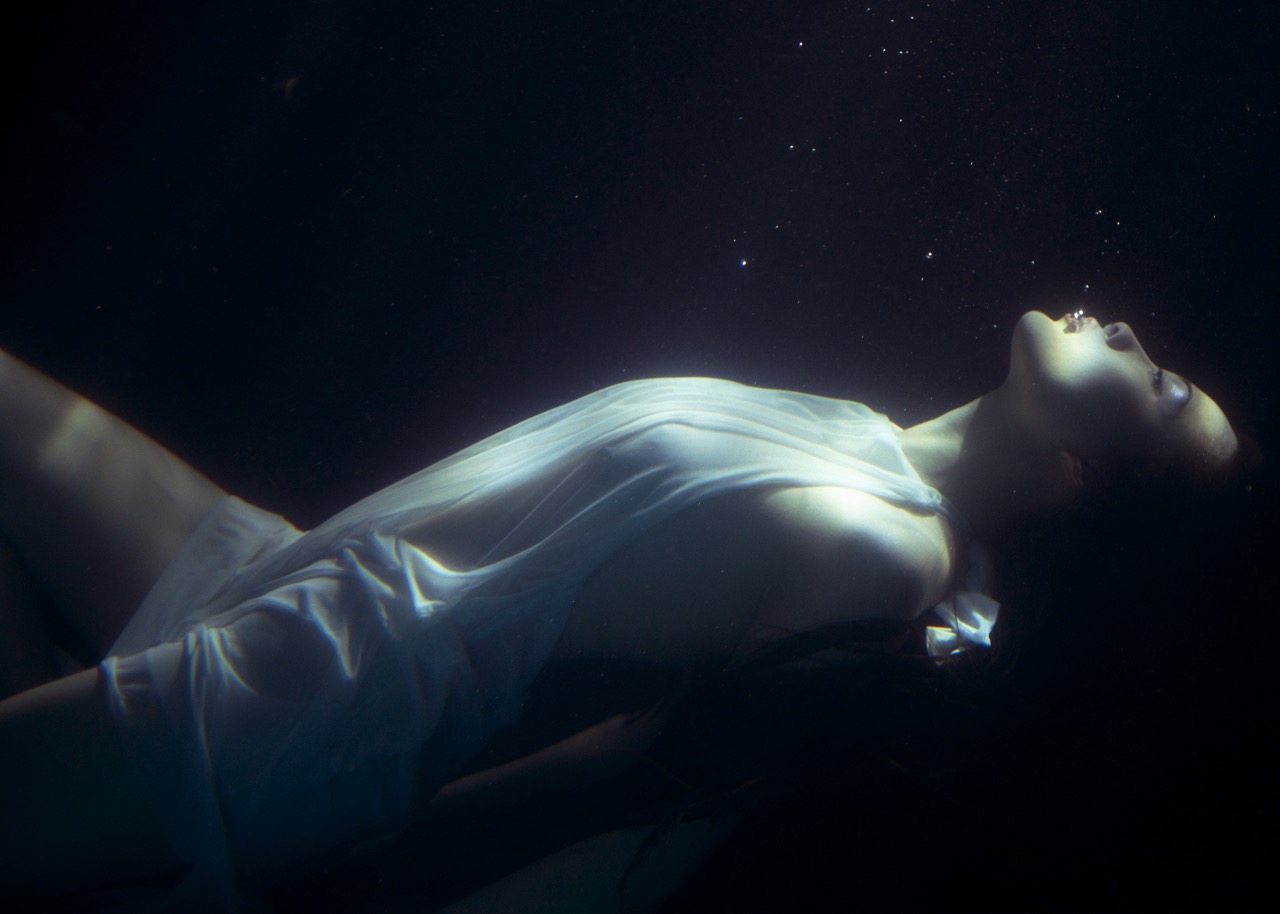
I I’m not consciously trying to build a fairy tale world; I’m building what I want to live in. I love looking at dreams. I think dreams are important as a means of escape, and a way for us to process oblivions. And they share a very similar structure with the cinema. Some of the images that appear in my music video are fragments from my dreams. I once had this dream where I was wandering in a vast, misty forest, and chasing the echoes and shadows that kept coming close and slipping away. The echoes felt like they carried an important message that I couldn’t quite grasp, and in the end, I realized it was myself speaking back to me. That almost labyrinthine vision became the seed of the Lethe music video, which I created together with my friend Erika Kamano.
Erika Kamano
Do you remember your dreams well?
I love to scribble notes of my dreams. I see them as a personal cinema at night. Some of them are really vivid, with an image embedded in them already, while others are really fleeting and fragmented and don’t make much sense. A lot of the dreams are like fish in the ocean. When I write lyrics, they swim up to the surface, giving shape to the things that initially didn’t make sense.
If you were to describe your own ethereal world in three words, how would you describe them?
Surreal, ever-flowing, and mystique.
How do you make your everyday life a bit more… mystique?
One of my morning rituals is to stroll through the cemetery near my house, listening to the birds’ symphony, while collecting words around my head in the face of such eternity. I like to think we humans all have these invisible, beautiful tentacles; they are so gentle, sensitive, and receptive in a way that they can get easily muted by the noise of the city and the mists of everyday life. I try to stay porous enough to let them flow by filtering the frequencies and information I let in. I am rather slow and oblivious to trends or pop culture, and I guess technology too. I haven’t downloaded TikTok yet, but I do happily lose myself in endless silly cat reels- 80% of my Instagram algorithm is now trained to them.
And do you have any objects that you carry with you that hold symbolic meaning or sort of magic?
Oh, yes. I mean, it varies with time. Every time I perform, I always carry a different shell with me. They are one of the first objects I used to improvise sounds with on the harp when I first started playing live. I love collecting them, sometimes I asked to keep oyster shells from restaurants if one felt special or resonant. It became a little ritual for me, I see them as little guardians of sound. Sometimes I get nervous before stepping on stage, seeing them just made me feel I’m in my own world again, and to be open enough to share what’s within.
How did you choose the shell specifically? Does it symbolise something for you?
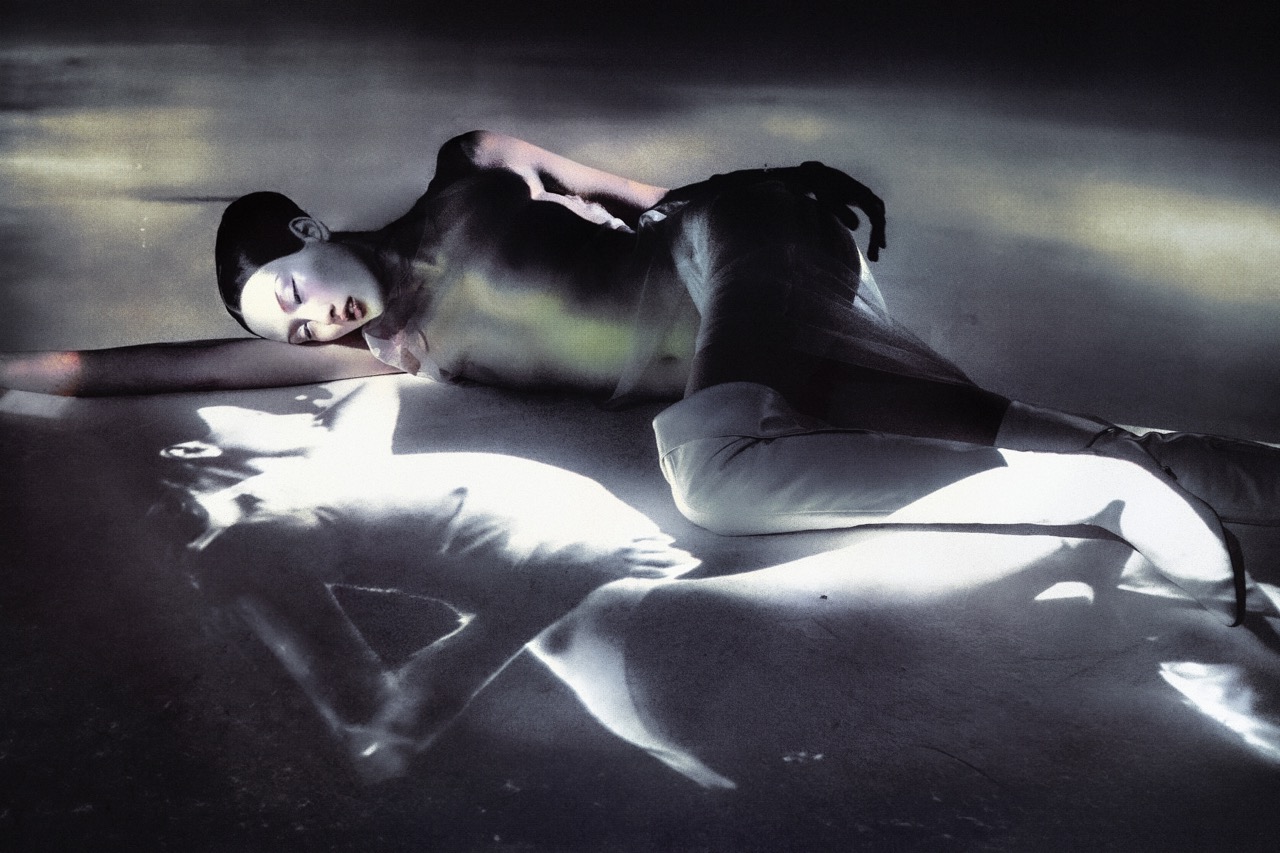
The shell is like a fossil of sound, a body carved by invisible harmonics and resonance. The internal spirals of a shell echo the same patterns that give rise to music, the harmonic waves. It’s like a frozen piece of music. I am also a big fan of Hilma af Klint, the spiral shells as a symbol of evolution, and a microcosm of the unfolding cosmos.
Vassos Vu
I love that it’s not just a trinket for you. Is there anything that you remember influencing you from a young age already?
I spent most of my childhood time in my bedroom, immersed in fantastical literature, novels, and mythology, dreaming of invisible characters and images that felt so much larger and beyond than my everyday life. I was obsessed with dreams and daydreams. I recently read an interview with Apichatpong Weerasethakul where he was saying his obsession with dreams came as a form of escape, and it suddenly makes sense to me. I grew up in a quite strict, restrained household, and reading was one of the few hobbies that was allowed. So I surrendered to the worlds built through imagination and endless dreams, and in many ways, they’ve never stopped shaping me.
Do you have any faith or spiritual practice, any rituals, angel numbers, tarot readings, zodiac signs, or cosmic coincidences that you’re into?
I kind of see everything as part of a ritual, everything exists in vibrations and energy and resonance. I love speaking to the moon sometimes. I am also interested in cosmic readings sometimes and myths, but more as a language of symbols, I don’t really know enough about it. I guess it’s about staying porous enough to sense when the world is whispering back.
That’s beautiful. What would your spirit animal look like?
I just got this instant image in my head. A giant deer with immense horns and tentacles, standing in the middle of a pond under the moon, deep within the forest, almost silver glistening from the moon. I don’t know, but I think this comes from a little poem I wrote years ago, and it just surfaced back now, right as you spoke. A hidden creature with horns like tentacles growing into the sky, and carrying light or a quiet glow down into the darkness.
Describe your favourite scent?
Something that smells like the ocean, so ever fluid and boundless, but also with a very intimate feeling, it can smell like a trace of tears… I know I’m being very abstract here. I guess anything that defies the earthly bounds and wraps you around into another realm would be my dream scent. I also got asked to design a perfume recently for one my favorite brands, I’m excited to bring this into shape soon.
Which song from your album means the most to you and why?
Lethe, the first single of my EP, is one of the first songs I wrote with the harp. It was inspired by this Greek myth that I’ve long been possessed by, the river of forgetfulness Lethe, whose waters erase all earthly memories. I often think about how we relate to memory and its undercurrents, how they get reshaped by the present, yet at the same time constantly shaping the present. Sometimes they can feel like a burden we long to escape, those discreet, most vulnerable, repressed fragments that echo in the corners of darkness. In that tension lies both the desire for oblivion and the unbearable lightness of being. It almost felt like a certain exorcism to me when I was writing it; I was almost forced to face certain shadows and ghosts, and find a strange harmony with them.

Erika Kamano
I read that you broke free from a strict and traditional household. Is that something you’re still dealing with, or have you been able to let that go?
For a long time I felt like I was trying to escape. It almost felt as if you had to betray where you came from in order to grow your own form. It took time for me to learn to see the traumas of my upbringing as calluses, something that actually formed a stronger skin to grow from. I only started making music and decided to learn harp when I was 26, much later than most musicians, even I had the dream since a teenager. And I think all that left me yearning for my own language and building my own world,to alchemize those into my work. And at the same time almost an exorcism, a way of releasing the ghosts and the shadows that once haunted me. And my family are now actually proud of me and what I do, which I’d never have imagined when I was younger.
And what were you doing before you started music?
I actually left school quite late, I did two master’s degrees studying film and curation. I was immersed in cinema, and that’s still one of my biggest inspirations in everything. After graduating, I got scouted and signed with a modeling agency, and I was able to support myself while pursuing music. Thanks to modeling, I was able to buy myself a harp — my first harp actually came from a Balenciaga campaign.
You were also in the Dipetsa runway show. It felt like you both fit each other’s tastes really well.
Yes and it has always felt like a ritual to walk for her. I’ve been such a fan of Dimitra’s work, the way she transforms this intangible, almost unreachable fluidity into shape, with such mythological layers. She herself is a magical being full of rituals. I remember going to her wet workshop last year in this incredible almost pyramid-like space, it felt sacred. She led us to imagine holding golden light in our palms, pouring it into the water, then sipping it as if the light could flow through the whole body and vessels . And I remember her saying ‘we are our own mother’ and it struck me so deeply. I was so moved I cried — it was profoundly beautiful and inspiring.
Erika Kamano
I read that you used to pretend to play the harp even before you actually learned to play the harp. What do you think drew you to it so strongly?
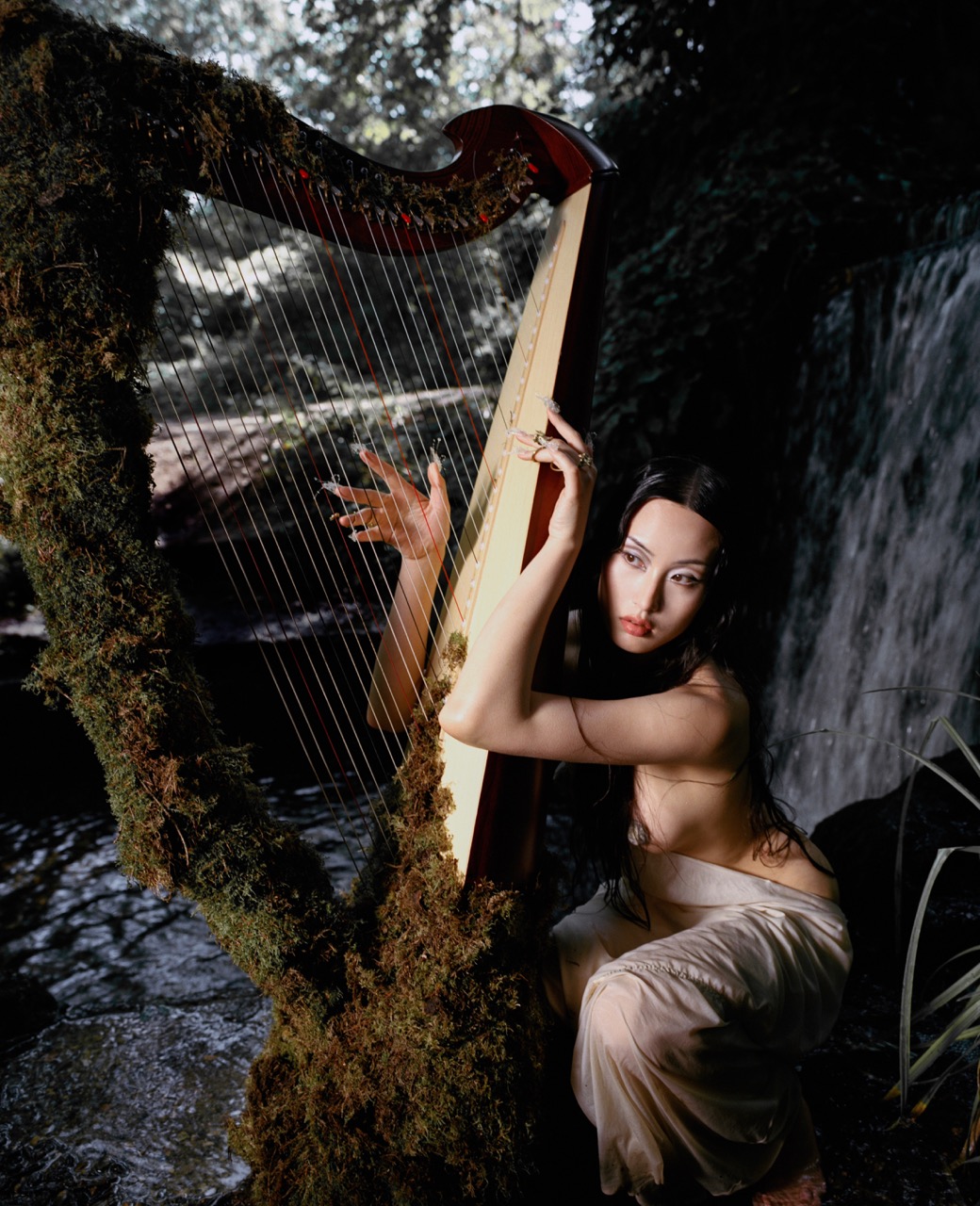
When I was about five, my dad took me to a big music shop to buy me a piano. And at the centre of the shop was this huge grand, golden pedal harp. I was just like, I couldn’t move. I had never seen a harp before and I was completely stunned and mesmerized until my dad was dragging me away. I guess when I was little it was more like envisioning myself as a little angel playing the harp for its sheer presence. That fantasy disappeared once I became a teenager and fell in love with all underground bands.
But the true calling point came after I heard Alice Coltrane, the way she played the harp like a portal, an ocean of fluid waves. And it made me wanting a sort of revolution, with such ancient strings into building another dimension, with all the modern effects, distorting and creating a new world.
Do people have assumptions about harp or harpist or you in general that you wish were different?
People often assume the harp is delicate or angelic and a lot of them assume I must be a classical harpist. I remember playing for a friend’s Fashion Week presentation, which was held in a vault in Hyde Park where they actually store gold. Most of the guests were quite west-end and I think they expected this elegant angelic performance, while I was doing some wild distortions with my bow, and I think that scared them a little.
It’s always fun when people take a very classical instrument out of its context. Takes courage. My final question is, what are your dreams for the future?
To build worlds like portals, a sanctuary for people to step in and weave dreams that’s both ephemeral and eternal. Also making films.
Words by Pykel van Latum
Images by Erika Kamano and Vassos Vu