Uniquely tender. Effervescently close to the heart.
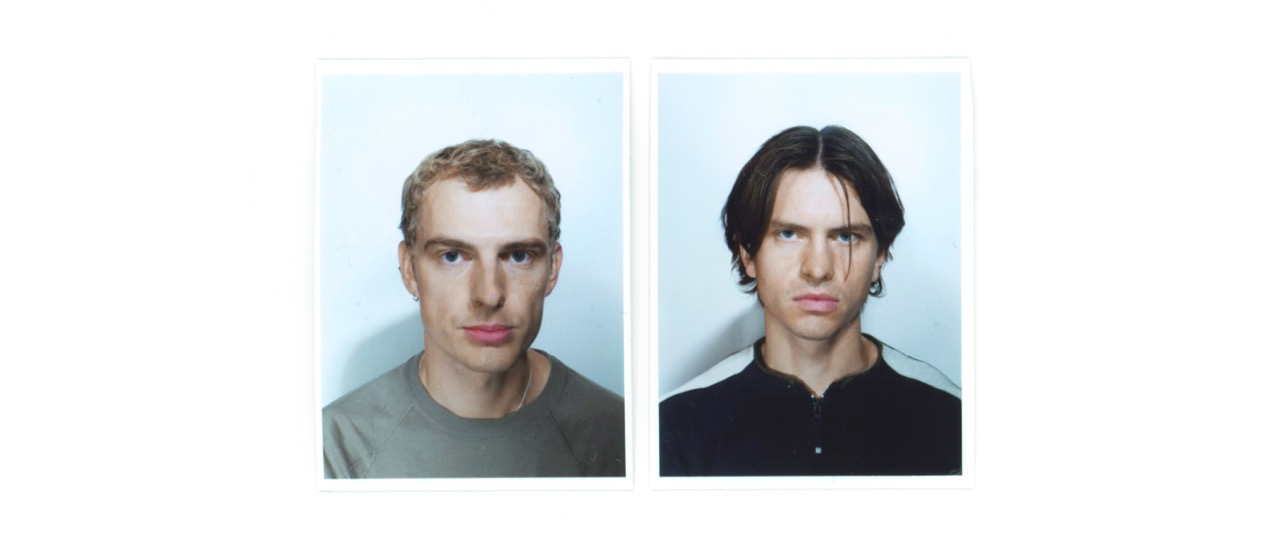
Sticky sweet vocals wrap themselves around bleach-white synths, intentionally simplistic – casually cool, and with an affliction that pleads you to come back for more. Horse Vision, a duo composed of sound designer Johan Nilsson and musician Gabriel Von Essen, has been discreetly dropping electronica-infused indie pop-rock gems since 2023.
Although closely associated with Bladee’s label Year0001, Horse Vision’s short discography is notably absent of the cloud rap/hyperpop sensibilities that one might expect. Rather, the duo strips down this digitised rattle to its bones, operating on intimately selected samples, acoustic guitar, and entrancing vocaloid melodies. Crafting snowy soundscapes that are uniquely tender, hitting effervescently close to the heart, as if their music may just blow away into the icy breeze.
On their debut album Another Life, the basics are revamped, polished, and refracted, reflecting a preciously pearly ride. Like our equine companions, Horse Vision’s sonic palette leaves you with few blind spots, paying cherished attention to each moving part, 350° and all.
Slyly trotting onto the scene with little online presence or promotion, we chatted with the pair as they began to embark on their EU/UK tour.
How did Horse Vision come about as a project?
G: Johan showed me a bunch of songs that he’d been writing in Copenhagen while living there for a few years. He wanted to release them, but didn’t have a band name. I told him that I had some good names in mind, one was “Horse Vision”. That’s how the collaboration came about; Johan had the music, I had the name. Then we realised that we were also heading in a similar direction musically, but from two different directions. Johan had been composing film music, and I had been playing with various bands and artists in Stockholm. We started to record some things in the studio. At first, the idea was to make minimalistic soft-rock music, kind of Duster style. Then it became something different.
J: We’ve been friends since high school and have shared a studio in uptown Stockholm for the past seven years, but this is the first thing we really do together. Horse Vision came about as a desire to share music in a way that was direct, fun and honest; separated from the traditional timelines of record label rollouts and the idea of having everything in place before you share the music. When we finish a song, we want it out as soon as possible – with ’Another Life’, we didn’t know where we were heading before we got there. To us, it seems like a more honest way of doing it. As we’re working on our second album, people are asking ”What is this new album about? What will the art direction be like? What’s the overall concept of the album?” and we never have a proper answer as we don’t work like that. It’ll become evident in hindsight, as all the pieces come together.
What does it mean to have “horse vision” musically? What does that look like for you?
J: When we make music, we always try and follow the path of least resistance – having listened to music and played instruments for such a big portion of your life, it’s fun to succumb to your ears and instinct and let the music write itself rather than trying to force it in a specific direction. There’s a strange prestige in doing things the hard way, that we think is dull and boring. Most of the time, the most obvious way is the best for us. In that way, you’re true and direct to yourself and don’t have to detour into being something you’re inherently not.
G: We live in a strange time where more and more expressions are incorporated under the ambiguous label “pop music”. However, this maelstrom of genres and styles has a tendency to make commercial music even more streamlined; it’s just a blur of ever-recurring change. The vision of Horse Vision is about paraphrasing and depicting the fragmentized landscape, and hopefully transforming it into something beautiful. I think this comes down to having humor and trying to see the affinity and reciprocity between musical expressions that may appear very different at first sight.
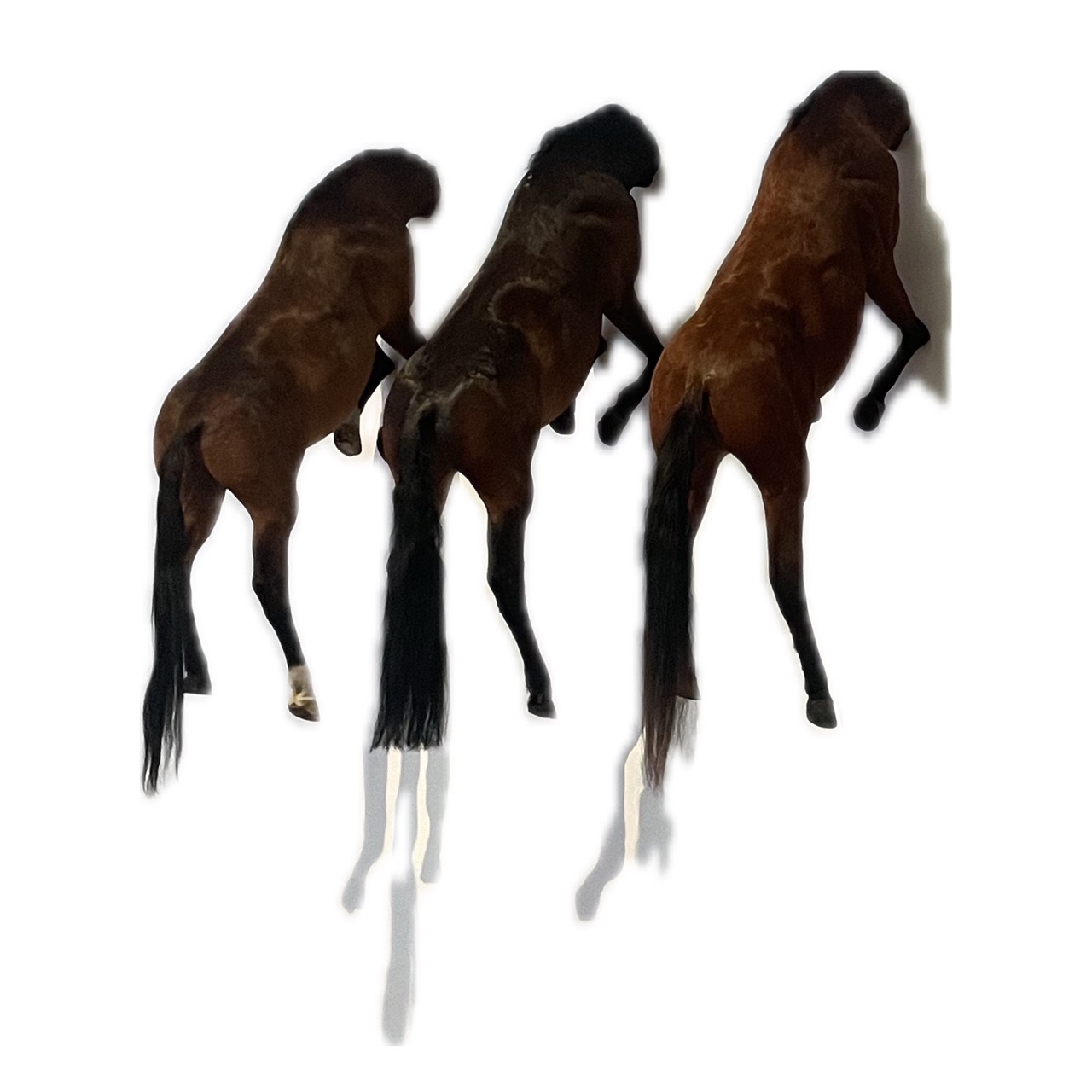
Cover art by Tiffi Malmgren
Favourite recent musical find?
J: The mc.cece mash-up of 50 Cent’s ”In Da Club” and Alex G’s ”Forever” is amazing. It’s just an incredible example of how contrasting elements can create this very powerful and playful dynamic that can be so strangely beautiful. It’s packed with obvious nostalgia; the memory of listening to ”Get Rich Or Die Tryin’” visualized by Windows Media Player as a kid and the naive sincerity of Alex G’s layered guitars and banjos is just a cocktail of familiar expressions and strange, old emotions, presented in a way that makes a lot of sense in a contemporary digital climate of collages and curation. We also saw GB in Oslo the other day, and the live set was so good – not that it’s a recent find, but it’s the first time we got to see it live.
G: Haven’t listened to music so much lately. But found the bible as a Swedish audiobook on Spotify. It’s pretty good.
Most recent non-musical inspirations?
G: I started watching Adam Curtis’ most recent documentary Shifty: Living in Britain at the End of the Twentieth Century. It’s about life in the UK during Thatcherism and the neo-liberal wave. I really like Adam Curtis and his way of making a collage of very fragmented content without forcing it into one cohesive story or narrative. It’s beautiful and a major inspiration for Horse Vision.
J: I just got a car that I love so much. It’s a 1999 Mercedez Benz station wagon, the one that Carmela Soprano has. I really like driving, but I like it even more when my girlfriend drives me around. Just cruising through the city late at night, listening to Photek or DJ Python is such a lovely inspiring thing to do.
Your music is notably guitar-centred despite the electronic elements and unique production. What is the thought behind this sonic choice? What draws you to guitar music?
J: We’re both musicians rather than producers, playing guitar and bass, but for a long time, we were both very tired of the idea of guitar-oriented music. It seemed really, really difficult to do something with it that could be fun and interesting and beautiful, having played it for such a long time. Horse Vision was the shift in which we just accepted that very simple shapes, chords, and patterns have a very special place in our musical world, no matter how basic or plain. The thing we wanted to do was to be very honest and transparent about the very simple beauty that lies in basic guitar chords and melodies, and to ornament those compositions with electronics, sampling, and contemporary technological tools to contextualize them further. It’s amazing how very small sonic ornaments can add very distinct nuances to a musical palette and the overall experience of listening to a track. We are definitely a guitar band drawn to electronic music, rather than the other way around.
G: I think the kind of tonality and harmonic universe that we like comes more naturally on guitar. The acoustic guitar is especially important for us sound-wise. Instead of being an instrument that fills up the gaps in the mix, I see the acoustic as an instrument in its own right, almost like a cello. I think that approach also makes the contrast against the digital elements more interesting.
Sounds or sonic textures that have attracted you recently?
J: Listening to the new Oli XL album re-ignited my fascination of spectral sound processing. I don’t know if that is what I’m hearing throughout the album, but the very clinically clear qualities of the sounds remind me of it. Kind of sounds like glass and metal, but all very soft and undulating; not harsh nor scary.
Can you speak on your intention behind creating the curation platform inadvertent.index*?
J: The main idea of inadvertent.index was originally about anti-algorithmic curation and serendipitous exploration of music and culture. I began by putting together a website on which links to cultural papers, videos and music as well as writings on cultural politics and phenomena were presented as a deck of cards that shuffles itself every time the page is refreshed. It’s not a place you go to find something that you’re specifically looking for; it’s about happy accidents and new discoveries. It went on to be a platform for musical releases – for our own musical projects and those of our friends. It circles back to the idea of not having everything in place before you go about and do something; it’s like a book that writes itself. We don’t have a musical or aesthetic vision for inadvertent.index – it will present itself as more things are added to it. Together with Tiffi M and prelude hearts, we put together a compilation called ’Satellite’ earlier this year, featuring 20 works by artists and bands around Europe, the UK and the US. It has become a platform that is contextualized by its participants and shifting expression rather than a pre-decided direction. It comes from a desire to capture something in our local and adjacent cultural canon that can only be understood once it’s put together. We’re building the label one release at the time; Sindy is the latest addition, alongside Tiffi M, Horse Vision and Ossian Flavin.
What physical spaces are influential to your work and why?
G: I think both me and Johan prefer to write and produce music at home. The studio can be a stressful place. There are too many options. The majority of ‘Another Life’ is recorded in various apartments in Stockholm, London, Copenhagen; and sometimes with rather poor equipment. For example, the guitar and vocals on Dreams are Fragile are recorded straight in the MacBook mic.
A piece of media that you have been drawn to recently?
J: I’ve been really into X-Files for the past six months. It has such a beautiful, sinister and naive feel to it. It’s not the best show, but I love the atmospheres, the polished sedans, their padded shoulder suits, and the far-fetched explanations to whatever impossible case they encounter.
G: I saw a film called Spoorloos a while ago, and still I think about it a lot. It’s a Dutch horror/mystery film from 1988 based on a novel called the ‘Golden Egg’ by Tim Krabbé. It might have the most uncanny ending scene in film history. It’s an amazing film about how radical evil and freedom presuppose each other.

Who is a band or artist that influences you that might be unexpected?
G: I think most of the things I listen to people would find a bit unexpected. But perhaps fusion guitarist Allan Holdsworth. But some of his stuff actually have kind of a Horse Vision vibe.
J: Burial is definitely a major influence of mine. His music is so beautifully ornamented and layered; like musical sediment. The fragmented pieces of beautiful sounds, downsampled or crystal clear, all stitched together in this ghostly fabric – it’s like watching a film with the screen turned off. Sometimes when I listen to music, I think to myself ”I’d like to try this out”, you know, but with Burial it’s more of a type of music I always get back to just to remind myself that musical beauty can be achieved through careful sound selection and an open mind – when the emotion you want to express is more accurately captured in the actual sounds rather than in words. It’s really nice to get to know more about someone’s life through the sounds they sample and use in their music; it can tell you what games they play, what movies they watch, the music they listen to, what they’ve been thinking about. I try to incorporate that when producing, to put more of the sounds that have been special to me in my life into the music rather than writing lyrics about it.
An activity that complements Another Life?
J: It was mixed and produced almost solely in headphones, recorded mostly late at night, after long work shifts or in a small cabin by the sea where I grew up. Walking through the city listening in headphones is a nice thing to accompany the record, I’d say.
G: I think sitting on an airplane is always good when listening to music. If that counts as an activity.