Hairy, Scary, Necessary

Taking over a major house is a nightmare gig. You can essentially only go wrong when a house is so beloved, and the easiest way to not get eaten alive is to go respectfully archival. Pull from the codes and prove you’ve done your homework. Duran being Duran, he did… none of that.
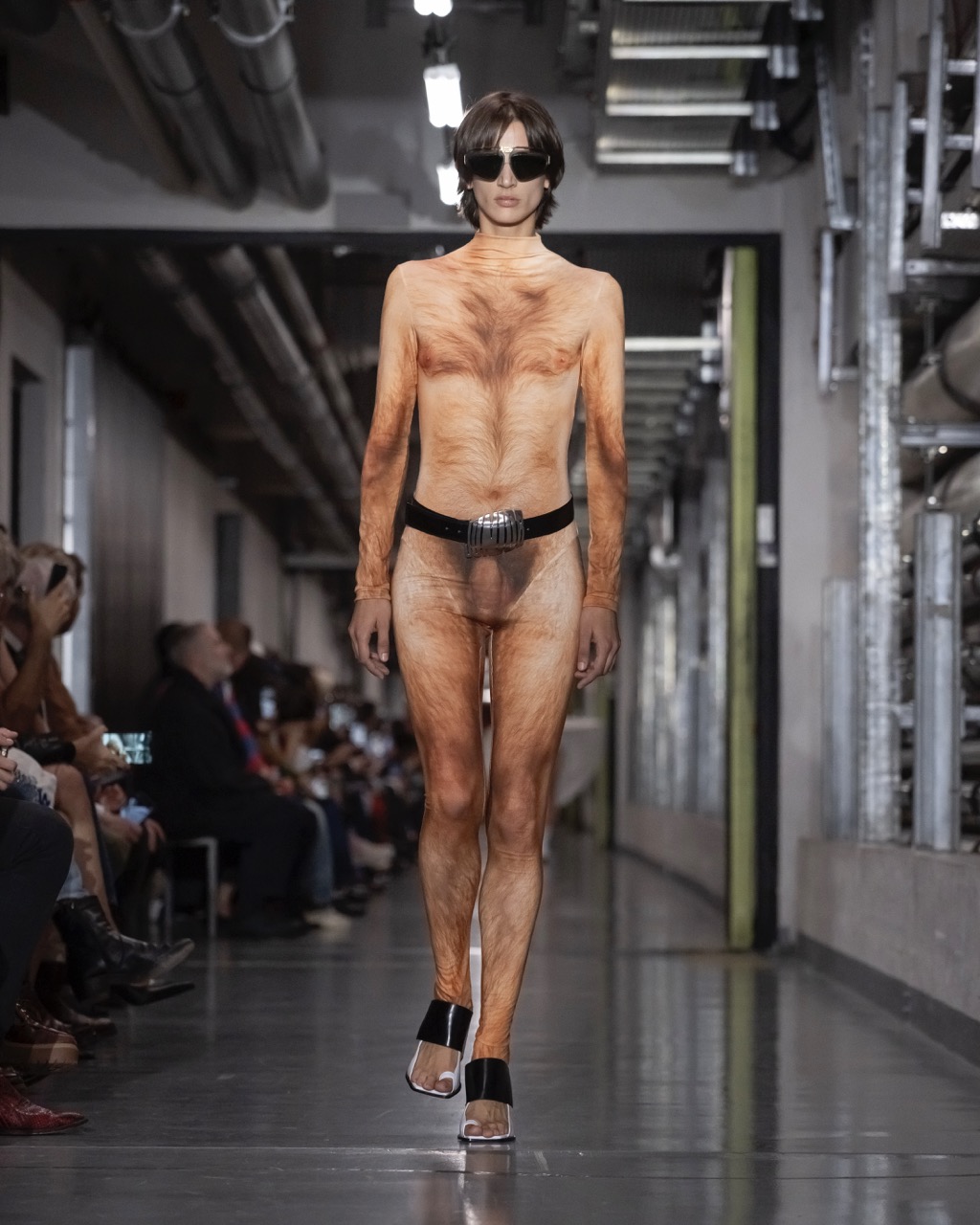
The hairy bodysuit alone sparked hysteria. Mandy Lee (@oldloserinbrooklyn) called it an affront to femininity, “Halloween costume”, and “anti-woman” were thrown around. But why is a woman in a hairy catsuit so threatening? Why does body hair still trigger disgust? Since when is fashion only supposed to make women look good? Aren’t we, allegedly, past that?
You don’t have to love the suit. But if seeing a bit of fuzz still feels so repulsive, maybe the discomfort says more about us than about the clothes. In that sense, it was a perfectly Gaultier move: provoking you to think about what is “bad taste”. Because let’s not forget: Jean Paul Gaultier built his empire on taboos. In the 1980s and ’90s, he eroticised the male body, put men in skirts, sent women down the runway in pinstripe suits and cone bras. He played with gender, sexuality, and taste like no one else, his work steeped in the energy of nightlife, fetishism, and humour.
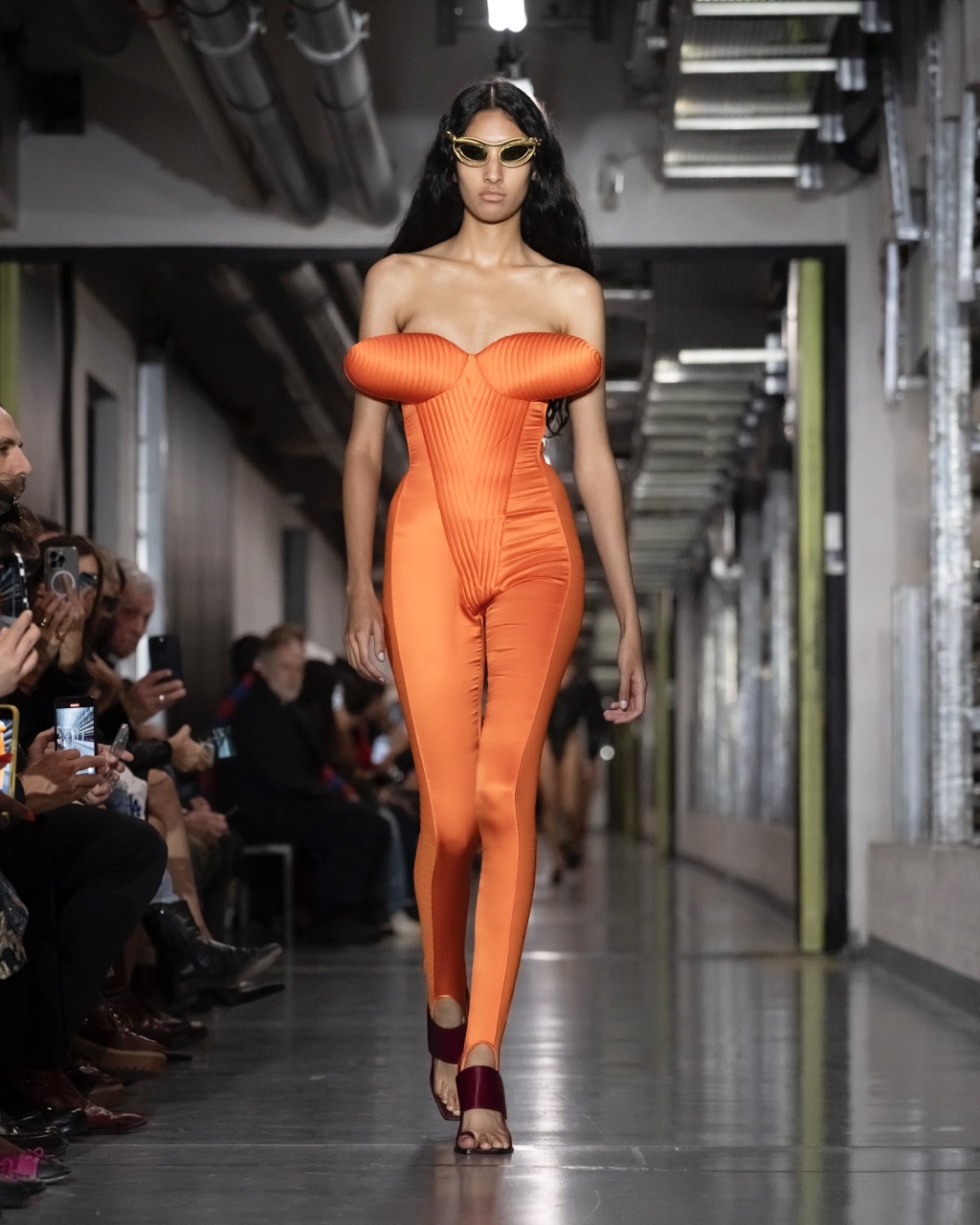
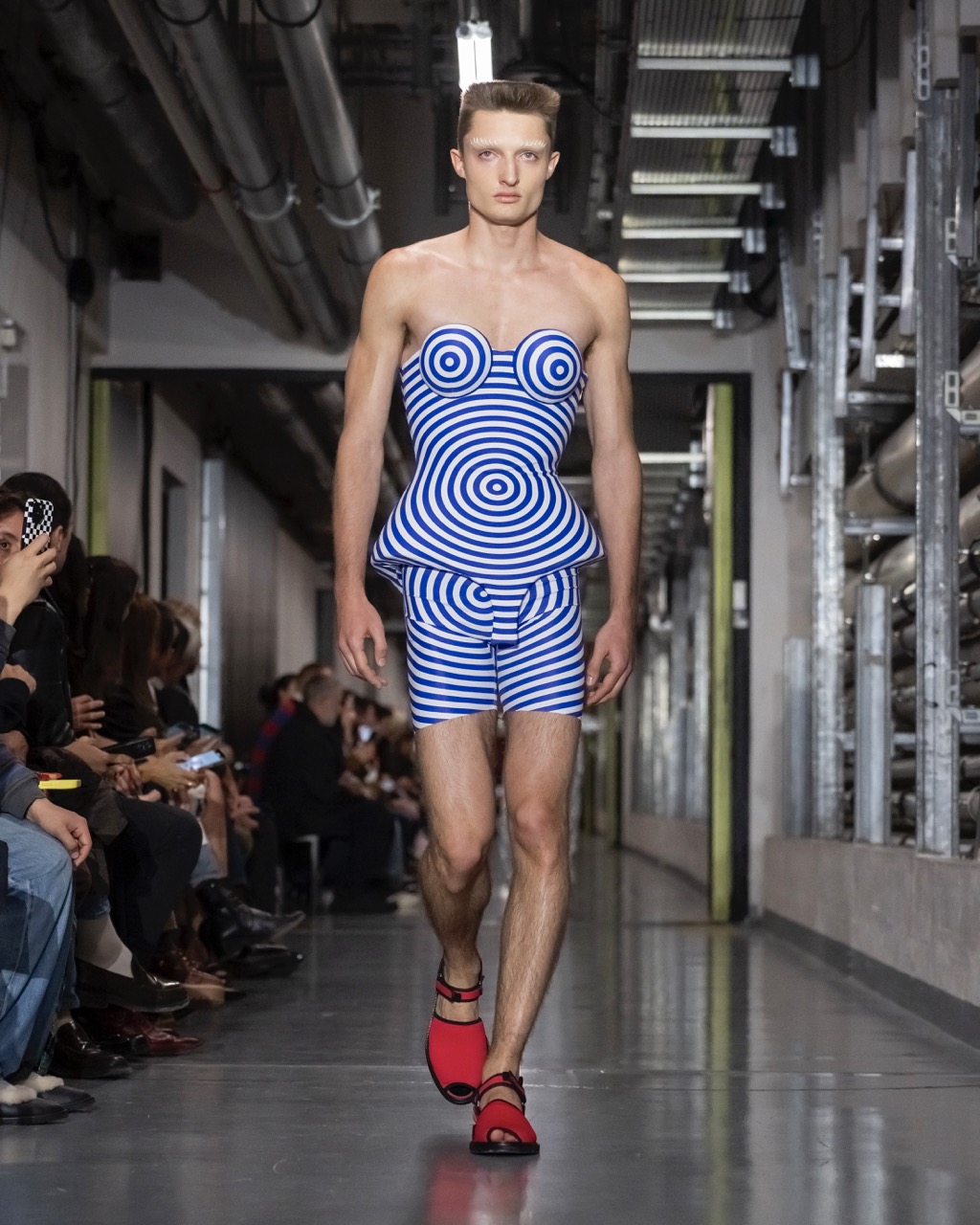
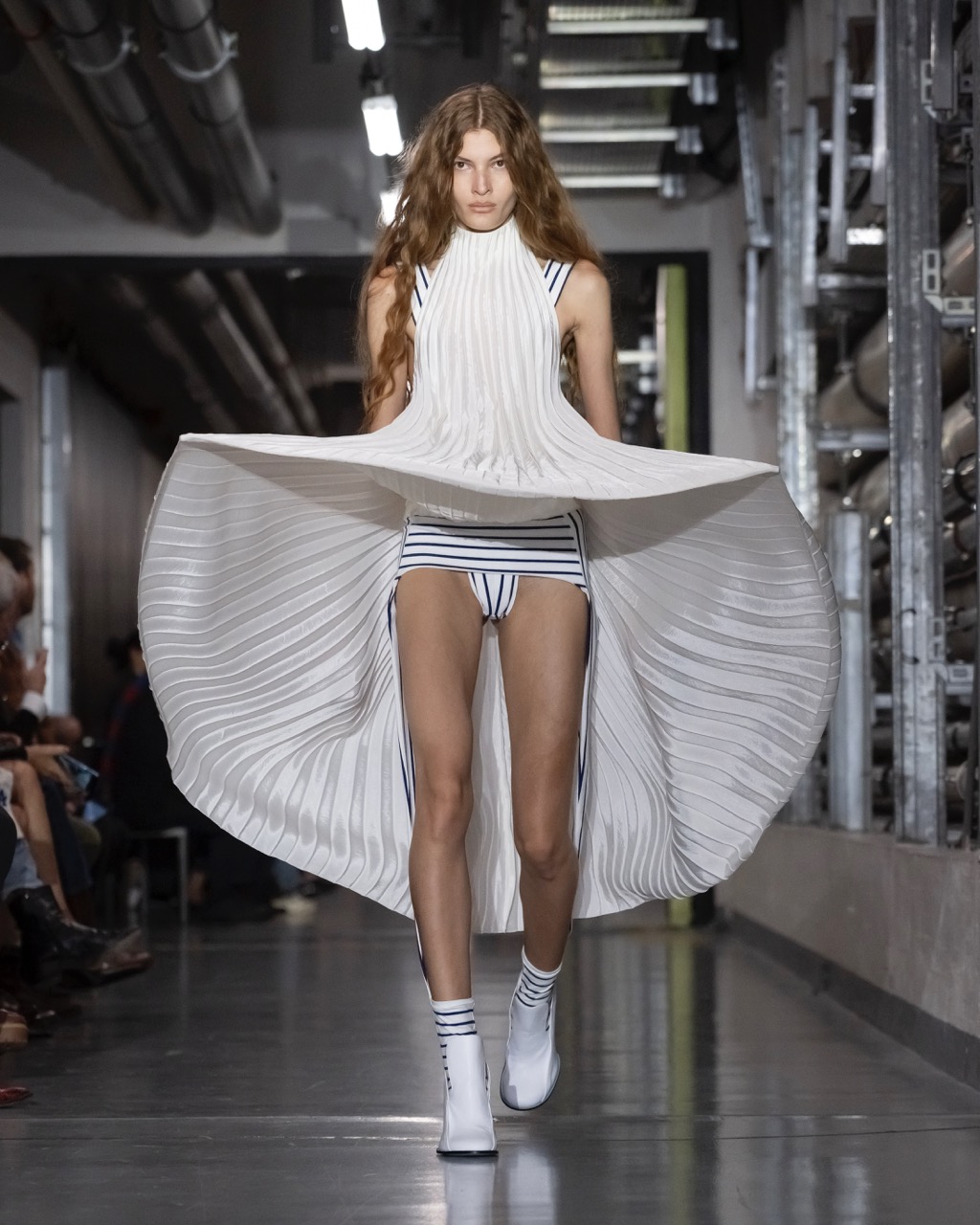
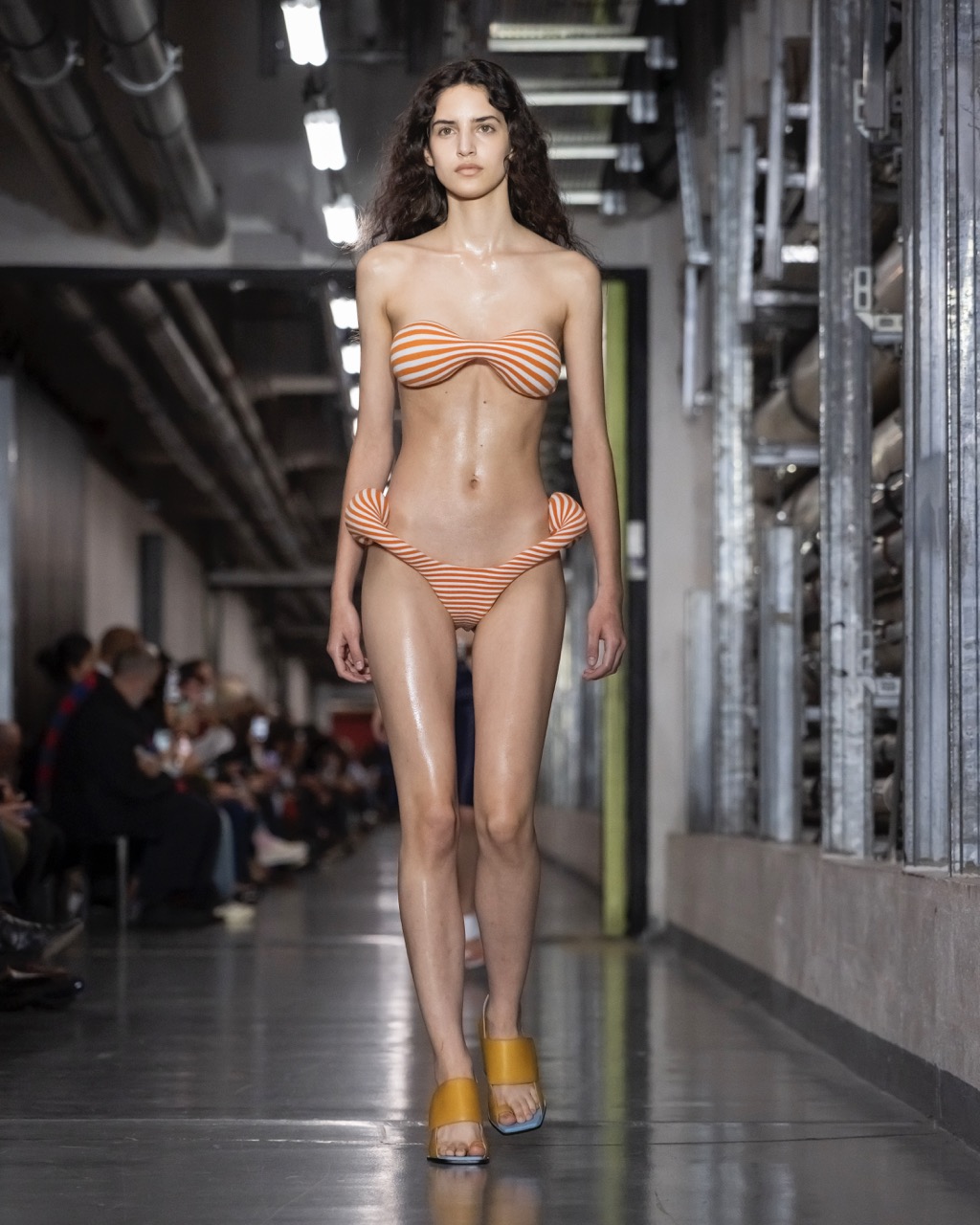
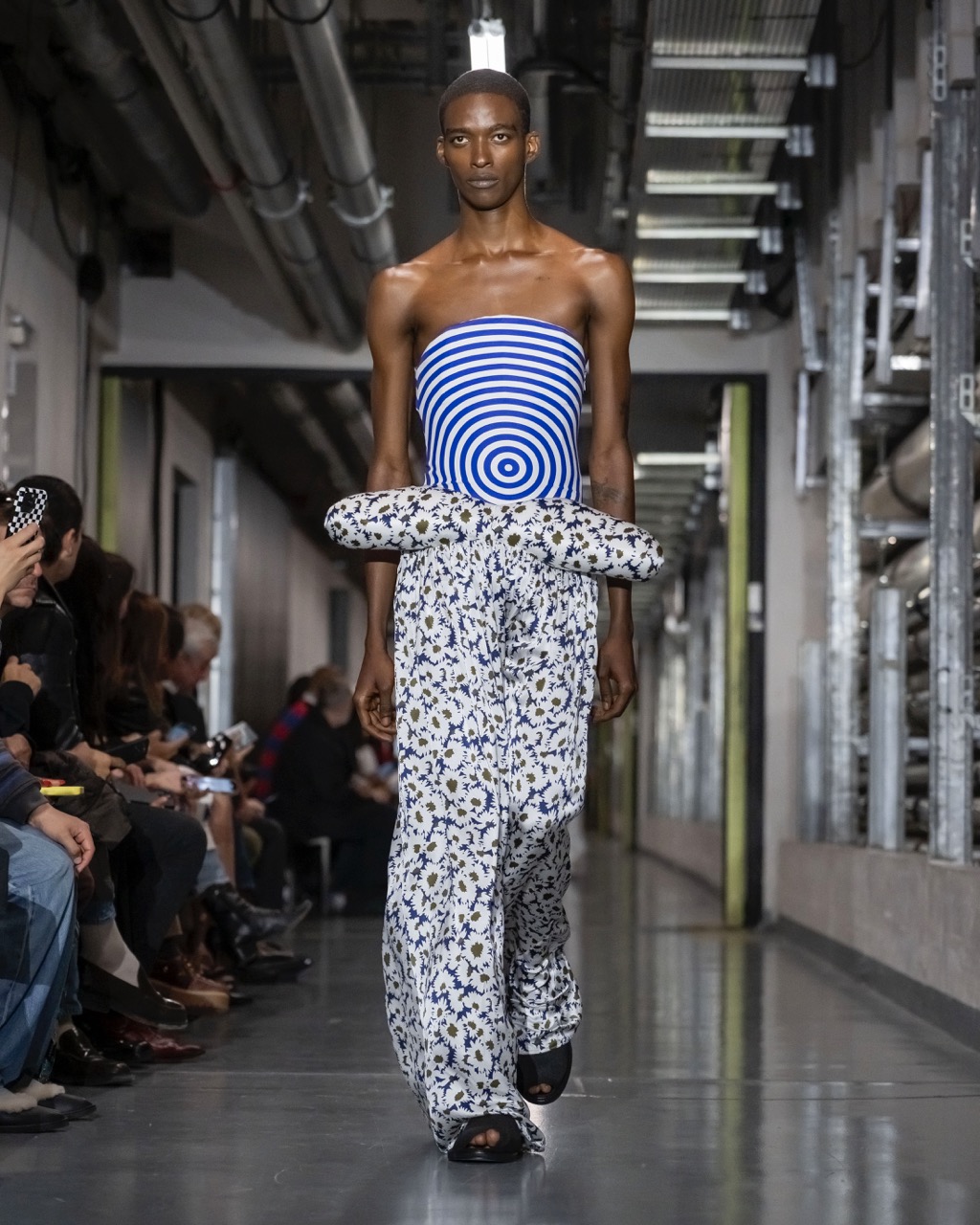
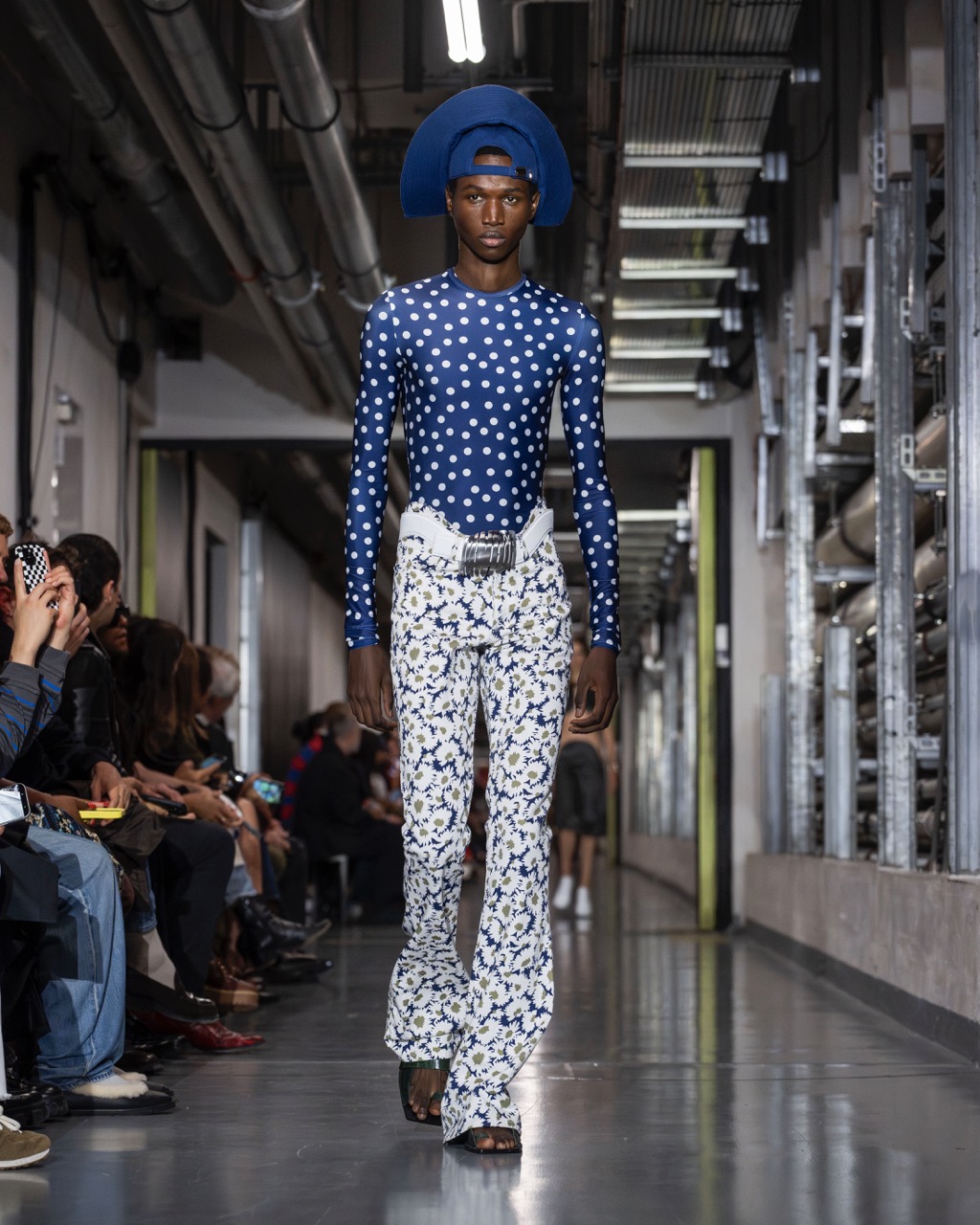
Though Lantink didn’t go into the archives, there were still references. He simply Duranified them. Sailor stripes; tattoo mesh, familiar JPG symbols pushed through Lantink’s surreal logic. The cone bra appeared, inflated and distorted, opening the show in blazing orange. It essentially married the JPG cone bra with his own balloonified dresses. His Junior collection pulsed the house forward, reviving the rebellious club kid DNA that made Gaultier’s name in the first place. Even in the name it comes back: this collection was titled Junior, nodding to Junior Gaultier, the cult 1988–1994 line that embodied raw youth, club culture, and sexual freedom, a world Duran has always aligned with.
The setting reflected that too: guests walked into a scene of post-party debris. Cigarette packs, empty bottles, the remnants of a night gone too far. The atmosphere recalled Amsterdam’s legendary RoXY club (1988–1999), immortalised in Cleo Campert’s Het RoXY Archief, one of Lantink’s key inspirations.
Lantink’s appointment also marks a turning point for Gaultier. After years of rotating guest designers — Glenn Martens, Haider Ackermann, Simone Rocha — Lantink is the first to be officially installed as creative director. After a decade without ready-to-wear, they’ve chosen a provocateur, not a preservationist.
Gaultier was nicknamed l’enfant terrible of fashion; Lantink is his 2025 counterpart. A designer who doesn’t care to please and who sends men in bikinis and women in prosthetic penises. As someone who once interned with him, I can say firsthand: Duran listens to no one. He is genuinely bored by consensus. It may not have been a polite debut, but if you wanted a polite collection, perhaps go to the Row.