Serving Tribal Kunt

Bag cuscus fur, belt pig killing apron from the Chimbu province of Papua New Guinea, earrings coyote bones, necklace fish bone, bracelet Igbo cuff, rings MARA PARELTA
Maahleek’s body is a museum site: a living, breathing exhibition space where artefacts transpire, fusing with his own DNA and self-expression. The LA-based artist, also known as Tribal Kunt, utilises a deeply research-based and archival approach to styling and hair art, crafting looks that “blend many aspects of [his] ancestry with a twist.” Initially inspired by the gifts his uncle would bring back from his numerous trips across Africa (the first one being a wood slingshot from Ghana, which he still cherishes), Maahleek’s practice has grown into a rich digital dossier of Pan African and Indigenous craftsmanship.
This ethos of archiving traces back to Maahleek’s first entrance to social media in 2007. “I have a visual record of every year of myself since, and even back then, I knew it would mean something to me when I got older,” he reflects. Within this, social media becomes a platform for both his personal chronicles and a space for knowledge-sharing: from showcasing body paint and deer skin attire inspired by the Himba of Namibia to braids based on traditions of the Rendille of Northern Kenya, Maahleek uncovers and amplifies the regalia of ancestral art.
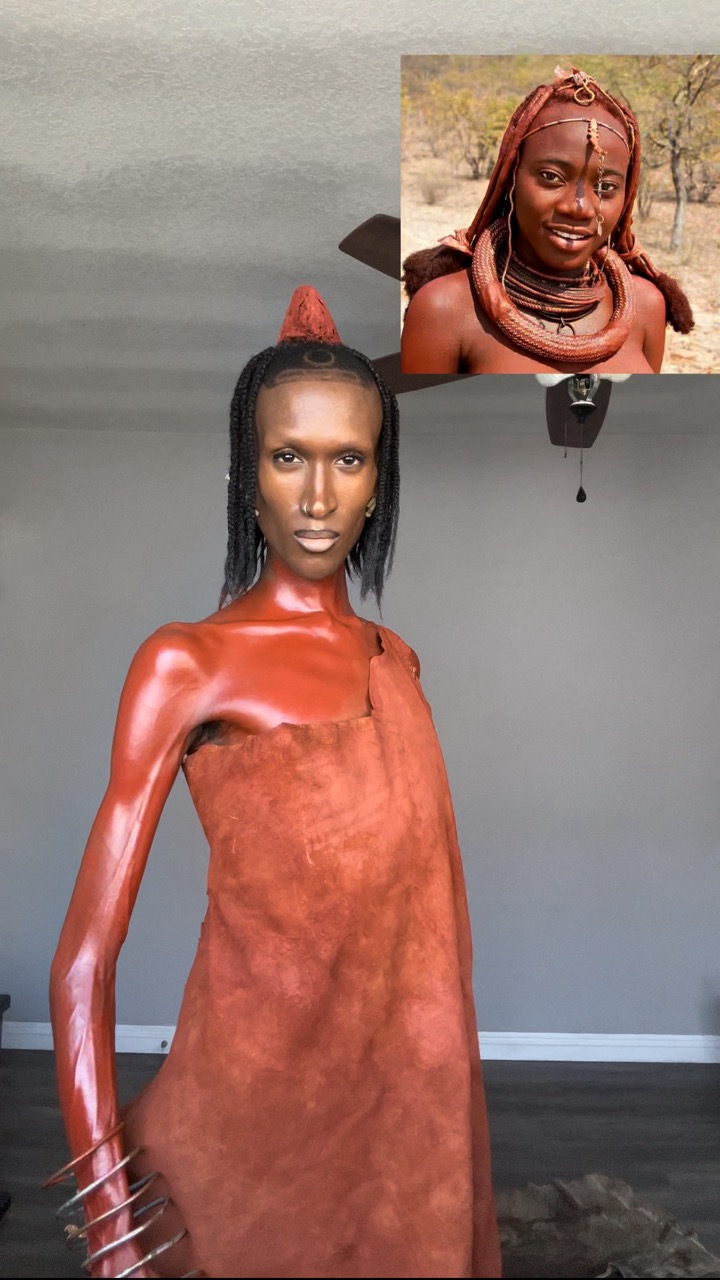
Top deer skin stained and suncured by Mahleek, inspired by the Himba of Namibia, hair inspired by the Rendille people of Kenya
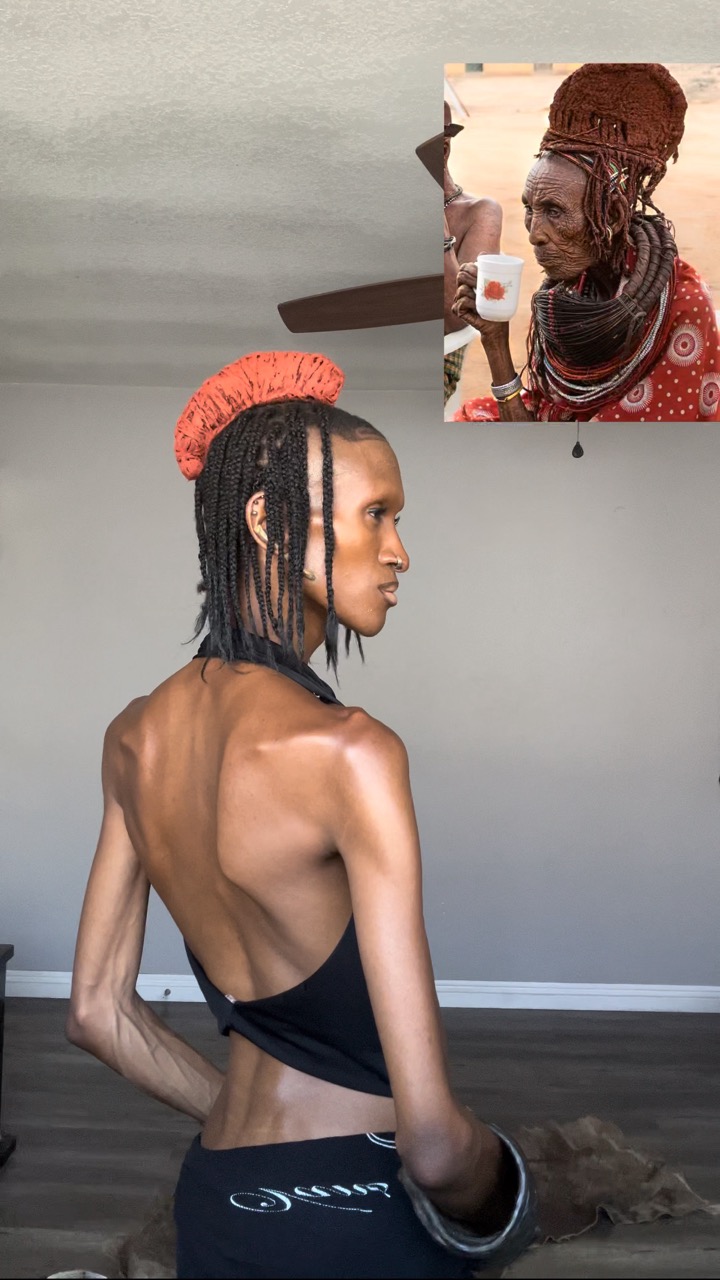
Hair inspired by the Rendille people of Kenya

Skirt GUESS, belt cuscus fur from the Chimbu province of Papua New Guinea, necklaces made of pig tooth and betel nut

Necklaces made of pig tooth and betel nut
It takes talent, patience, and a hawk’s eyes to be able to browse the Internet and fight off fellow eBay bidders with such dedication and meticulousness. “The itch to find things hits late at night, so I usually just start digging around on Google and finding the most random websites that sell artefacts,” Maahleek reflects on his process. In a hot librarian way (or more, a hot art historian way), he admits that he gets “a bit obsessive when it comes to finding out the history of the style as well as the photos,” — and it really shows. In addition to transmitting often lost diasporic narratives and traditions, Maahleek’s practice is ultimately deeply personal. “Being my family’s personal ancestry.com (lol), I have an archive of many images and records from my African and Indigenous ancestors. It’s my way of venerating them, through my hair, my attire, everything,” he shares. “My body is a vessel.”

Necklace ceremonial wild boar tusk from the Angu people of Papua New Guinea, necklace mid-20th-century Native American elk teeth

Necklace ceremonial wild boar tusk from the Angu people of Papua New Guinea, necklace mid-20th-century Native American elk teeth
“We get an education and a serve every time 😭,” a comment reads under Maahleek’s video on how Maasai and Samburu hairstyles from Kenya inspired his own. This is precisely what the philosophy of Tribal Kunt embodies — taking a diligently researched style, and, in his own words, “freaking it.” Maahleek epitomises what cultural preservation should be: conscientious yet dynamic, reinterpreted across new contexts, allowing heritage to evolve rather than stagnate. Part frozen in time, part given a new life.
Words by Evita Shrestha
Images courtesy of the artist