for Glamcult #143, the DEEPREAL issue
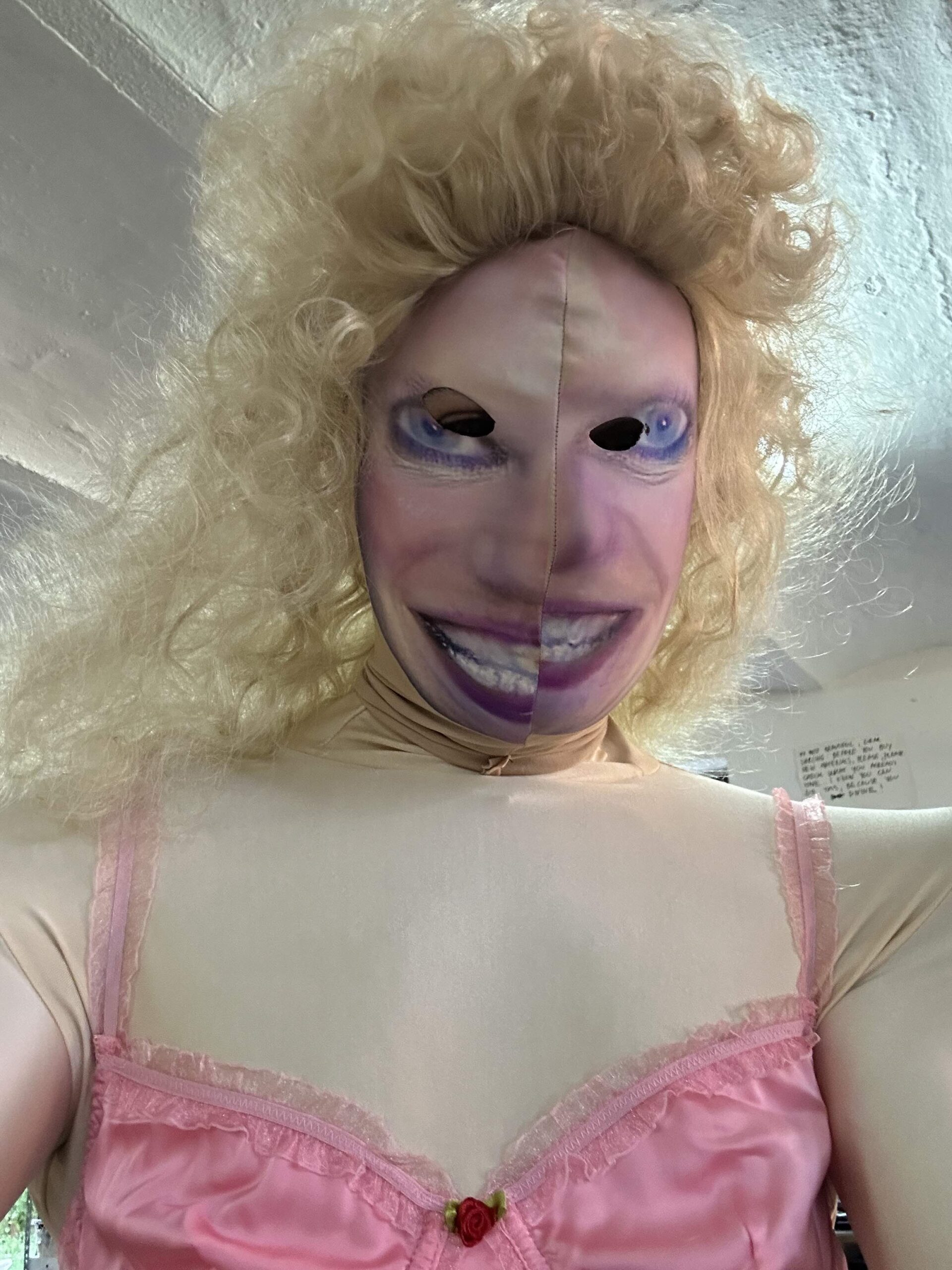
Shalva Nikvashvili is a Georgia-born, Germany-based artist whose “organised madness” finds its grotesque ways into many media. A violently condensed, barely representative list includes: masks made of raw meat or bread; headpieces assembled from scavenged leather, clay, human hair, and funeral portraits; hybrid bodies with flaunting genitalia; sculptures from electrical cables, old clothing, plaster; performances and video works where obscured figures feed each other and defecate.
The offshoots of Shalva’s feverish output are united through how he processes the world. “Reflecting the madness of the world we live in is my main source — an unlimited inspiration from the shitshow we call a ‘normal’ lifestyle,” he shares. His work lifts the veil over what we push down on a daily basis, confronting us with the chaos throbbing underneath the pretence of normalcy of the Western world. Each piece evokes a deliberate discomfort, a reminder that the parts of ourselves we’ve numbed are still there, regardless. Through deformation, he stages an unravelling of the social contract, showing that beneath its polite fabric lies the unedited matter of being human.
“I don’t feel shame or fear,” Shalva states firmly. To provoke is not to simply ragebait or flirt with shock. A provocation is to turn the blade inward; it gains gravity only when it exposes the artist as much as the viewer, when creation becomes self-stripping. “I want to be fully exposed to the public. That’s what I want to say with my work: it’s okay to be vulnerable and transparent.” In his hands, exposure is a shedding of the inherited skin of decorum. “Shame was invented by humans to control each other,” he adds.


Today, you can find Shalva (perhaps not that easily) in the middle of the German countryside. “I talk less and share less. In a world of ‘fake,’ I cannot,” he shares. For him, authenticity is a daily negotiation with silence, space, and self. While the world debates how AI might warp our sense of real representation, perhaps the more prominent question is whether we are even being real now, what white lies and masks we’re putting on. “300 people, no shops, no traffic lights, just nature, my four dogs, and my husband in a beautiful farmhouse,” Shalva describes his life as of right now. “I work every day in my studio and don’t give a fuck about the world.”
Ultimately, he wishes for his work to transcend time. “I hope that someone, far in the future, will say: ‘Fuck! So what I feel now is not only me! There was someone else who felt the same.’” What might appear aggressive on the surface is simply a tenderness, as the unfiltered vulnerability Shalva exposes are parts of us. “I want [my audience] to feel hugged, seen, loved, and understood by my work.”
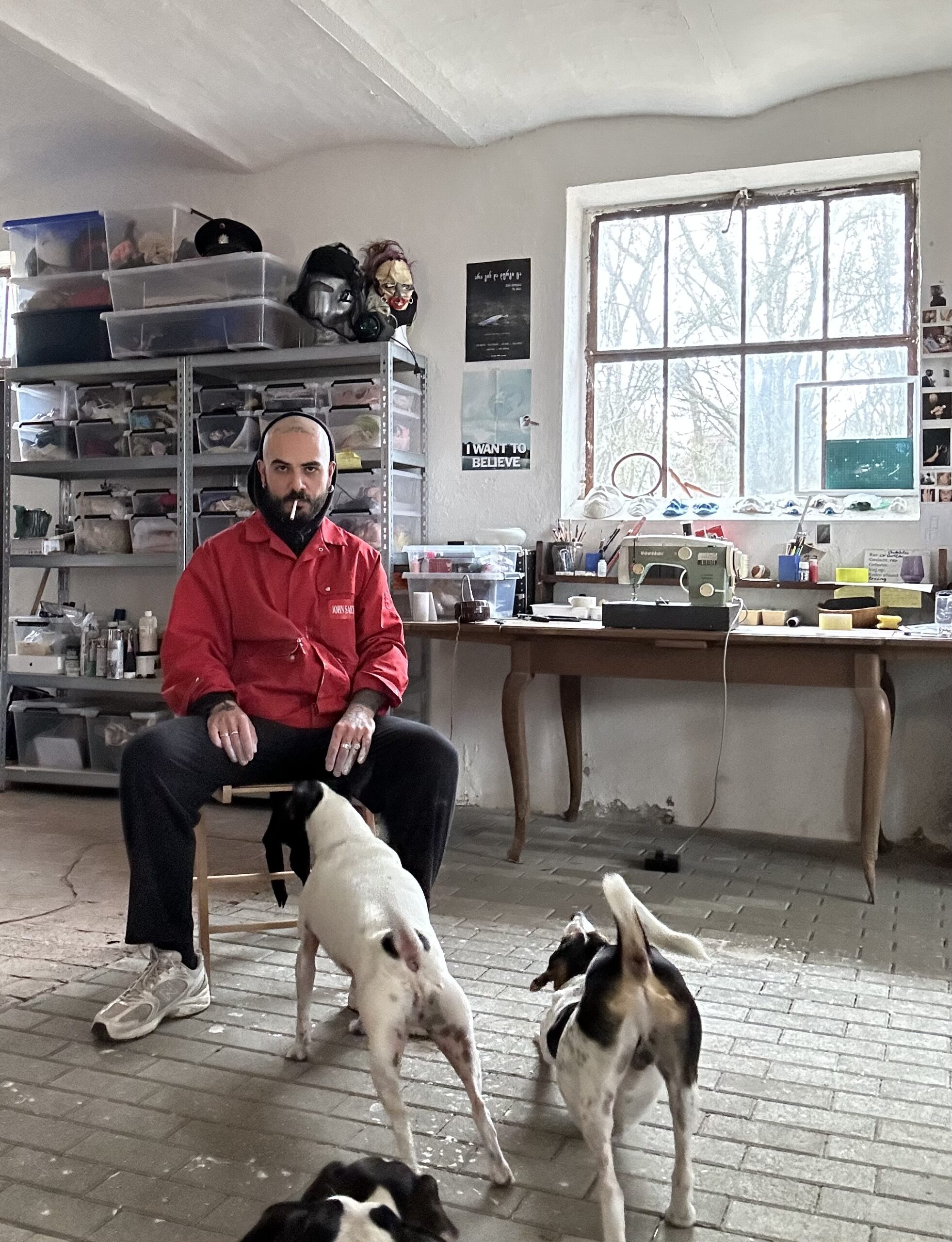
“When I lived in Georgia, I shared one room with my whole family. We would eat one by one because there wasn’t enough space for everyone. When dinner was over, my father would turn on the TV, while I’d put an A4 paper on the same table and draw,” Shalva recalls his first ‘studio’. “Now I have a 90-square-meter studio. In winter, it’s as cold inside as it is outside. Still, it feels like the most comfortable place on the entire planet to me.”

George Nebieridze, Shalva Nikvashvili, WHO CARES…, organised by MOLT at Offsite by Wehrmuehle, Berlin, 2025
“How can we be apolitical?” Shalva asks. In his realm of absurdity, everything is meant to break; the crumbling of what we know is most welcome. “My goal would be to see the world collapse, because we need either a rebirth or simply an end.”
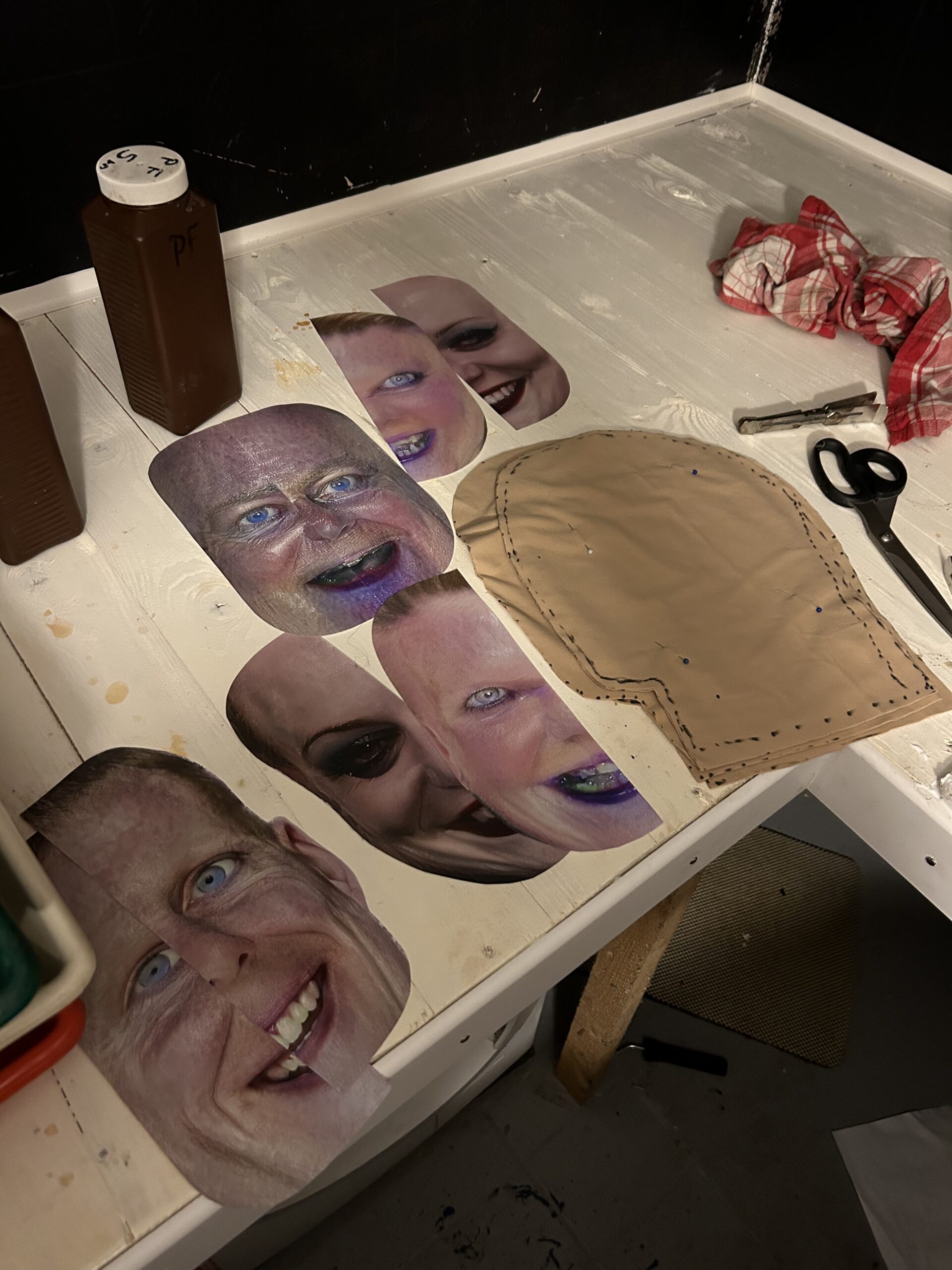
His affinity for raw, sometimes unsettling materials traces back to his childhood. “When I was little, I made small sculptures from mud and bread, played with trash bags, created ‘beautiful’ dresses, and pretended to be someone else. I realised very early that I had to create an alternative reality for myself in order to survive.”
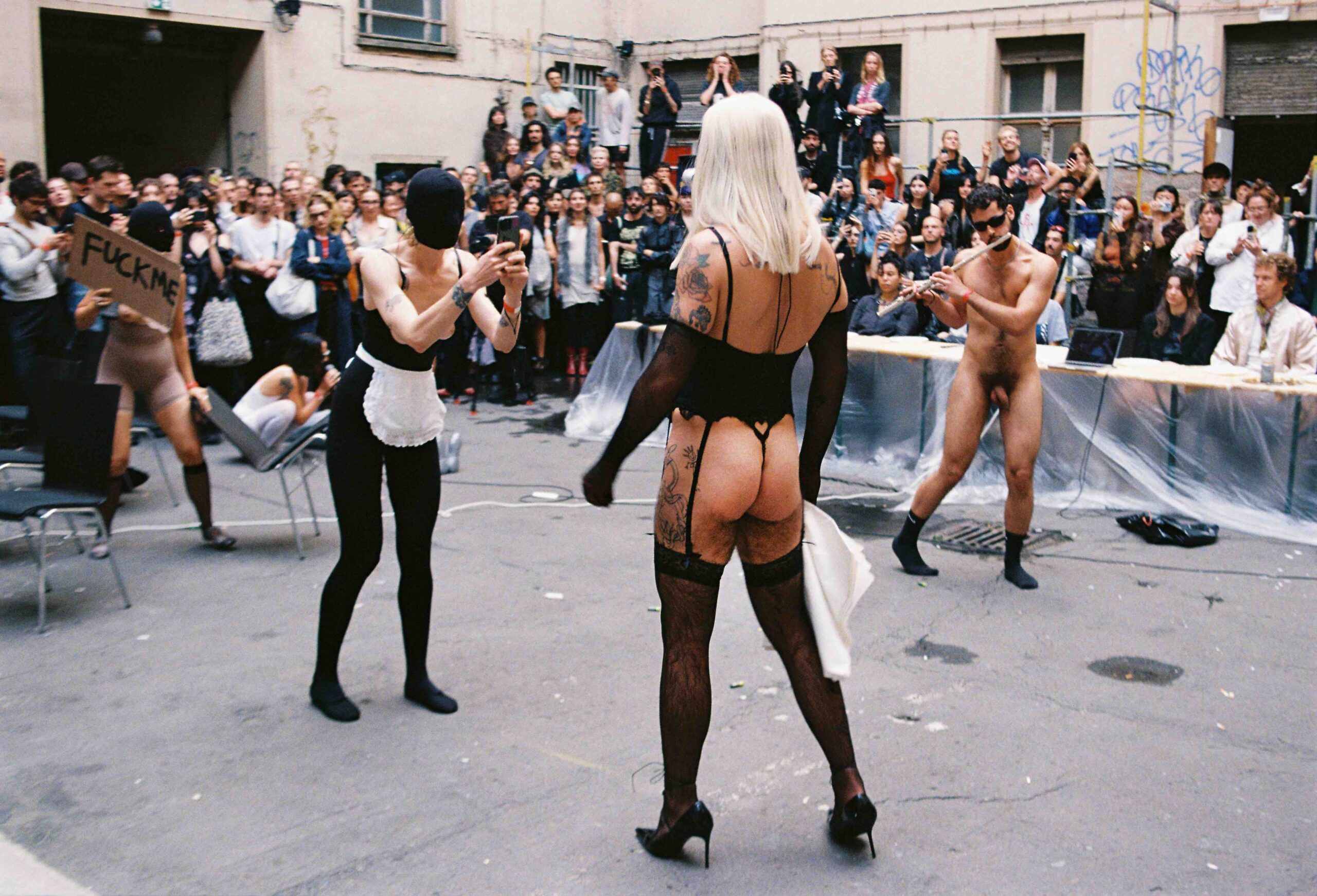
George Nebieridze, Shalva Nikvashvili, WHO CARES…, organised by MOLT at Offsite by Wehrmuehle, Berlin, 2025
Shalva’s works touch on nebulous yet inescapable topics, such as identity and belonging. “I never really belonged in Georgia, and honestly, I never feel that I belong anywhere. Somehow, I feel comfortable wherever I am, as long as I have space to create. Without that, I lose connection to ‘life’ — everything becomes pointless, and I fall into an obsessive sex life to damage myself, to provoke emotions, to remind myself where I come from and where I am now.”
Words by Evita Shrestha and Pykel van Latum