“People can misunderstand me all they want until they see me perform. Because when you see me perform, I give you my all.”
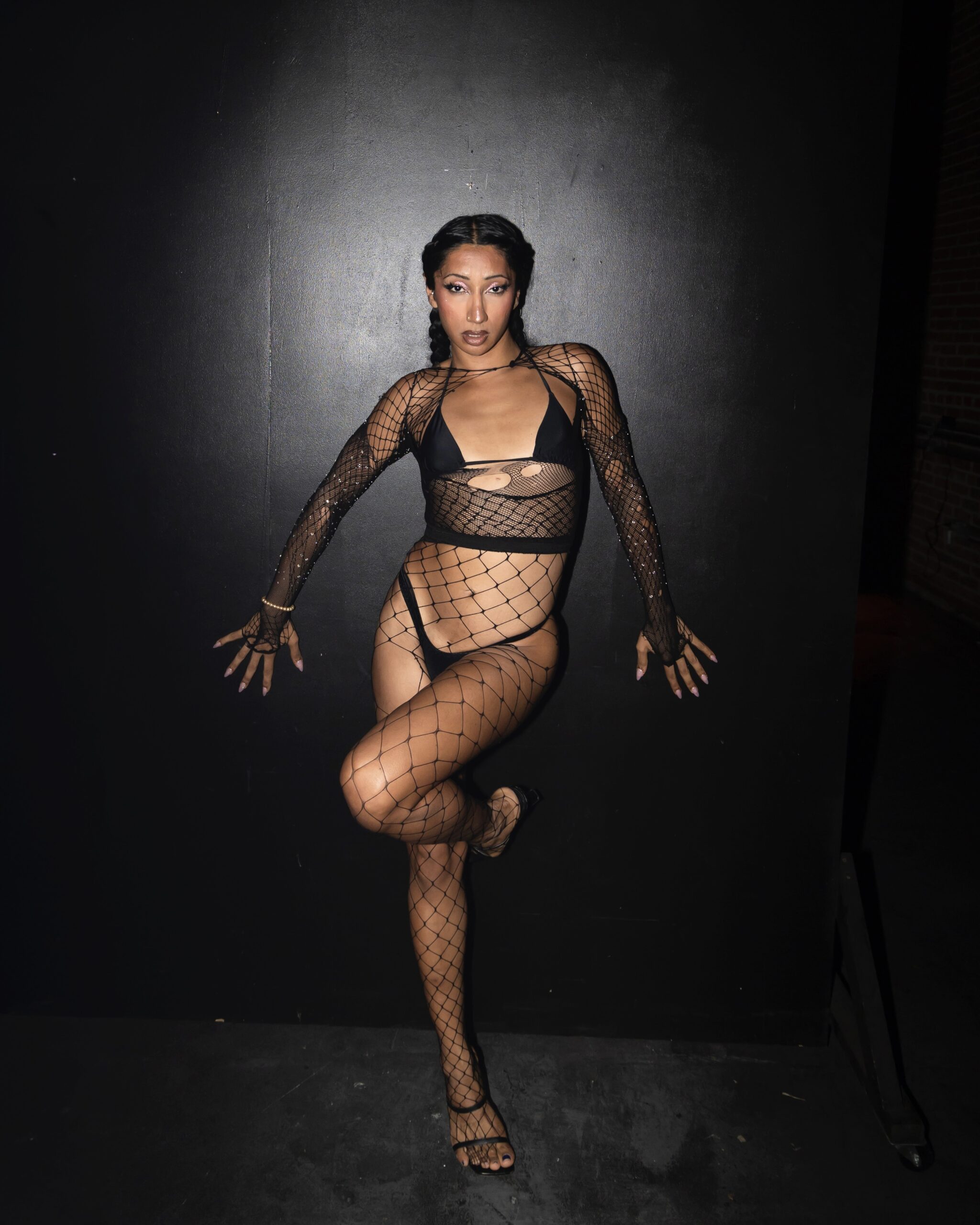
To step on stage and give yourself entirely — to rip your heart open, tense every muscle, let your sweat braid with that of the crowd — takes a lot of love. Operating from this erupting fountain of radiance and devotion, Armana Khan is the NYC-based DJ, model, and activist bringing whimsy, ferocity, and aggressive ass-shaking back to the club.
In the current political climate it’s easy to turn to the dancefloor as a site of escape, but Armana instead treats it as a classroom, a meeting point, a circuit of energy and liberation. Her sets are are a cultural and energetic collision — bhangra melts into afrobeats, Desi roots tangle with global club sounds and techno, tradition grinding against futurity until something combusts. Seeing her live amplifies this charge to a near-violent intensity, but the electricity bleeds through even online (a Soundcloud mix titled Halal Food Truck Baddie already tells you everything you need to know). We caught up with Armana to talk about bringing political awareness into club spaces, wearing lehengas with bikini tops, dismantling hierarchies within music scenes, and why music is its own entity of connection, looming beyond identities and bodies.
Hey! Lovely to see you, where are you calling from?
I’m in New York now. I’m going to DC next weekend, which I’m excited about, and LA at the end of the month.
Fun! What are you up to there?
Yeah, in DC, I’m going to be playing this new club that opened up called Transmission. It’s really cool. And then in LA, it’s this party called Maharagan, which is a SWANA (South West Asia and North Africa) party. Yeah, so it’s going to be so amazing.
Sounds like it. Let’s rewind – can you tell me a bit more about the genres you gravitate towards within your practice? How have they come into your life before you started DJing?
I’ve always been really just attracted to world music. Songs that sound like your aunties or uncles would listen to in the family van at home — songs where it sounds like a bunch of older women are sitting around a circle in a room, clapping their hands and singing. There are those songs in so many different cultures, and it always hit me when I was younger, that our cultures are so much more similar than different. I just heard the way Punjabi women sing it in so many different songs. Exploring them was how I began to explore different sides of music. I didn’t even listen to American music like that until I was 11 or 12-ish. I missed the whole Britney Spears thing and all that. I only listened to world music or a lot of Desi music at the time.
It reminds me of that Instagram real audio. How does it go… It’s like, “Oh, we’re from the same place. The Bronx? No, the world.”
Yes, haha! It’s giving that.
Love. And in your sets, how do you make sure that all of these songs get their space? How do you treat music outside of your culture with respect rather than a surface-level borrowing that we see so often?
I think that doing your actual research on the songs that you’re playing is super important. How you feel about these songs will resonate with how you’re playing them. I feel like sometimes people who play songs where you don’t really understand it or it’s not from your culture per se, they try to just rush through it and not hit that moment of the song. I think it’s really important to know those parts of the song. I also play songs that are defiant and political. There’s a song that I play called Bomb Nuclear by Nesida Ria, a group from Indonesia. It’s basically about being anti-war, and the devastation of nuclear bombs in society, and that’s really important to me. If you listen to the song, it’s so crazy because it sounds like a bunch of women are just singing in the room; it’s almost eerie sounding. But then you look up the translation, and it’s super political. I’d never heard an American song like this. Then, I found this Miami bass mix of it, and I had to play it at the club. I’m playing that song because the meaning is so important to me. I was worried people weren’t going to understand it, but they just loved the vibes. That’s more of a serious song, but I played silly songs like Sabria Leal by Shireen. Do you know that song?
No, I don’t think so.
It’s an Arabic song. It’s so good. Shireen is so, so, so amazing. She’s from Egypt, and the song is basically her yelling at a man that she’s dating, and she’s listing off the different things that she hates about him. She’s like, “You broke my heart. You left my heart hurting.” Everybody can relate to that, and when I play the song and I’m performing it, I point at the audience and act like I’m mad at my man. These songs really do mean a lot to me. I am Pakistani, and I am obviously playing music that’s not from my culture, but I really love these songs. I play them in the shower, and I’m going to play them at the club.
How do you find the balance between seriousness and bringing political weight, while also being silly and giving the space to shake ass and feel good?
I’ve always been kind of worried and have asked myself if people are going to take me seriously as an artist. Especially within my culture, we need to sometimes just breathe and relax a bit. I would always make inappropriate jokes within my culture, even growing up. My mom would get so pissed at me. I feel like I was put in this world to shake up Desi culture, maybe help it progress. I always start a set with a speech. I talk about different politically important messages to me, and it always ends with, “Now let’s shake that ass.” You have to be a little bit silly, but it’s important to bring seriousness into your work as well. But sometimes I do have those thoughts in my head, “Are people going to take me seriously with the way I dress, with the way I act?” But I think the love and respect and admiration I have for this art form is so apparent. When people see me live behind the decks, they see that. They’re like, “Maybe this thought of this person that I had is not the same in person because she clearly really cares about this shit.” I really love this shit.
Yeah, it’s the oldest tale of being judged by and reduced to the way you look and the manner in which you speak. It’s really beautiful to see women going directly against these stereotypes and broadening what we consider credible or worth listening to.
I think we’ve had it. It’s been just men behind the decks for so long. Sometimes I worry, is my femininity going to get in the way, unfortunately, of being taken seriously? But I’ve had it. I’ve always been feminine since the second I was born in this world. And I love it. I see the power and the strength in it. If people are going to judge me, they’re going to judge me. But you can only judge me until you see me perform.
Yeah. I want to go back to the balance of playfulness and education that you mentioned earlier. Is it reflective of how you move through life in general as well, especially in the context of all the political unrest we’re currently witnessing?
If I’m going to be completely honest, it comes from a place of guilt. Because sometimes when I’m out at the club with my friends, and we’re dancing, images that I just saw on Instagram of what’s happening in that country today or an hour ago will come into my head. We’re here, so happy spending money on drinks and hanging out, while the world is burning right across the street. Then, I have to remind myself of something that I sometimes say in my speeches as well. We have to party today because partying is so necessary, for the way that we connect with music is so important. Across all cultures, that’s how we connect. We need that connection between humanity. If we don’t have this today, we’re not going to have the strength to fight tomorrow. When you create your own space, like when I created Kahnistan, you need to make sure people know shit is happening in the world. We need to acknowledge it, and we can party and still think about this. On that ride home with your friends where you talk about the show, I hope that I’m in those conversations and people are like, “When she said that, what did you think about this? Or by the way, she said that we should do this, you know?” Obviously, I’m at the club shaking ass, but we’re still having these serious conversations within that same sphere. I’m not making a joke of it, but we’re still making a conscious effort to talk about it.
I really love that! Going out doesn’t have to be about escaping, it can also be a channel of staying informed and being connected, and it’s beautiful to see spaces like that thrive. I’d also like to discuss how your identity influences your work. You often talk of the intersectionality of being South Asian and queer, and how that’s been a political stance for you. While it’s incredibly important, do you think people misunderstand your music when they only see it through one of those lenses?
Yeah, sometimes, I’m kind of sick of people introducing me as “Armana Khan, the trans DJ, Armana Khan, the South Asian DJ, Armana Khan, the Pakistani DJ”. I am outspoken about my identity because there aren’t a lot of open trans Pakistani women who are doing what I’m doing. There’s this DJ, Zee Muffin, she’s one of the biggest Pakistani DJs ever. She’s so talented, so sweet. She has a party called Azadi, and I performed there. Afterwards, there were these guys who came up to me. Mind you, they’re like pushing people to come up to me. They’re shaking my hand. They’re hugging me. And they’re like, “Wow, you did so amazing.” And I looked at them, and I’m like, “You guys look like the same guys that used to make fun of me when I was young because I used to go to the mosque on Sundays and I never played basketball.” Then, my Punjabi friend looks at me with tears in his eyes, and he’s like, “Baji [sister], do you not understand what this is doing, girl? These masculine ass men in our culture are coming up to you, saying you really understand our music. You were playing into our hearts with your set. Do you realise what that’s doing?” It made my mind spin. I don’t want to be known as the trans DJ because music is way beyond any identity. It just comes from the soul. It’s a genderless, identityless thing. It’s art, and those boys might have never come up to me if I didn’t play what I played. And I’m pretty sure they wouldn’t because that’s never happened before. I never had any of those types of men come up to me before. It just proves people can misunderstand me all they want until they see me perform. Because when you see me perform, I give you my all.
I want to ask you about how you navigate certain hierarchies in the music scene. Even the underground queer spaces that claim to go against these mainstream norms, there are still a lot of structures that are unknowingly perpetuated. What are some invisible barriers you’ve seen, and how do you work to break them down?
Yeah, there’s definitely a lot of hierarchy. I see it. There’s always this guestlist hotspot. Everybody wants the guestlist, and there’s only a limited number of people that you can even put on there, and then you have to be one of the person’s close friends, etc. I feel like it just creates this hierarchy of who’s in and who’s not. I wanted to be able to combat that in some way with my party. But you can’t just have people come to your party for free every time; it wouldn’t be sustainable. Luckily, I have the best supporters online. It’s just so amazing, people really understand me and what I’m trying to do. I started the Khanistan Trans Fund to raise funds for people who need help purchasing tickets for my party, because you still have to hit a ticket sales point. I had a goal, and I doubled that goal. We were able to send tickets to so many people to come to my party. All they had to do was DM the account and say, “Hey, I’m looking for a ticket, I’m low on funds, and I would really love to come to the party.” We had a packed house. It was so special. It feels really good to be able to not have that weirdness of needing to know somebody to get in. We were trusting each other enough to know that someone actually needed the ticket; it was just an amazing situation.

That’s really, really beautiful! How often do you put on events?
I actually just had my first one, and now the party’s gonna go on tour across the US and Europe. I’m really, really excited because Khanistan in New York was so amazing. I could just see so many people letting it loose and letting their inhibitions go and open to new music. Sometimes I don’t play all my weird music, like the real auntie music that I really like. I’m an old lady. And then, I played so many references and music that is so deep within my heart. And the room just loved it because these are my friends. This is my party. In my mind, we are all holding hands around a campfire, listening to music.
How’s New York treating you as a creative home for you?
I did not live until I moved to New York. Here, I found out that I can be who I want to be. New York was where a person told me, “You were meant to do something in music in life, you weren’t meant to do anything else besides music, you need to take that seriously.” New York is the city that told me that I was worth something when I felt like that no matter what I created, nobody was going to connect to it. I believed it until I met New York, and she’s everything.
How’s the Zohran air right now?
Oh, my God, I’m just so ecstatic. He won, that’s great, but actually following through on your word and doing things for humanity and the city is amazing. He’s already enacted so much change. The world is so dark that even the slightest glimmer of hope matters so much. Like when you put a glitter top coat on your nails, and it’s a light little glitter, it’s not like glitter polish. You see the nail and then the light hits it, and you’re like, “Oh, my God, I forgot I put the glitter.” Zohran is like that for me.
I hope he sees this. I really want to go to New York.
Yeah, come! Honestly, my favourite city to play is New York, number one. Glasgow, Scotland, was also so amazing. I think a tie between Nuremberg and Berlin. Nuremberg was so amazing. When I played, there was a line around the corner at the club all night. It was insane. I’d never seen that before.
Interesting… You’ve tapped into Nuremberg. Niche European city queen.
I guess so, yes!
I also want to talk about fashion as a tool of self-expression for you. Your outfits always carry such a magnetic energy, how do you approach building a look?
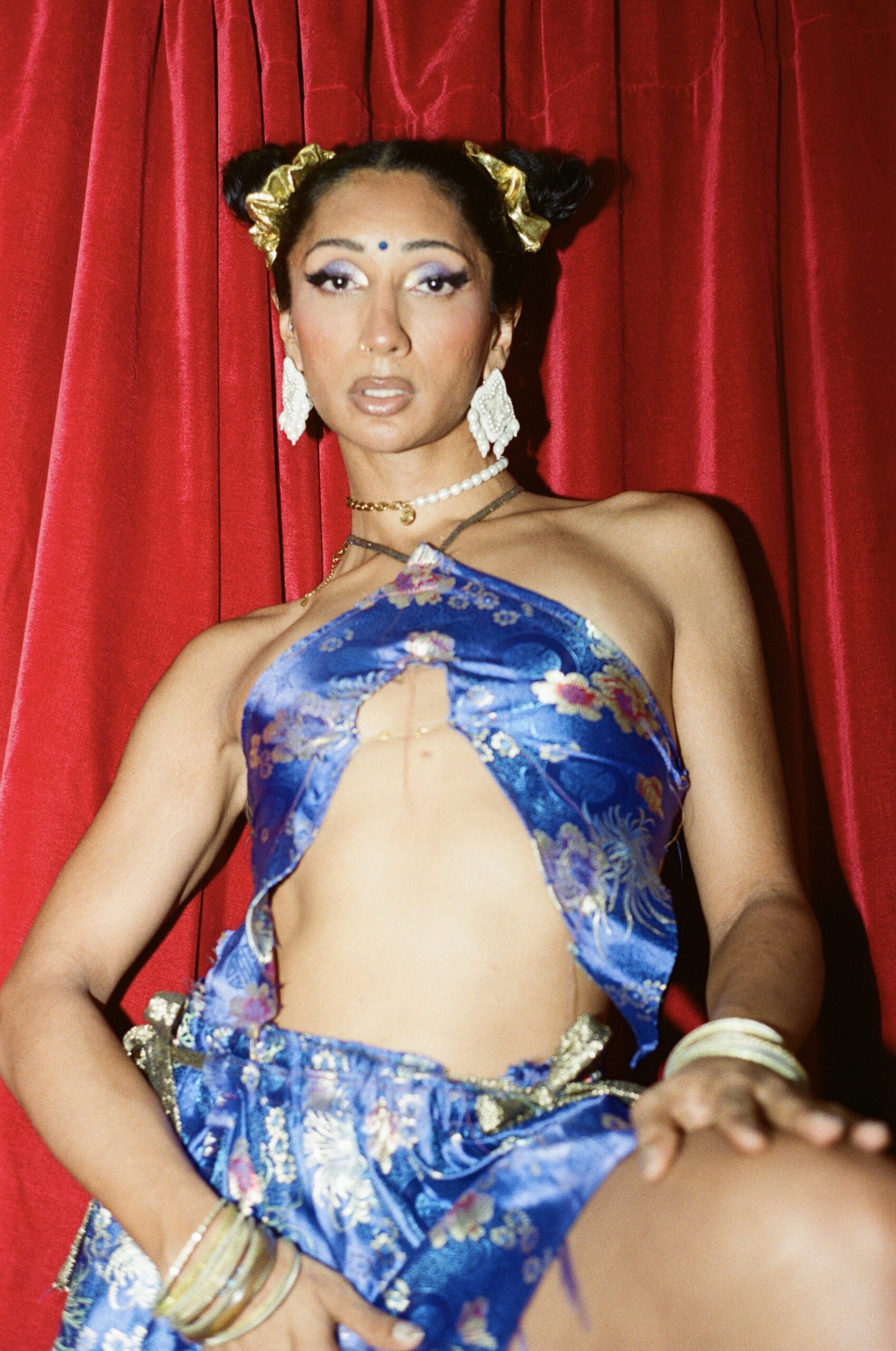
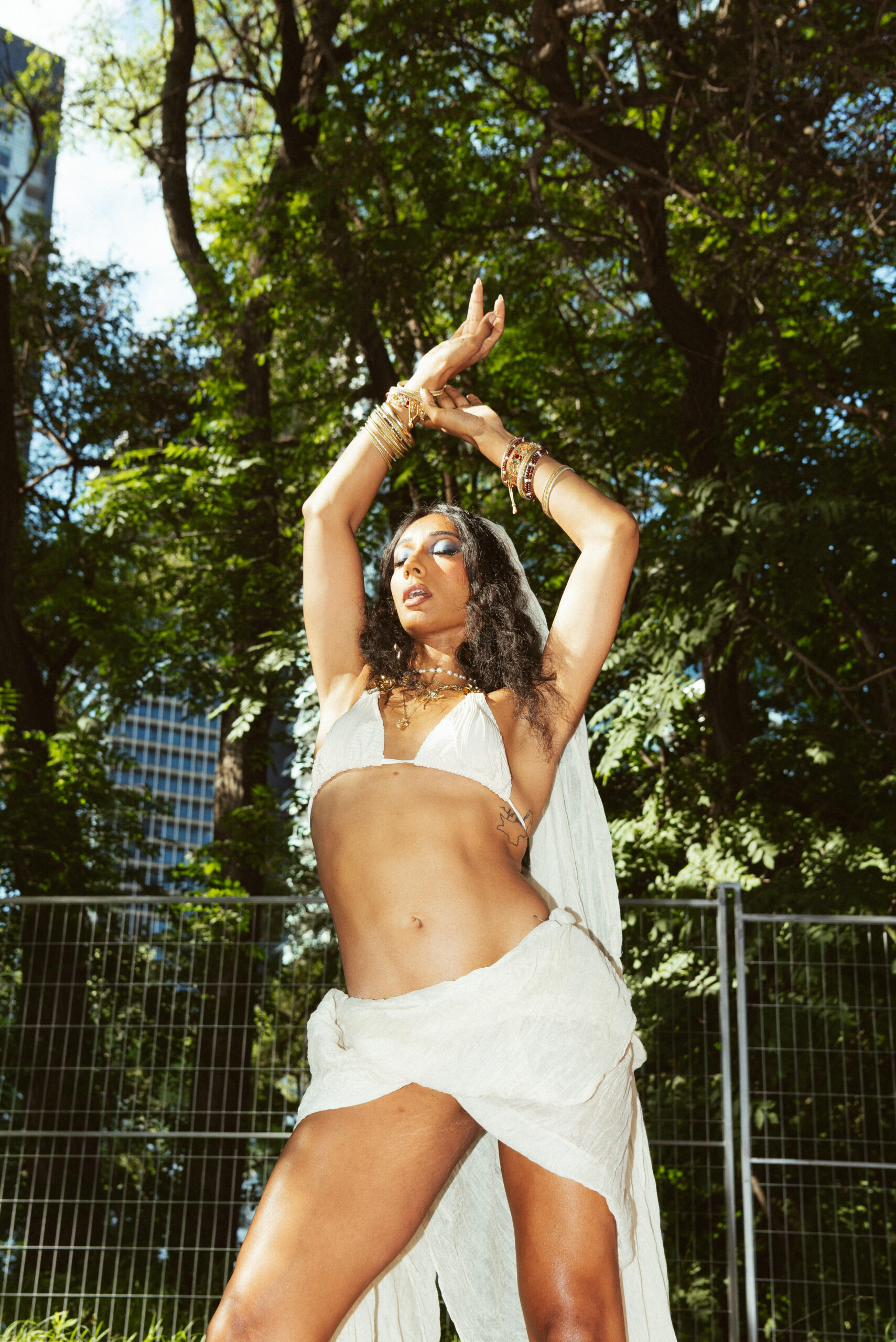
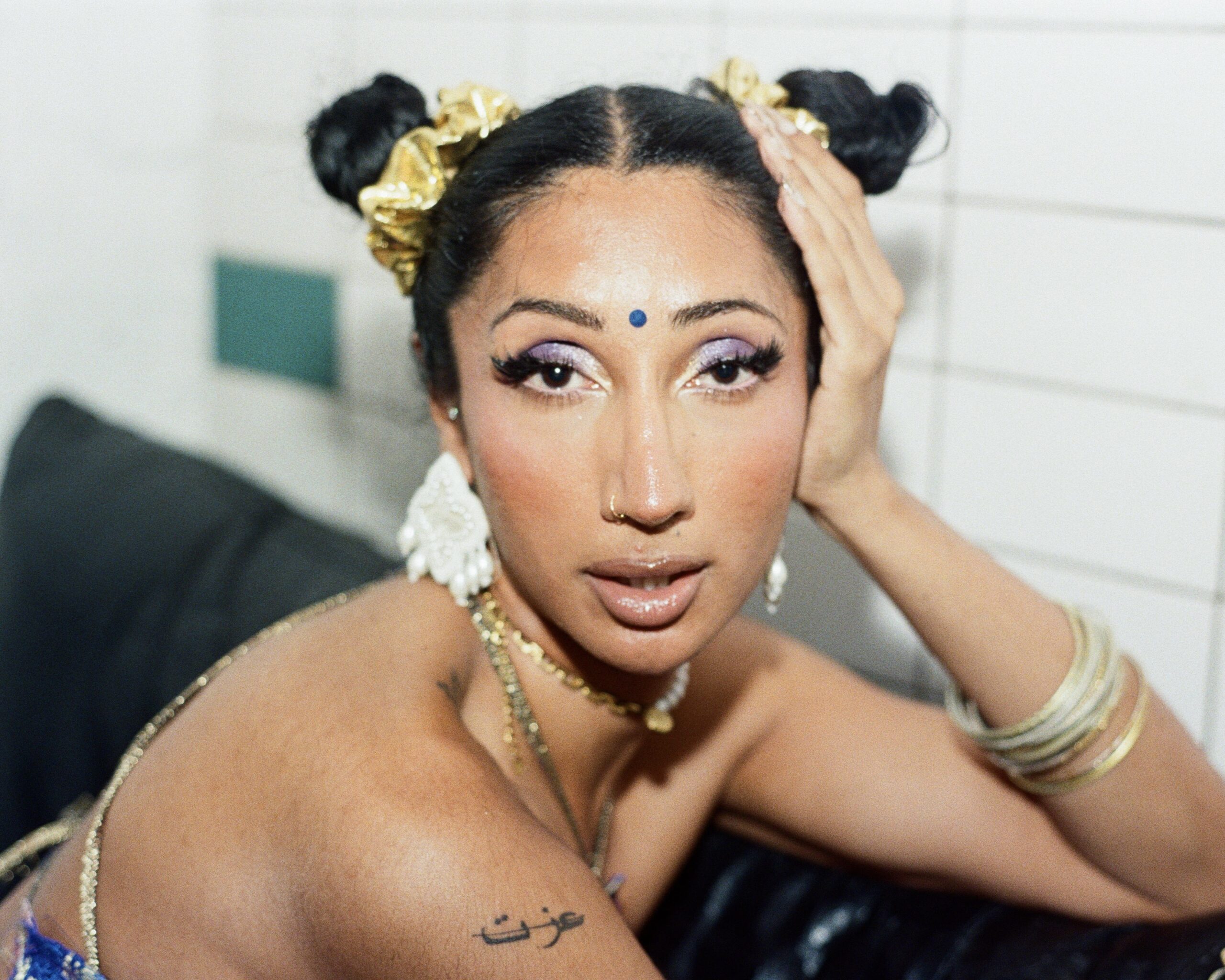
Well, you asked me about New York before, and I feel like New York definitely influences my style so much. Yes, I’m still going to get judged in public. But New York is just like my entry to letting my freak flag fly. I’m what they call an ABCD – American Born Confused Desi. People used to use ABCD all the time to make fun of me or whatever. People would always tell me that I can’t wear Desi women’s clothes at all. Growing up in a post 9-11 world, I feel like whenever I did try to wear anything within my culture, I would get made fun of. I didn’t want to show my culture at all. I would be so ashamed. When I got older and moved to New York, I saw there were queer hijabis, and they were expressing themselves in that way. It inspired me to express myself in my culture’s way, too. I’m not hurting anybody. I’m not wearing religious attire with a thong. I’m wearing a lehenga with a bikini top. And I love it. It looks beautiful, and it’s fun. Some people don’t understand my vibe, but it’s not for them to understand. It’s for me to understand. I always go by a mantra of “We were put in this world to understand ourselves, not be understood.” I’m dressing in a way where if I were to look at a picture of me when I was younger online, I’d be like, “Oh, my God, I’ve been looking for someone to look like this and to do what she’s doing, I’m going to do it ten times harder now because she’s doing this. I’m going to level her up. I’m going to do it even better.”
What’s on the horizon for you? What are your goals?
Oh my god, there’s so much I’m excited about. I have my tour in Australia next month. It’s the Pakistani Princess Tour Down Under, which I’m so, so, so honoured and excited about. Within two years of my career, and going on my third or my fourth tour now, it’s really amazing to me. People really invite me in when it’s not my culture on tour, and connecting with music together across the world is just so beautiful. Then we’re working on an Asia tour after that, and I’m going on a European tour this summer. My butt is going to be very sore, but I’m going to be so fulfilled in my soul. Sometimes I walk into a new place, and that pressure comes to my mind.“You’ve never been here before. Their culture is so different. You’re so different. They’re never going to understand what you’re doing.” But when I press play within five minutes, it feels like the whole world goes crazy – in that room, at least. There’s nothing better than that.
Show them!
When I first moved to New York, I would go to the club and always try to look for the girl who would be going crazy, like ass to the wall. You know that wall-dancing where you put your hands on the wall? I would look for that girl to be like, “Okay, now I can do it.” I feel like I was always looking for permission. And I said, “If I ever am on stage, I want to be that girl that I was looking for.” So that way the crowd can go just as crazy as I want to go crazy, you know? We’re literally at the club wearing a fun, silly outfit, and have all this jewellery and makeup on. Let’s just shake our hair and go crazy. Let’s stop being so serious all the time and stop trying to look so cool. I’m so sick of looking cool. Let’s be silly.
Preach.
Words Evita Shrestha
Images courtesy of the artist