Her upcoming EP Anatomy of A Cry is a soft, trenchant study in emotion
There is a strange, precise physicality to crying. It starts as an itch somewhere behind the ribs, a tingling pressure suffusing the chest. Your throat tightens. Blood races to your face. And then, almost against your will, your whole nervous system spills. Crystal Murray knows that feeling all too well. On her upcoming EP Anatomy of a Cry, the London-based artist turns toward the emotional physiology of tears. Like carefully plucking at invisible wires until they align in a configuration that overwhelms you – mathematically exact and capable of undoing you completely.
We love it when film nerds make music. As she casually references what feels like a thousand films that shaped her vision, you begin to hear it – each track unfolding like its own universe, textured and immersive, yet coherently threaded together. Having grown up around her father, jazz saxophonist David Murray, she absorbed gospel, improvisation, and the communal rhythm of touring early on. Through her ears, those roots blur further: folk softness brushes against experimental electronics, neo-soul warmth is obscured into trip-hop shadows. Her sound feels like road trip music (in the least tacky sense possible), the kind that makes you zone out, your thoughts drifting inward. Soft, gliding, but never without weight.
To celebrate the release of her next track, 73, (produced by Sega Bodega btw), we caught up with the artist to talk about her favourite types of cries, coding insecurities into jokes, and her love for touring (bonus: she even leaks her Letterboxd!).
Hey! How are you doing today? What state of mind are you answering these questions from?
I’m good, I try – it’s been an interesting beginning of the year, a rollercoaster of emotions, but also finding a way through the chaos.
Hopefully, the snake’s shed is coming to an end. Congrats on the release of 73! Can you expand on the story behind it and how it connects to the larger themes of Anatomy of a Cry?
Thank you, I’m feeling so good about this one because when we made it, it really helped shape the project. Sound-wise, it was exactly where I wanted it to sit – folky guitar, raw voice with a sparkle of electronic. I’ve always been trying to find the right balance in my “genre-bending” music, and this felt like it. On an emotional level, this is the first project where I’m not writing only about love, or toxic love. I talk about the relationships I have with myself, finding peace within myself, but also finding the manic and chaotic energy that I don’t try to hide, this duality that’s been in music for a time now.
The EP revolves around crying as a physical, almost mechanical act. When you were composing these songs, did you think about the physiology of crying itself, and how sound could evoke that response in listeners?
I love that you get the mechanical angle of the title because yes, totally. Anatomy of a Cry. I could have found a more poetic wording for it, but I’m even questioning the mechanical links of our emotions: the questions and responses of our body’s reaction to a touch or feeling. I found the name of the project when I was watching my first ever concerto in Stockholm, where my friend Boerd played double bass. The first minute of the show, I started crying, it was like mechanical, seeing more than 50 musicians all connect on this one note. It felt like looking inside a mind and how mathematically and directly something can make you cry when you are plugged a certain way. And how cries come out of me for so many reasons, of course, love, heartbreak, the brokenness of the world, but also passion, beauty. There’s also one I love so much – the “manic cry”, that’s really the one that makes you question, sometimes gives you answers even.
You’ve said you let your gut lead this project. Can you describe a moment during songwriting or production where you ignored convention or logic and it became a turning point for a track?
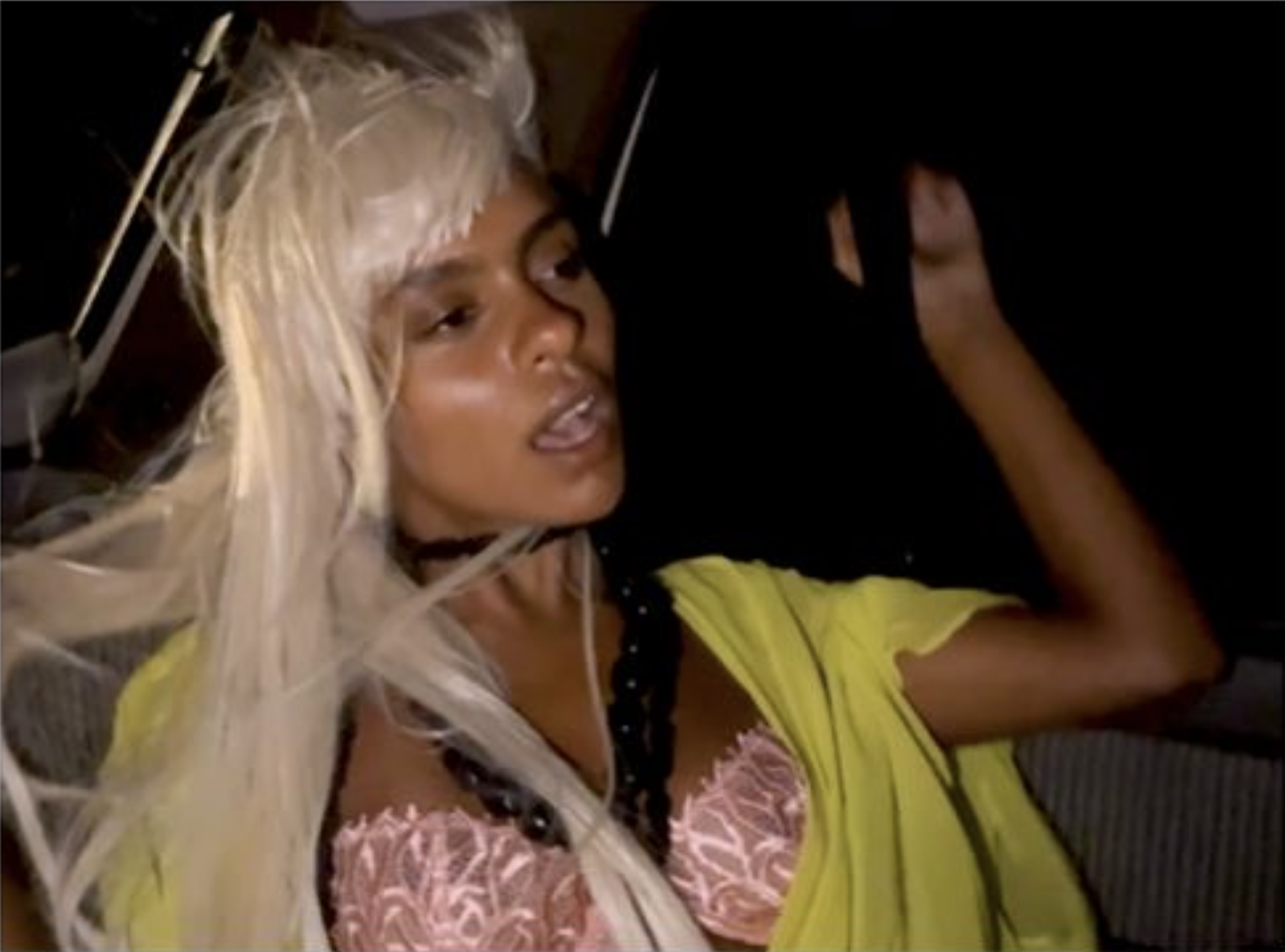
When I was writing Tangerine, I was writing about this night where I saw someone I love with another person, romantically. And I just snapped into this wild orbit. The kind where you don’t cry, you combust. I semi-blacked out for two days after that, and got myself into this never-ending bender fuelled by rage and a broken heart. And I thought about Sin-Dee in the film “Tangerine” (Sean Baker), and I linked the song to her as well. Stopped the session, rewatched the movie, and finished writing the song with Emma – it’s the emotional manic baddie that comes out once on the project but felt so important to have (re: manic cry).
A slightly anxiety-inducing sound runs through even the most ethereal parts of the EP, as if there is a certain tension or bittersweetness lurking at all times. Was that energy a conscious choice — something you wanted listeners to feel discomfort as well as beauty?
Love how you’re reading the project, yes, totally. I write with discomfort; it comes out naturally when it hurts. I weirdly don’t sugarcoat things. It’s also the way I am in life. I have a particular way to speak English or French, and the way things come out sometimes is not the way other people would say it. I like to use that. I also like being ironic (that’s the French in me). I will always show insecurities through jokes. I feel like SZA does that a lot, using irony to point out your crazy obsessions.
You quote cinema as a background influence on your work. What have you been watching recently that influenced the EP, and what are some must-see films that live in the same emotional universe as the record?
Come over Letterboxd darlingsss, it’s fun over there @cry2000! But I think to make it short: “Women Under the Influence” by John Cassavetes, and I absolutely love his relationship with Gene Rowland, I love their connection and how real and discomforting some scenes are. “Tangerine” by Sean baker of course, Sin-dee, my manic baddie for life. “Dreams by Kurosawa” – Kurosawa’s film, inspired by his dreams, held my attention completely. It’s obviously completely surreal, but you understand a time where it’s held. Nuclear paranoia, wartime regrets, and childhood fears unravel in the subconscious of Kurosawa’s sleeping mind, and it shows how even your dreams can make you understand the trauma and doubt of a man. Don’t know in what way, but it inspired me somehow, Chungking Express.
If you could score a fictional film that perfectly embodies Anatomy of a Cry, what would that movie be like, and what scene would represent each track?
I think it could be a story about how memories build you as a person, places, smells, and how you hold on to them through your life. By writing this, it reminds me of sentimental values – the childhood home, the manic cries, the discomfort? – or even “The Mirror” by Tarkovsky. We kind of already did that on the visualisers – every track is a particular scene. A moment in time. A feeling. But let’s make a new one for fun. They will probably intertwine in some way. Part Two – the opening scene could be in a club, but we’re not scoring club music, we’re scoring part two, and when the chorus comes in, flashes go on the guitar strobe – duality at its finest (heart break trying to heal itself with sex and rock’n’roll). 73 is kind of like the video; we shot our own film noir. Bizarre, beautiful scenery. Long ride. A plot. A mystery. Ref: “Eyes Wide Shut”, “Mulholland Drive.” Keystar – these are the childhood memories right there, haunting but also positive? Me watching baby me? Tangerine – well, you know. Sweet – I think it’s a moment in the movie where the main character is in her room and is singing intensely to a song. It’s that song. Numb enough – I could see it as the ending scene for sure.
Growing up touring with your dad, I imagine you witnessed music as a communal, almost spiritual experience. Now that you’re touring on your own, presenting deeply personal work, how does it feel to navigate that same world as a grown-up, with your own voice and vision?
I love everything from it, the teams, the wait, the pressure, that’s my life. I love it so much, and when I’m not performing, I’m just waiting to be performing. It’s just where I like to be – and want my work to be.
When you’re not thinking about music, what’s something you obsess over or love learning about?
Well, as we can see in this interview, I‘ve been in my film era. It has been healing, and I’ve been finding answers strangely. I love researching the insight, the dynamic between the director and actors. Where and how the movie was written.
Images by Carmen Woreth
Words by Evita Shrestha