Enfant terrible: tamed

Duran Lantink’s first collection for Jean Paul Gaultier was received in the way fashion people receive most things: quite dramatically. As the newly appointed creative director of the house, Lantink was supposed to arrive politely, open the archives like a family photo album, and recreate the classics with appropriate reverence so everyone can unclutch their pearls while their beloved house is handed over to a new, young, and potentially careless Dutch designer. As we all remember, Duran did quite the opposite: he left the archives closed and wandered off into his own, provocative imagination of what the house could be. The all-round reaction of the fashion world was, in short, quite angry. Lantink seemed to laugh it off with confidence. But watching his second collection’s relatively tame, chic silhouettes, one wonders: Did the backlash get to him? Has the massive outpouring of criticism shaken that confidence? It wouldn’t be all that crazy – in the end, doesn’t everyone want to be loved?
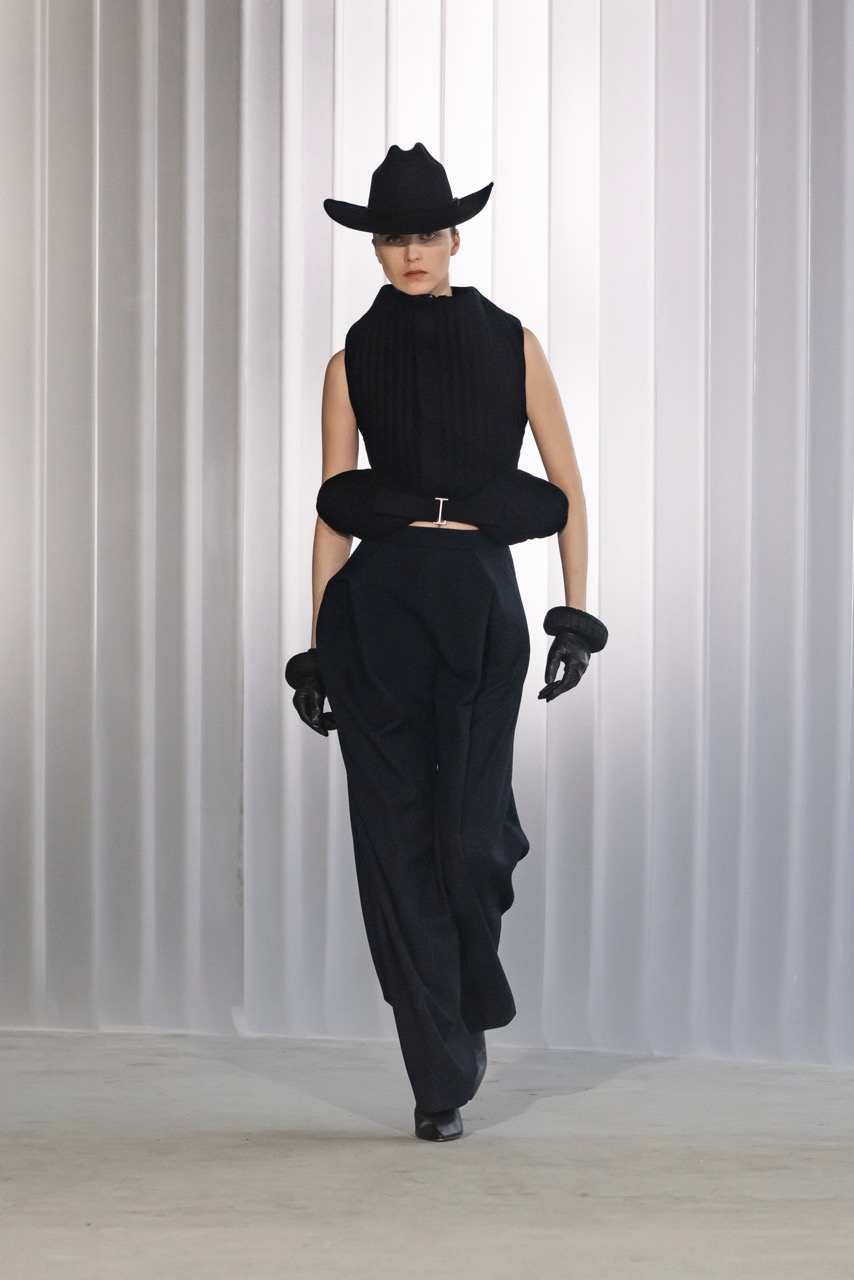
The collection opens with a very traditional look: a black suit jacket, red lipstick, smoky eyes, slicked-back wet hair. If you were thinking, “Huh?” we were, too. It’s not ugly or badly tailored at all, it’s just… surprisingly conventional! The next few looks stay in known territory: tailoring, cowboy hats, variations on officewear. But look four, thankfully, confirms Lantink’s weirdness is still there. The collar of the shirt wraps around the head (turning the opening into a scuba hood, or something like an office balaclava). The pinstripe suit is subtly covered with same-fabric jarretels… office look but secretly sexy. Lantink is back to disrupting clothes, albeit politely this time.

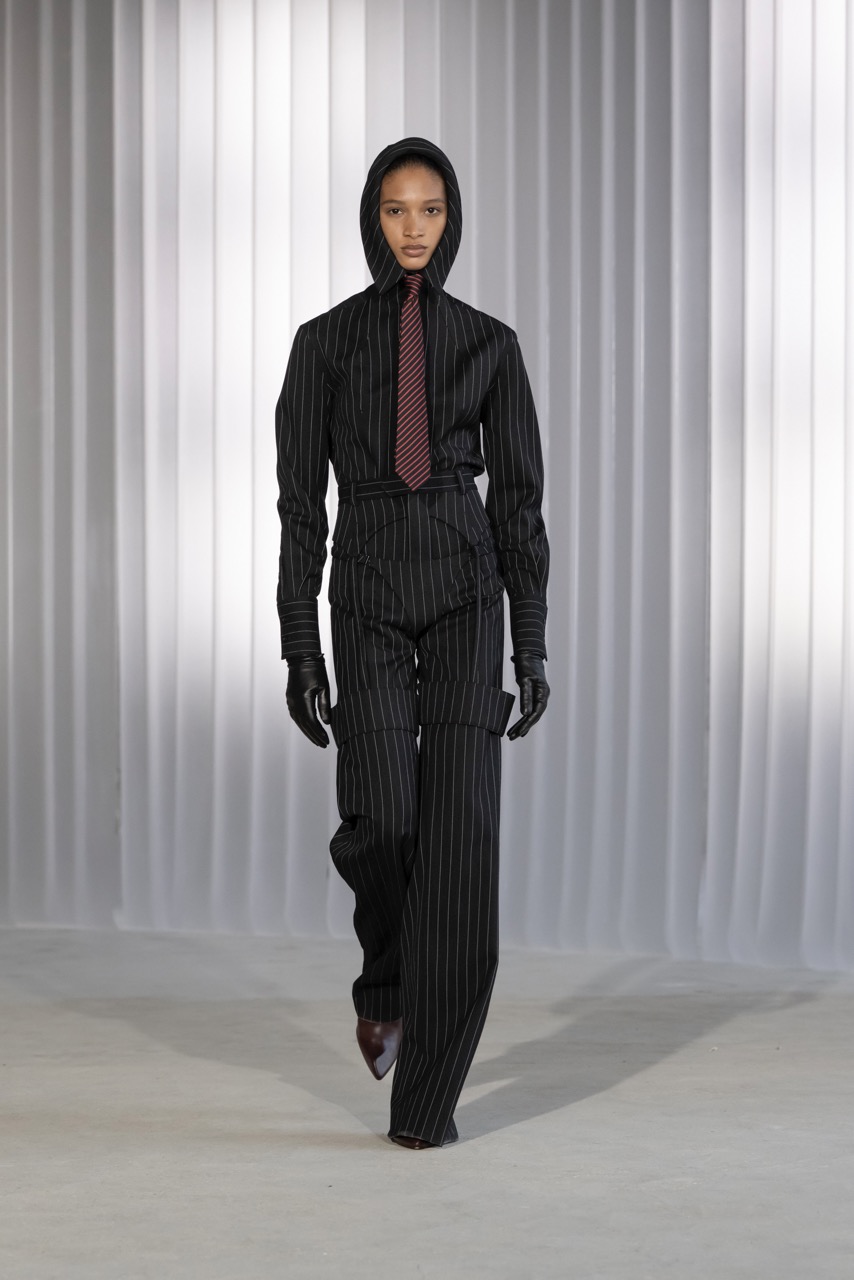
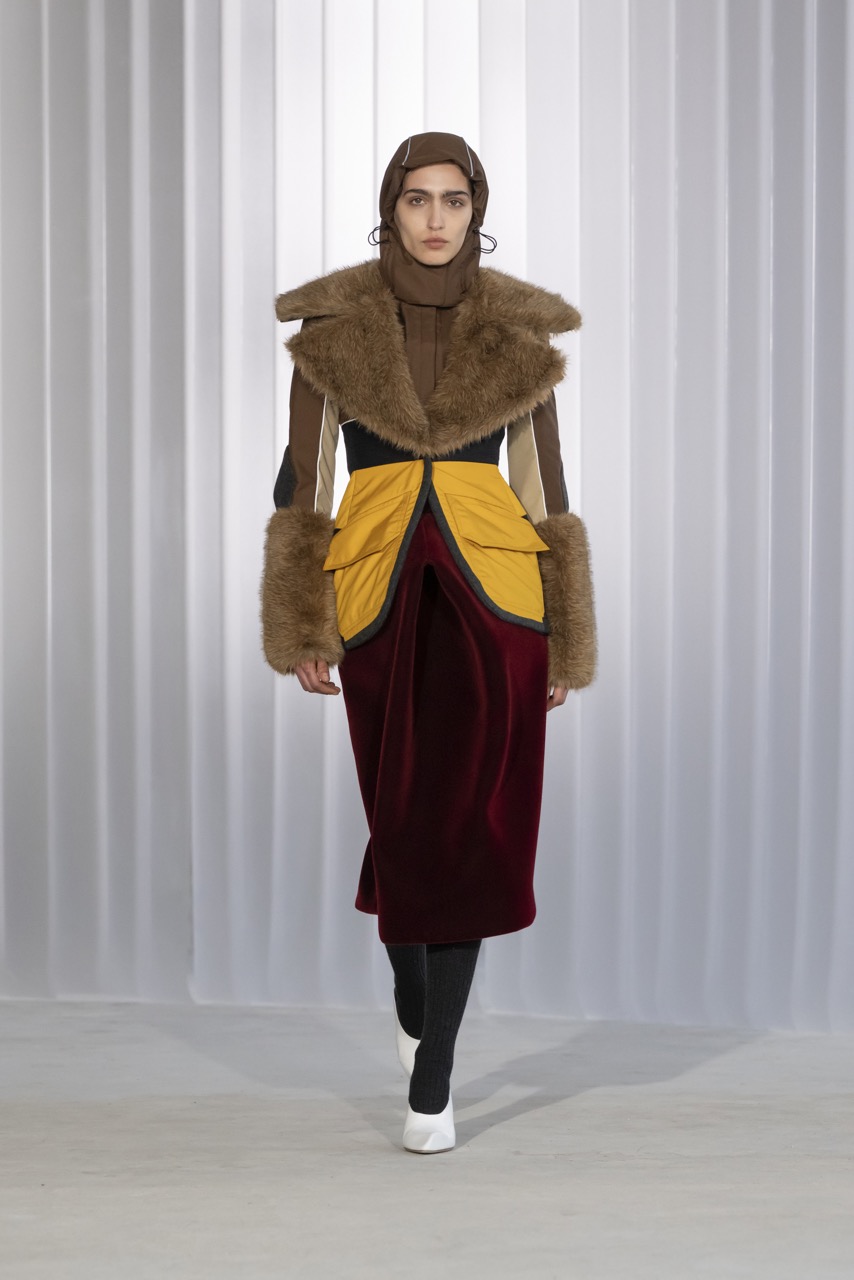
When visiting JPG’s archives, Lantink discovered that several key pieces seemed to be missing. Turns out that Jean Paul Gaultier himself was never precious about his past designs—much like Lantink, he frequently cut them apart, dismantling them only to give them new lives. Hoods appear in technical fabrics, and suit jackets are stitched together from different materials, echoing Lantink’s early practice of combining multiple designer garments into single Frankenstein-like pieces.
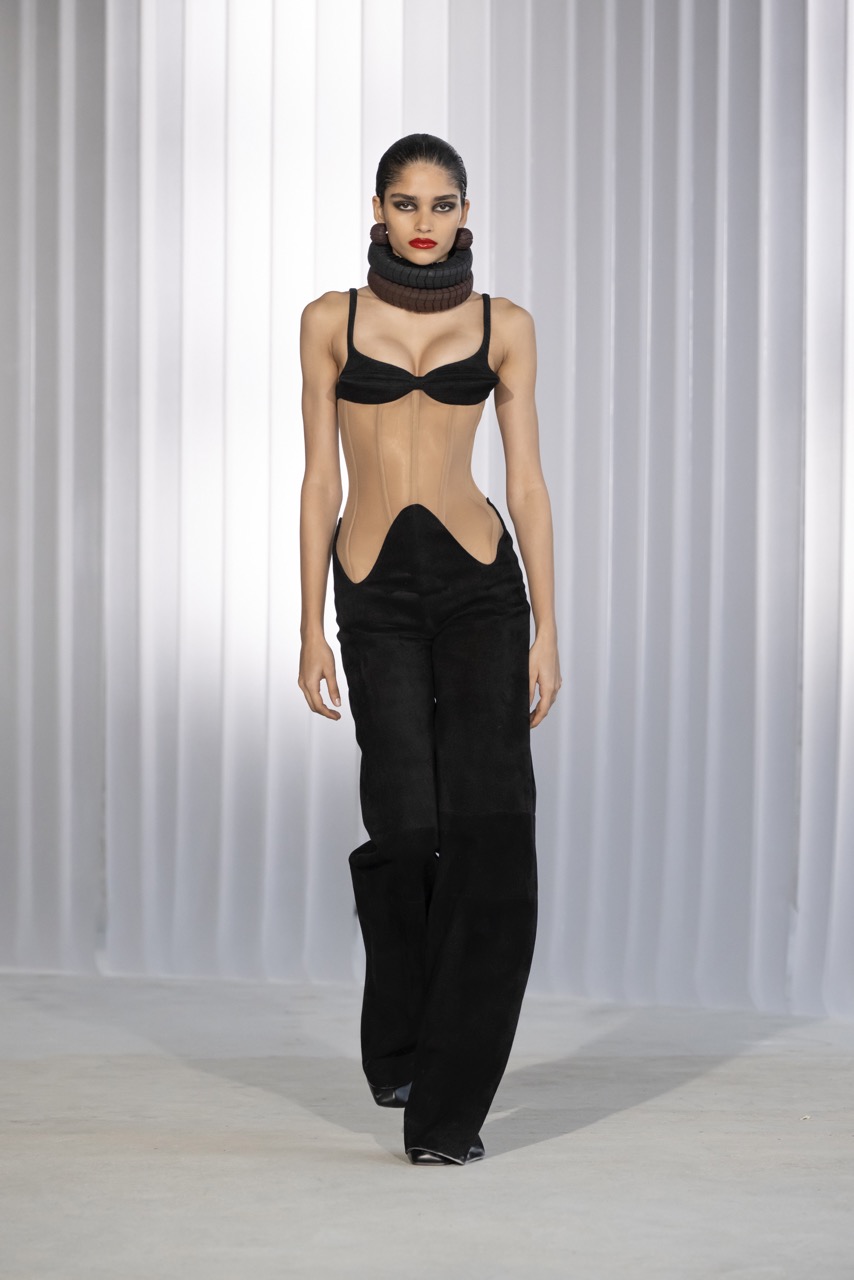
The two designers apparently spend their lunch breaks talking about film, which may explain why the officewear quickly takes a space-age turn. White PVC overtakes the blazers, pinstripes are replaced by increasingly sculptural forms with each passage. The lineage isn’t entirely surprising. After all, Gaultier began his career under Pierre Cardin, fashion’s great futurist, who treated the body less as something to dress than something to reshape. Rubber tire-like accessories loop around the neck, recalling earlier Gaultier excursions into science fiction and his long-standing interest in jewelry shaped by African adornment traditions.

Then, finally, Lantink arrives in full form: bodysuits are printed with a doll’s anatomy, making the model stride the runway like a life-size Barbie with moving joints. These body suits are technically nude, but somehow quite neutral and unperverse. A triangular bra frame suggests underwear while revealing the doll’s body beneath (smooth, plastic, nipple-less). It’s a curious image, especially after last season’s notorious “birthday suit,” a hairy body print worn by a female model that included a visible penis. The look sparked accusations of mockery in some corners, though the outrage made me question who was actually the one hating women – the one who presented a hairy woman as a fashion symbol, or the ones being horrified by seeing a woman with hair or a penis. Does that make sense? Anyways… I digress.
Last season’s criticism about the penis body suit seems to have trickled into Lantink’s mind, as showing a vulva apparently wasn’t on the agenda. This time, the body is noticeably more sanitised: the blank anatomy of a Barbie crotch rather than the messy realities of flesh and hair. Both the female doll and the male version (would we have to call it an action figure if he’s muscular?) wear jarretelles, while white gloves resembling Mickey Mouse hands complete the toy illusion.
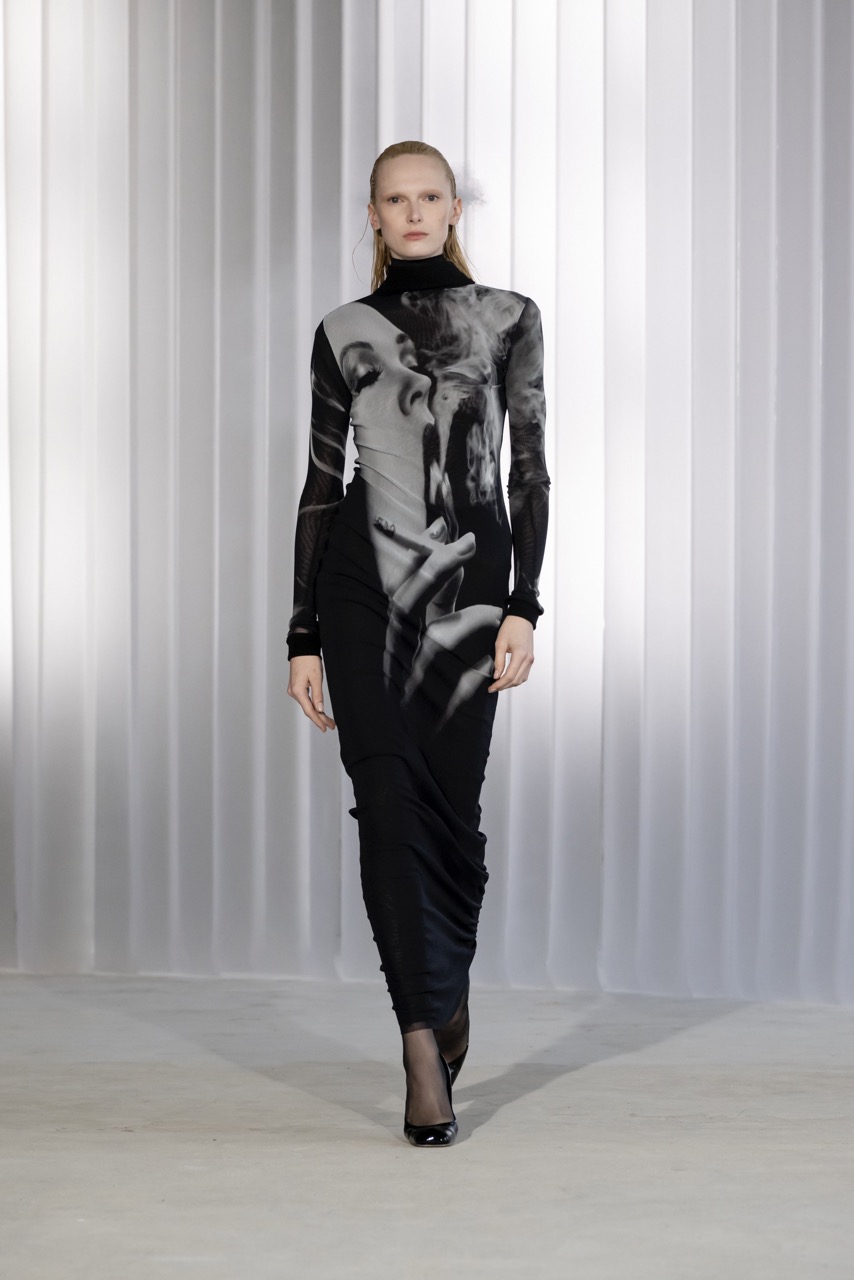
One moment that felt slightly out of place was Alex Consani walking the runway in a mesh top printed with the face of Marlene Dietrich, smoke drifting from the back of her head. It feels like it was intended as a viral moment, though it didn’t quite explode the way one might expect. It’s unclear where the reference went (the shownotes explain it was the base of the collection) but it got lost somewhere along the way. Still, one is rarely upset to see Alex Consani on a runway.
The looks that perhaps showcased Duran’s newfound chicness are the corseted silhouettes. They revisit the sliced trousers from last season, now more rounded in their cut-outs, and pointed breasts. From the front, they look quite normal; from the side, they become tastefully abject. In his debut, there was already a not-so-subtle hint in this direction, featuring giant orange oblong breasts jolting outward—referencing Madonna’s JPG cone bra, but almost in a bimbo-y, fake-tits way. This time, the gesture feels considered, less like a joke, more aligned with the kind of elegance JPG is known for.
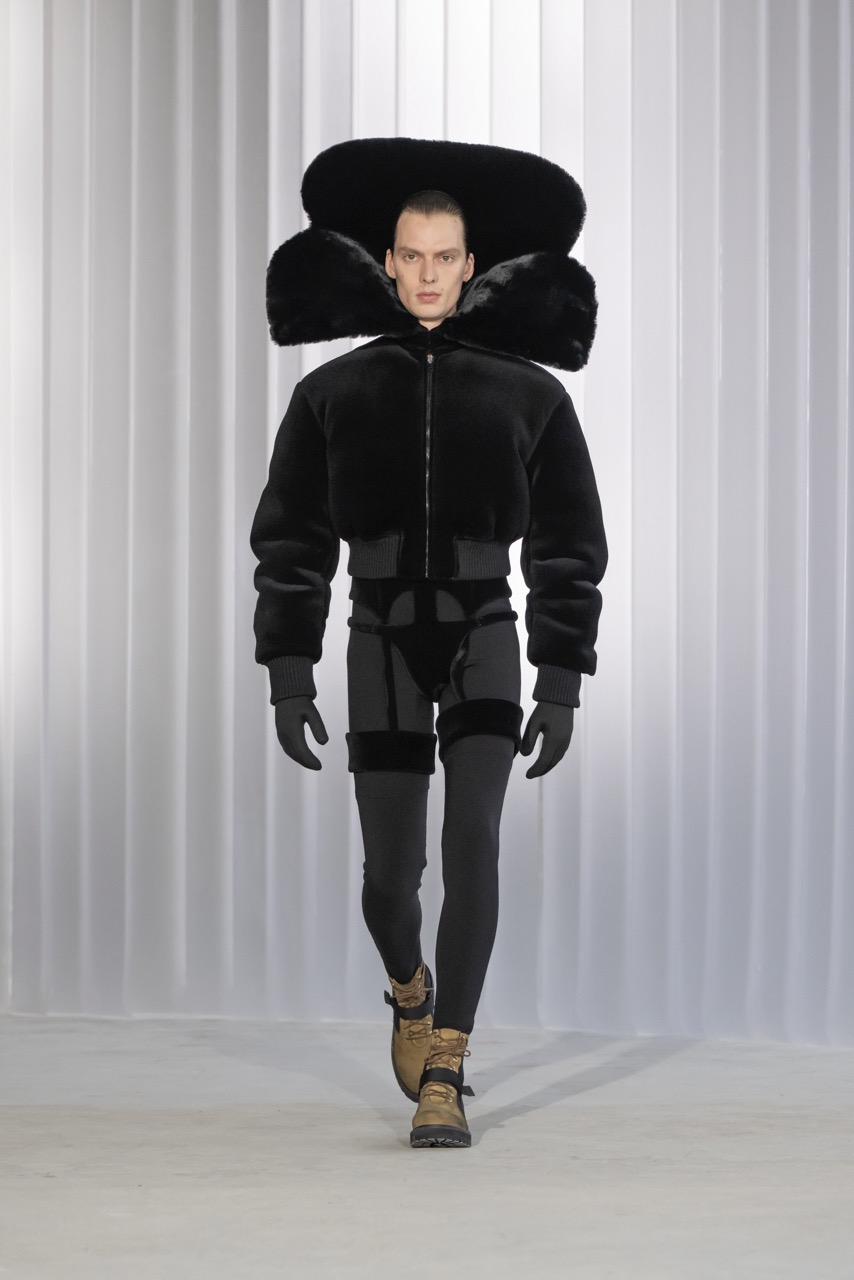
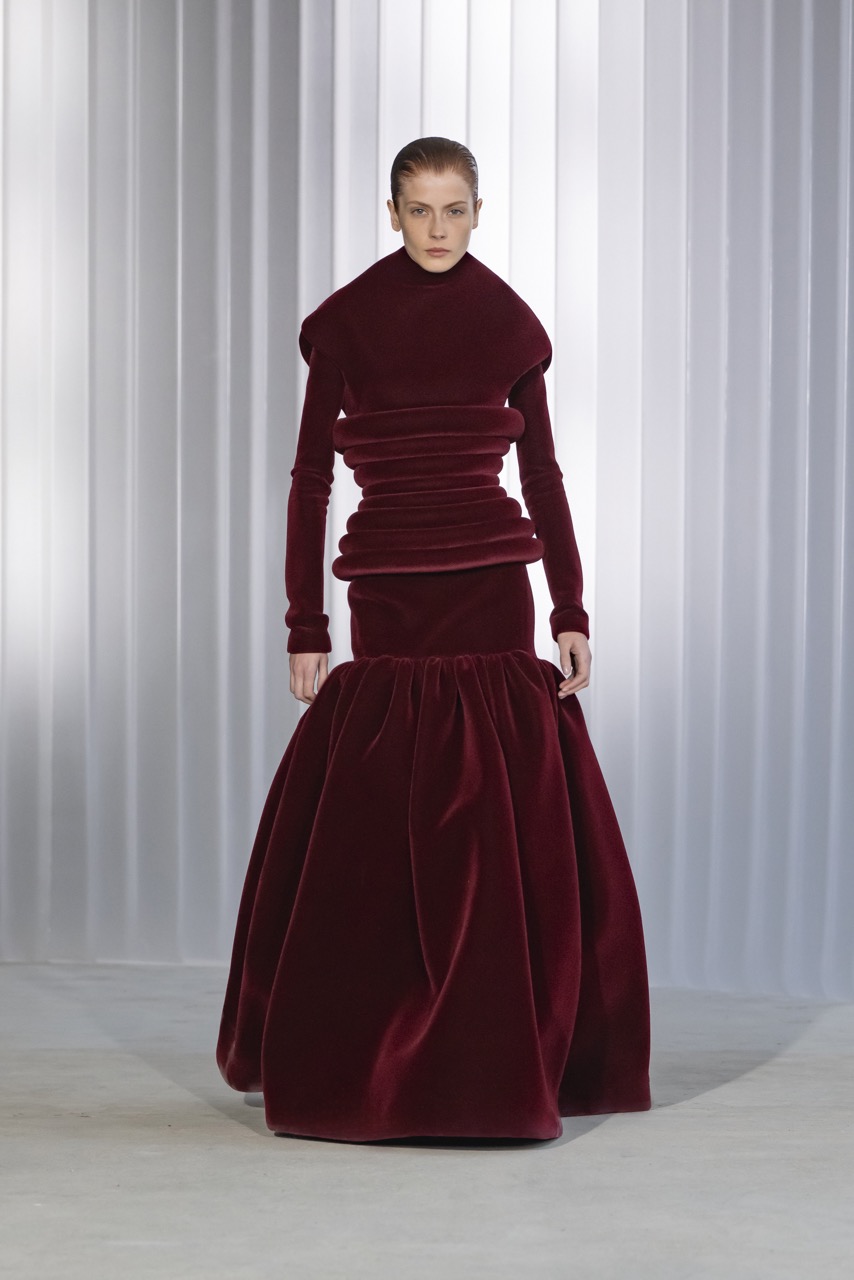
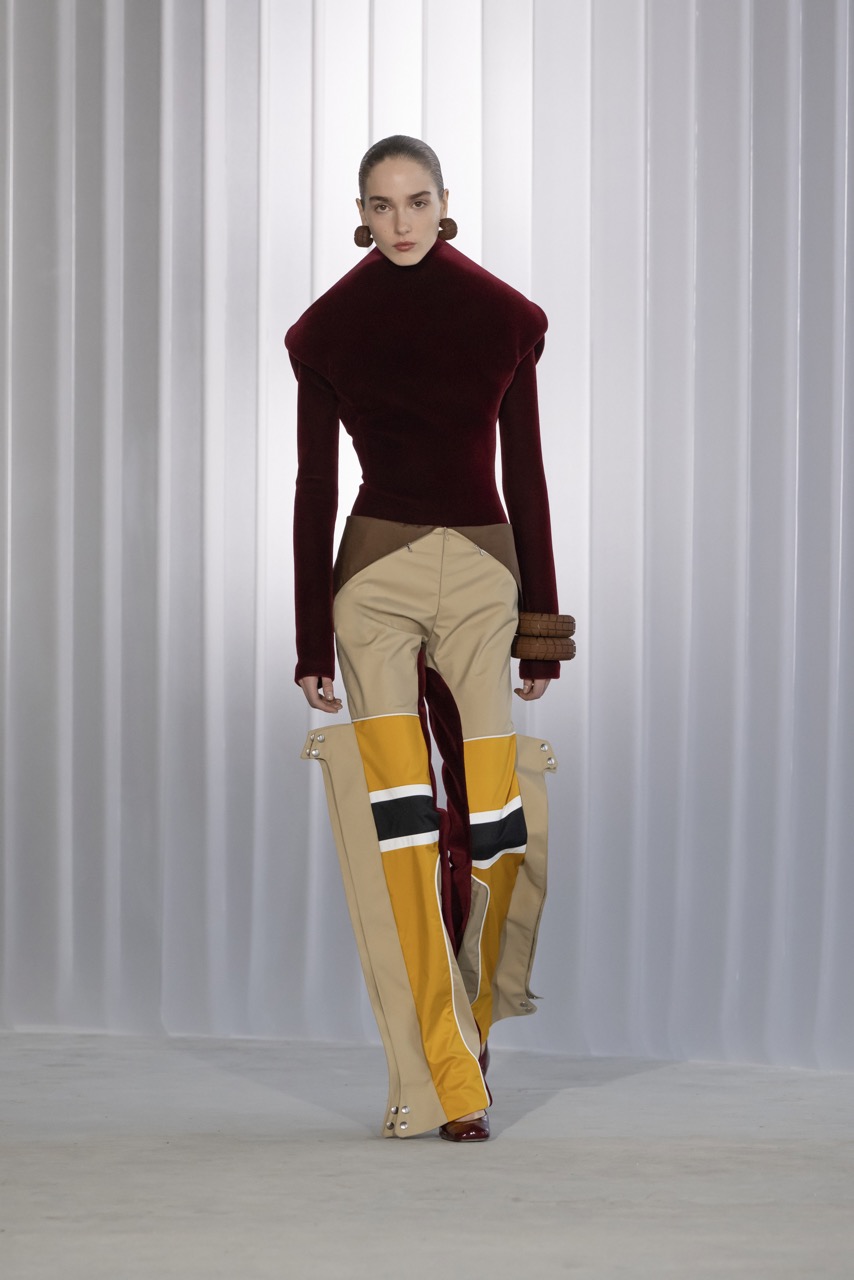
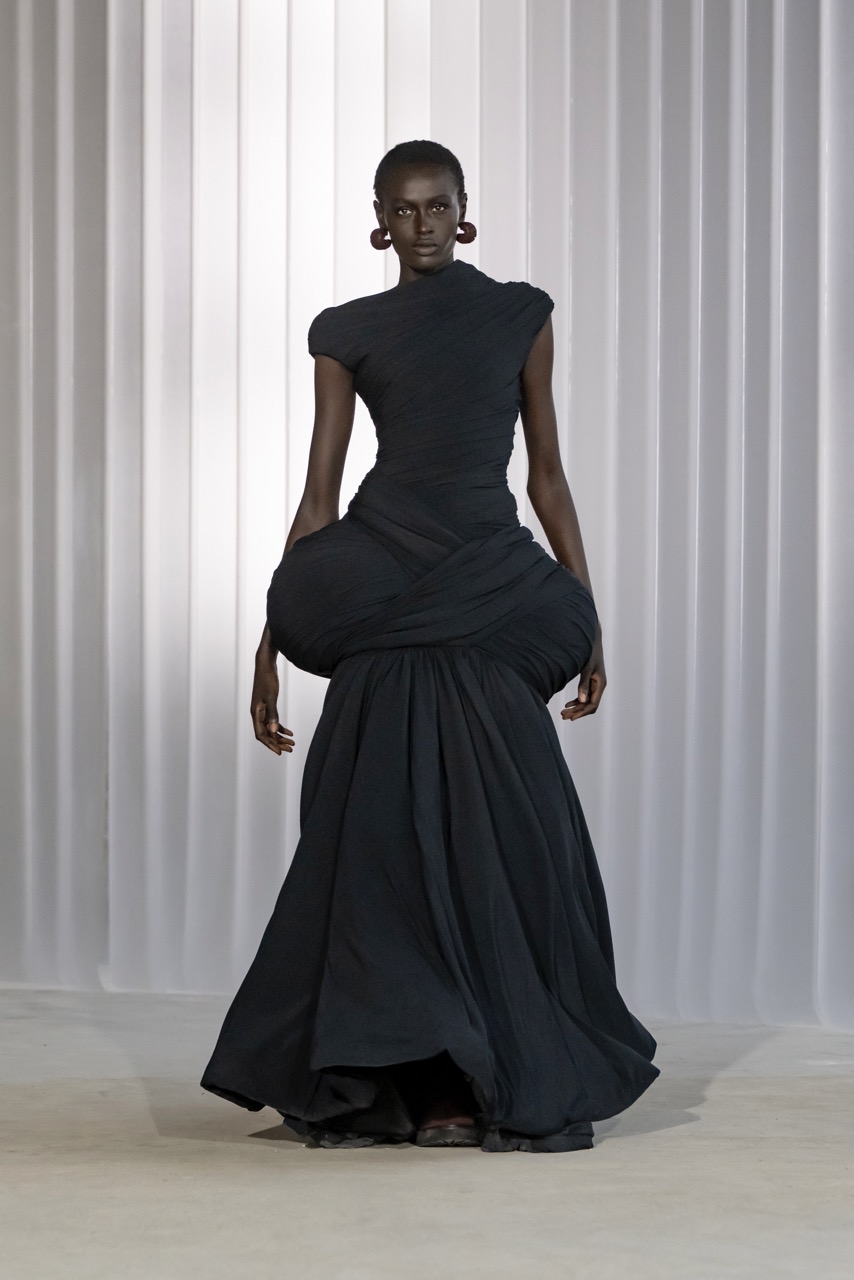
The show closes with sculptural black looks that resemble office-core space cowboys, before shifting into dramatic gowns. Red velvet silhouettes explode outward in exaggerated shapes, followed by more traditionally draped evening dresses.
The characters that he’s created in this collection could be detectives, cowboys, ravers, steampunk figures, or bankers on Fifth Avenue in perfectly tailored coats – but all of it suggests that Duran has listened. The enfant terrible is still there, but tempered his provocation, now proves he’s also capable to make something striking, while still poking at gender codes and fashion’s rigid rules. Can everyone be happy now??
Words by Pykel van Latum
Images courtesy of the brand