On hypnotic performances, leaning into the sound, and finding one’s sacred space
For Sina XX, the dance floor is a sanctuary. But what does it mean to have a sacred place? Physical boundaries could safely contain it, symbols might embellish its walls. But after all, that space can also be so intimately personal, one where giving and adorning oneself to it becomes the ultimate act of devotion. Sina XX leans into this (non-)place, where the materiality of it doesn’t matter as much as what is shared within, when the body and mind fuse into one. The Paris-based DJ and producer crafts sounds rooted in his SWANA origins, with pulsating all-encompassing techno rhythms forming a symbiotic mix that transforms into aches made manifest through movement. And, underground dance culture is taken seriously: through collaborative parties, Sina XX has been a key player in the construction and consideration of the Parisian nightlife scene. If creativity flourishes in the club, freedom is exhaled through a tight-knit community, where safety and belonging are nurtured.
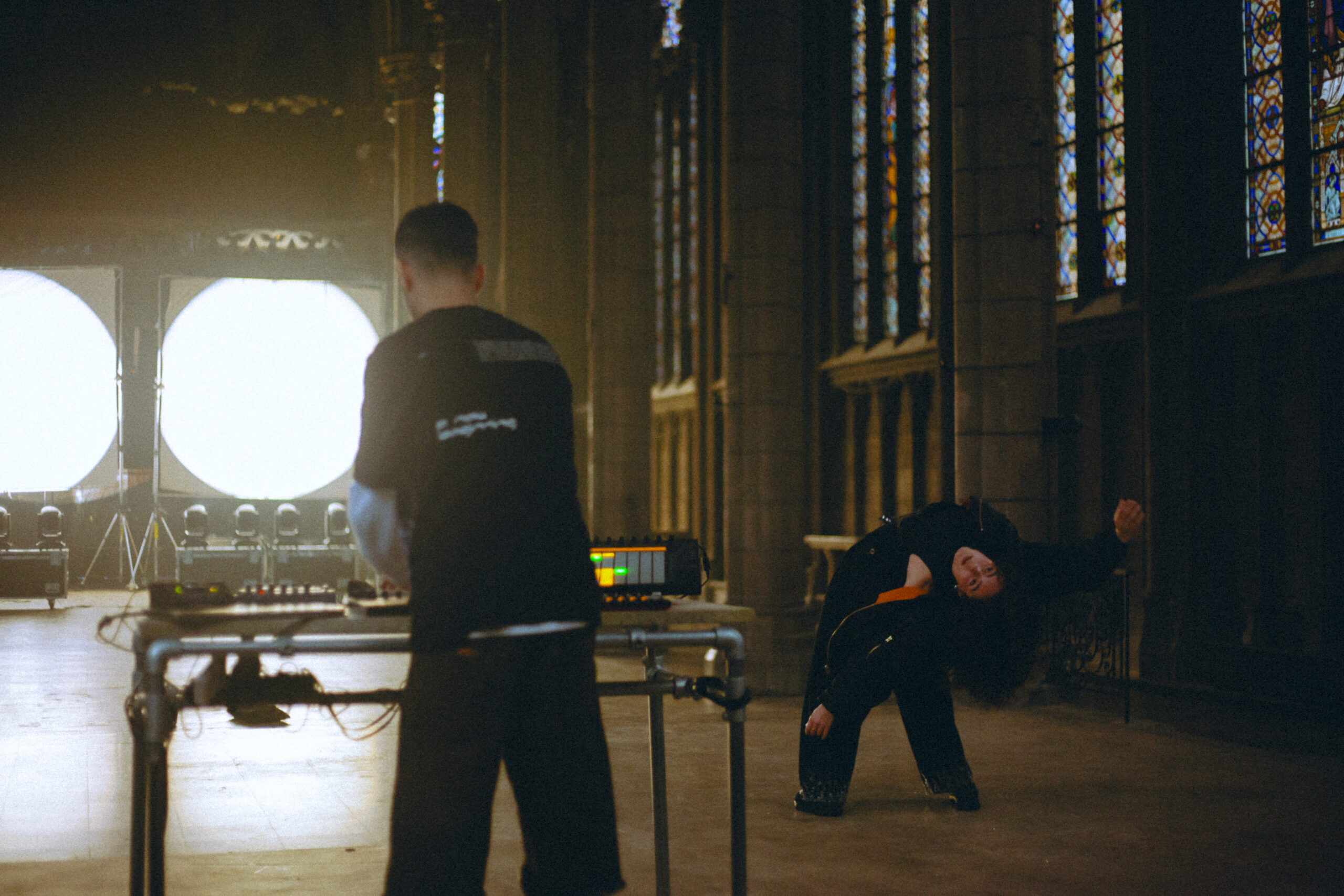
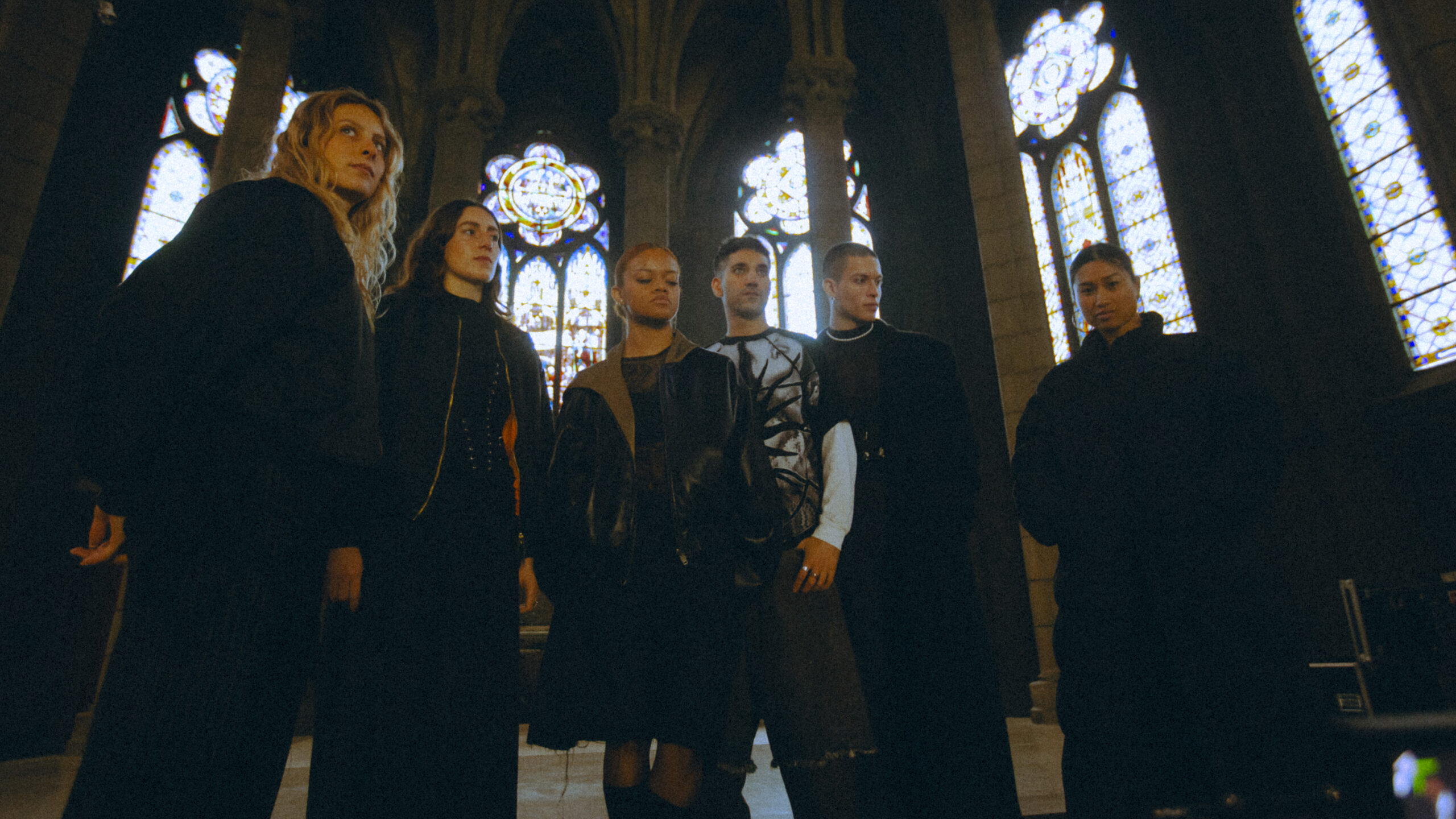
These ideas materialise in the title track from his second album, ‘Let There Be Light,’ where this vision unfolds within the hollow, grand hall of a Chapel. Through a hypnotic performance, each dancer matches a distinct musical stem, fully leaning into the sonic architecture, allowing movement to naturally mirror sound.
We caught up with Sina XX to discuss the meaning and strength of letting oneself loose to dance and music, the visual world and meaning behind his projects, and the importance of taking action.
Hi Sina! How are you doing today? Where do these questions find you?
I literally just watched the final (final) edits of the three performances I filmed from my album Let There Be Light, and I’m in awe of our collaborative work. I’m feeling lowkey emotional.
Ah, and we can’t wait to see what you’ve all done! You’ve been active in the electronic music scene for a few years now, what’s your origin story with the field?
I’ve been involved in underground dance culture since I was a teen. For years, I was that guy at the front row, who told all his friends they shouldn’t miss this show. I had a blog, worked for promoters and artists on social media, was a resident for several collectives, until I founded my own, subtyl. As a collective, subtyl helped shape Paris nightlife by being one of the first collectives doing parties outside of traditional club spaces. Every event explored a theme and brought together dancers, performers, architects, designers and vjs. It was all rooted in the idea that the club is a creative space, where communities and creators come together.
The label started in 2018 with a compilation named after our short term club, ‘Megadestock’. It featured some of France’s essential techno voices like Marcelus or Quelza. It was important for me to create a platform for the local scene – because for years it felt like Berlin was the center of attention for techno. Deep down, I knew that the future of our culture was broader and would come from a real respect for local scenes. A few years down the road, that vision is now becoming the norm and I’m really proud to see that change.
You draw inspiration from traditional SWANA instruments and vocals for – what are some formative artists influencing your sound that have got nothing to do with electronic music?
Freddie Mercury and David Bowie have been some of my biggest inspirations. I love how both of them constantly reinvented themselves while being true to their personality and dream. Freddie’s collaboration with Montserrat Caballé was a testament to creativity and collaboration. Bowie kept pushing British rock culture until his very last record. Which is very interesting because in electronic music, people tend to favor the “niche”, which means sticking to a very specific aesthetic. I like to blend things together in unexpected ways. Both Mercury and Bowie showed me it’s possible.
You released the official video for Let There Be Light, can you tell us more about the track coming together?
My second album Let There Be Light came out around a month ago. On tour, I turn it into a live experience where I’m surrounded with performers. For the video, I was inspired by Michel Gondry’s work—one of my favorite french directors. In his music videos, the sound is often represented by something concrete—like the dancers’ movement in the video for Daft Punk.
When approaching the performers, I shared this idea: I wanted something tribal yet symbiotic to the sound. Instead of giving them the full track, I gave each one a different stem, a part of the sound, to interpret. The video’s intention was to capture the energy of those performances with a format between a music video and a live take.
The music video is set in this gorgeously illuminated church. What about this location spoke to you or made sense for the song?
The three videos are shot in a former Chapel, in Paris. To me, the club is a sacred space. A place of freedom, togetherness and expression. So having the chance to perform the tracks in a church made complete sense. I was finishing my album when I first visited the chapel, and it resonated deeply with the record’s main theme—faith and the transformative power of dancefloors. I guess it’s my way of saying that the club is my church.
The dancers offer such a hypnotic performance, too. What would you say is your own approach to movement?
I listen to music both with my body and mind. And I’ve always gone out clubbing for dancing. Translating a sound into a movement and connecting with my body through music are definitely linked to my artistic practice.
And that’s what I love about nightlife and clubs as opposed to most other musical experiences like commercial clubs or concerts—underground club culture is dance culture. It opens up that space where everyone is welcome to experience their bodies in the most unhinged way. No fear, no judgment, just raw energy and self expression. When we look at videos from the 90s people were really going off. I feel that energy is really coming back. Techno is becoming dance culture again.
You’ve collaborated with Snake Hebi and other super talented artists, how do you approach collaborative projects as opposed to more individualised producing sessions? Do you prefer them, or do you usually work alone? If so, why?
I’ve always seen the club as a creative laboratory more than just a venue. It breaks down the distance you find in traditional art spaces—people aren’t just watching, they’re participating.
Over the years I’ve collaborated with artists across disciplines, from architect Adrian Sierra Garcia to visual artist Mohamed Bourouissa, or recently with my friend and musician Antigone. It has definitely shaped how I think. For instance, I have translated concepts from engineering or painting into music and it was a game changer for me.
Music – especially dance music – was never meant to be made alone. It’s a collective language. Collaboration helps you step out of ego and tune into something bigger: collective energy.
Speaking of collective energy, I love how you’ve decided that the proceeds of your upcoming EP ‘Azadi’ are going to the people in Iran, turning the initial message of celebration into one of solidarity. You’ve said your music acts as a message of resilience, unity, and hope. I was wondering how these values can be translated in electronic music?
Last year, Glitter55 invited me to play a B2B set with Nesa. The proceeds were given to SOS Méditérranée, an NGO that has saved over 40,000 lives in the Mediterranean. With the money, they were able to buy a new boat and double their rescue mission.
This is concrete, this is real. This is music, underground culture and people coming together for a cause and getting real results. Our action matters, our voices too.
So sick. You’ve spoken about the symbiosis of the coldness of machines and the warming up happening on the dancefloor, the mechanical and the human. You’ve spoken about the importance of fostering a safe space during your events. What does that look like for you, and how do you actively contribute to that?
Safety on a dancefloor has a lot to do with education. Often it means having the conversation nobody wants to have—on abuse of all shapes, for instance. It’s always a difficult balance because we work in a ‘party environment’. Everybody wants to keep things fun and playful, so it takes courage to actually speak out when things are going the wrong way.
Every time I enter a party I can sense the energy of the people behind it. Are they doing it for money? Fame? Or are they serving their community? In my collective and parties, creating a safe space for artists and our community to come together is the priority. It has a lot to do with accepting to grow organically. Not over promoting—which I believe usually attracts people with wrong intentions. But also always have teams which are trained for those situations; having an awareness team is a minimum but also training everyone you work with.
You’ve been organising events for some time now. How would you describe the dance floor turning into a ‘tribal ritual’ to someone who’s never been to your shows?
There is a fountain or energy in each and every one of us as soon as we shut down our rational brain. A certain oneness between your mind and body, between yourself and the environment. At some point, people stop performing and start being. The mind quiets down, and something more instinctive takes over. That’s where the magic is.
The cover of Azadi was done by Raana Dehghan, and Let There Be Light by Chris Shubat. Why did these representations speak to you?
Both were existing work. The relationship with Chris dates back to my first album and his artworks actually have had a significant impact on me creatively. For instance, I can’t remember whether the albums’ titles came first or his artworks. It’s like, in my mind, they are bound together.
I’m drawn to painters because their work holds depth and silence. That space for interpretation is something I try to bring into music too. I find this interesting at the time when we are bombarded with motion visuals online. Paintings are an invitation to sit down and move from within.
Let’s finish off on a question for the future. What’s something you wish to accomplish with your work?
My music has already accomplished what I wanted: to express myself in the most authentic way and to feel free. I hope it does the same to you.