Rewire Festival is a sanctum of experimental music
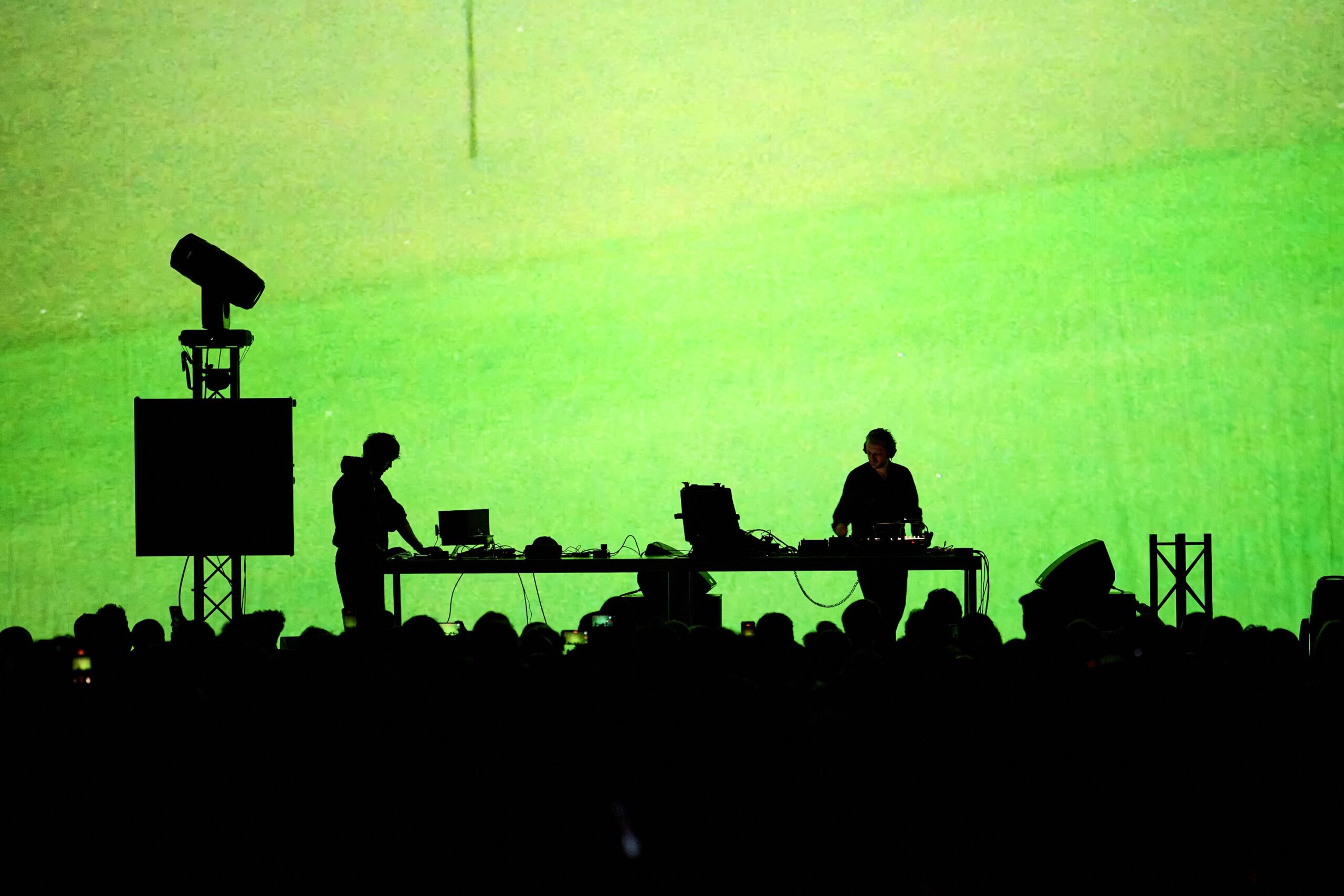
Photo by Parcifal Werkman
Not to be dramatic, but emerging from Rewire Festival feels like I’ve been taken in for maintenance — tuned, recalibrated, oils changed, tires renewed. A deep rinse cycle for the senses. Hearing sharpened, attention span restored, emotional bandwidth for music stretched back to a capacity I forgot I had. For its 15th edition, Rewire once again peels The Hague out of its usual administrative stiffness and recasts it as an elastic, breathing playground where sound seeps out of venues and settles into pavements, stairwells, conversations, bloodstreams.
What continues to set Rewire apart is its stubborn, obsessive intentionality behind every corner of its programming. The curation carries that now well-mythologised reputation of being prophetic, catching sonic trends right as they’re about to crest — and occasionally giving them a quiet push forward. The audience reflects that same sensitivity: nerds and lovers who will stand perfectly still for forty minutes because a sub-bass frequency is doing something. This crowd will happily parse microscopic shifts in texture, and then just as readily surrender to something abrasive and body-rattling. It’s also a humbling experience: your carefully cultivated niche taste suddenly has a queue wrapped around the block. Turns out you’re not alone. Worse even, some people got there earlier. But there is a reassurance in it as well, as you see your taste materialise into a node in a wider, living circuitry. Venues, from churches to galleries to theatres, scatter across the city like pressure points of that shared body, and moving between them feels like a badly planned pilgrimage route. You fall into step with strangers, disperse and regroup with an insect-like coordination.
This is by no means a comprehensive recap of what went down, and more a scratching of the surface of what we made it to, set against the much larger backdrop of what we didn’t. Because Rewire teaches you, quickly, that control is a losing game. What follows is compiled from field notes (field recordings, if we may) assembled from crumpled paper (Rewire does have a way of making you want to go analogue, until you realise you can’t read your own handwriting), cryptic Notes app entries typed at 2am, and videos that looked really good in the moment but, on rewatch, somehow got a thousand time shakier.
There are, of course, gravitational centres. The Copenhagen it-duo Smerz, as magnetic as ever. James K, continuing her steady ascent with a performance that felt entirely otherworldly. Joanne Robertson, the Dean Blunt collaborator and committed reverb maximalist, letting her voice slither through a vast 16th-century church. But in addition, these were our favourites.
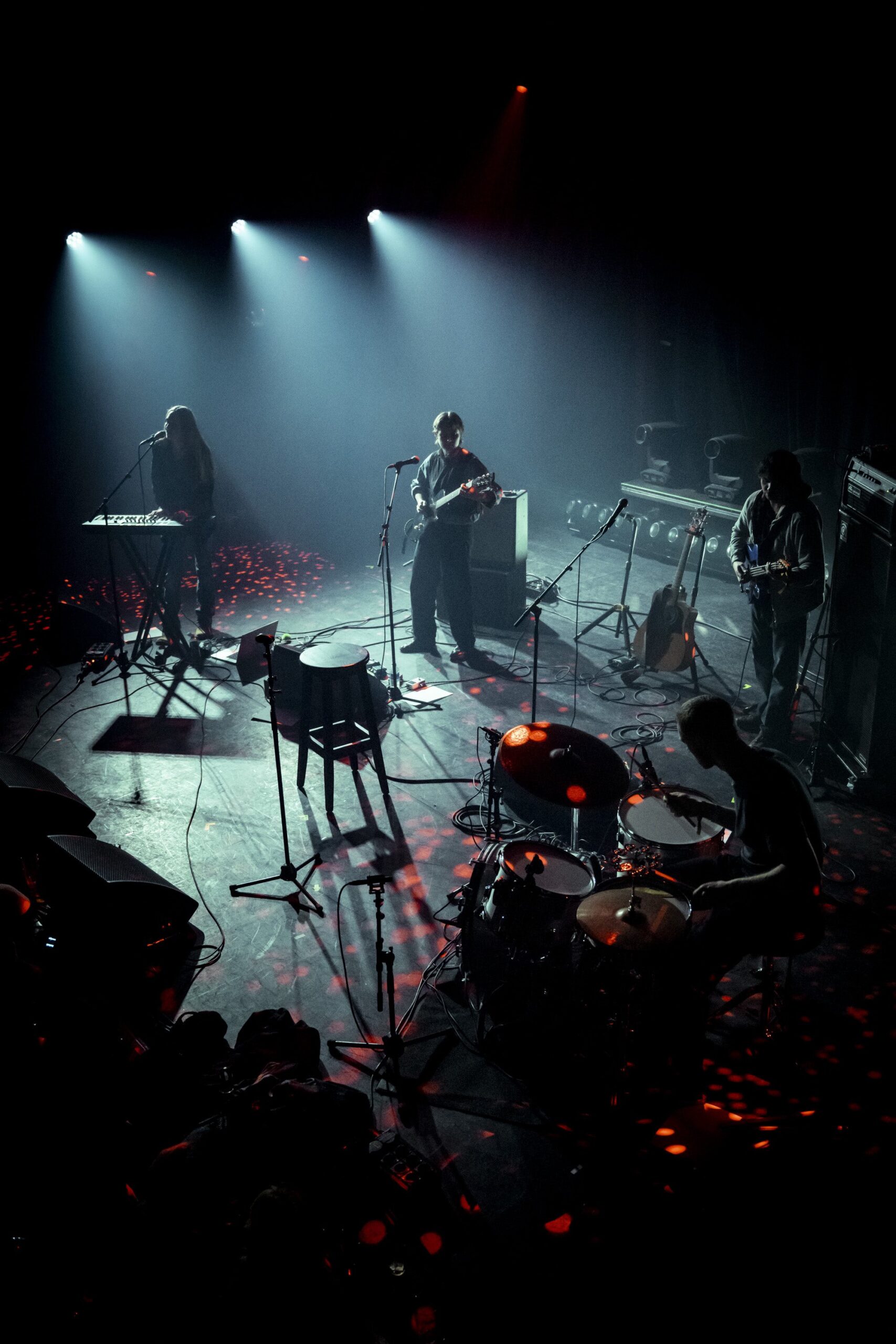
Photo by Charlotte van der Gaag
Fine CPH-ified country and made it hot again
(Also: the most swag live recorder appearance ever)
Starting strong on Friday evening, Copenhagen’s alt-royalty Fine delivered something far more folk-leaning than expected. In hindsight, the horse on the ‘I could’ single cover might have been a hint. What unfolded live was a way more sun-washed, almost dust-tinted reworking of her discography, gently brushing up against Americana and country traditions without ever fully settling there. A standout moment came with a live recorder gliding through Days Incomplete, adding a fragile, almost pastoral texture, alongside a preview of an unreleased track, Give In, which might just make country cool again (or, generally, for the first time).
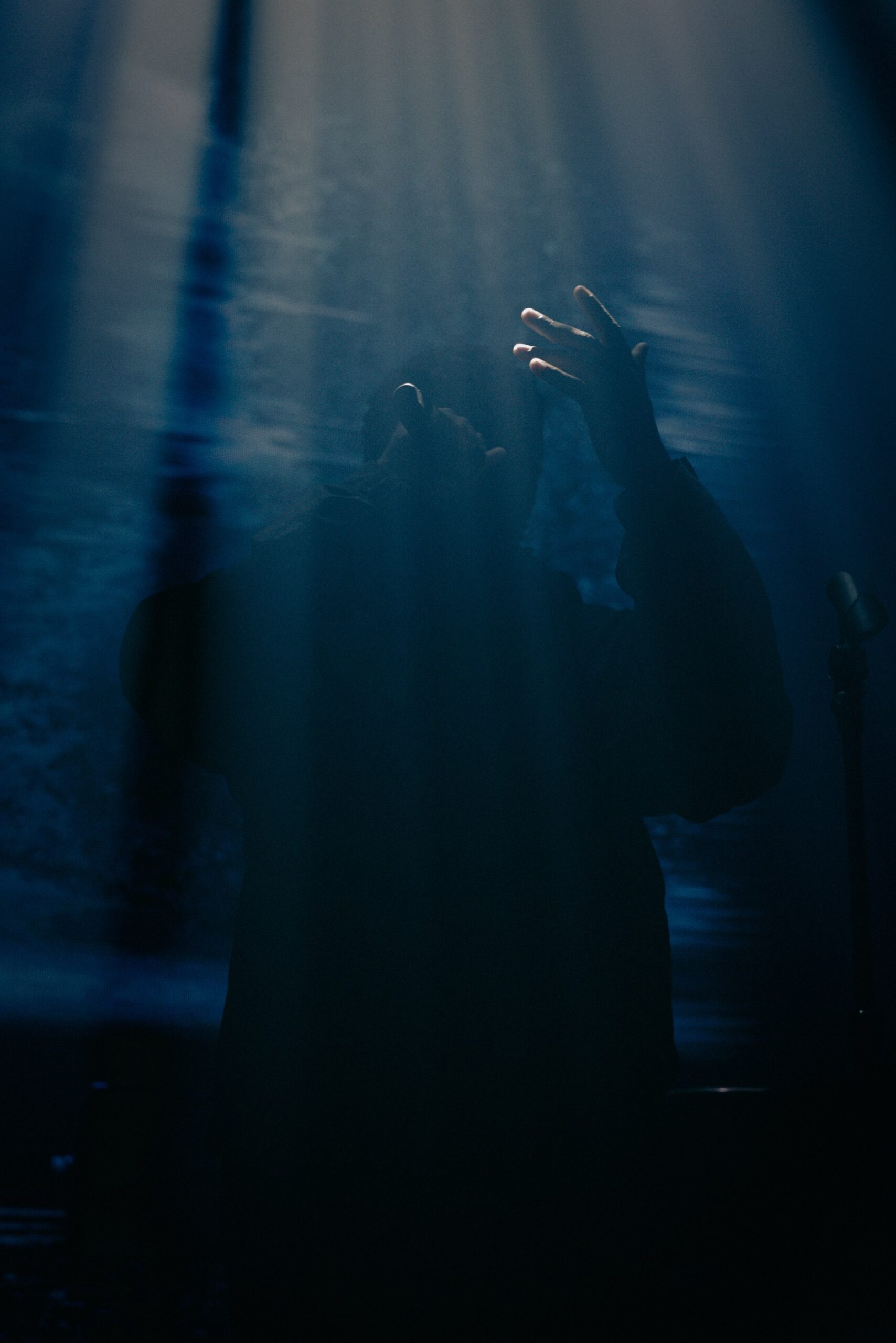
Photo by Laura van der Spek
Nazar beautifully mumble-rapped over distorted, woozy Kuduro
Misreading a friend’s text and walking into the wrong room has never been so rewarding, as Nazar’s performance immediately got me entirely transfixed. With a layer of melancholia and sensitivity, Nazar mumbled and harmoniously sang through an unlikely juxtaposition of sounds, both jagged and sensual. Broken beat distorted Angolan Kuduro, carrying the sharpness and refractive power of broken glass shards while also simultaneously being a balm for the soul.
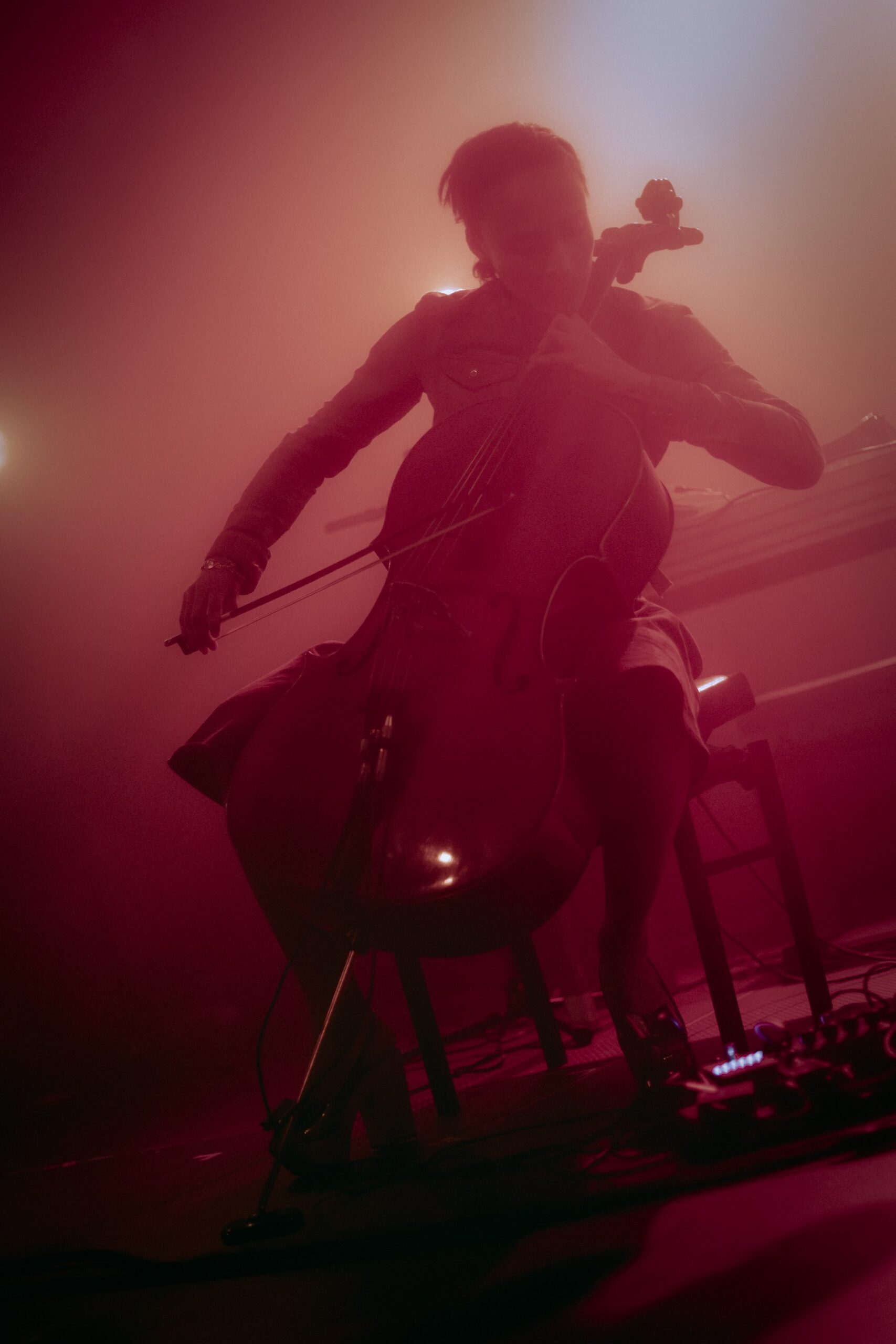
Photo by Laura van der Spek
From keys to cello, multi-instrumentalist Ouri was just showing off
(Featuring gracully tuning the loop station with her heel. Iconic.)
On the last day of the festival, the energy felt softer and more reflective, and Ouri perfectly tapped into that air of a mild collective comedown. Moving fluidly between instruments, she built a set that felt intensely close and intimate, her saccharine voice dispersing across the room like steam. Beneath it ran off-kilter electronic undercurrents, subtly destabilising the warmth, gently winking and tugging the listener in different directions. It felt like sinking into a warm bath that occasionally shifts temperature just when you slightly get too hot or too cold.
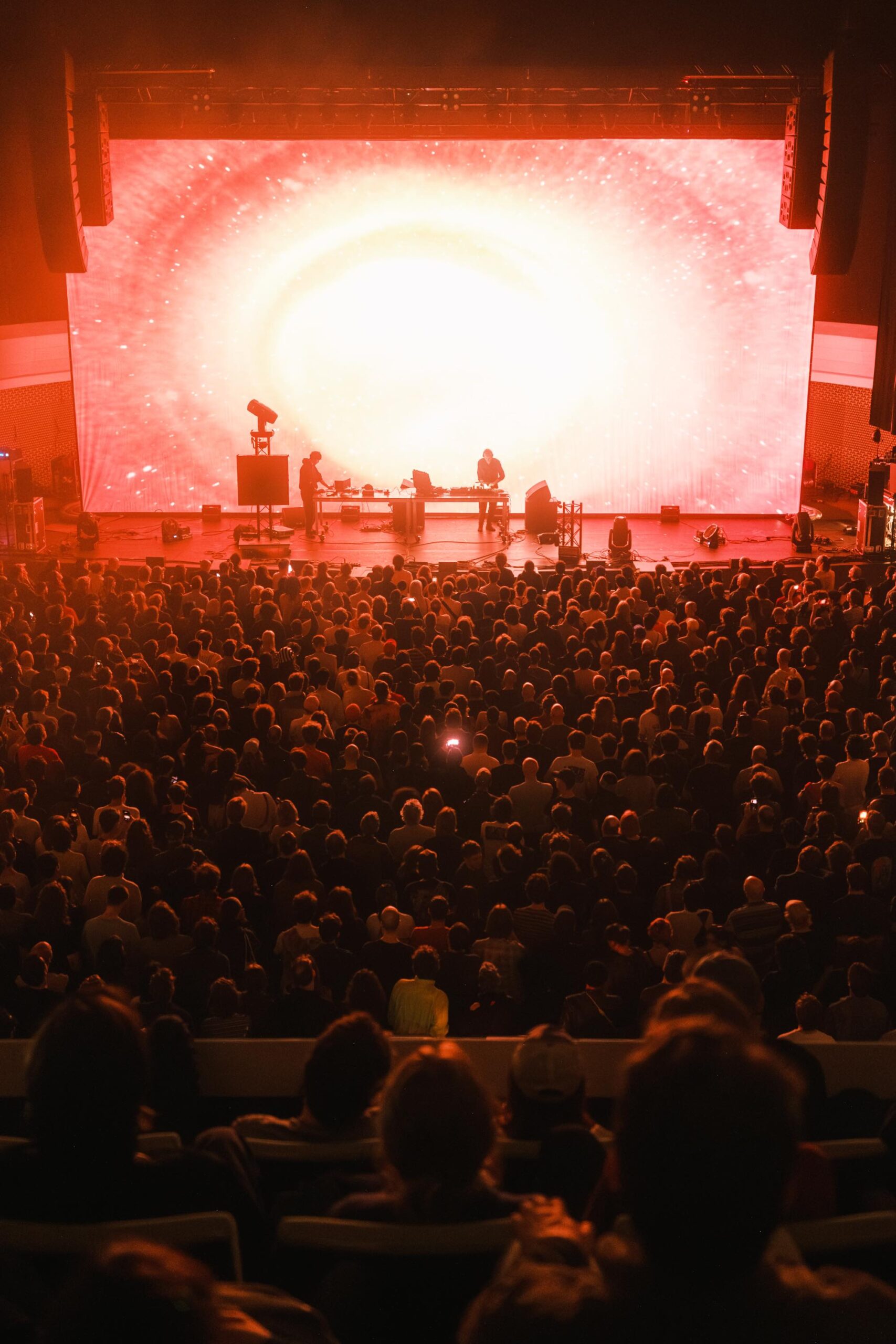
Photo by Alex Heuvink
Onoethrix Point Never took us on a trip
Oneohtrix Point Never rendered his latest album, Tranquilizer, through an audiovisual odyssey that made very little sense, in the best possible way. There was a faint familiarity threaded through it, traces of his discography surfacing briefly before being pulled apart and played through a much stranger lens. In collaboration with visual artist Freeka Tet, the performance breathed as one organism, sound and image locked in a constant, uneasy dialogue. The visuals swung between warped digital debris and something like a natural history museum on steroids — lightning bolts splintering, textures collapsing, what felt like David Attenborough footage dragged through a shredder and reassembled in full glitch.
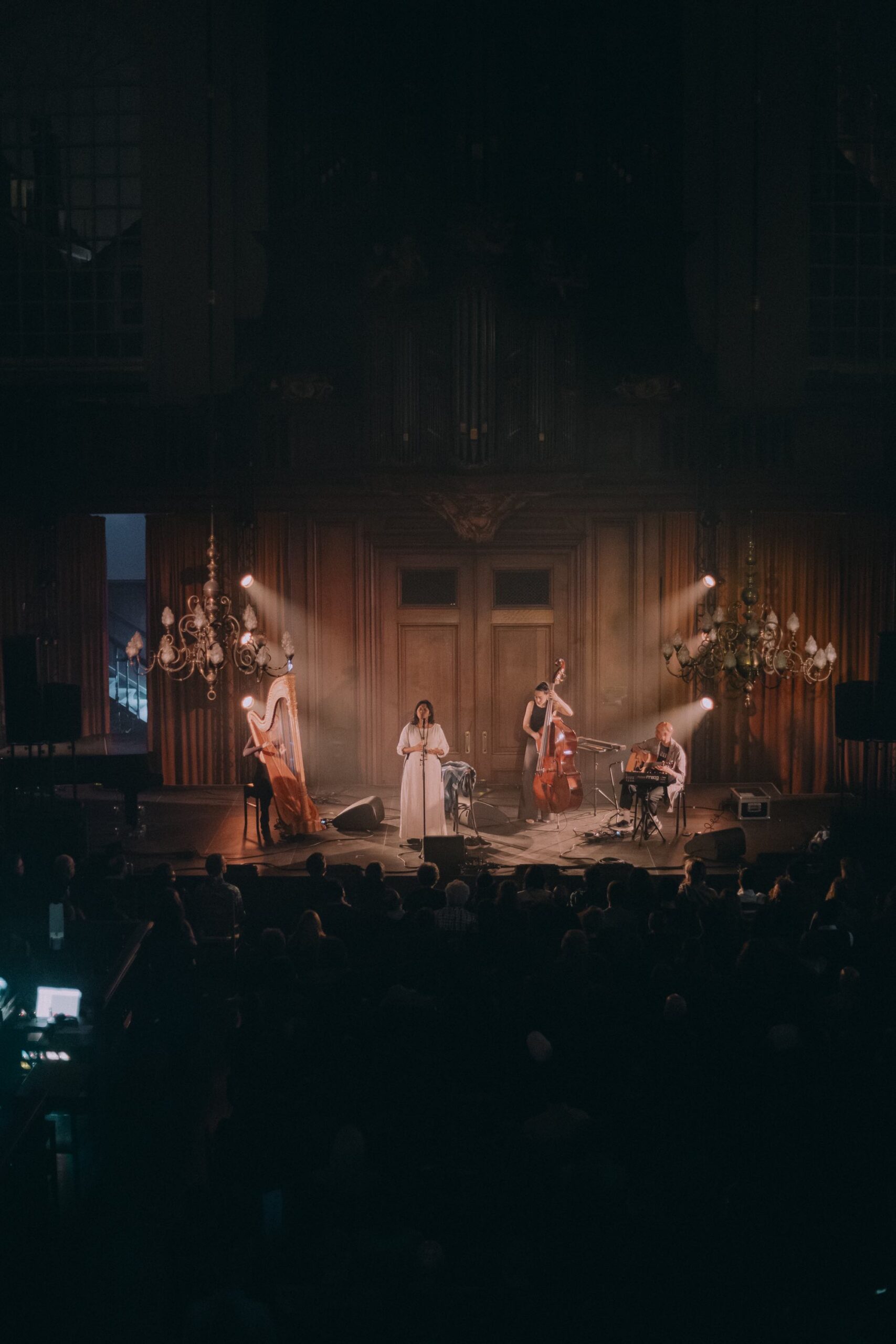
Photo by Laura van der Spek
ganavya was purely transcendental
Playing a midnight show, ganavya’s set was pure magic. I felt like being thrown into a folk fairy tale told just before sleep. Drawing from the Hindu tradition of harikatha, she threads storytelling into music with a modern clarity that never dilutes its roots, instead propelling them into new forms. Her thunderous voice glides across South Asian devotional music and spiritual jazz in perfect coherence. Between songs, she speaks softly, offering fragments of personal and historical meanings of the musical pieces, making the whole space feel like someone’s living room past curfew. She holds her audience and her instrumentalists — in moments like when a harpist falters slightly, and she meets them with immediate warmth and grace. The whole show was one incredibly moving and sacred experience to witness.
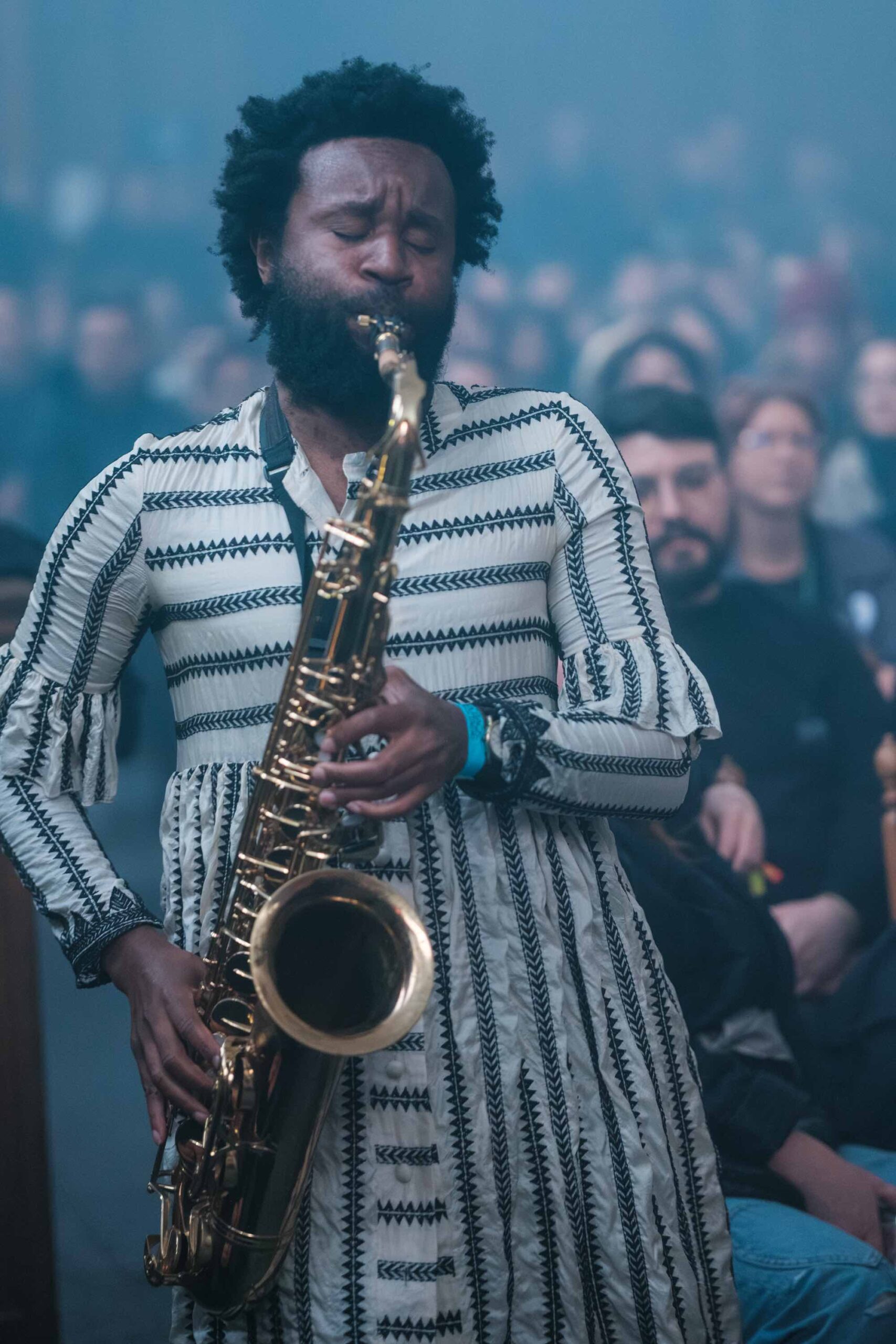
Photo by Alex Heuvink
Honourable mentions also go to Purelink and Malibu, turning performance halls into giant bedrooms where one can safely float in their sweet slumber, JJJJJerome Ellis for stepping behind an organ at Lutherse Kerk and then nearly blowing up the ornate windows with their piercing, mournful voice, and Sijya’s haunting yet comforting electronic manipulations. For the night program, some dream b2bs — Deena Abdelwahed and Kode9, JASSS and Batu — unlocked a typically inaccessible reserve of energy we didn’t expect to have.
As idyllic as the weekend feels, Rewire doesn’t pretend the political disappears for four days in a utopian promise. Instead, it gets metabolised slightly differently, through a shared pocket where imagining alternatives doesn’t feel naïve or indulgent. Through its extensive Context Programme and a constant encouragement of dialogue, sound becomes both method and material for thinking otherwise, and passion starts to feel infrastructural rather than ornamental.
Generally, Rewire asks very little of you — comfortable shoes, a functional social battery, and the willingness to brace against the occasional North Sea wind — but it does insist that you become permeable. Plans dissolve quickly here anyway. And in a cultural landscape and attention economy where we’ve been overexposed to everything, overwhelmed by sheer saturation of all possible human and machine creative outputs, Rewire manages something rare: it restores the possibility of being surprised and experience something genuinely, fundamentally new.
Words by Evita Shrestha