The recipe for addictive electronic music: playfulness, experimentation, and ADHD.
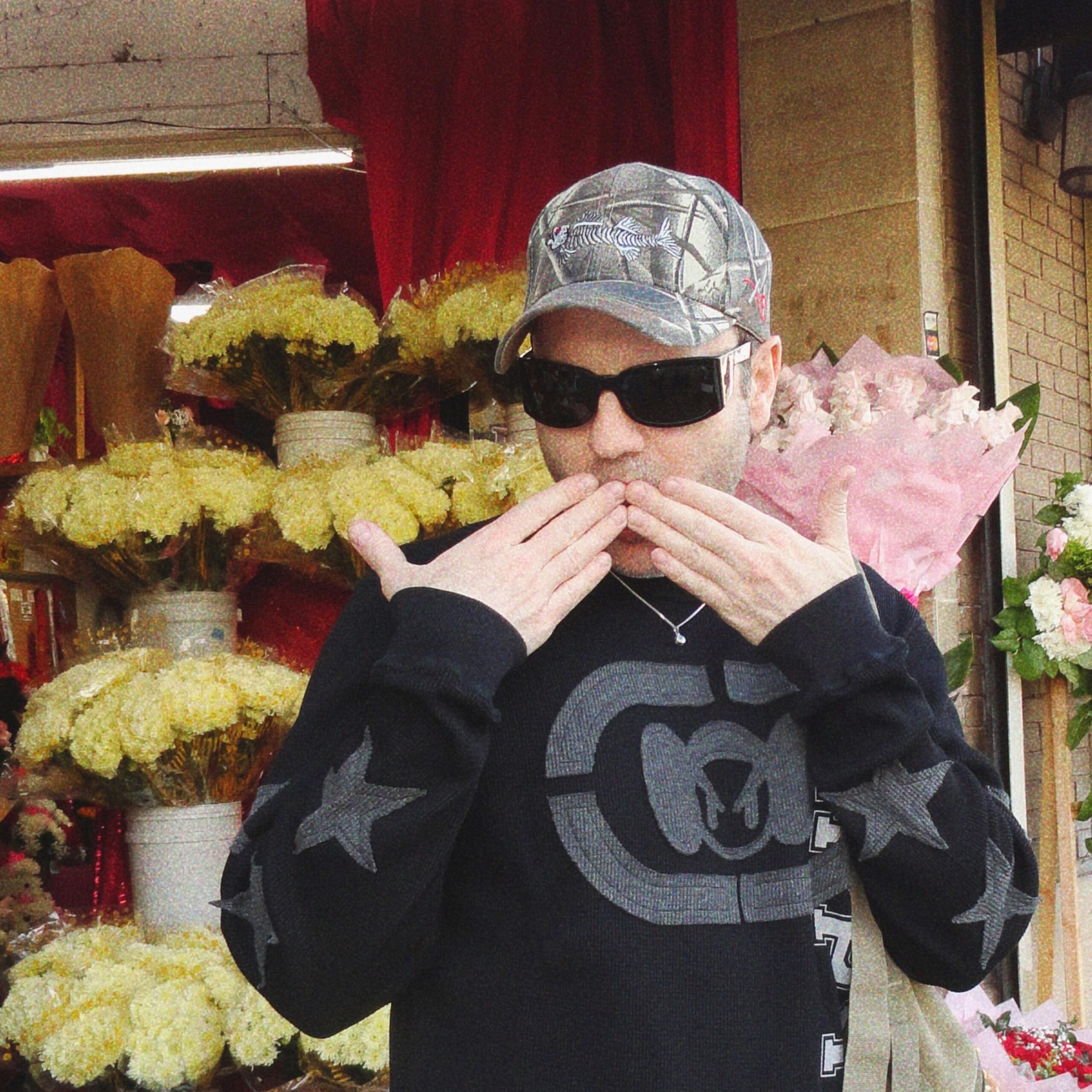
Lately, otherworldly bass brushing against the edges of experimental club music has been loudly pulsing through Jensen Interceptor‘s electrifying sound. But that’s just part of it. Born Mikey Melas, the Australian-born, Berlin-based DJ and producer likes to lean into experimentation and playfulness — above all. With sonic textures spanning his Greek and Cypriot roots, a deep-rooted love for French Touch, Kenji Kawai’s score for ‘Ghost in the Shell,’ and everything and nothing in between, Jensen wholeheartedly ‘jumps into the unknown.’ References are limitless, after all.
Growing up in Sydney, Jensen basked under the guidance of 2000s DJ collective Bang Gang, where genre blending at the club was finally fully embraced (unlike various other Aussie venues at the time). Some might say ‘never meet your idols,’ but Jensen got the flip side of the coin, and after getting to know the crew, he released Light Year’s debut record — a project he co-founded with his best friend — under their label. Bring in 2025, and his LP INTERCEPTION receives similar treatment with the admired Peder Mannerfelt.
Catching up with Jensen before his set at Lentekabinet, we got to learn more about his passion for VSTs, how a techno track might (dangerously or satisfyingly) veer off into trap territory, and pinch-me moment of having Aphex Twin play one of your tracks during his Coachella set.
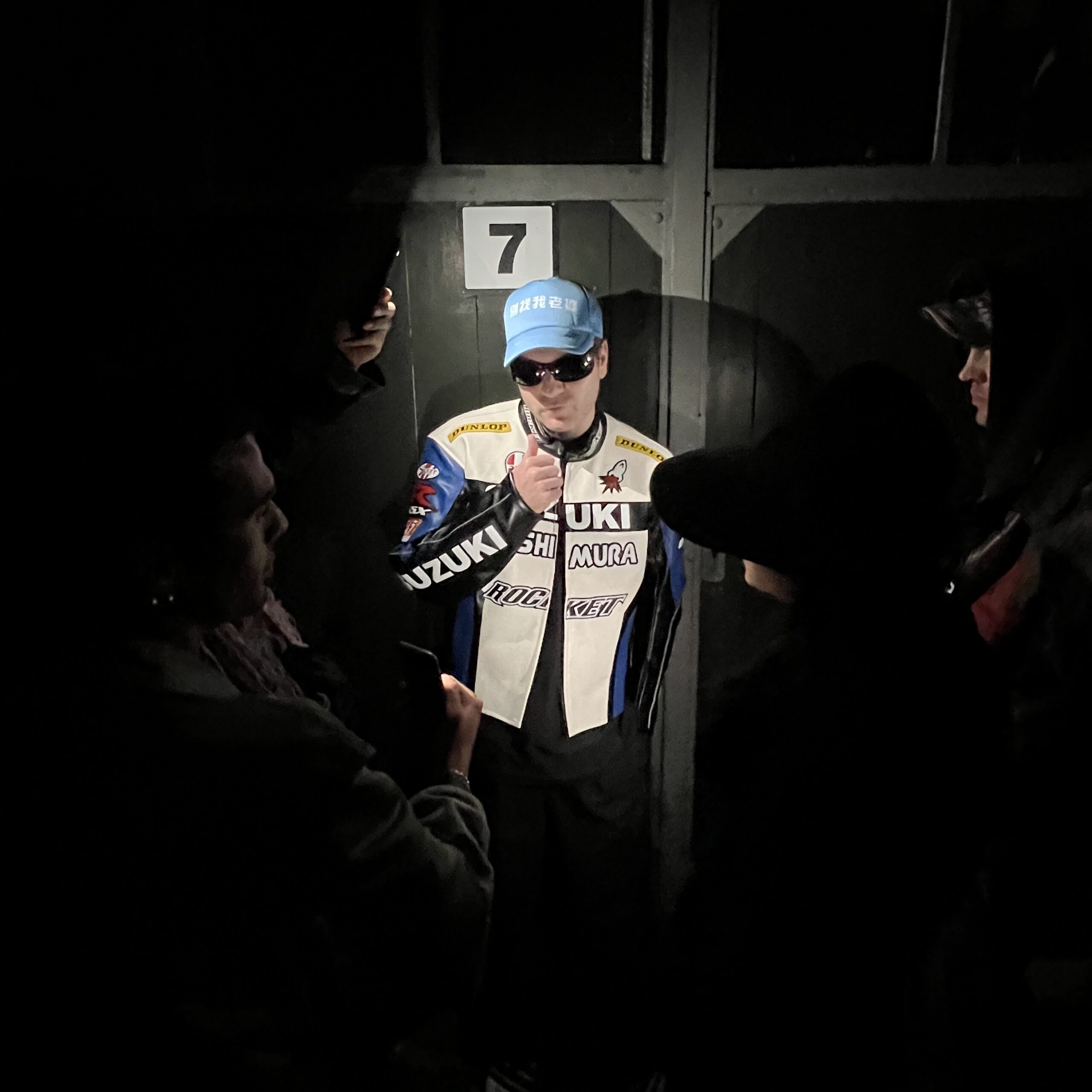
Hey Mikey! With Lentekabinet approaching, how are you feeling?
I’m super excited, I only have a few shows this summer, so I’m very happy at the opportunity to share a new live set with the crowd at Lentekabinet.
You just released your EP ‘Synthetic Seduction,’ which has two quite wild, rhythmic yet fast-paced club-ready tracks. Can you tell us more about them?
Thank you, I’m super happy with the EP. There are two tracks, one called Alien Body Positivity and the other is Flux Entrance. To me, they both explore two sides of the same organism. One is raw, percussive, and confrontational, the other is hypnotic, psychedelic, and fluid. Both are rooted in otherworldly bass and the experimental edges of club music, which is an area of dance music I’ve been happily orbiting the last year or so. The EP was released on Peder Mannerfelt’s label, which makes it even more special, as I’ve been a fan of his for quite some time now.
Wow, and released under someone you’ve been admiring! Very cool. I read that you now mostly work with samples and less with heavier physical hardware like synths. Tell us more about your production process!
Yes, sadly when I moved to Europe from Australia I wasn’t able to bring my synths with me, but that actually led me to rediscover my love for sampling, as well as develop a bit of a new obsession with VSTs [Virtual Studio Technology]. My process is pretty simple, to be honest, I tend to start with drums first, and then try to write and fit sounds that can coexist and/or compliment the groove that’s on the page. Occasionally, I’ll go into a session with a preconceived idea, but that’s quite rare. I find most of my success comes from just jumping into the unknown and discovering things by chance while digging through sounds. When it comes to VSTs, I’m a big fan of everything Arturia is doing, especially their pigments plugin, you can find and create some really futuristic sounding stuff.
With the variety of genres feeding into your productions, and whilst making it all feel so cohesive, how would you explain what makes your work so distinctly yours?
Day to day, I listen to and consume so much different music, so I really try to let all of those influences filter into my production. It doesn’t always work out, sometimes I’ll start making a techno track that somehow flips into a trap song halfway through, and it sounds absolutely terrible, but for me, it’s all part of the fun of experimenting and trying different things out. Sometimes it works, and you come up with something really fab, other times, it’s a complete mess that will thankfully never see the light of day. I think constantly staying playful and experimenting in this way, combined with my ADHD, is probably how and why my sound has developed the way it has.
You’ve said that you dig into your Greek roots — through your EP ‘Thermaic Gulf,’ its collaborations with Thessaloniki-based drill artists, and the sampling of the lyra — and that influence runs into your album ‘Interception’ too. Are there other ways you are still getting inspired by your heritage?
Yes indeed, I try my hardest to keep up with what’s happening in Greece’s underground and electronic scene. My EP Thermaic Rise was a bit of a creative turning point for me, because my Greek and Cypriot background was something I had never fully appreciated or really leaned into before. When I was making that release, I wanted to reconnect with my roots and figure out how I could incorporate that into my sound. As I continue to evolve as an artist, one of the most important things for me is authenticity, and finding ways to be as honest and genuine as possible in my work. When I approach music from that place, I create some of my strongest material, which I think definitely happened on my latest album. I also continued exploring the Thermaic Rise theme and found more Greek samples that are sprinkled throughout the INTERCEPTION LP. I still draw a lot of inspiration from what’s happening in Greece as well. The scene there feels like it’s growing more and more, which is really incredible to see.
Speaking of the region, any thoughts on the rise of the Balkan djing scene (more specifically, with what has been widely called ‘Balkancore’ online)?
My apologies to all the Balkan bbbbs, heartbreakingly, I’m not very clued-up on the Balkan scene or ‘Balkancore’ just yet, but you absolutely have my attention now, so I’ll definitely be doing some homework and reporting back. Any Balkan cuties reading this, please send me your favourite Balkancore vibes.
A new genre to discover then! If we go back in time, what were your first encounters with music like? What made you start experimenting with production and DJing?
I used to make and sell CD mixes for kids at school, and would DJ at house parties when I was around 13 or 15. All of this came from my older brother, who was heavily into the late 90s and early 2000s rave scene. He really put me onto everything, he had decks in his room and collected records, so from about age 11 or 12, I was listening to Thunderdome and Forze Records compilations, Daft Punk’s Homework was in constant rotation, and pretty much everything and anything in between.
I started taking DJing more seriously when I was 21, which is when I got my first proper club gig. After a year or so, I wanted to improve my sets by making edits of tracks. Those edits eventually evolved into remixes, and before I knew it, we had original tracks on our hands. When I say ‘we,’ I mean my first project before Jensen, which I started with one of my oldest and dearest friends, Jordan Feller. The project was called Light Year.
The Australian dance/underground scene has changed a lot in the past 15 years. What are some of its formative parts you’ve carried with you?
Growing up in Sydney, a really formative part of my introduction to underground music was the Bang Gang era — if you know, you know. Bang Gang were a group of six DJs who truly created the wave in the early 2000s. I came up going to their parties, and they all had a massive impact on me creatively, especially Gus Da Hoodrat and the one and only AJAX (RIP).
Before Bang Gang, clubs were much more segregated and heavily defined by a single genre of music, often catering to a very specific type of clientele. If you didn’t look a certain way, were queer, or were just a weird music kid, chances are you didn’t feel particularly welcome. They completely changed that. They created a space where all of those rules went out the window, and they approached the music in the exact same way. There was this collision of electro, indie dance, techno and hip hop, all tied together with this punk attitude and approach that felt incredibly exciting, unpredictable and rebellious. It wasn’t confined by genre rules like a lot of other clubs at the time. It was more about energy, personality and creating a world around the music, while cultivating a safer space for all the freaks and weird club kids of Sydney that felt they didn’t belong.
Over time, I ended up becoming close with those guys, which was pretty surreal considering I had originally experienced it all from the dance floor. Eventually releasing our first Light Year record on their label was a real full-circle moment for us, and definitely helped shape the path I went down as an artist.
I think one of the biggest things I carried with me from that era was the DIY mentality and willingness to take risks. The Australian underground scene always felt quite self-sufficient because of the distance from the rest of the world, and that forced people to develop their own identity rather than chasing whatever was happening elsewhere. Even though I’ve been based in Berlin since 2018, I still feel very connected to that mindset. I still approach music with the same openness and curiosity I found in Sydney, not wanting to sit too comfortably in one genre, and always chasing music that feels physical, emotional and a little rebellious.
You said earlier you consume so much different music. Could you share with us one of your favourite spaces, digital or physical, for finding new music?
I stopped playing records years ago, so sadly I don’t do much physical digging these days, although I do miss it at times. These days, YouTube and Bandcamp are definitely my main sources for discovering music. And as much as I hate to promote Instagram as a platform, I do end up discovering a lot of artists and labels there as well.
Who would be your dream partner for a B2B?
This may surprise some people, but my absolute unicorn B2B situation would be with Thomas Bangalter from Daft Punk. I’m not really known for house music, but I’m actually a massive closet house head, especially when it comes to the golden age of French Touch. French Touch is genuinely one of my all-time favourite genres of music. To this day, whenever I listen back to all the Roulé and Crydamoure releases, it completely blows my mind. It still sounds like nothing else, and it’s honestly crazy to me how they were making all that music back in the 90s. For any promoters out there interested in a specialty house set from Jensen, please hit up my agent Carin and let’s make it happen. And if Thomas somehow sees this, that invitation definitely extends to you too papi, bisous bisous hehe.
Well, it must happen asap! And what about non-musical inspirations that feed into your sound?
No surprise here, but anime and video games without a doubt have played a huge role in shaping my world, alongside a lot of sci-fi and horror films from the 80s and 90s. Directors like John Carpenter and Ridley Scott have heavily influenced me, along with composers like Kenji Kawai, who did the score for Ghost in the Shell, and Tsutomu Ōhashi, who worked on the score for Akira.
I also played a huge amount of Sega and PS1 when I was a kid, and there are certain games that really left a lasting imprint on me. Some notable mentions would be Metal Gear Solid, Final Fantasy VII, Kileak: The DNA Imperative, and of course the ever-iconic Wipeout XL.
What’s been the biggest shift in how you work or think about music since relocating to Europe from Australia?
My way of working and thinking about music has naturally changed. In Australia, I really valued space and isolation. It gave me the freedom to experiment without too much outside noise, and that helped me find my own sound in a very open way.
Moving to Europe, and settling in Berlin in 2018, brought a very different energy. You’re constantly surrounded by inspiring artists and new ideas, which definitely pushes you forward. At the same time, it can sometimes feel overwhelming, and it’s easy to fall into comparison, which isn’t always helpful creatively. That’s something I have struggled with at times, but over the past year or so I’ve found a much better balance and learned to stay more focused on my own path. One of the positives here is being able to test music in clubs much more often. That immediate feedback can really help shape how you think about structure, energy, and how a track actually works on a dancefloor.
Overall, I’ve moved from working mostly in isolation to a more focused and intentional approach, always thinking about how music translates in a club. I still try to keep that early sense of openness from my Australian days, but now it’s combined with a bit more experience and perspective.
Your biggest ‘pinch-me’ moment in the last few years?
There’s been two very surreal moments for me so far, and I honestly can’t see them being topped anytime soon. One happened recently when there was a video of Megan Thee Stallion on holiday somewhere, doing shots by the pool with her friends, and in the background she was playing my track Boy U Nasty with DJ Fuckoff. Seeing and hearing that completely floored me as she really is everything!!!
The second happened back in 2019, and honestly it still blows my mind and leaves me completely gagged. Aphex Twin played my track Drum Rack with Assembler Code during his Coachella set. What makes that even crazier to me is that the track was a very limited vinyl-only release, so the fact he actually owns a copy of one of my records is just totally insane and unfathomable to me.
What can we expect from your future projects?
I’m very excited to reveal that I have a new EP dropping at the end of May on my dear friend Lawrence Lee’s A7A imprint. I think this release will really turn some heads, as I’ve shifted gears into some new territory in true Jensen fashion. The EP features five tracks of deep, driving, groove-heavy techno, and is probably my deepest offering to date. After that, the rest of the year is looking pretty full up with releases, all exploring different directions, as I love to do. Some experimental bits, more techno things, and some club-friendly vibes as well.
Words by Lora Lolev
Images courtesy of the artist