On being an energy company, universal tarp language, and putting the Philippines on the map
LiFE DESiGN builds their brand through inside jokes, tarpaulins, basketball jerseys, church wristbands, school uniforms, and the everyday maximalism of Filipino life. Speaking with Fisayo — or “Fleasayo,” depending on the day — feels like tuning into a frequency. He drops puns and philosophies in equal measure, speaking about fashion like a prophet of optimism. Later, Xylk joins the conversation: though a bit frantic for missing the meeting, he appears calm, reflective, and equally committed to the same mission. Together, the Toronto-based duo are building what they call an ‘energy company’ rather than a fashion brand, one specifically determined to position the Philippines not as a hidden contributor to luxury fashion, but as a fashion capital in its own right.
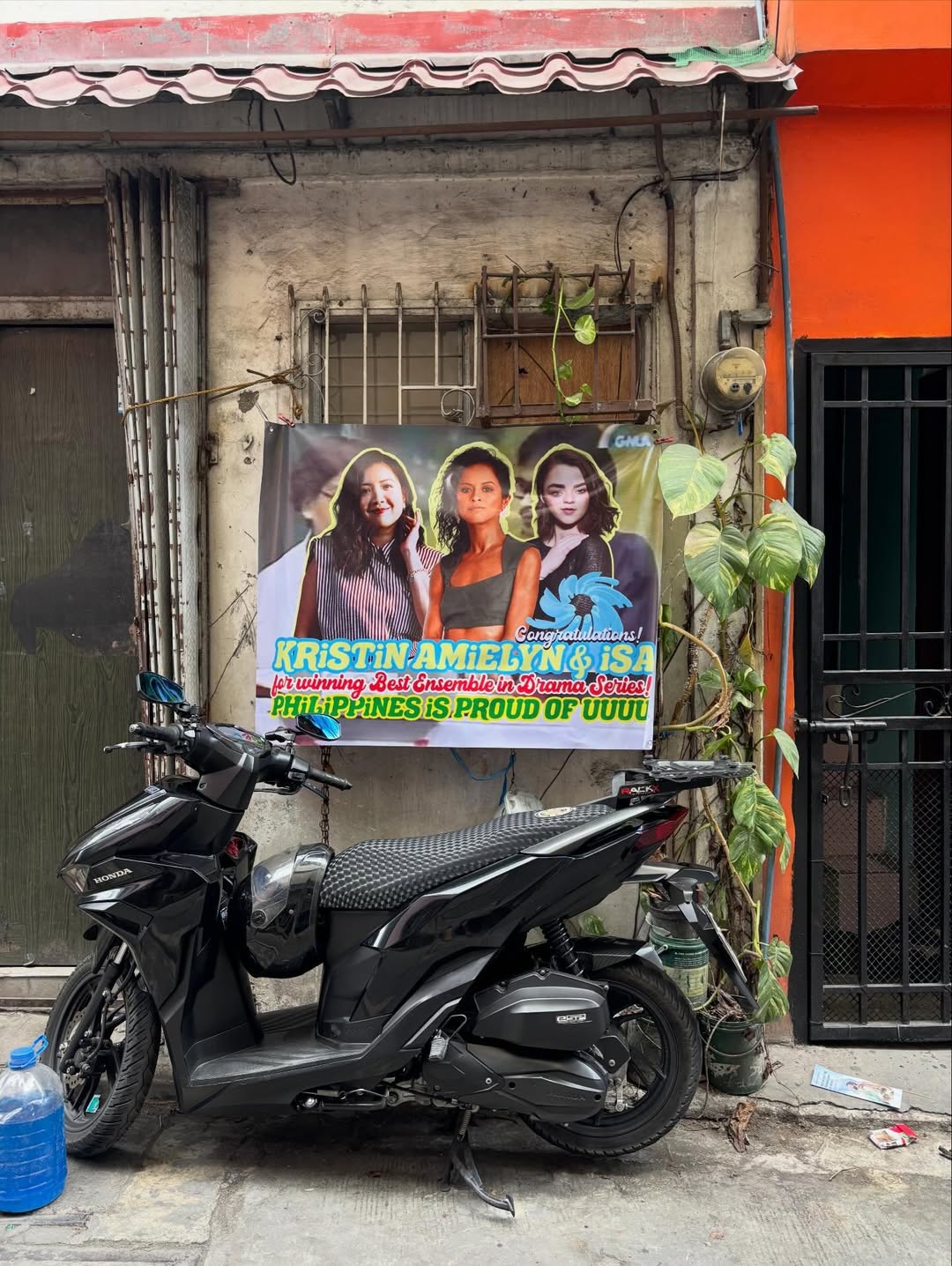
Their visual language is instantly recognisable: you might know them from their viral congratulatory tarpaulin with lowercase i’s to ‘lower themselves and elevate others,’ four u’s standing for ‘you, you, you, you.’ Behind the playful aesthetics is a deeply intentional philosophy about identity, diaspora, and representation. Where luxury fashion often relies on seriousness and scarcity, LiFEDESiGN embraces comedy, repetition, and sincerity as forms of craftsmanship. For them, couture lives not only in construction, but in references, humor, and emotional connection.
Ahead of their presentation and documentary screening at State of Fashion, I spoke to Fisayo and Xylk about Filipino maximalism, romantic comedy as a fashion language, and bringing Paris Fashion Week to Manila.
Hey! how are you?
Fisayo: I can’t complain, you know, I woke up today. I’m blessed.
Period. Tell me about yourself and LiFE DESiGN.
F: Xylk will join us later. I’m Fisayo, like F-I-S-A-Y-O, but then it’s also Fleasayo because I’m flea.
What’s Flea?
F: One time, I was just getting dressed and my Puerto Rican friend was like, ‘Oh, you look super flea.’ And I’m like, ‘What is that?’ And then he was just like, ‘bro, that just means you look flea, like you look cool.’ I’m Fleasayo, I’m Flea Ralph, Bruce Flea, Morgan Fleaman. Andy Fleahall — I love that one. Xylk is Fleanoi instead of Pinoy. Fleonardo di Caprio.
Aye! So I first came across your work via your iconic banners, the one where you’re congratulating J.W. Anderson for joining Dior. Then I found out you did so many more! Can you tell me about them?
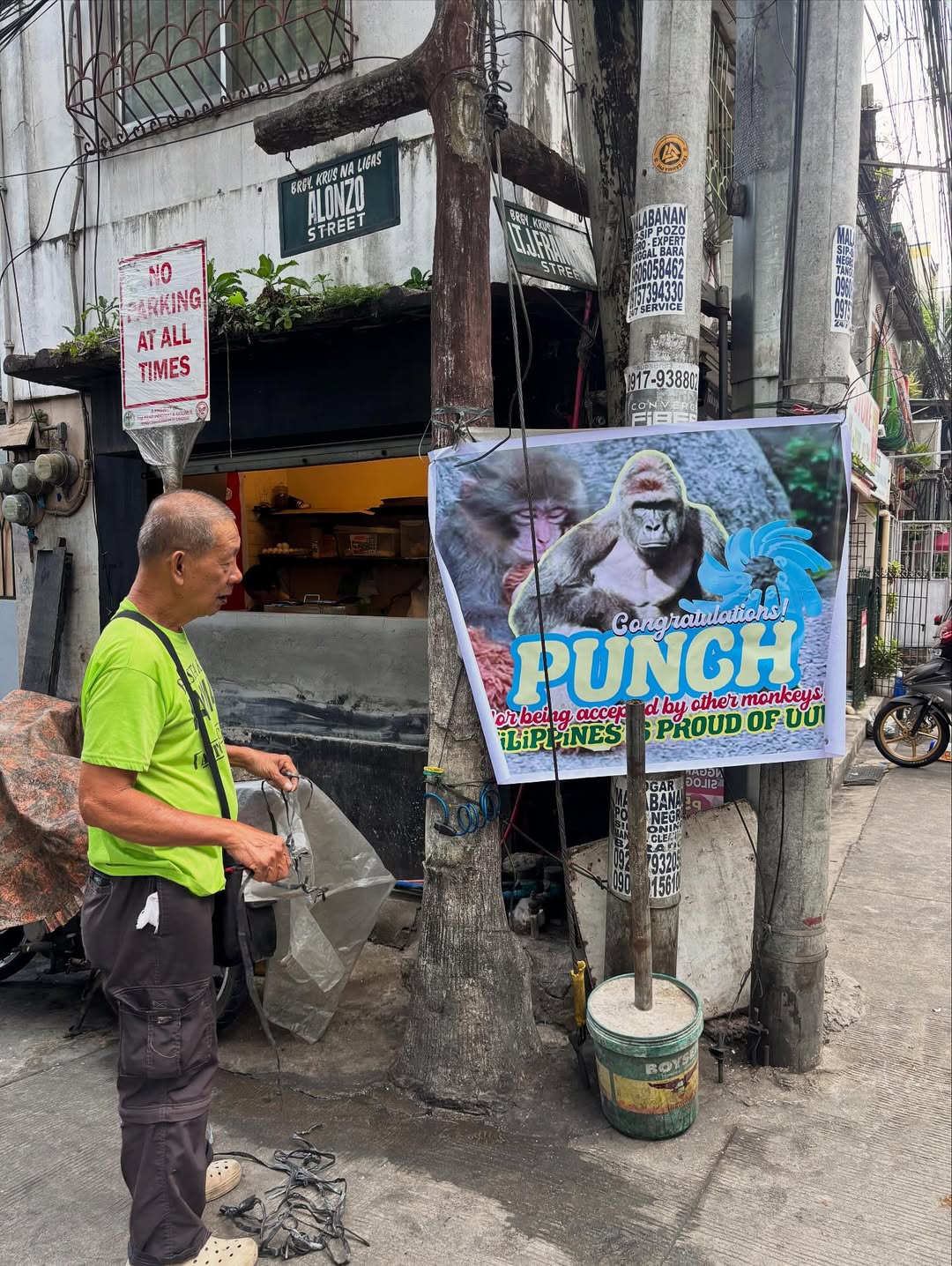
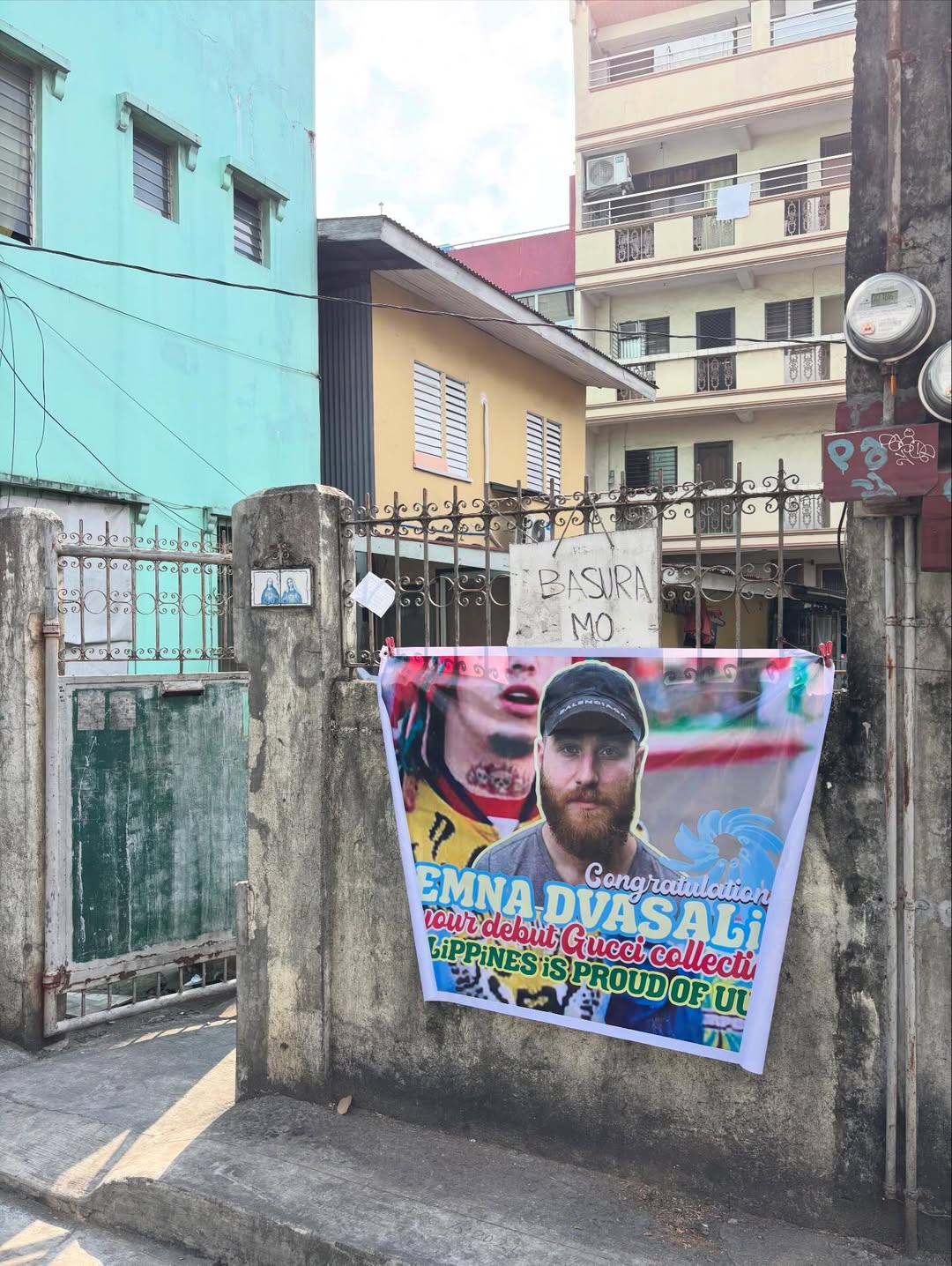
F: The tarps are actual love letters for people that are doing things. And the fun thing about it is, it is a direct representation to the embodiment of the everyday Filipino, because they will make a tarpaulin or a banner if you graduated school, found your dog, learnt how to tie your shoelaces. That everyday nuance is celebrated over there.
Xylk obviously was already hip to that because he grew up there. The first time I was there, it was for Xylk’s birthday, around 2021, and we actually made and surprised him with a tarpaulin for his birthday. But the first one that we made to celebrate a designer was Martine Rose for Women’s Wear Designer of the Year, which is so ironic because she’s part of the State of Fashion Biennale too.
Crazy coincidence! Can you dissect these sorts of elements? What makes it so recognisable and so typically Filipino?
F: First and foremost, it’s a universal language for the Philippines. I’m Nigerian Canadian, but that type of interface and aesthetic is familiar. We have to really refer to maximalism because that’s just how it is over there — it’s bright colours and strong typefaces. And for LiFE DESiGN, we’re bright punk.
Honestly, it’s just us believing that service to the masses leads to greatness. And it’s UUUU because it’s for you. We do this for you. I love how it’s also not spelled out as Y-O-U, and also there’s no Y, it’s just four U’s. Also anytime some word has an I, it’s a lowercase because it’s not about us. So we lowered ourselves to elevate others. That’s the reason behind it.
I love that. I thought it was just an aesthetic choice. In the Netherlands, we would write like that on MSN. I was like nine, but it was just like a cool way of typing in the MySpace era.
F: No, it definitely does look really cutesy and kawaii.
A lot of luxury fashion relies on exclusivity and seriousness, and your work embraces repetition and familiarity — even this sort of everyday awkwardness. What made you realise that elements many Filipinos see as ordinary could become these powerful global symbols?
F: That’s a great question. It’s a lens onto what we believe is couture, which is fun. It was really imperative for us to have a language that people could connect with and an identity. So the Philippines is rooted in fun and in not taking yourself too seriously. There isn’t that perspective being reflected in the luxury fashion world.
Also, repetition is mastery. The reason why we know Margiela is because of those four stitches that the atelier has been doing for decades. So with us, you’re going to see the lowercase i, the four U’s, the sun everywhere, and you’re never going to see black. The darkest colour that you’ll see is midnight — like a really dark navy. Those are actual premeditated decisions that we made.
So Xylk is Filipino, and you have a Nigerian background. And you both met in Toronto, right?
F: That’s correct. It’s super crazy. It’s definitely a blessing. The energy that Xylk and I have is something that I don’t take for granted.
You were already talking about Filipino culture being rooted in fun and not taking itself too seriously, which feels like an essential part of your brand and design practice, but are there any parts of your Nigerian background coming into it?
F: One hundred percent. That’s why we don’t even say that it’s a clothing brand — we like saying that it’s ‘fun wear,’ and that we’re an energy company because energy is currency. I’m an accumulation of Toronto, Nigeria, and, for the past half decade, of the Philippines. For example, the ‘God bless you,’ and these Christ motifs we’re playing with come from me being born into a heavily Christian background. However, it also coincides with the fact that, in the Philippines, there’s two religions: Christianity and basketball.
Lol. What’s your favourite part about what you’re doing?
F: It’s an energy company, and we’re definitely not selling clothes. Actually no, that’s not it — I love that I can be myself. And in the past, I’ve had the privilege of having a brand, being ‘successful’ in America, having stores, celebrities wearing it and all that jazz. But I actually wasn’t myself. When I was going through all of that, I wasn’t a life designer. I was actually a dead designer.
I love that. Do you feel like you’ve ever had to soften Filipino culture for global audiences to understand it or to pick up on it?
F: The fact that Xylk lived in the Philippines until he was 12 or 13, and then came to Toronto, his lens is a lot sharper than someone who’d start a brand after only living in the Philippines or Canada. It’s almost like it’s a bridge. We’re able to cultivate a bridge. So I don’t believe that we’re softening how Filipino culture looks. I believe that because it’s energy, we’re able to understand our reference points to the level where it’s relatable. It’s going to embody Filipino culture from the foundation, but it’s also relatable to everyone because when we post these tarps, it’s a universal language. Everyone wants to get congratulated. When the tarps blew up, it was because of Black Twitter.
Really? How so?
F: Yeah. I remember someone posted a thread and it said, ‘Why are the Filipinos so proud of everyone?’ And that person was a producer for Westside Gun. And he had a screenshot of all our tarps and it just started this discourse where everyone just started joining in and saying they want one of these too. So for another culture to identify in that way is a testament to what we’re doing.
So LiFEDESiGN also speaks about creating space for underrepresented voices. Which voices specifically do you feel are missing from the global fashion conversations?
F: Definitely the Philippines. The business of fashion is rooted in elitism, in a cultural dissonance to people that look like me and people that look like Xylk. And that’s just how it’s been designed. We’re seeing there’s an emergence of romanticising how the foreigner is, and how they conduct themselves, their everyday nuanced lives — which is really cool. So it’s all about timing. We’re just playing our role and responsibility where we have a voice, and I’m going to make sure that we’re heard.
I love that. So building off of that, when people think about craftsmanship in fashion, their first grade of thought is often set in European luxury traditions. How do you challenge that hierarchy through your work?
F: When you’re an investigative reporter of fashion and style, you’ll understand that it’s everywhere — it’s an embodiment of how you see the world. And there are a plethora of cultures that are couture. For example, with us there’s the Antipolo bag. So you’re familiar with Ralph Lauren Polo, but the bags are made in Antipolo, Philippines. So that alone is a direct representation to what we are as a brand, as an energy company, as life designers.
Oh, there’s Xylk. Hey Xylk!
Xylk: I’m super sorry, I double-booked!
No worries at all. Fisayo was talking about the Antipolo leather bag, and how traditional forms of luxury can be challenged.
F: I was talking about the Antipolo bag. But there’s also a book made out of the same fabric of the clothes for LiFE DESiGN, which is our lookbook. And this is couture for us. This is how we challenge it. When it comes to our version of what couture means, we say that our comedy is couture. So it’s not the physical, tangible, respect of craftsmanship, but it’s intellectual craftsmanship. It’s the layers of inside jokes and references that we’ve put into the product. That’s where you find high level craftsmanship. It’s not in the way we make it, but in the thought of it. And you laughed when I said Antipolo bag, as in ‘Anti-Polo.’ But I love Ralph. He’s my favourite designer of all time. It’s just the bags that are made there.
These kinds of things are very refined puns, and it’s really fun to figure that out when I’m talking to you because they just seem like an aesthetic choice at first, but these rules and inside jokes behind it make a whole philosophy. I love that.
F: I like what you said earlier about doing the ‘i’s’ on MSN when you were a kid, I think that is exactly where we want to take you. Our stuff is very childlike, and not to be confused with childish, which is very different.
X: So we don’t use the colour black. Off the top, when you look at our stuff, it’s vibrant and it gives you that feeling already. It’s very disarming. So it sets the vibe for us and it’s world building.
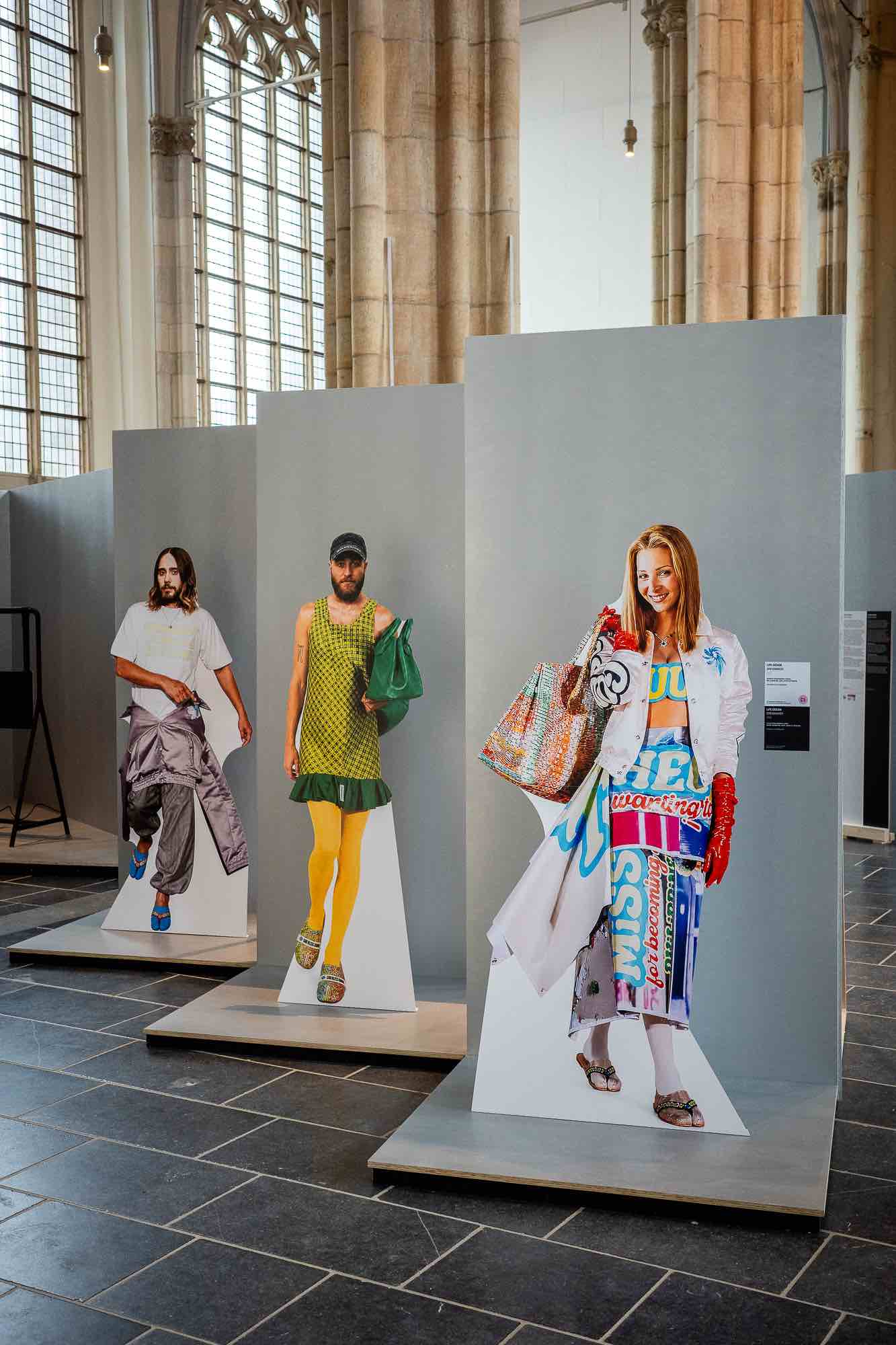
My next question is about the name of your collection: ‘DRESSMAKER.’ It reimagines Filipino school uniforms and everyday life as high fashion. What made you begin there?
X: The DRESSMAKER is a reference to my late grandmother. She used to alter dresses. If you were in the Philippines, and you had a sewing machine, you had signs outside of your house that said ‘Dressmaker,’ and you’d create garments for the neighbourhood. She made all of her daughters’ dresses for school, and she also happened to be a teacher. So their house was a kindergarten school. I was just really tapping into my grandmother for this reference.
Then, I left the Philippines when I was 10, and the thing that I can remember the most is school memories, as I spent most of my days there. Then, we moved to Toronto, and all I can remember is my friends in school uniforms. So this is me kind of picking up where I left off. That’s why it kind of looks like adults wearing kids’ clothes. And it’s funny because when I met Fisayo, he was in his version of a uniform. And he and his crew just wore navy for like two years straight.
Whoah. What was that all about?
F: It was just a decision. But when you stick with something and you’re consistent, there’s a component of repetition, and it sharpens you. So I chose navy and off-white, and I just didn’t want to do black because it just seems so easy. And I’m already black.
X: Yeah. I would say that with all our work, we always try to reference something. So when you look at our show, we had impersonators that were portraying Leon Talley, Donatella Versace, Anna Wintour, and at the end of it, ‘Rick Owens’ would take a bow instead of us. We wanted to reference Margiela’s show where kids were a part of it. So it’s also like we’re students of the game and we don’t believe that anything is new. But what’s new is the audience.
What made you decide to document the making of ‘DRESSMAKER’ rather than just presenting it with a finished runway look?
X: We’re not necessarily focused on the product, but on the narrative as to why we’re doing this. And what makes a brand into an entity that people can emotionally connect to is the story.
As State of Fashion is questioning the fashion industry, where do you guys feel like the fashion system should most urgently change?
X: I feel like Filipinos, on the couture side, are always trying to be white. If that makes sense. They’re always trying to be European. So the pinnacle of it is being a designer and going to Europe to work. But I think there needs to be the idea of other avenues as well. Especially when Virgil opened that door up for everyone. I do believe that, for us, we have so much to say about this because, it’s become such a classist tool in the Philippines to be in fashion. For example, if you’re in fashion, you have to use the highest grade of material and textiles. In LiFE DESiGN, technically, it’s polyester and it’s really bad, but at the end of the day, when we walk around Manila, 95% of the people are wearing this material. They’re wearing basketball jerseys, shorts, because it’s light, it’s breathable for our hot climate. We’re trying to reflect the times of a real Filipino experience. So we’re playing with the resources that are available.
F: I’m always going to be optimistic for the role and responsibility that I’m playing with Xylk for creating a new paradigm with how Filipino fashion is looked at.
What does fashion have the power to do that other mediums can’t?
X: Fashion for the Filipino community could just put us on the map, to be honest. It’s a wide open lane for us because there hasn’t really been that kind of voice for our country. And don’t get me wrong, there are great designers in the Philippines, but they stay there.They’re not out here.
The reason why we’re so focused is because the Filipino diaspora is scattered around the world — meaning we can reach as many Filipinos as possible. For example, there are Filipinos in small towns in the States, and they might feel like, ‘Okay, I can be a nurse, or a caregiver.’ No, bro. If we build the biggest brand, reach them and they can see what we’re doing, then they’ll see there are options to do other things.
F: LDMH. Life Design Manila House, where we’re bringing Paris Fashion Week to the Philippines. We’re bringing editors, we’re bringing journalists, we’re bringing all the people that sit at the seats. We’re going to be including you. Come on, baby.
Explore their work at State of Fashion
Images Courtesy of LiFE DESiGN