“I really look for this attitude where you don’t have to know everything, it can also be light and fun, but still touching on serious stuff.”
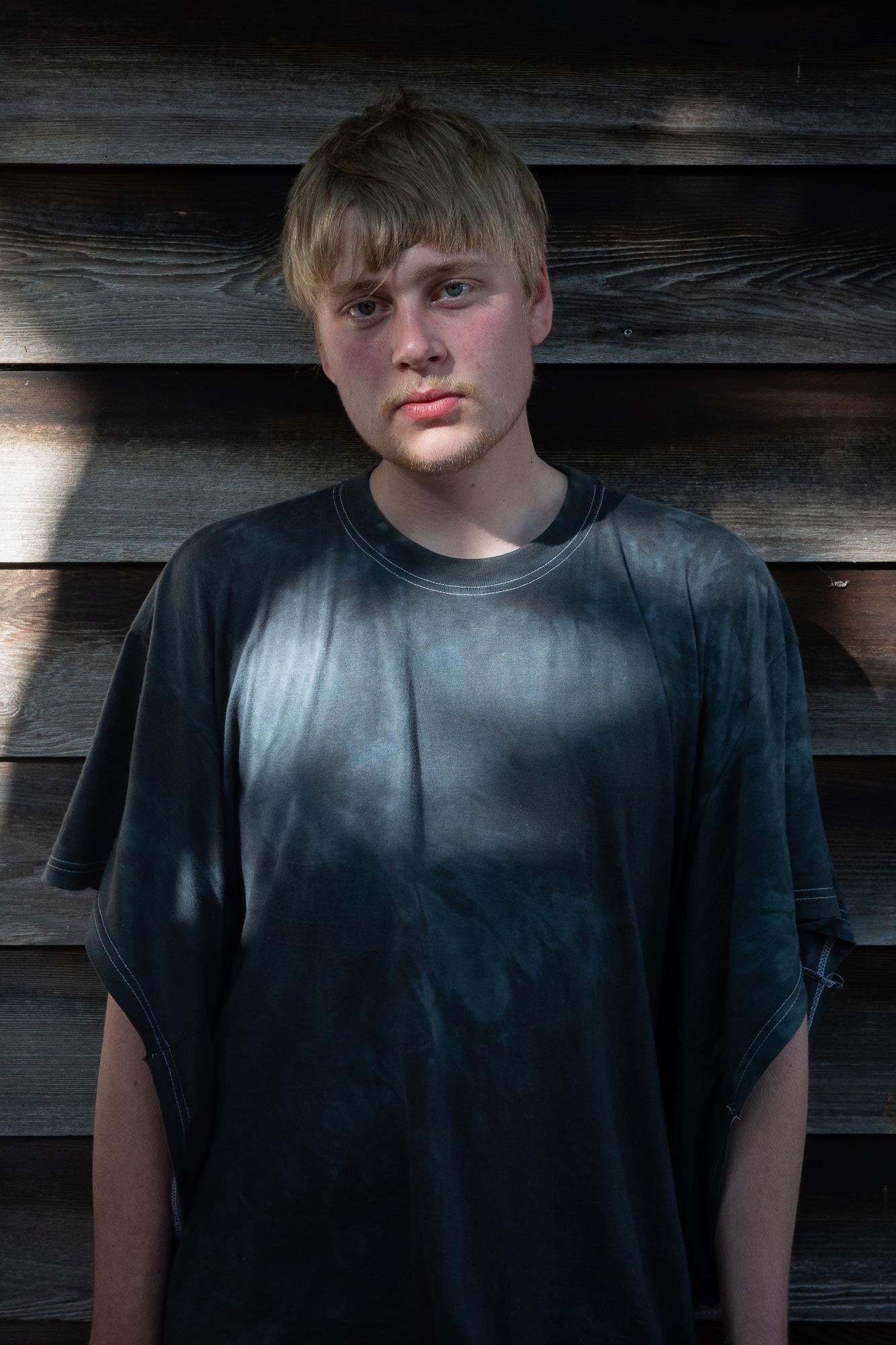
There’s something about sitting front row at a KABK graduate fashion show. You’re catching an exclusive first glimpse of the brilliant minds presenting their final collections, getting to savour each student’s distinctly recognisable universe. These presentations spark a strong initial curiosity and leave you wanting more — and luckily for us, we got to sit down with the brilliant Tim Dekker to unpack his hypnotic collection.
Tim is the graduate student who knows. Or at least, kinda. Unveiling his collection-performance titled with deep awareness IDK (I Do Kinda), the show made a full embrace of his position within the (fashion) world — an ode to the ‘everyday, progressive person,’ who doesn’t need to know everything, where fun and lightness are more than welcomed. Tim’s practice sits in the middle of the interdisciplinary realm where making, performing, and playing carry depth, but without ever taking itself too seriously either.
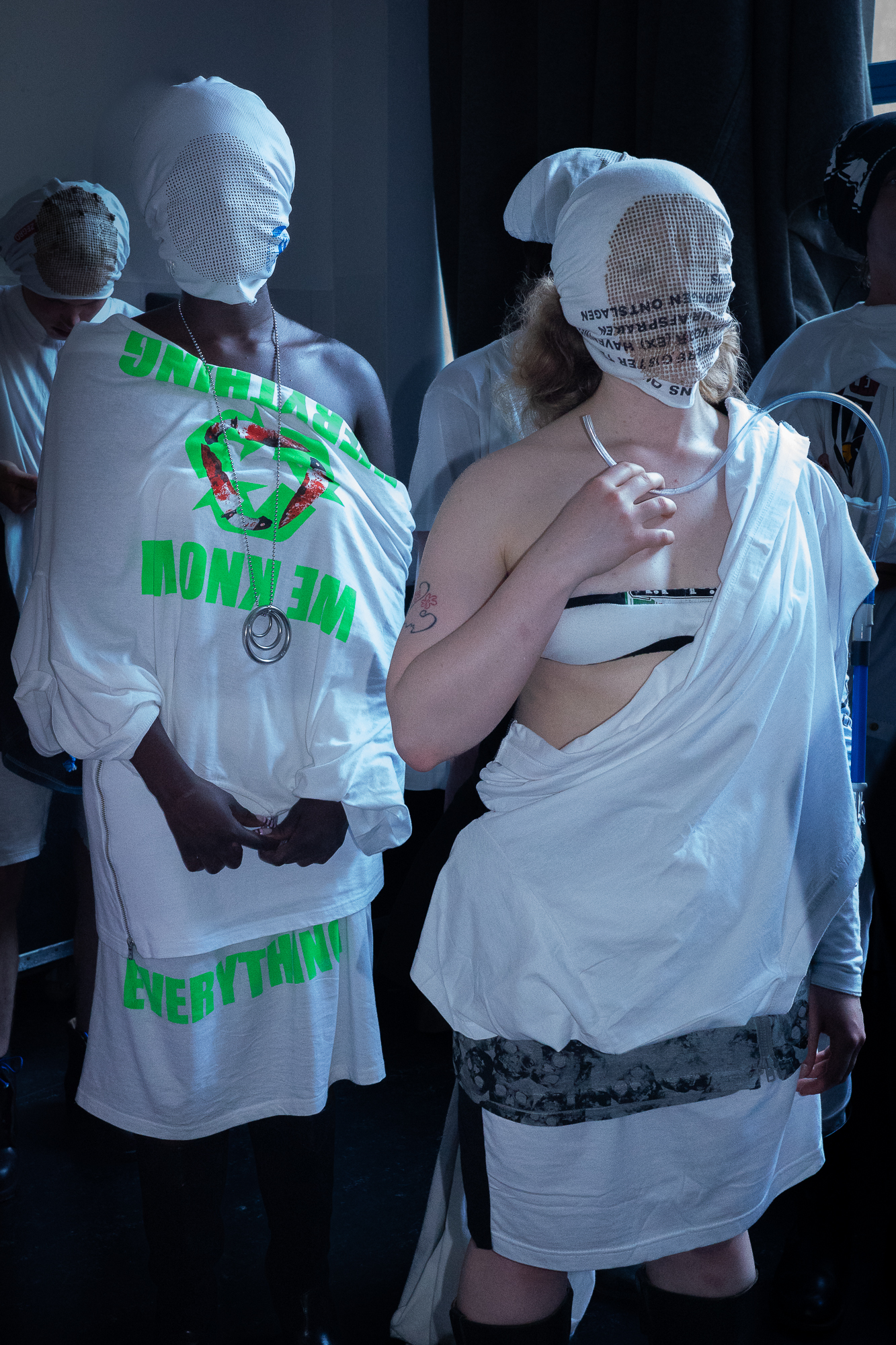
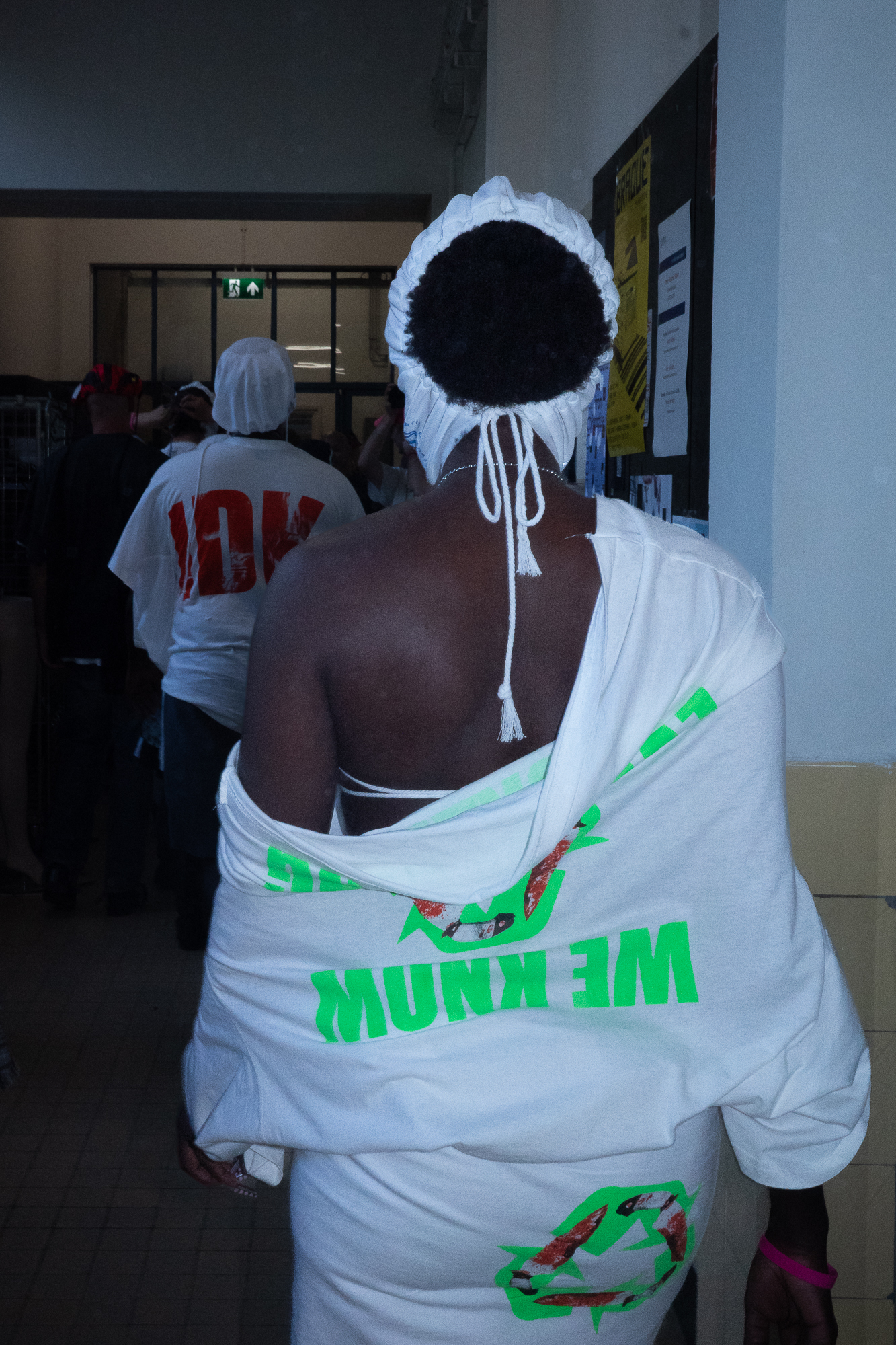
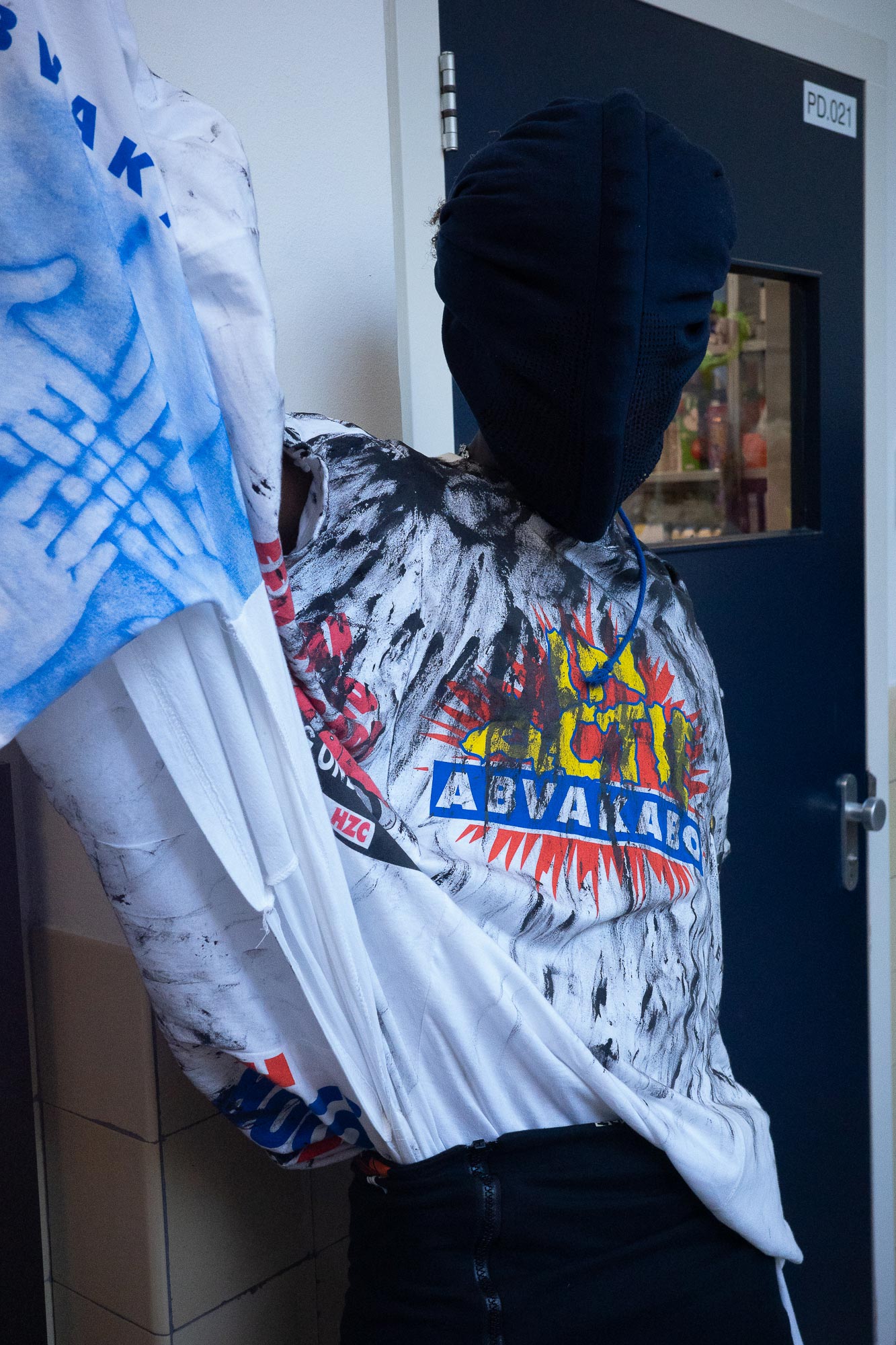
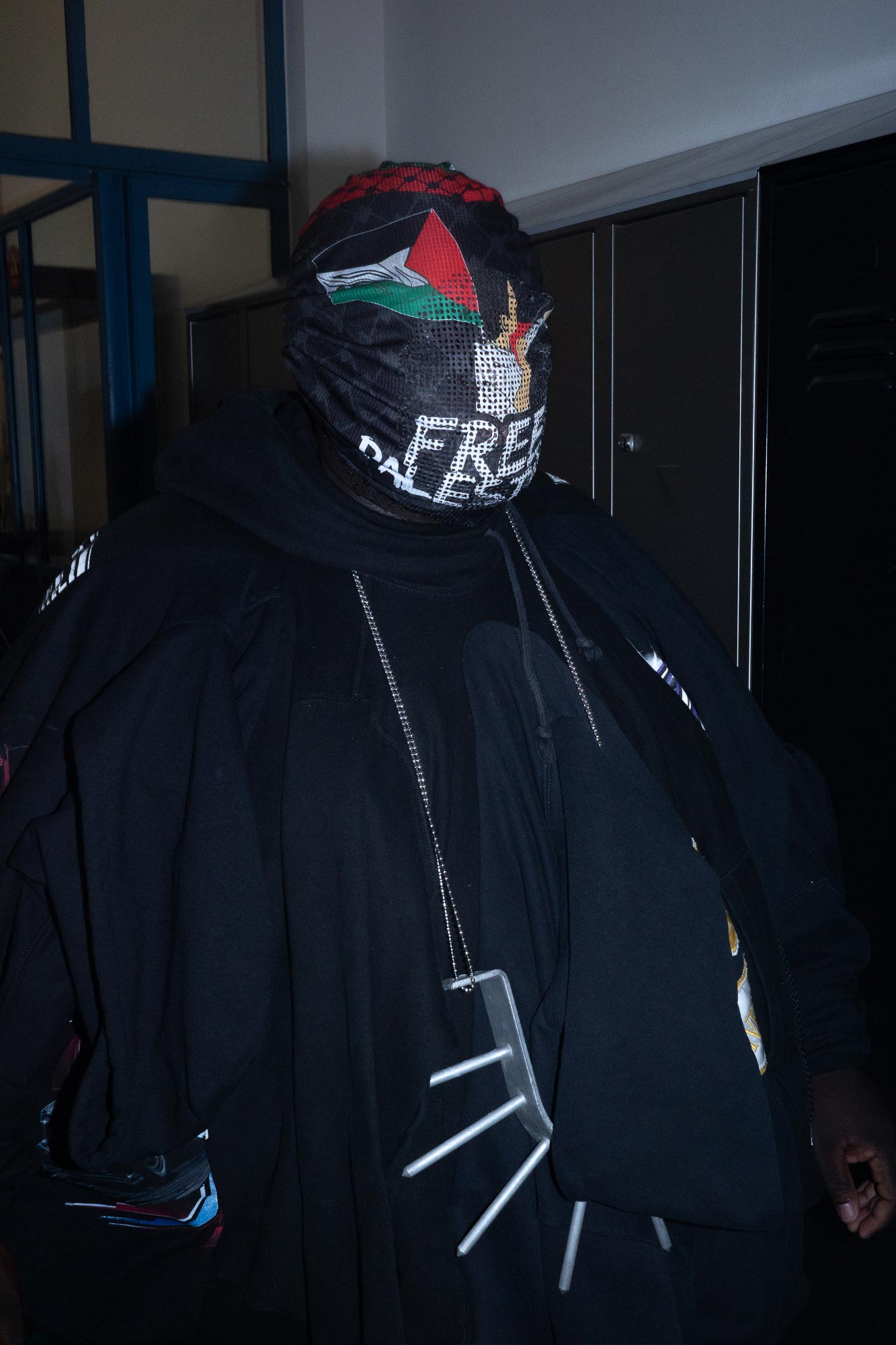
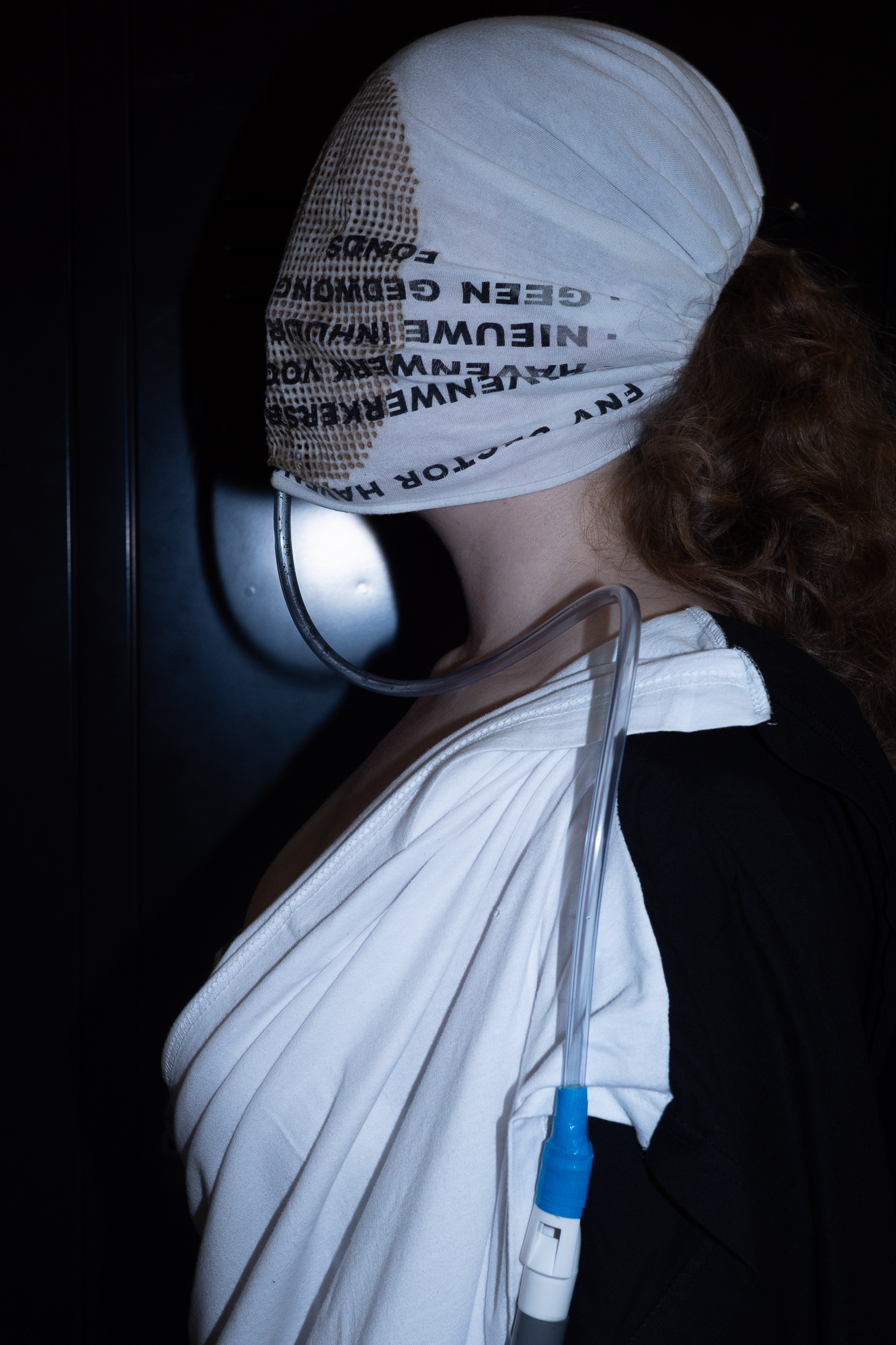
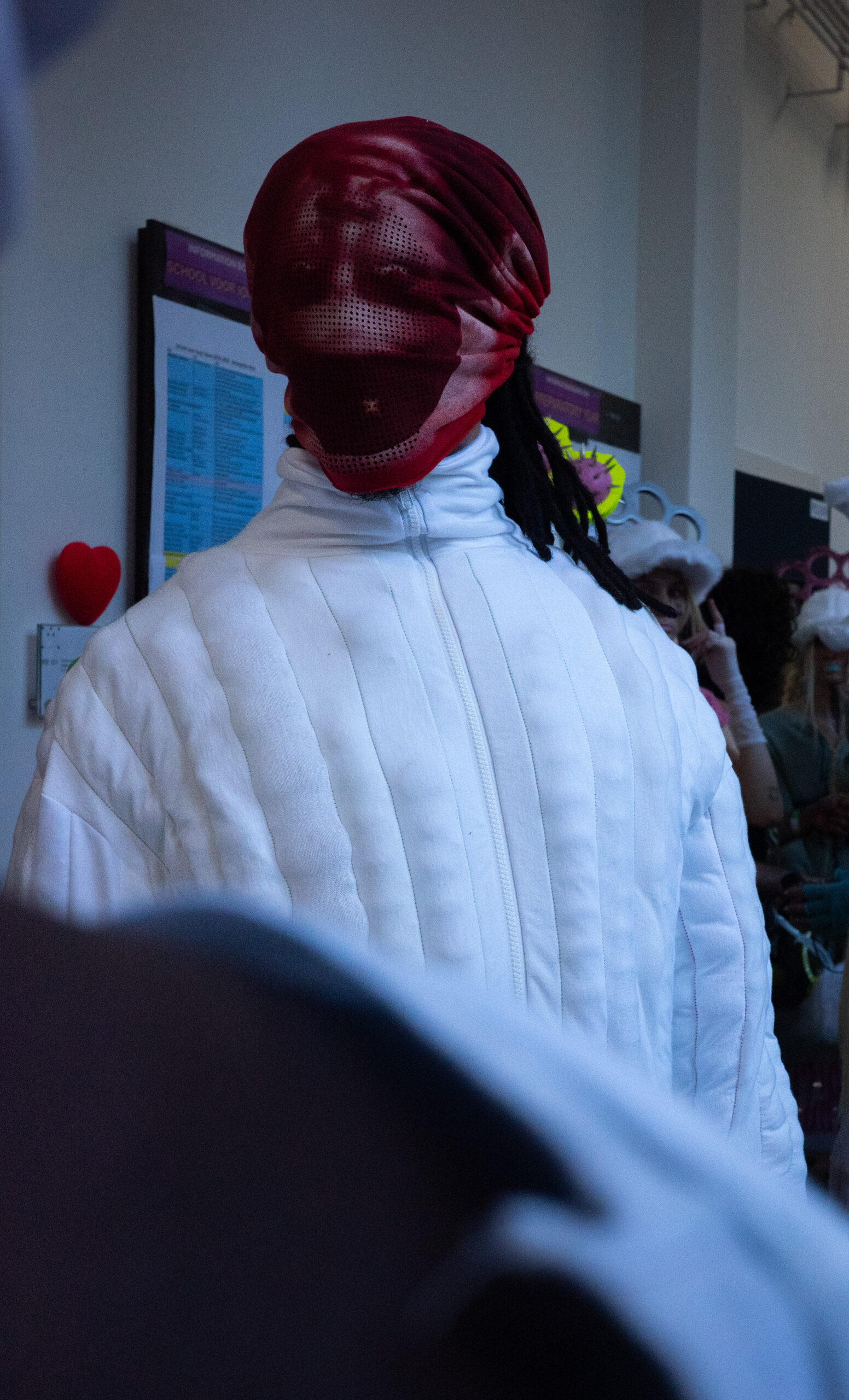
Central to IDK’s presentation was a large, assembled-on-the-spot metal instrument-installation. Meant to have rotating chairs attached to it — alas, the runway space was too narrow — the structure is named ‘The Truth.’ Veiled by front-facing t-shirts, models were ceremonially banging out and pulling strings forming a rhythmic pulse, later joined by the marching silhouettes. The t-shirt — the ultimate ‘democratised piece of fashion’ — was the central piece. Acquired from a collection of 4,000 tees (for a very reasonable price), Tim deconstructed the textiles, screen-printed recycle logo-knives patterns, perforated breathing holes, and stuffed them with dog toys. Someone even dubbed the show a ‘flashmob.’ And Tim wholeheartedly agrees.
Hey Tim, lovely speaking to you again! How are you feeling after the show?
Now I’m feeling great, but it took a while for me, I’ll be honest. Right after the show I felt quite stressed or not so happy with it. I think before the show, my work lived outside of the school context a bit — which I wanted. But then when the show was coming up, I really started comparing it to this fashion in art school and stuff, and what I (falsely?) think people deem fashionable.
Yeah, that resonates with your collection’s text a lot. But let’s begin with an introduction — could you introduce yourself and your practice?
I started doing fashion because I wanted to go to art school. I was making clothes but I didn’t really know what fashion was; I was just doing it because it was fun. And then I wanted to be an artist, and I found out that being in fashion is kind of a weird place to be if you want to be an artist in some sense. But I like fashion a lot because it also lives in a lot of things together, which is what I always liked about fashion.
But myself, I’m very much into making music. Although I’m not the best at playing any instruments, I used to do a lot of production. And now it ‘s all connected in my practice. My friend and I built an instrument, and I really wanted my graduate collection to live in these different mediums — fashion becomes very powerful when put together with various mediums.
And that also ties back to your collection’s title ‘IDK (I Do Kinda)’ where you made the t-shirt its central garment. Can you walk us through it?
Initially, I wanted to make this a collective idea, together with my friends. But then, of course, you cannot expect people to work for you in such a tight time frame.
The title IDK (I Do Kinda) reflects the position I find myself within fashion and the world, and it also helped me not to compare myself too much. And at the end of the day even though the t-shirt is central, I do care about the technical side of fashion. Just this year I didn’t make a technical collection because I don’t think it’s the most important aspect of this project.
Then for the actual show, every model brought their own influence on how everything went. I kind of let go of it a bit, and it was quite nice. I didn’t say too much about how people should walk. Someone called it a flash mob, which I thought was quite funny.
Yeah and you could feel that energy! Can you tell us more about the t-shirts that you used in your collection? You deconstructed them into face masks, skirts, bandeaux, and jackets.
Of course, well first, there’s a size inclusivity that the jersey allows which is very interesting. Also, the t-shirt represents to me this democratised piece of fashion — something we can all have. And I wanted to speak on fashion as core to our human experience. Then, I’ve been collecting t-shirts for a long time, and one day, around six months ago, my friend sent me this Marketplace ad where someone was selling 4,000 t-shirts after its collector passed away. So basically, they wanted them gone, but they didn’t know how high the value was of some of them — there were soccer t-shirts worth hundreds. It was €250 for all of them. I still have a whole storage full of t-shirts.
I was already working with t-shirts for my graduate collection but the world sometimes works in a way where something happens when you least expect it.
And what about their transformation?
I mostly used screen printing — there are like five or six prints. My favourite one was with a recycle logo with knives in the middle. Also it’s a good way to look at the collection, where some parts have more depth but at the same time it’s also more ‘stupid’ and funny, because it’s just some silly knives. And I really look for this attitude where you don’t have to know everything, it can also be light and fun, but still touching on serious stuff.
Also I wasn’t necessarily thinking on how to make my work political, but more about how to tell a story about ‘everyday, progressive people.’ And at the end of the day, I don’t want to be this person that’s always talking about politics, as I used to be going down that route where I was making everything political, I was constantly worried about the world — even though I still am, of course, and still believe everything is political — but I also chose a bit of my own happiness now. If you always make everything too deep then it makes you really become crazy.
Also what about the rest of the t-shirts? What are you going to do with them?
I’m currently storing them in my atelier and my friend’s storage. Luckily we bought the stock between three people. We’re making a little book about the owner of the t-shirts too. We documented all of the pieces and through these t-shirts, you can kind of see a bit of his life line.
Now what about the massive metal spinning instrument/installation that was brought in before the models started walking?
Basically, two years ago, I made my first instrument with my friend Alper [Cekinmez], now a graduate of the school. Alper is the best, and he makes these crazy metal works. He made a gyroscope where you spin around. Then the last time, we made a big metal box, called ‘La Machine,’ where someone, an actual musician, was inside playing accordion. But on the outside, there were all these strings and stuff to control the music coming from the inside — and that would be me controlling those strings, and I had this costume on. I don’t know how to play. And I think that’s what made me want to expand on that, which made it become the centre of my collection. Also I don’t believe in everything as a profession. I think our society is obsessed with professionalism. Why don’t we all sing and dance, and sew a little tote bag or repair some holes in our sweaters on a sunday, you know?
Now for the collection, initially, we were supposed to add a layer of chairs that would spin, but unfortunately that didn’t fit on the catwalk. It took us collectively, between Alper and I, more than 120 hours to work on it. It was really a pleasure to be able to do a fashion collection and then just be busy with something so non-fashion along with that, and it still making sense. I finally felt more complete
Your models were also wearing these sorts of tube-pipes making noise as they walked, creating a sort of rhythm with the bangs on the metal installation.
Yeah, all of these things come to be kind of like wearable instruments, but also you don’t have to play them. The sound came from actual human motion from walking, not from playing, so it was interesting.
There were also some jackets constructed from the t-shirts that make a squeaky sound when you touch it. Also zooming in on touch and presence.They were basically two-layer t-shirts in a strip. And then you could just sew them together and then you fill them up with whatever you wanted to put in them. So in the orange one, I put the bells. And in the white one, I put the squeaky (dog) toys.
And I was wondering how your design language has evolved since your first year?
Well, I think you see that with a lot of fashion students, that as soon as you get to an important academy, the work becomes very sculptural, kind of enforcing this idea of the clothing itself as the art.
But now my language evolved in a way where I don’t try to force the product as art, but rather the whole thing as art. For example, I started looking at the graduate collection as an album. And you don’t have to make a classical album to make it cool. You can make the most shitty punk drums that are not on time, not necessarily good, but it can still be the most interesting, fun thing. That’s kind of how it evolved a bit.
What is a piece of advice you received during your studies that stuck with you?
Just getting to hear about my teachers’ personal careers and how they also feel these self-doubts and insecurities the day before having to hand in work. That’s something that really helped me this time. No matter how professional people present themselves, they still have their own doubts.
Also, quickly to circle back to your personal style — you said you love t-shirts. Do you have a ‘uniform’ tee when growing up or currently?
I have a Joy Division t-shirt that someone offered me €800 for, lol. But don’t worry, that’s not why I like it.
Also, there’s one in the collection that I didn’t change at all, it has a question mark and it says: ‘What do we all think we’re doing?’ It just fitted so well with the collection. I like these silly t-shirts a lot. But most t-shirts I’ve been buying lately are tees from the 70s. Maybe in the future, I’m going to work with them… I’m never cutting up antique shirts, though.
What are your sources of inspiration?
Designers, probably Miguel. Especially during this time. And music-wise, one album that always comes back is Arthur Russell’s album World of Echo. Then I listen to Suicidal Tendencies, Sepultura, NoFX, you know, punk metal. Or Public Enemy, Crystal Castles, Laurie Anderson, whatever honestly.
Also during my graduate collection preparation, I would always go back to the album IJSLAND by Abel and Sef. It’s political, but it’s also silly. They call it a ‘palate cleanser,’ and I love that. It’s all these genres mixed and it’s brain dead in some ways.
Where are you planning on taking your journey next?
The first step is the school’s graduation show in July. And I think that’s gonna be the basis for the rollout afterward, because there are so many people involved in this
Also, the musicians are very keen on making an album out of the collection’s installation. They were also kind of involved in the flashmob — as they also didn’t have lots of time to play on it a lot. They are now busy writing an excellent piece on it and expanding the show. Hopefully afterwards, we’ll have the written piece and we’ll be able to travel with it — kind of like a music tour. And then every stop can be like a little pop-up shop, where you can buy the t-shirts, and play the instrument
Words by Lora Lolev
Photography by Renée Benerink