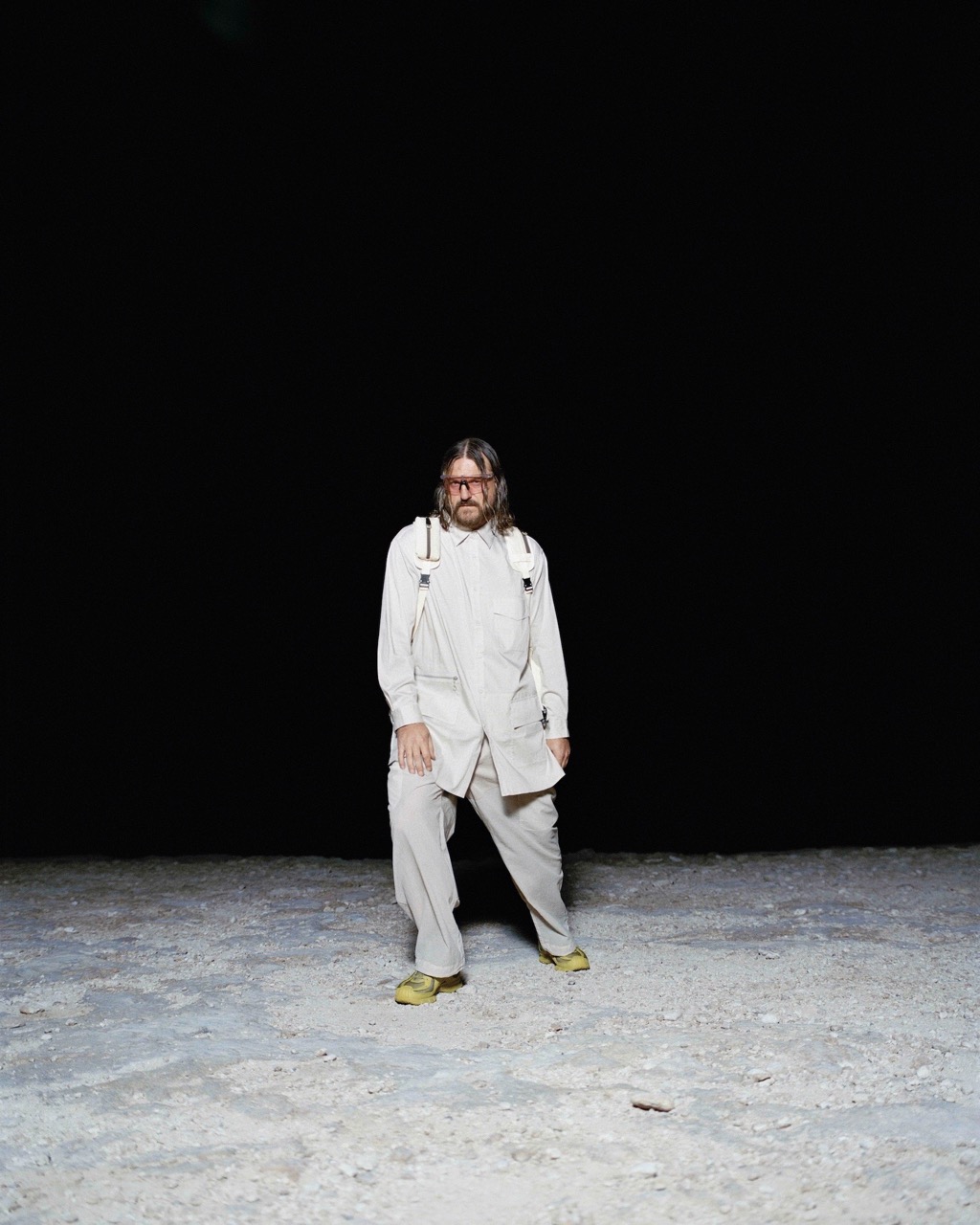
Shirt and trousers Y3 via REVOLVER IBIZA Shoes ASICS, Sunglasses OAKLEY, Vest stylist’s own
Solomun occupies a rare kind of space in dance music: globally recognisable, endlessly booked, yet still driven by the humble instincts of someone digging through records in the back of a club. His world pulls from several places at once: the DIY spirit of Hamburg, where he built Diynamic and shaped his sound from the ground up, the dancefloor education of Chicago house, and eventually Ibiza, where he has cultivated the kind of island energy we might not have expected, but are very pleased to discover. In 2013, he launched his Sunday residency Solomun +1 at Pacha Ibiza, a concept so deceptively simple (one guest, one room, one stretched-out set with enough time for all sorts of musical tangents) that it calmly rewired the dynamics of the superclub era. Most famously, he moved the DJ booth into the centre of the crowd, collapsing the distance between performer and dancefloor. Recent guests like The Dare, alongside names ranging from F o u r Te t, Skrillex and Peggy Gou, show an artist who clearly knows what’s up. The CV just keeps spilling over: marathon all-night sets (try 27 hours), a cult Boiler Room (back before the KKR messiness and corporate glow-up, it’s still the platform’s most streamed set of all time), global festival headlines, the long-running influence of his label Diynamic, and productions like the remix of Lana Del Rey’s West Coast, which practically became emotional infrastructure for an entire generation of clubbing. Yet speaking to him, none of it arrives with ego. Solomun comes across as grounded, open-minded, almost suspicious of his own mythology. The spotlight may follow him everywhere, but his energy feels closer to someone quietly observing from the corner of the room. Maybe that’s what makes him such a compelling DJ in the first place — the sense that he’s still genuinely in dialogue with the crowd, with the music and its histories, and with whatever new thing might emerge next. And maybe that’s also why he complicates certain assumptions about Ibiza, his primary turf, itself. In our spirit of Worldwide Underground, it’s been easy to flatten the island into a cliché of VIP booths, excess, and dance music polished to a mirror shine. Solomun’s version feels rooted elsewhere: curiosity, patience, trust in the crowd, and a genuine respect for the craft.
Thank you for being here and joining us even during your fast. How has the break from touring been?
If you’re like me, on tour for so many years already, with this beautiful job and the pleasure to do it, a break is never quite enough. I really enjoy the time off, and it’s always kind of funny, because somehow I feel like I could easily extend it by another two or three months. It’s also a bit dangerous, because you can get used to not being on the road every weekend very quickly. But I also really love to get back on the horse and share beautiful moments with people through new music.
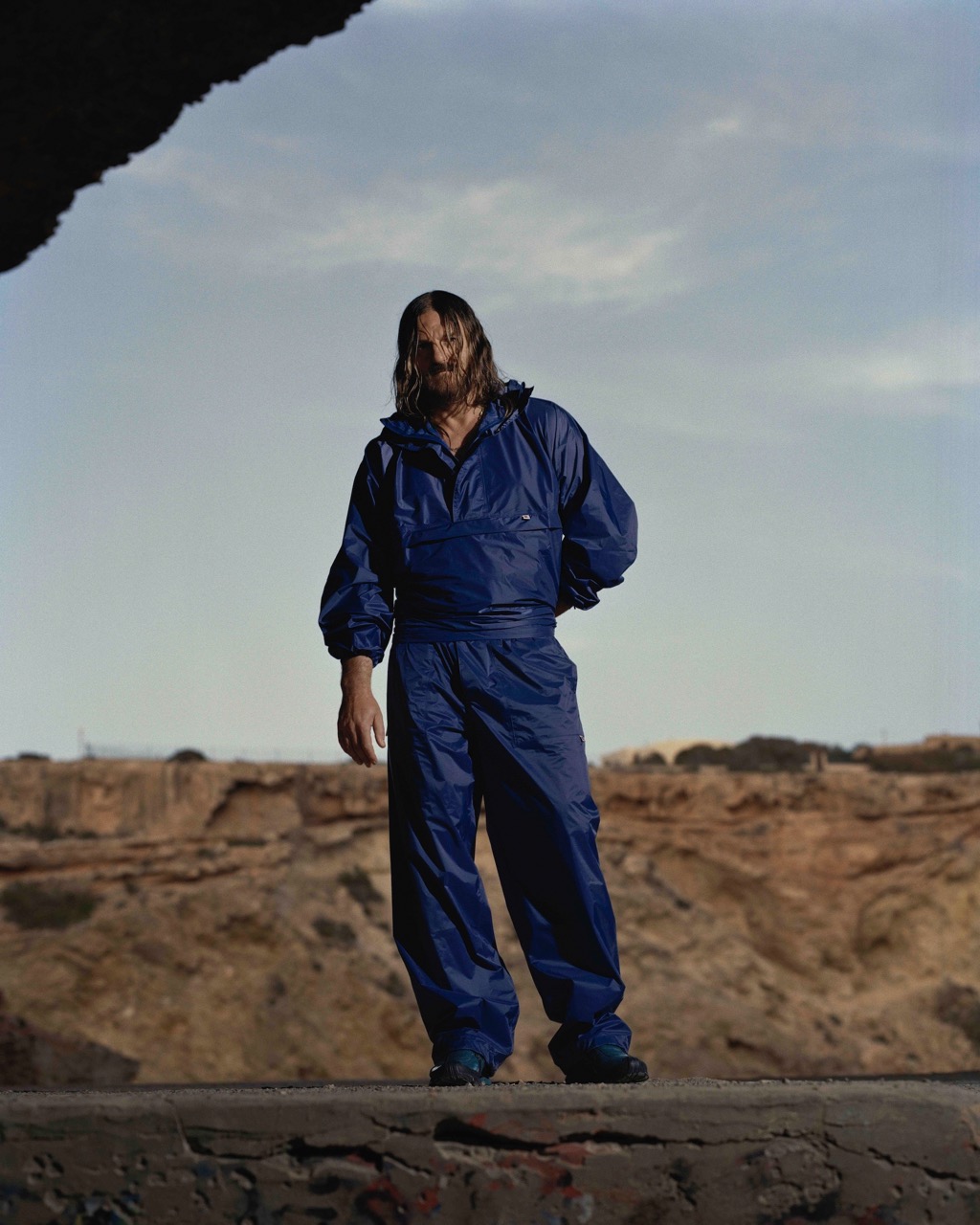
Tracksuit SUSAN BIJL X BONNE Shoes ASICS
I’d love to talk about your first memories of music, sounds or moments you remember fondly.
It’s always interesting, because the older you get, the more you start noticing the impact of your youth and childhood in adult life. For me, it was a random tape from my older cousin. He was around 20, and he really loved my mother, so he’d pass by sometimes to say hi. I was 10 or 11, and he brought me this DJ mixtape, recorded live from a club. As a kid back then, you only had radio stations, so listening to a real mixed tape like that was so weird. It did something to me. It was the first time I realised there was so much more to explore than mainstream radio. And I was a huge Wham! fan back then. Wake Me Up Before You Go-Go got me hooked, and then I discovered their album Fantastic, which was funkier, more experimental, and pulled me in much deeper. So you could say Wham! inspired me to start digging. And a little side note on Ibiza: that same album also had the track Club Tropicana on it, and the music video was shot at the still legendary Pikes Hotel.
Growing up, what were the sounds in your home?
I’m Croatian from Bosnia, so being from the Balkans, I grew up with this kind of music. I had big families on both my parents’ sides, and a lot of them also lived in Hamburg, and they always saw each other on the weekends, to have a good time, to chat, to play cards. It always ended with music. Music always has a positive impact on my life. And my family likes to celebrate, obviously.
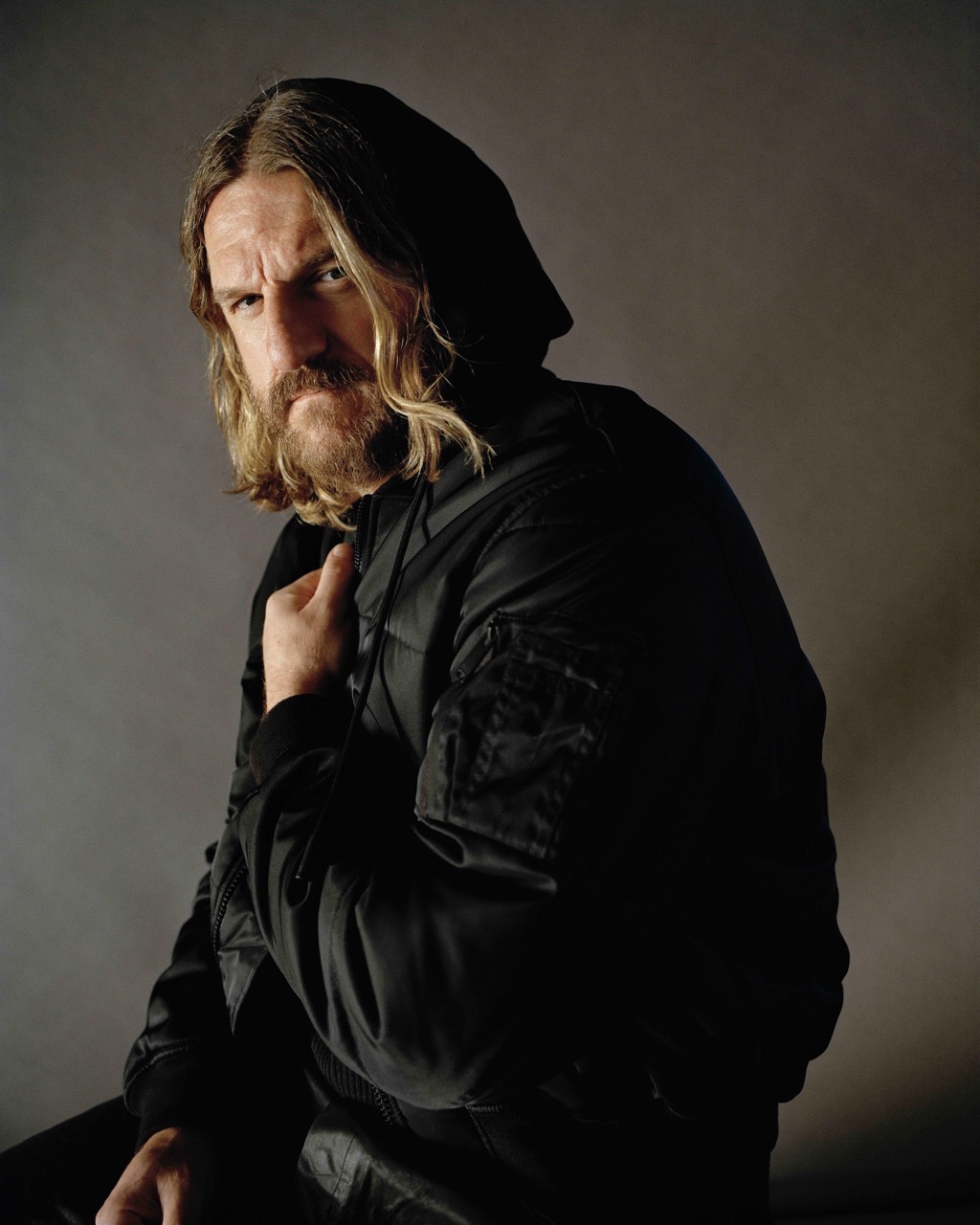
Tracksuit SUSAN BIJL X BONNE Shoes ASICS
And before you got into DJing more fully, you had a film production company, right?
Yeah, we started our own small film production company, which was the other passion I followed besides music. But I only founded Hajde Productions after I’d already worked on German TV productions myself, in different departments, so I had a pretty good overview of what filmmaking is really about. Fatih Akin was one of our neighbourhood friends. He was studying film, and he did his first short movie, which won some prizes. Then he went on to do his first big one, and it showed us that even if you come from a migrant background, like all of us did, you can achieve anything. We’ve been very proud of him, and it was a huge motivation to be brave enough to explore our own creativity. And today, as a Golden Globe winner, president of the Cannes festival jury and so on, he’s one of the most important voices in European cinema, and I’m still very proud of him to this day.
Do you feel there’s a connection between your music and film? Your sets move in a way that gives them a certain cinematic feel.
100 percent. It’s not like I planned it, but it happens naturally, because of the way I see things, how I live with my friends, and because I love storytelling. And a good story is about the details. Just one example: in August I have the big honour to play a set at the Festspielhaus in Bayreuth, where the Wa g n e r F e s – t i v a l has been taking place for 150 years. It’s a huge thing that a DJ can play there, because in the last 150 years, only Wagner’s music has been allowed in this building. The request reached us when we were in Tulum, and obviously I was over the moon. My manager Daniel had the chance to speak with K a t h a r i n a Wa g n e r, the great-granddaughter of Richard and the boss of the Festival. For him this was also a big deal, because he comes from a family of classical musicians.
Congratulations! But you were talking about details and storytelling…
Right, so here’s the backstory he forgot to tell her on the phone. A few days before that offer reached us, we had this very complicated journey from Brazil to Lima. It started beautifully: a helicopter ride over the jungle, and because the whole thing already felt so surreal, we were listening to the Ride of the Valkyries. It felt like Apocalypse Now anyway. Then the trip turned into a proper odyssey. The plane wasn’t working, we had to stop in Brazil while technicians tried to fix it. It didn’t look good, but in the end we made it to Lima, three hours late. We were stressed, because we knew people there were already waiting for me. At three in the morning, this huge transporter picks us up right at the plane, three guys driving super, super slowly for about 30 minutes. And in that car, the guys were listening to a classical radio station, and guess what? A piano version of the prelude to Die Meistersinger by Richard Wagner, played by Glenn Gould. So our journey started and ended with Wagner. And two days later, I was asked to play there. First serendipity. When Daniel spoke to Katharina Wagner on the phone, he just forgot to mention this important detail. I guess he was too nervous. But I understand him, of course, because I also have my own thoughts about it, and I’m not sure if I can really live up to the whole thing and its historical weight. For him, it’s an even bigger full circle moment, because his great-grandmother already sang one of the Valkyries in Bayreuth back in 1912.
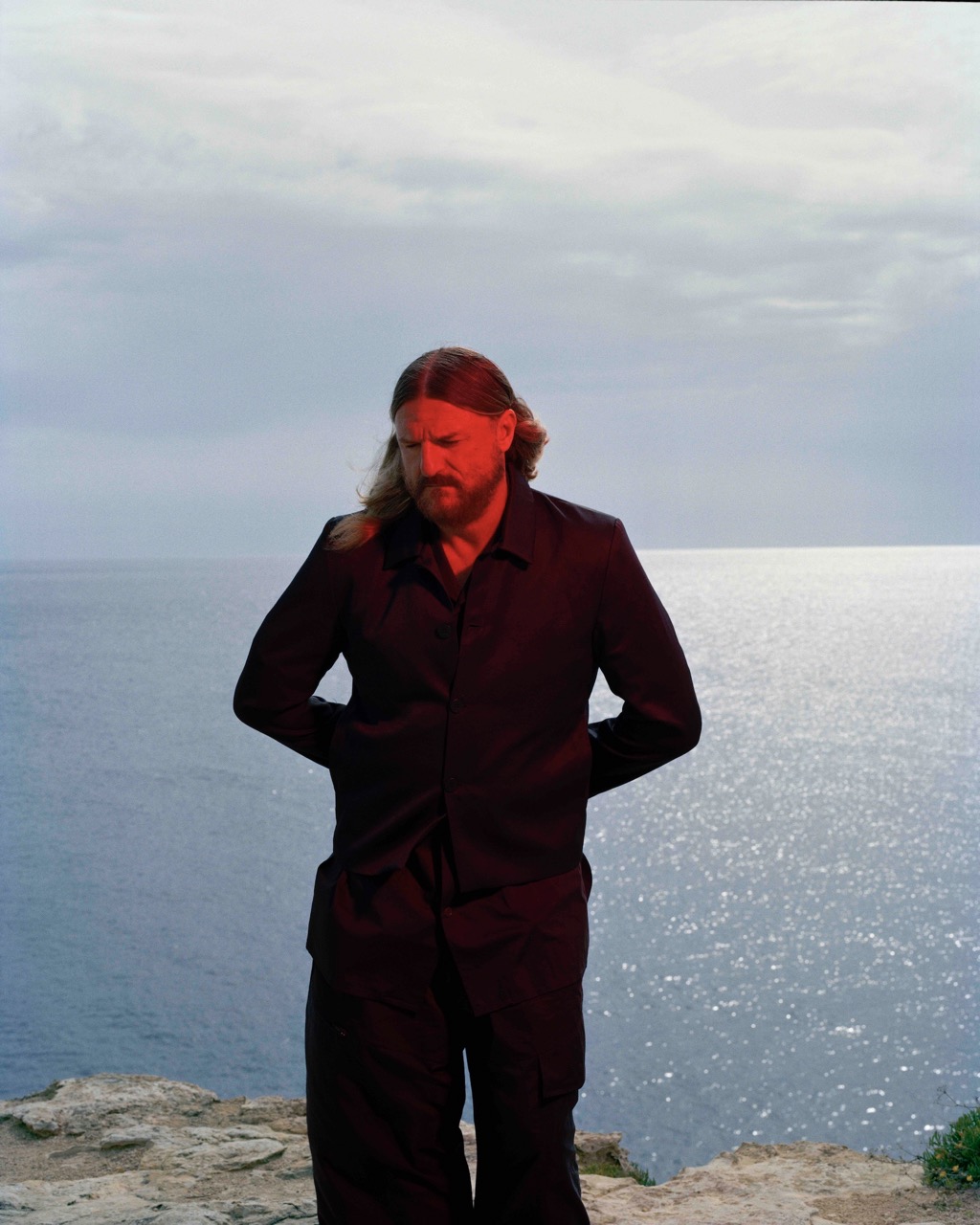
Jacket LACK OF GUIDANCE Shirt and trousers Y3 via REVOLVER IBIZA
What a great story!
I love storytelling, I love movies. Instinctively, that’s what I’m trying to do when I DJ. If I have the chance to play for more hours, I have a bigger chance to tell a story. But regardless of time, I’m always trying to tell one. The details just live in the long sets.
I was curious about those long sets. I heard about a 27-hour set you played once.
Yeah, that was the longest so far. But it’s not copy and paste, I can’t play long sets everywhere. Sometimes a three-hour set can feel like eight or ten hours, because the location, the people, the energy are different. And honestly, the 27-hour show wasn’t planned. I’ve also done 18, 19, 20, 21 hours. It’s like two or three after-parties a year, when I know I don’t have to travel for a while after. It’s really a guilty pleasure, to have this extra thing to share with people, and the freedom to play tracks that don’t fit my normal sets. Honestly, sometimes I just don’t want it to end. I just do it for myself! Maybe it’s very egoistic [laughs].
Fair enough. I imagine it’s also nice to shut the whole world down for that many hours while you play.
That’s the beauty of it. That’s why I do it, and that’s why I love it.
Coming back to film, what are some of your favourite movies?
There’s one other thing I learned from Fatih Akin: it doesn’t matter which school you went to in the end, it’s about how many films you watched and what you learned from them. I watched a lot of movies during that time, and it was also horrible, because I couldn’t watch them normally anymore. I was just watching scenes and thinking how I’d edit and stage them differently. Back then I was very nerdy about film, the same way I am with music: always going deeper, digging, trying to get to the bottom of things. I’m a huge fan of David Lynch, and Blue Velvet is a great movie. A year or two ago, the photographer Andreas Gursky had his birthday, and he had the beautiful idea to ask his friends to send him two or three of their favourite films on DVD as a present, which would then all be built together into a specially designed shelf. A really beautiful idea, especially in the streaming age. My gift was Monsieur Ibrahim. What I really love about it is that it’s also a migrant story about a little boy. It’s just about life and the conflicts in it, and how you have to deal with them. And I love Lost in Translation, Bad Lieutenant, The City of Lost Children, and all of Martin Scorsese, Rainer Werner Fassbinder and Emir Kusturica’s movies.
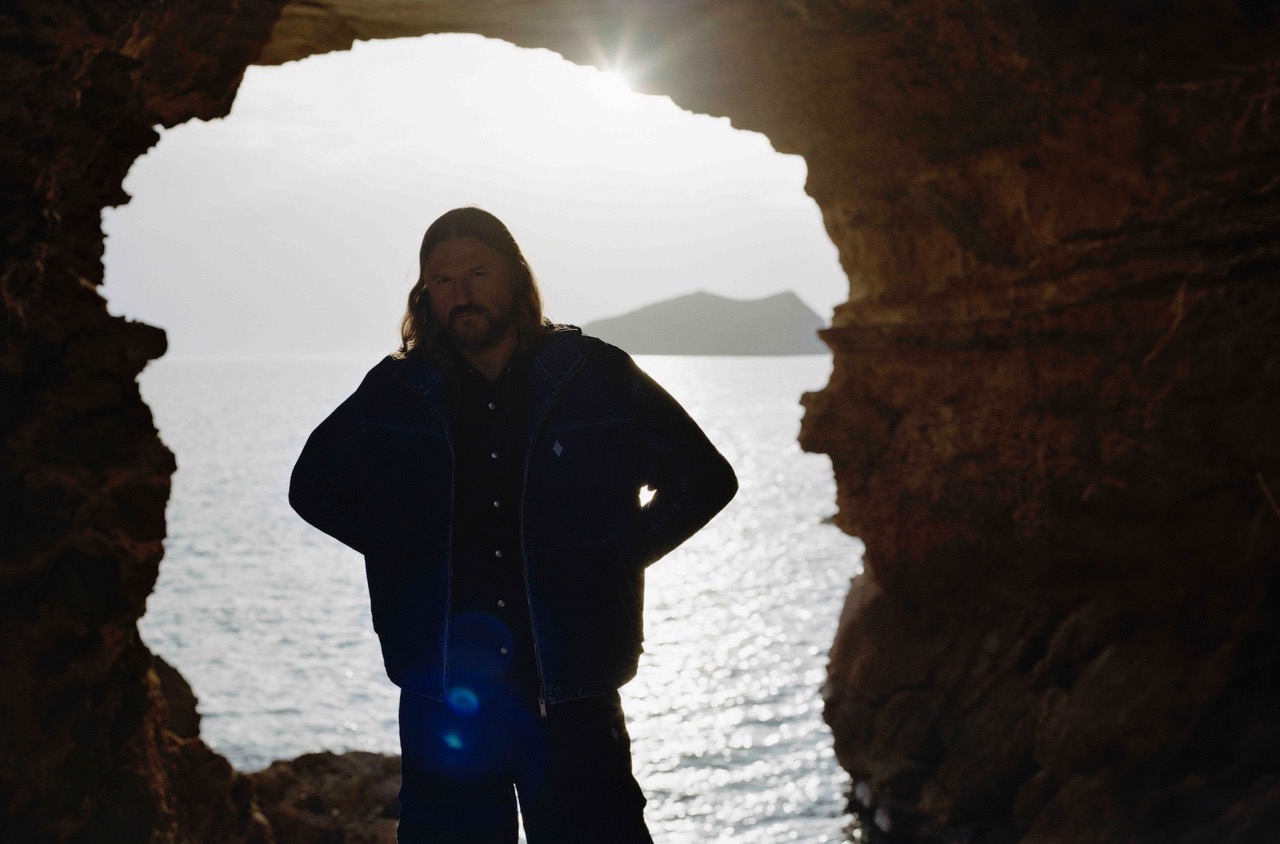
Tracksuit MARCELO BURLON COUNTY OF MILAN
Good choices. I wanted to talk about the trajectory of your career, starting in more underground, DIY spaces, and transitioning to a more mainstream, or more commercial setting. What has that transition been like, and how do you maintain it?
Of course, there is a transition, but with commercial and mainstream, I have the feeling you’re referring to Ibiza? [laughs] What’s your opinion about Ibiza?
Honestly, my impression is shaped by really high ticket prices and fancy venues. I feel like the more underground, hedonistic spirit of it has been commodified in recent years.
This is something I learned in life: don’t judge a book by its cover. I was like you, I had no connection to Ibiza. I grew up in Hamburg with this flagship underground, and I was always interested in house and techno and their history. Back then, my partner, with whom I started our first parties in Hamburg, called DIY, would always go to Ibiza and tell me to come. It didn’t make sense to me, why should I go to an island where everybody parties on holiday? Most of the artists who played there didn’t feel too interesting to me. But I always said: when it feels right, my time will come. I’ll go there and make my own experience. When we started the label, very early, we had the idea of a radio show. Ibiza had a lot of good radio stations, and two of the most famous ones, Ibiza Global Radio and Ibiza Sonica, were listened to by people from our scene all day. So our sound was already playing in Ibiza, even though I had never been there myself. And then at some point in 2011, I played my first gig there, an opening party for a new club in a hotel. Spoiler: it was not a success. It was strange to me. When I arrived and saw these billboards, I was like, ‘What the fuck? Is this Las Vegas?’ I didn’t understand it. Some performances were new to me too, hired dancers with huge costumes on podiums and on the dancefloor. I couldn’t really find the connection, why are they here on the dancefloor right now? Then the next few days, when I had a little more time to explore the island, I went to a beach party, and it was very beautiful. That’s when I understood what they meant by Ibiza. The magic I witnessed on the beach did something to me. And then I went to Cocoon at Amnesia, and that’s where I had my eureka moment, how amazing and special Ibiza can really be.
How would you describe that atmosphere? What are the things people don’t see from the outside?
It would be interesting to see how many artists who come here regularly have answered this question already. I think we all agree: there’s something about the island. I’m not really the guy for extraordinary, magic-word language, but there is something there. An energy. In general, when you go somewhere to experience something, you arrive with expectation, you’ve put effort into something you want to see. That’s different from going out in your own city, wherever that is. Imagine the impact of travelling somewhere, paying for the flight, the hotel, organising everything, just to see your favourite artists. It’s already a different experience from the start. And Ibiza is different. It’s a special place, where every year for over four months or longer, big and small parties happen every day. That’s really something special. And of course, there are many other great places in the world where electronic music is celebrated, that’s no question.
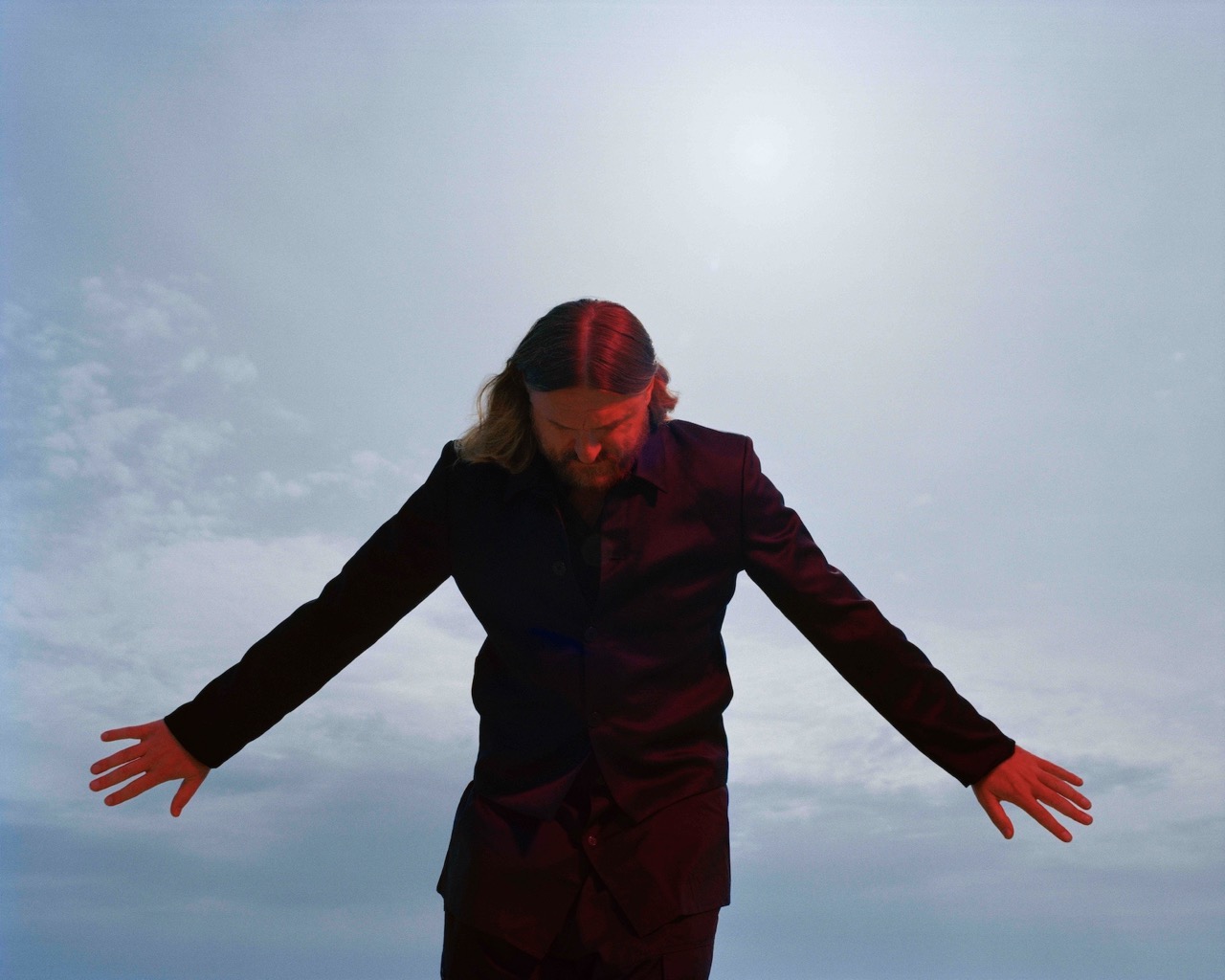
Jacket LACK OF GUIDANCE Shirt and trousers Y3 via REVOLVER IBIZA
What’s your favourite and least favourite thing about the scene on the island right now?
That’s a good question. What I’ve seen in the last few years, not only in Ibiza, is that in the end, it’s all about the next generation. I’m very happy about the freedom I have at my shows and the guests who share the decks with me. But it’s always about what the next generation wants. If the people of today want no-phone parties, they’ll make it happen. We started something like that at Pacha already eight years ago, handing out flyers at the entrance to make people more sensitive about what it means when you film on the dancefloor. It can be distracting, a bit annoying. It’s okay to capture a moment for the experience, but don’t forget why we’re all there, which is connecting on the dancefloor. And we always tried to explain that in a sensitive way, never dogmatically. I’m happy to see a lot of movements going in that direction. Back in the days, I had a club in Hamburg called Ego, and that also had a no-phone policy. I grew up like that. But I don’t want to tell the next generation what to do and what not to do. They have to decide for themselves and find their own way. And this isn’t only about Ibiza, it’s going to be exciting in every part of the world.
What was it like bringing your sound there? You said the first gig wasn’t exactly a success, do you feel you brought something the island hadn’t seen before?
After my first party there, the next year I got an offer from Sankeys, a club institution from Manchester. They had just started a new club and it was a proper underground space. It came at the right time. I really love the idea of building something from scratch, even without knowing what that means in Ibiza. But I love the risk. That same year, I started with Diynamic, Jamie Jones with Paradise, Richie Hawtin with Enter, and Marco Carola with Music On. That was an important sign of a new direction of sound for the island. We started the first night with maybe 600 or 700 people, and by the end we had 1,400 or 1,500. Respectable, but not great numbers. We were nobody, we just started from scratch. And we got a lot of respect for it, because nobody had us on their radar, even though others were obviously selling way more tickets.
Within your sets, your take on techno feels slightly more alternative, way more melodic or soulful, drawing from genres I wouldn’t traditionally expect.
Every artist has their own limit, their own way. You choose what you like, and I have to stand behind it 100 percent. I’m not doing something just to please somebody. You can play a well-known track from the 90s or 80s, or even Britney Spears, and if you can manage to put it in an intelligent, artistic, unexpected way, that’s brilliant. But if you do it flatly, it’s boring. For me, bringing unexpected things together is the art. I’m always trying to connect the music I grew up with, the influences I’m still listening to. I try to build small bridges between the tracks I want to play. I need space for this. And that’s important, you don’t want to eat the same thing every day.
Do you have an example of a transition where you took a real risk and the crowd responded?
I remember once playing in Brussels, about three years ago. It was outdoors, in a beautiful courtyard behind a historical building with columns. A daytime party, really bad weather. And then, in one moment, the sun came out from behind the clouds, right behind the booth, and shone through the gate of the historical building onto the crowd. But then I was like, ‘Fuck, I need to change my concept now.’ They’d told us there would be no sun, but suddenly it was glowing, and there was happiness. I thought: I need to play a disco track! This is the moment. I can’t remember which one I played, but I was under stress to find the right one. Luckily, I found it, and luckily the sun stayed for the whole track. It was an amazing collaboration with nature.
I really wanted to talk to you about the curation of Solomun +1. I loved that you played with The Dare, it felt like such a great and unexpected match. How did that come about, and what other ideas do you have for it?
I was impressed with him, his whole concept, his talent. I really loved his album What’s Wrong with New York? We were on tour in Australia, and he also played in Sydney, that’s where I met him for the first time. I was so positively surprised by how much background he had on the electroclash scene. We spoke a lot about how to bring that sound together with his own unique style. We shared some electroclash tracks afterwards. That’s why it was very easy for me to invite him, I really love what he’s doing. It’s one of those moments where I try to use the freedom I have to invite artists nobody really expects in Ibiza. And till the very end of the night at Pacha, he didn’t take off his suit.
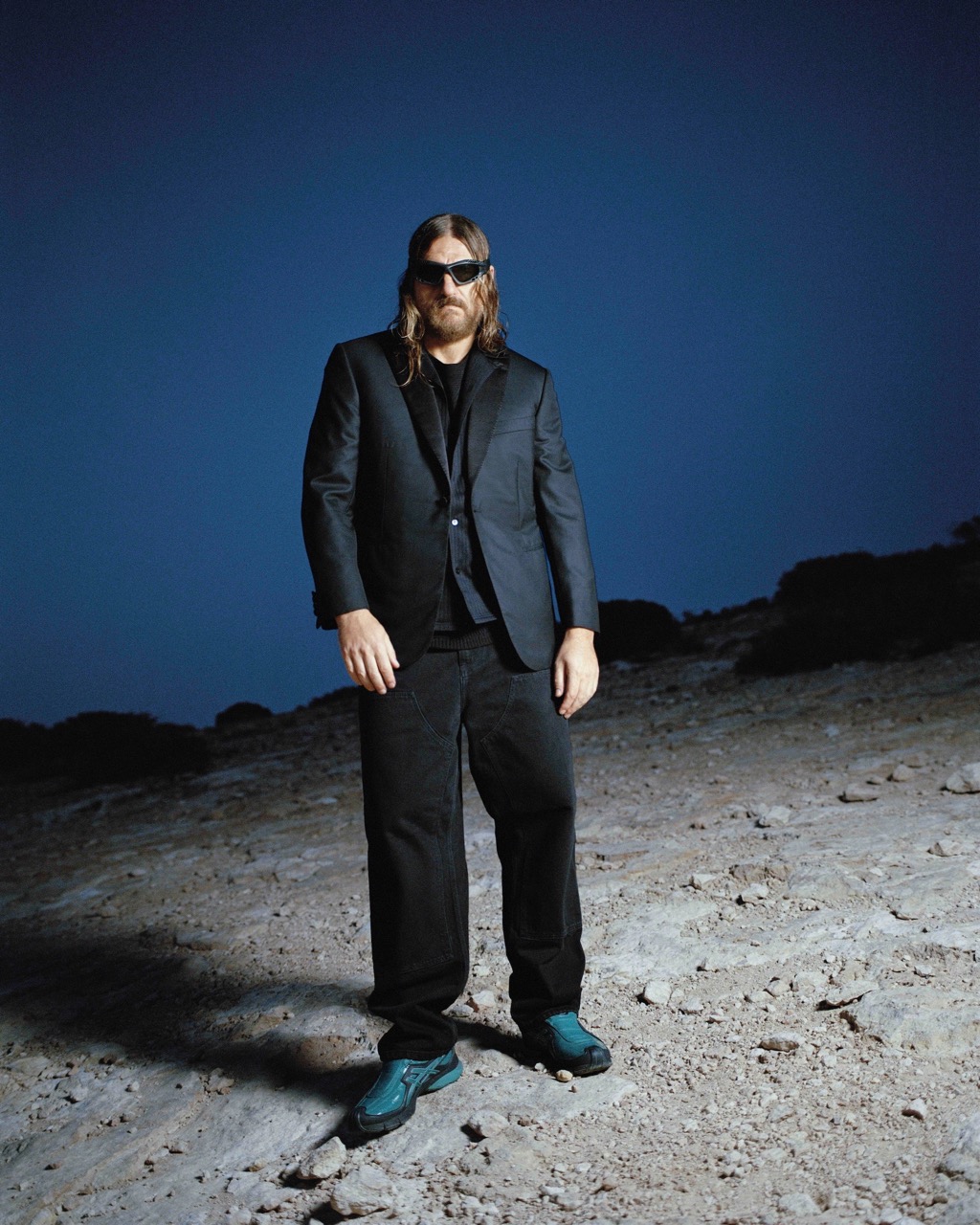
Tuxedo jacket BRIONI Shirt FILLING PIECES Top A.F. ARTEFACT via ICONIQ IBIZA Trousers CARHARTT WIP Shoes ASICS Sunglasses stylist’s own
Staying true to the character. Who would your dream invite be, dead or alive?
Elvis Presley. I mean, I’m very thankful for the possibility of working with so many great artists. But from all the ones I follow, who are still a role model for me today, it’s Laurent Garnier. I’ve never played with him. And maybe I never will, because he doesn’t play so many shows anymore. But we still write each other sometimes and send each other music. It’s always a very beautiful, respectful exchange.
Manifesting. And in more concrete terms, what can we expect from the residency this year?
I’d say a mix. Artists who join me for the first time, like Desiree, Max Styler, Kettama. Artists coming back, like Skrillex, Jamie xx, Peggy Gou, Chloé Caillet, DJ Gigola or Anyma. And of course, some of my longtime friends who’ve been coming since year one, like Dixon or Âme. And my probably most unexpected booking this year is Idris Elba, who I already played with once at Glastonbury, in the famous Guerilla Bar, where, and this closes the circle back to the beginning, there’s a strict no-phone policy. I’ll also play five Sundays all night long, something I started a few years ago. Those are also special nights.
In such a noise-filled and fast-paced industry, where do you find moments of quiet?
I love nature. It gives me so much peace. To hear the birds, hear the cats around me. I also have my own sauna here, that’s where I find peace.
And do you find that sense of quietness, even though it sounds contradictory, when you play? When you lock in for so many hours, do you also experience that shutting down of the outside world?
It’s a mix. Sometimes I’m very focused, and other times I have to wake up and connect with so many people. But honestly, that’s exactly the point. Shutting down the outside world. A big luxury these days.
How do you approach reading a room and knowing what to play when?
Did you watch the movie Gladiator?
Yes.
That’s how I read a room. Thumbs up or thumbs down. The dancefloor is always honest, if I don’t read the room in the right way, I feel it [laughs]. But jokes aside: I’m very happy and lucky to have played so many shows and gained some experience. And part of that experience is realising there are differences between countries. In some regions, things are more emotional and melancholic, in others, more energetic. And in Italy, for example, you can really feel the house music roots.
After all these years, what is something that still surprises you about the dancefloor?
The whole system of electronic music wouldn’t make any sense without the dancefloor. It’s the place where people melt together with the music, the melting pot. We need it to fulfill the whole beauty of music, and it doesn’t matter which genre. Also, it doesn’t matter how technology has changed, the dancefloor is still a place where we can forget everything. That will never change. Maybe it’s not surprising. It’s more a beautiful fact that we still have it, and we should appreciate it.
My final question: what’s on the horizon for you? What are some of the territories you’re still looking to explore?
I just want to have more time for myself, and to be better at what I’m already doing. I believe in the idea of lifelong learning. The moment you stop trying to be better is the moment you should maybe stop doing this.
Words by Evita Shrestha
Photography by NICK VAN TIEM
Creative direction by GLAMCULT
Styling by ILARIA NORSA
Post production by MICHAEL FRAHM
Styling assistance by ARABELLA LORUSSO PETRUZZI Hair and make-up by LAUREN WEBSTER
Production by ASHLEY HARRIS — The Island Productions
Special thanks to PR agency — The Media Nanny