But he loves painting their cans
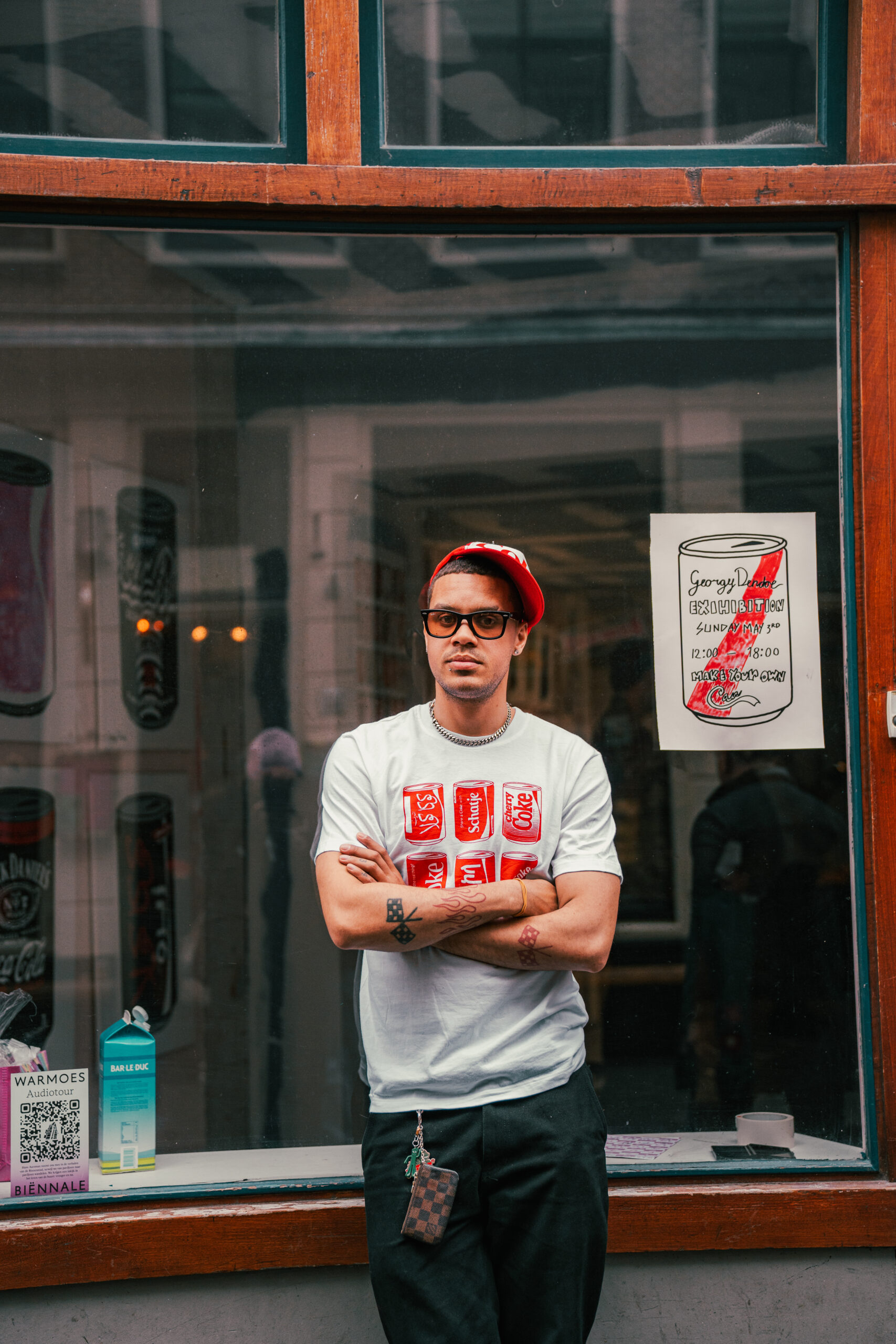
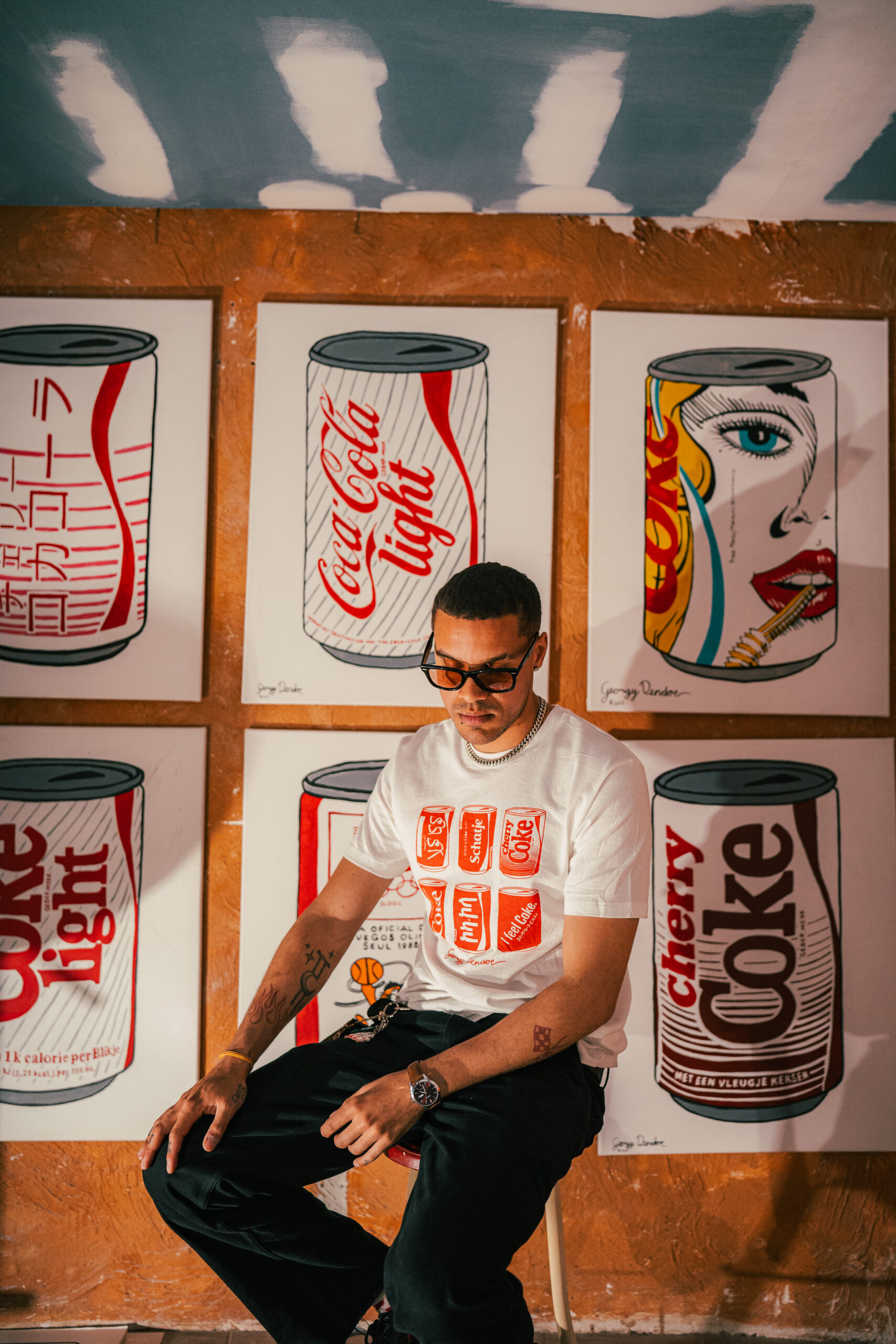
Georgy Dendoe is the Amsterdam-based multidisciplinary artist. Best known as GRGY from the super influential Dutch hip-hop group SMIB, he’s also now delving into childhood and pop-culture nostalgia, one tin can at a time. In between rapping, producing, and co-running the collective, Georgy has recently ventured into a new territory his artistic mind hadn’t yet explored: painting (cans, this time around).
Approached by the Warmoes Biennale for its first edition, he was offered a studio residency with the liberty to develop anything of his liking. Adamant on honing his painting skills, Georgy painted a Coca-Cola can every day for a month: perfect reds, the sweeping white script, and a black contour for the final touch.
Glamcult catches up with Georgy to, literally, discuss all things cans. From childhood memories spent at his grandmother’s house-atelier to growing up in a family of creatives, Georgy also lets us in on his love for Fernandes’ Cherry Bouquet and wholeheartedly shares his niche Coca-Cola design knowledge.
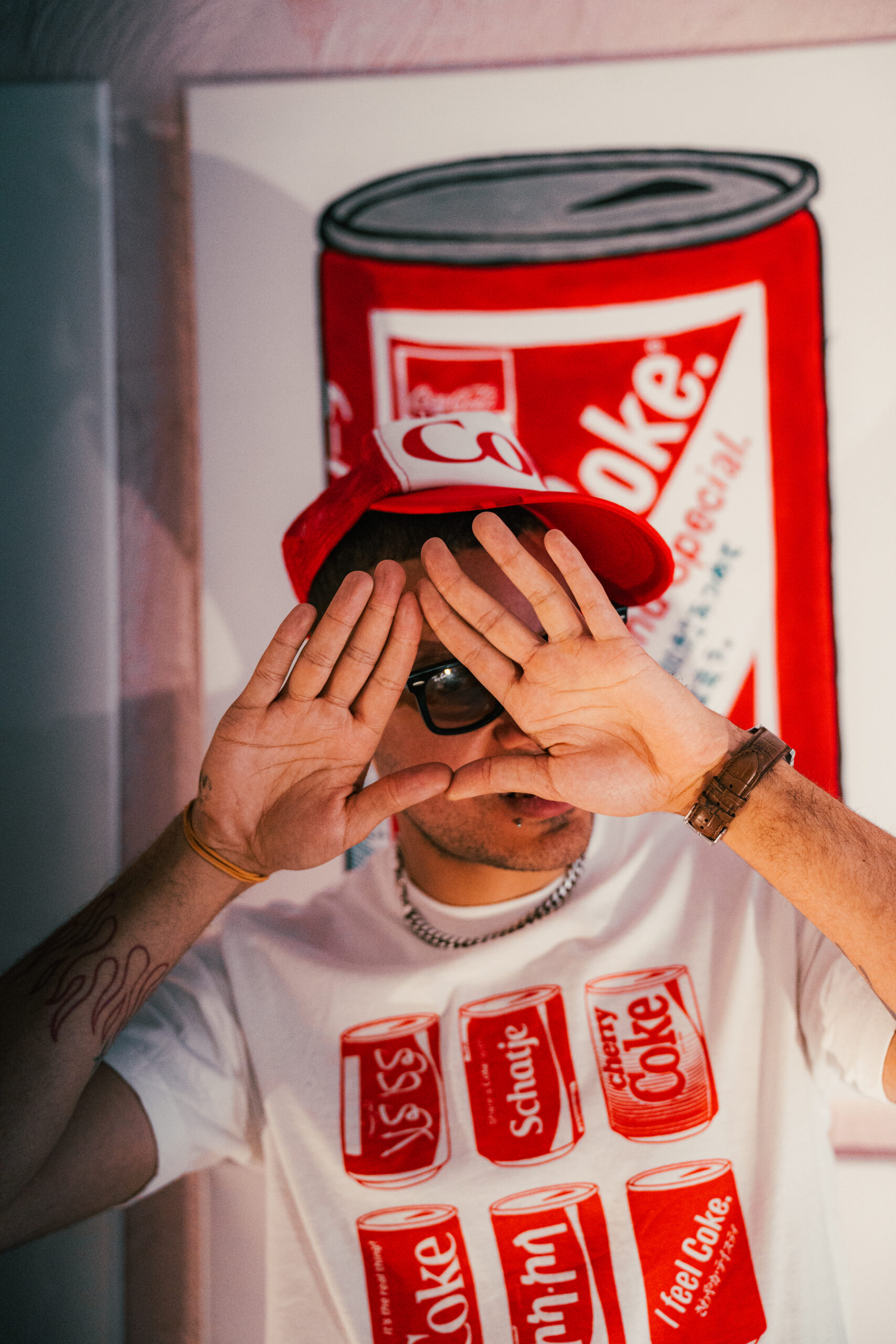
Let’s begin with the title of your series, Blikken van Mama, tell us more about it!
The title is actually very self-explanatory, it’s called ‘Mama’s Cans.’ I started painting cans that my mom had collected when she was a teenager. She had drinking cans from Grolsch, Heineken and Coca-Cola, to 7-Up — just any type of can she could find. And two years ago, I found them in my grandma’s attic. I had never painted before — I wanted to start — and my grandma [Anna Mes] was a very big painter.
Not being a Dutch speaker, I quickly turned to the title’s translation, where Blikken means both ‘cans’ and ‘glances.’ Was the word play chosen on purpose? There’s a double meaning of observation?
It’s possible, but … I would be lying if I said that was the case.
So fair. How did your mom’s interest in cans begin?
She just thought it was fun. But one thing that was cool is that I do art because of my grandmother. I was at her house every single weekend, and I just always saw her painting. I was allowed to do anything there, so I always drew, painted, made clothes, and listened to music with her… She listened to a lot of jazz music. She really stimulated me to just be creative. And my father is a drummer in a very big Surinamese band. So, from my dad’s side, from my mom’s side, art or creativity have always been very normal. I wasn’t pushed toward doing it, but it was just always around me.
It’s really impressive how she managed to keep them safely after all those years.
My mom was also, like me as a kid, collecting random stuff. She was always really supportive of it, and it was just natural, because she had me at a very young age.
My grandma passed away recently, last October. She was 90 years old, and she painted until the very last moments that she was alive. She got ill a year before she passed, and she had to move out of her house, so I had to clean up the space where she had been living for the past 40 years. And then, I went to the attic — in my whole life, I’ve never been to the attic — and I found old pictures of my mom, of my grandma, old art that she made, and then I found the box of cans. And the cans were really beautiful, because they’re from the 80s. I thought it was really cool that my mom was collecting them and that my grandma was supportive of it.
I was searching for a new subject to paint, and I really like Andy Warhol — and pop art, in general — and when I found my mom’s cans, I decided I should paint them. After I found the cans, I started looking differently at them in general, and whenever I saw one that I liked, I would archive it, take a picture of it, take it home with me, and put it in a box with the rest of the cans.
And so you first presented your series at the Warmoes Biënnale at the beginning of the year. How did that come about?
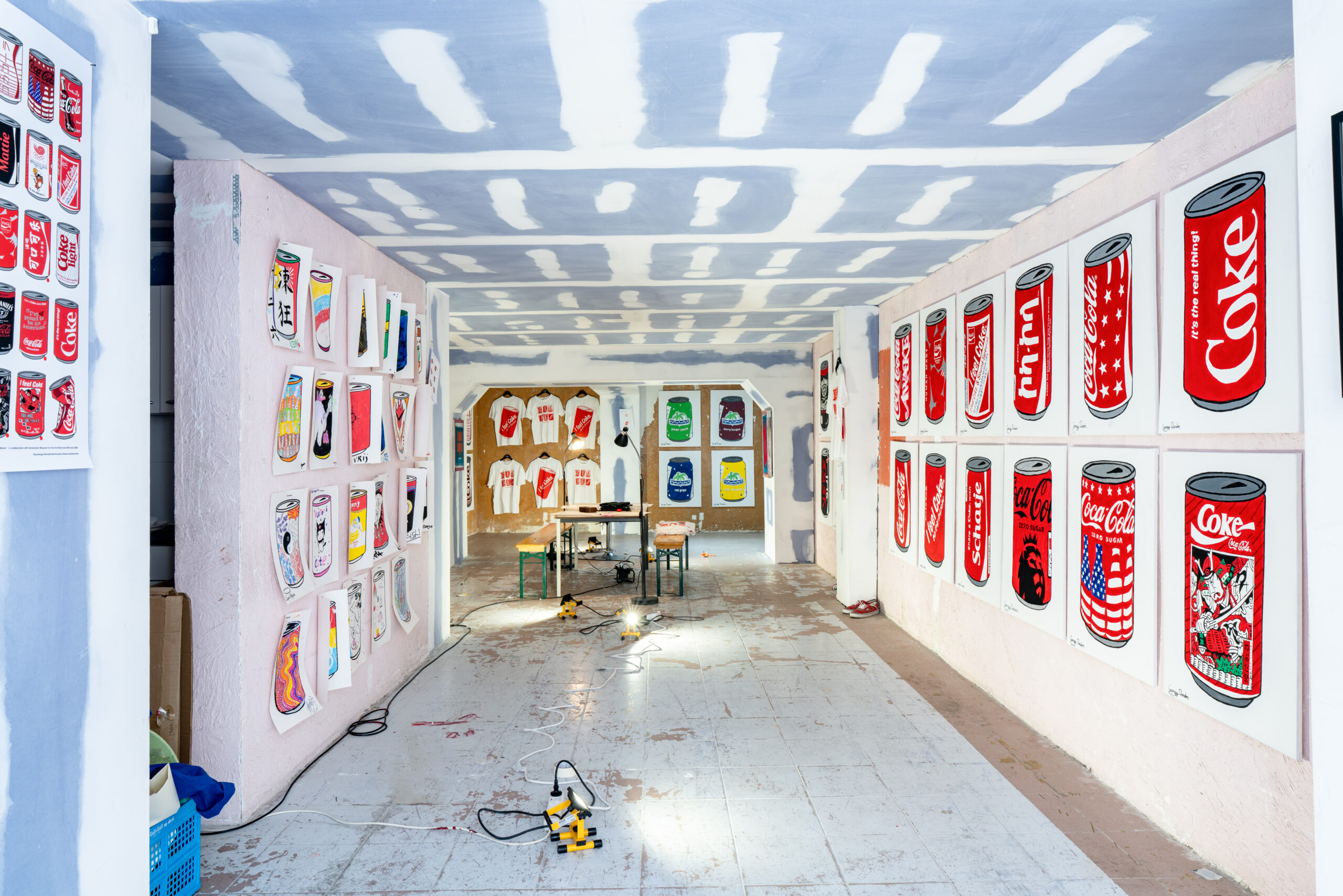
Last year, around December, I got a call from my friend Bonne [Reijn], who is doing the Warmoes Biënnale. He told me he wanted to involve me as an artist and asked me if there was something that I wanted to learn. I said painting. So, he offered me a residency where I could just learn how to do screen printing, painting — just everything that I wanted. That gave me a crash course by myself. For that month, I was painting there every single day for 30 days, and by the end, I did the exhibition in that same atelier.
You started painting when you began your residency?
When I found the cans, I really started painting, and made like 10 paintings in the course of six months, and then when I got the residency, I painted every single day.
The series only features Coca-Cola cans. How come you made that decision for this series?
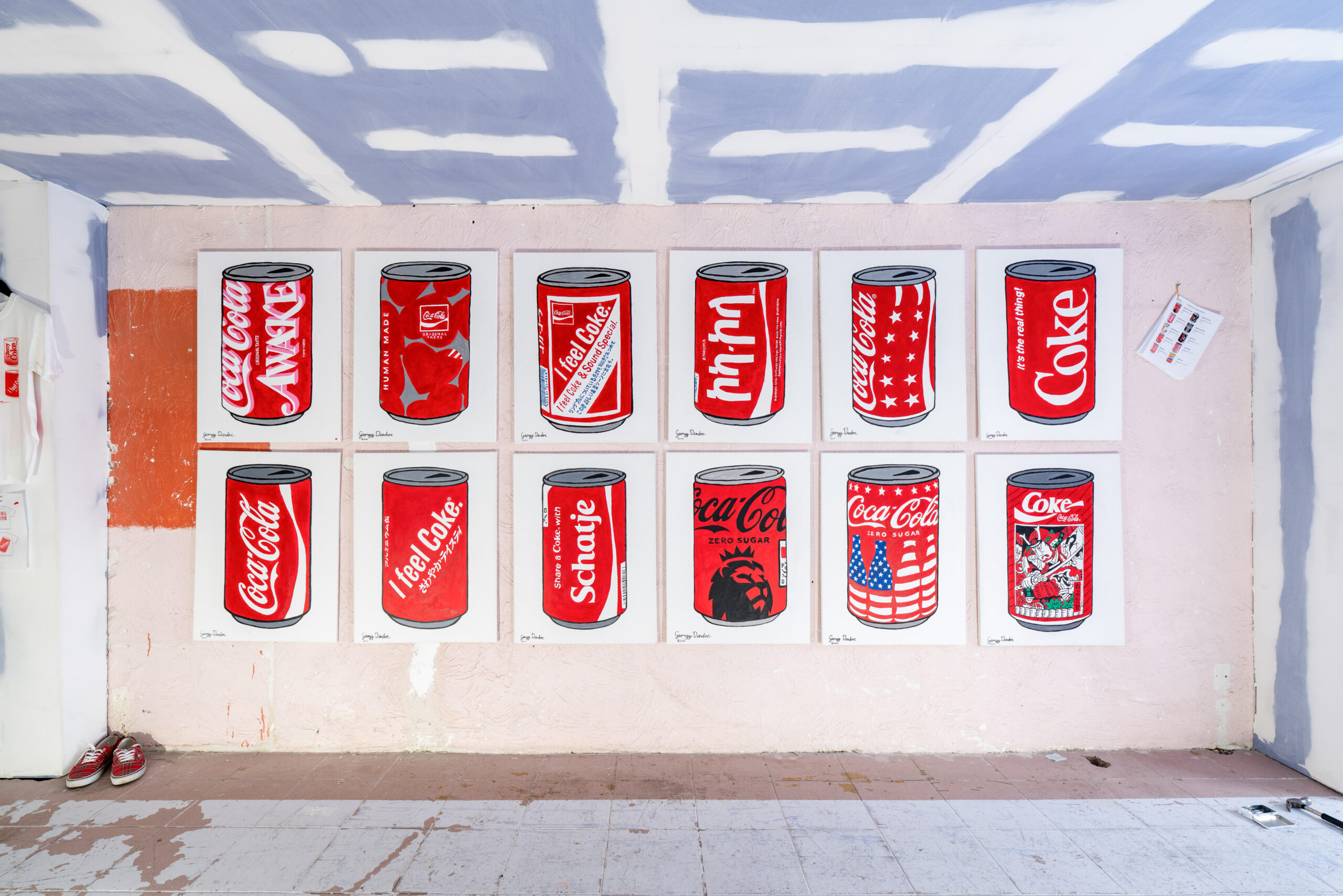
So, my mom had a whole bunch of different can brands, but then, as I started collecting them myself, I noticed how Coca-Cola has 10,000 different cans — and really fun ones. I didn’t invent any of them, but still, there are 30 different cans here, and it was really interesting to me that I could fill this place with so much of the same work, yet it’s all different. Actually, I’m just curating the cans that I like.
What was your technique like? Was it one painting after another?
So most of the cans have red in them, so I just started painting all the red on every single canvas, then I start with the next colour, all the greys, and end with the black lines. That made me really productive because I painted 30 cans in less than a month.
Like chain work. I was going to ask you about Andy Warhol earlier – you mentioned him as a big inspiration, also.
Yeah, Andy Warhol is amazing, but I will argue with you that my cans are better than Andy Warhol’s.
How do you defend that?
All my cans are hand-painted… I wanted to do screen printing, but I noticed I didn’t really have the technique down to do it. Just because I have so many different cans, I would have had to make 30 different screen prints, which felt like way too much unnecessary work. Of course, Andy Warhol is amazing, but I hand-painted every single one of my cans.
Can you tell me more about the workshop you held during the Biennale? People were drawing their own cans?
I screen-printed blank cans on A4 sheets for people to make their own cans during the exhibition. I had two walls that I left empty, and everyone that came around could put up what they made. It’s a collaborative effort.
I love that. You’re also showing an extension of the series at Kino Talk.
Yeah, so Kino Talk is doing a show about the abolition of slavery and freedom. They wanted to show art from the diaspora, and I, as a Surinamese man, I’m painting a Surinamese subject – the Fernandes can. Fernandes is a Surinamese drink I used to drink when I was little, and still do to this day — it’s just very tied to my heritage and to my childhood. So I also did four paintings of the Fernandes cans.
What’s your favourite flavour?
My favourite flavour is Cherry Bouquet.
Noted, I should try it. How did your series change the way you look at the object?
I look at cans totally differently now. When I see a crushed one on the street, I’m looking for ‘perfectly’ crushed ones — I’ve painted a bunch of them. This [holds up a perfectly crushed Coca-Cola can] is just a piece of garbage, but painting it turns a piece of worthless trash into a piece of art.
It’s an ever-expanding collection now. It started with my mom’s collection — which is 40 years-old — but now when I’m on the street and I see something random like this, it just becomes art in my mind.
It’s crazy because you said Coca-Cola has thousands and thousands of designs.
But you know what’s interesting: if I put up a painting of a 40-year old can and a brand new one — such as the crushed one I have here — you wouldn’t even notice the difference. It’s truly timeless. And timelessness can only be established after many years. You can’t design something today and say it’s timeless. The Coca-Cola symbol is just crazy timeless.
You’re really becoming a Coca-Cola design expert.
And I don’t even really drink Coca-Cola. Also, I’m not being sponsored by Coca-Cola, I’m not endorsing it. I’m just painting it. And, next time, I might paint a bunch of Heineken cans. I would love to also work with people that have a soda or can brand. I’d love to paint your can, you know.
Was there one can design that really surprised you?
They really translate time. For example, one of the cans had a whole advertisement on the back for kitesurfing. It said you could send money to their account along with your address, and they’d mail you a three-by-five-foot Coca-Cola kite. There was also one with a recipe that would go well with a Coca-Cola. So, they had a pizza one, then an artichoke recipe.
Me painting that again turns it into an inception form of art — there’s already a piece of art on the can, but to most people drinking it, it’s just a can. And when it’s empty, it’s just a piece of trash. But me painting that can which already has an art work on it becomes an immortalised piece of art.
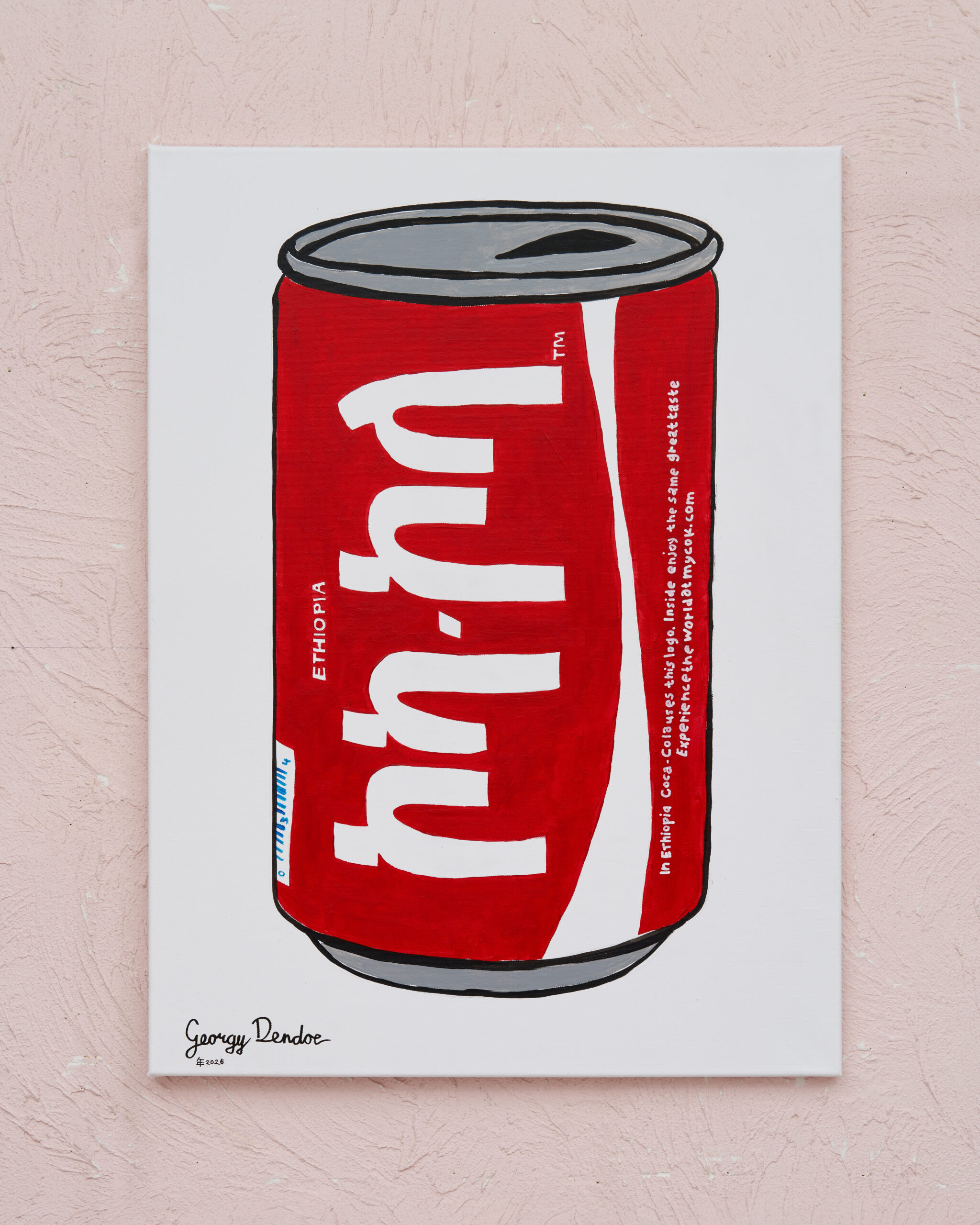
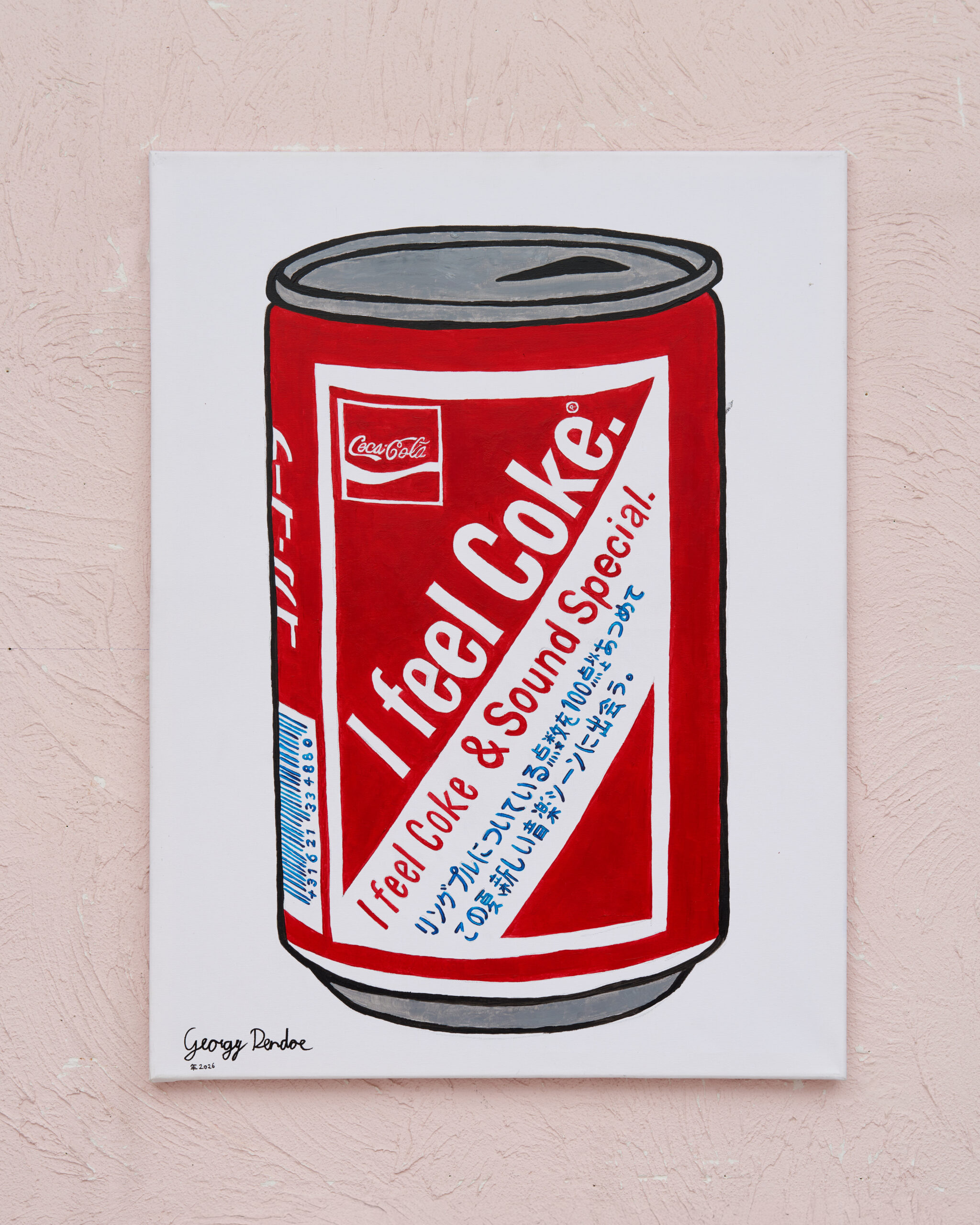
And for example, I have a Coca-Cola can from Ethiopia. You can’t read it at all. But still, you know what it is because of the swoosh and the colours. There are so many different languages of Coca-Cola — the Chinese, Korean, or Japanese — and you can’t really read what it says at all, but you immediately know what it is.
And also you mentioned earlier that what your mom really encouraged you also to collect when you were younger.
Especially my grandma. And also, at every exhibition that I do, I just hang one random painting from her in the room. So she’s there with me.
That’s such a nice tradition. What were the things that you were collecting when growing up?
I collected Yu-Gi-Oh cards. Also everything that was inside a chips bag. I just love collections. You also have games like Final Fantasy — the first one is from the 80s — and nowadays we have Final Fantasy 20-something. I just love that it has this continuation; it builds on heritage. I just think it’s so cool that they keep using the same name. Now, we have an iPhone 17, but in a hundred years, we’ll have an iPhone where the name is not going to be sexy, like an iPhone 51. They’re going to have to change the name at one point I guess, but it would be so cool if we just keep calling it iPhone and the numbers never end.
True, I never thought about it in this way. And what are you collecting today?
So much stuff. I’m collecting books, shoes, and clothes. I’m collecting random cars. I like toys. It’s not that I’m actively seeking stuff to collect, but I just like having stuff.
What are your future painting endeavours like?
So I did this series in a pretty small space and I would love to do this again with a different brand, or do it in bigger places and do even more. Now I did thirty, let’s do a hundred next time. Then if there’s an exhibition where you can look at a hundred different cans, that also adds another type of value to it again.
You’re only going to stick to cans for now?
Well, I’m doing cans now, but I want to do one idea a hundred times and then move on to the next idea. I might paint iPhone 1 till 17, just something that you could do multiples of. And the subjects are endless — we can paint anything.
Words by Lora Lolev
Images courtesy of the artist