UNFOLLOW
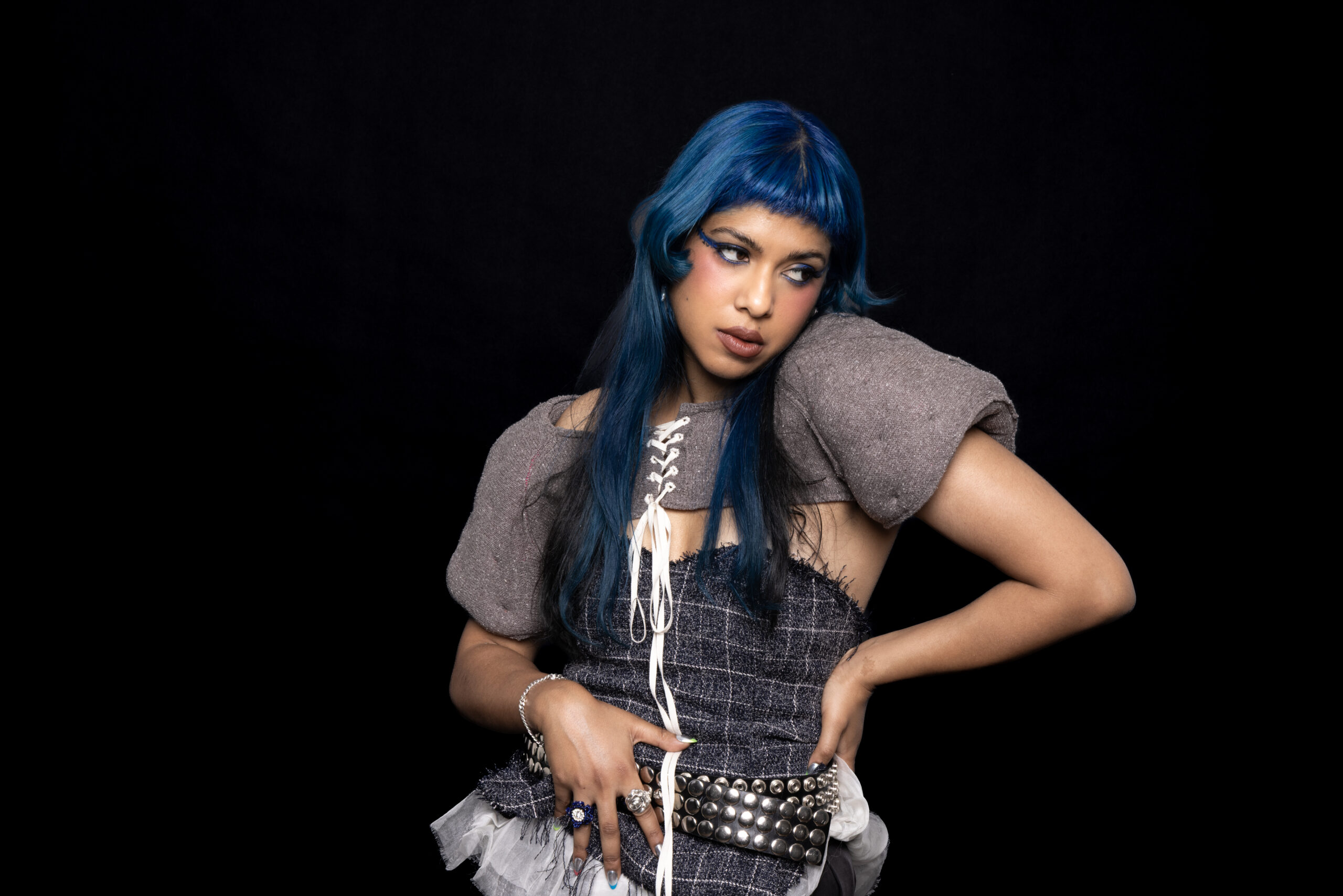
There’s a certain kind of confidence that comes from disappearing for a bit. Not in a cringe “taking a break from socials” way, but the kind where you log off long enough to hear your own thoughts again. And crucially, by choice — not because you’re stuck in airplane mode, or in the world’s deadest group chat.
For Ecca Vandal, that (ironically) quiet spell online became the foundation of her new — and ferally loud — album, LOOKING FOR PEOPLE TO UNFOLLOW: a chaotic, genre-sliding punk record made by shutting out everyone else’s opinions long enough to figure out what she actually wanted to say. “I was offline for so long while I made this album,” she begins to tell me. “It was great. It was like dialing out all of the noise that the online world provides.”
We speak ahead of the Glamcult cover shoot she’s due for later that day, and she’s oddly calm considering the usual editorial-day chaos. She has this very unfiltered way of speaking; thoughtful but conversational, like she’s arriving at ideas in real time rather than delivering polished media-trained answers. Originally, disappearing offline wasn’t supposed to be some dramatic artistic statement either. It was instinctive.
“I was really trying to search for what I wanted to do artistically,” she explains. “So I wanted to remove that influence in my life of what everyone else was doing, or what was trendy, or what people thought was cool.”
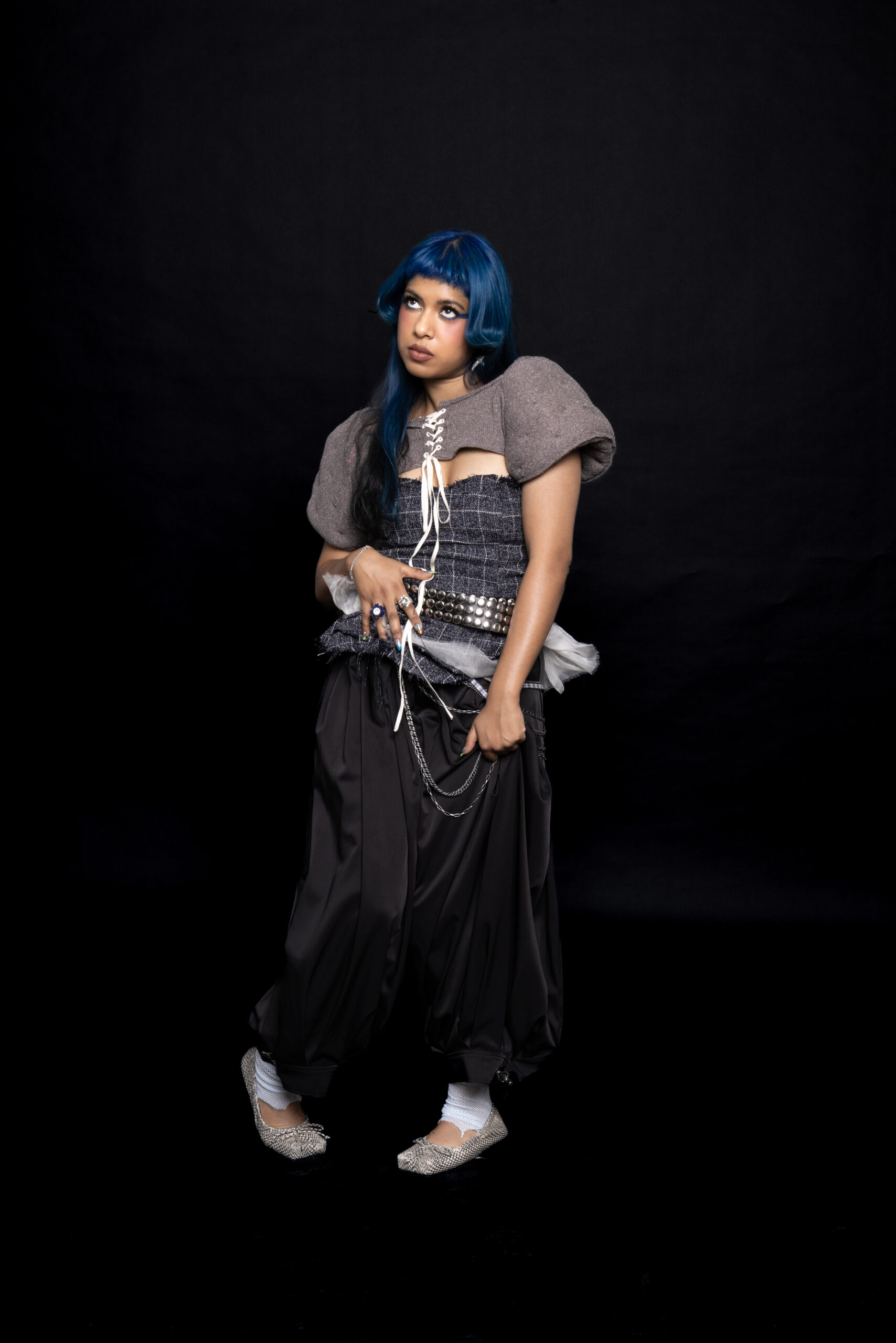
The longer Vandal stayed away from social media, the stranger it seemed to the people around her. Let’s be honest, we’re so used to artists documenting every second of the creative process, from studio shots or their coffee order, that someone simply vanishing to make work now feels borderline rebellious?
“The more I resisted sharing every part of the process,” she agrees, laughing, “the more it felt like I was doing something a little bit different.”
Still, Vandal isn’t anti-Internet in the ascetic, log-off-and-touch-grass sense. If anything, she’s refreshingly measured about it. She values online communi – ties, particularly as an artist whose work slips between conventional categories. “When I’m absorbing artists I love online, I’m not really interested in every detail of their lives,” she says. “I just want to consume the art they present. I’m not really interested in what they’re eating for breakfast.” For better or worse, that places her at odds with half the modern attention economy. The risk? The algorithm, unfortunately, may disagree.
At one point, we start talking about artists who’ve managed to main – tain a sense of distance from their audience and I bring up Vashti Bunyan, the cult folk musician who disappeared into the countryside for years before eventually discovering she’d quietly become beloved in her absence. “I love that,” Vandal laughs immediately. “Maybe that’s what I was channeling.”
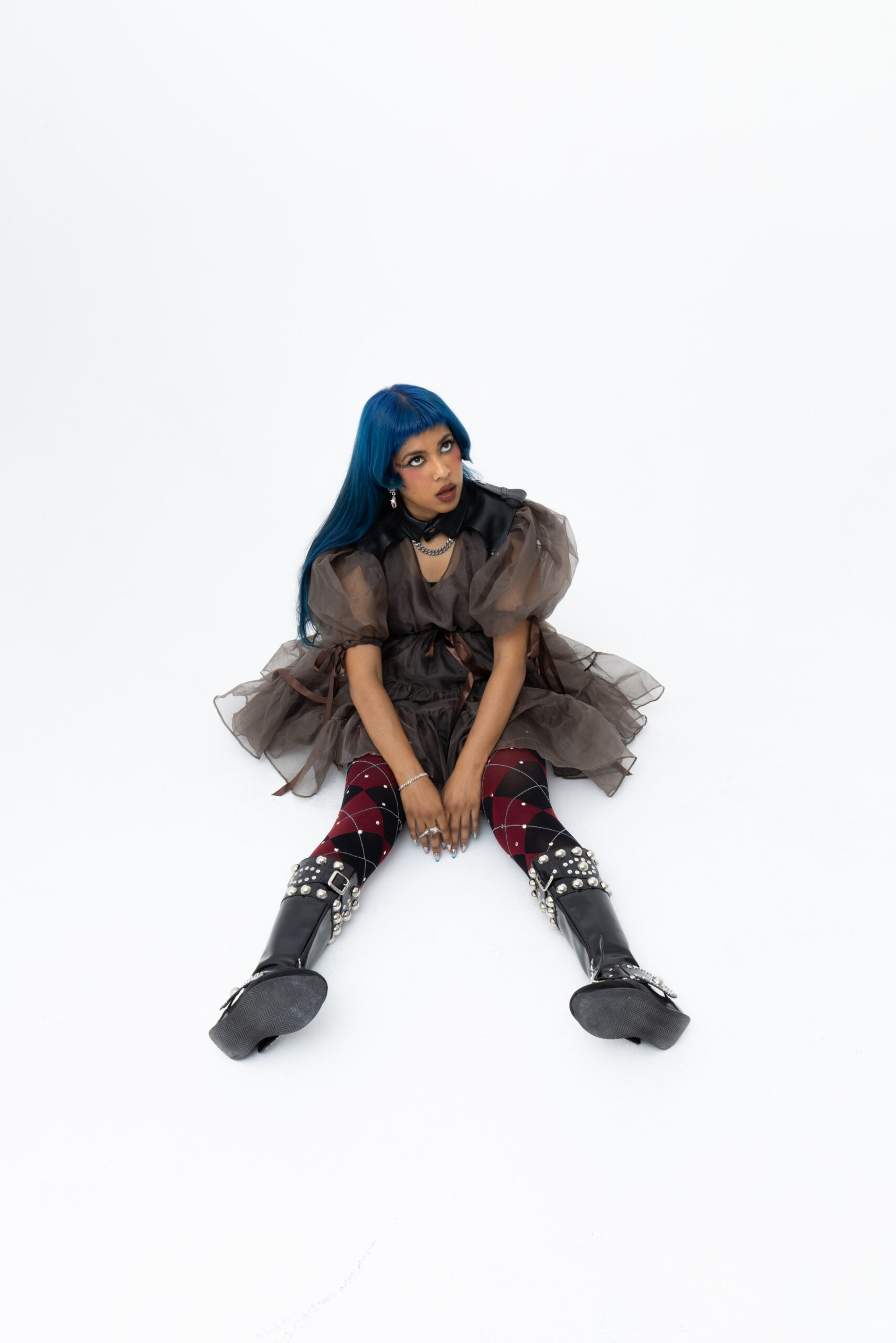
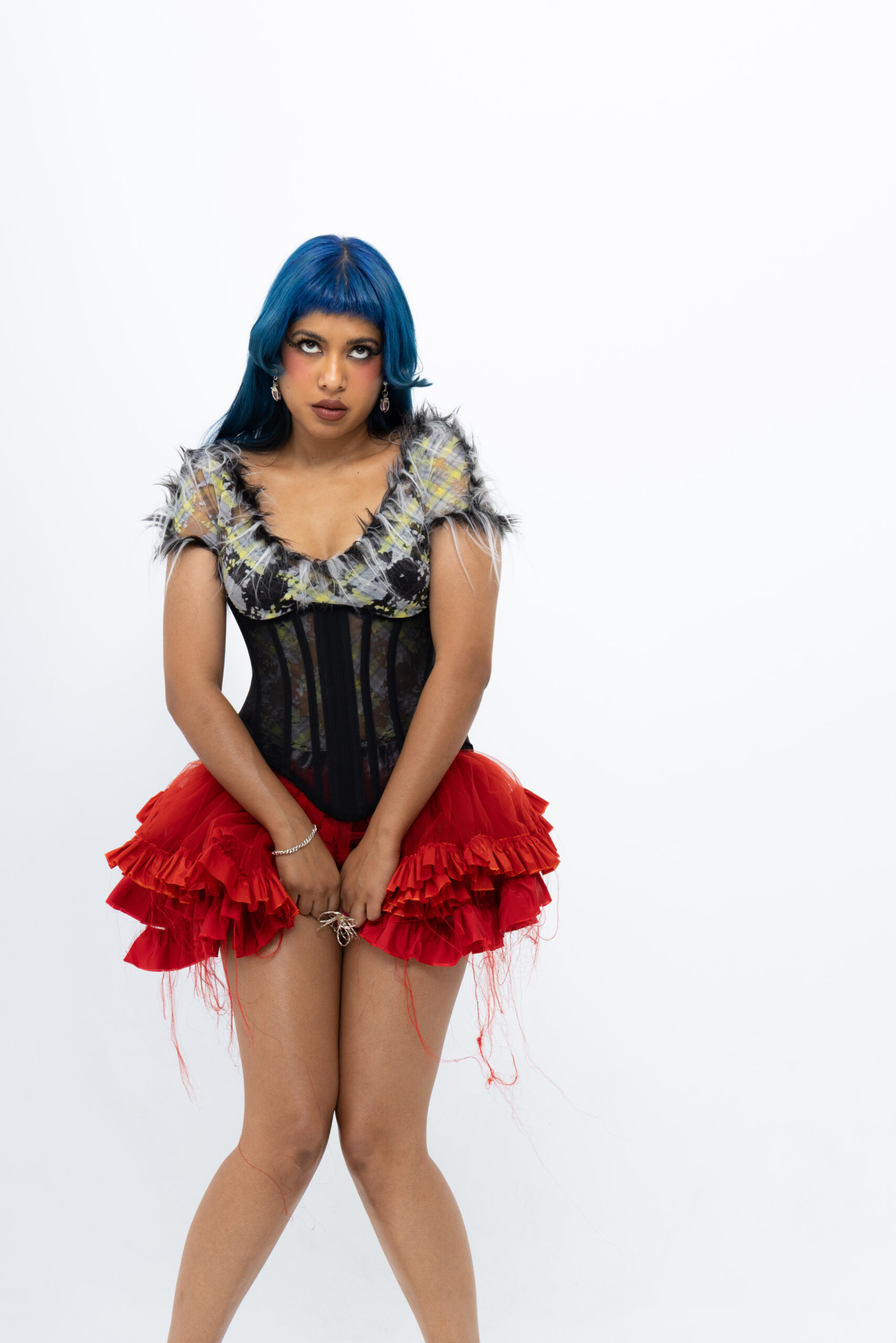
But she’s not interested in mystery for mystery’s sake. There’s no calculated cool-girl distance here. What she’s after is depth. “I do still think there are other ways to tell your story,” she says. “Through visuals, performances, conversa – tions. I don’t really think ‘get ready with me’ videos provide much depth to what an artist is about.”
Eventually though, she came back online because she’d finally made something she genuinely wanted to share. “Once I’d completed the album, I realised, okay, I want to put this out,” she says. “At the time I only had around eleven thousand people there waiting to hear what I was going to do. And I liked that.” Why? “Because I just wanted to share it with whoever was naturally drawn to it,” she explains. “Not because a label was telling people this is cool or that they have to listen to it.”
Slowly, that audience snowballed. “We put out little things online and slowly but surely a community started building,” she says. “That changed my perspective on social media because I realised I was actually finding my people.” And she really has found them. Over the last few years, Vandal has carved out a space entirely her own, moving between punk, hip-hop, hardcore, jazz and electronic music without ever sounding confused by it. She’s toured with Queens of the Stone Age, Limp Bizkit and Incubus, building a reputation for live shows that feel more like emotional release than straightforward gigs.
That same freedom bleeds through the album itself. Written largely with her bandmate Richie in his childhood bedroom, the project became its own hermetically sealed ecosystem, blissfully insulated from industry expecta – tions and whatever micro-trend the internet had collectively discovered and abandoned before lunch. “When we closed the door in that room, it was like shutting out the world,” she says. “We were just creating and having the best time doing it.”
You can hear that looseness throughout the record. Hardcore crashes into soul, punk bleeds into jazz, songs stretch out when they need to and disappear abruptly when they don’t. Nothing sounds overly pol – ished or focus-grouped. “I wanted to write things that made me feel powerful and free,” she confirms. And at one point I ask whether she ever feels intimidated by genre itself, particularly scenes like jazz or punk that can come with heavy gatekeeping and very opinionated audiences. “Absolutely,” she says immediately. “Jazz can definitely feel intimidating. It can be quite snobby sometimes…”
She gives an awkward smile before explaining what actually draws her towards it. “What I love about jazz is the dissonance and improvisation. That freedom to push against the edges.” Interestingly, she draws a connection between jazz and punk almost instantly. “I actually found similarities between jazz and punk through discord and improvisation,” she explains. “They both have this abandon. They’re both freely expressive.”
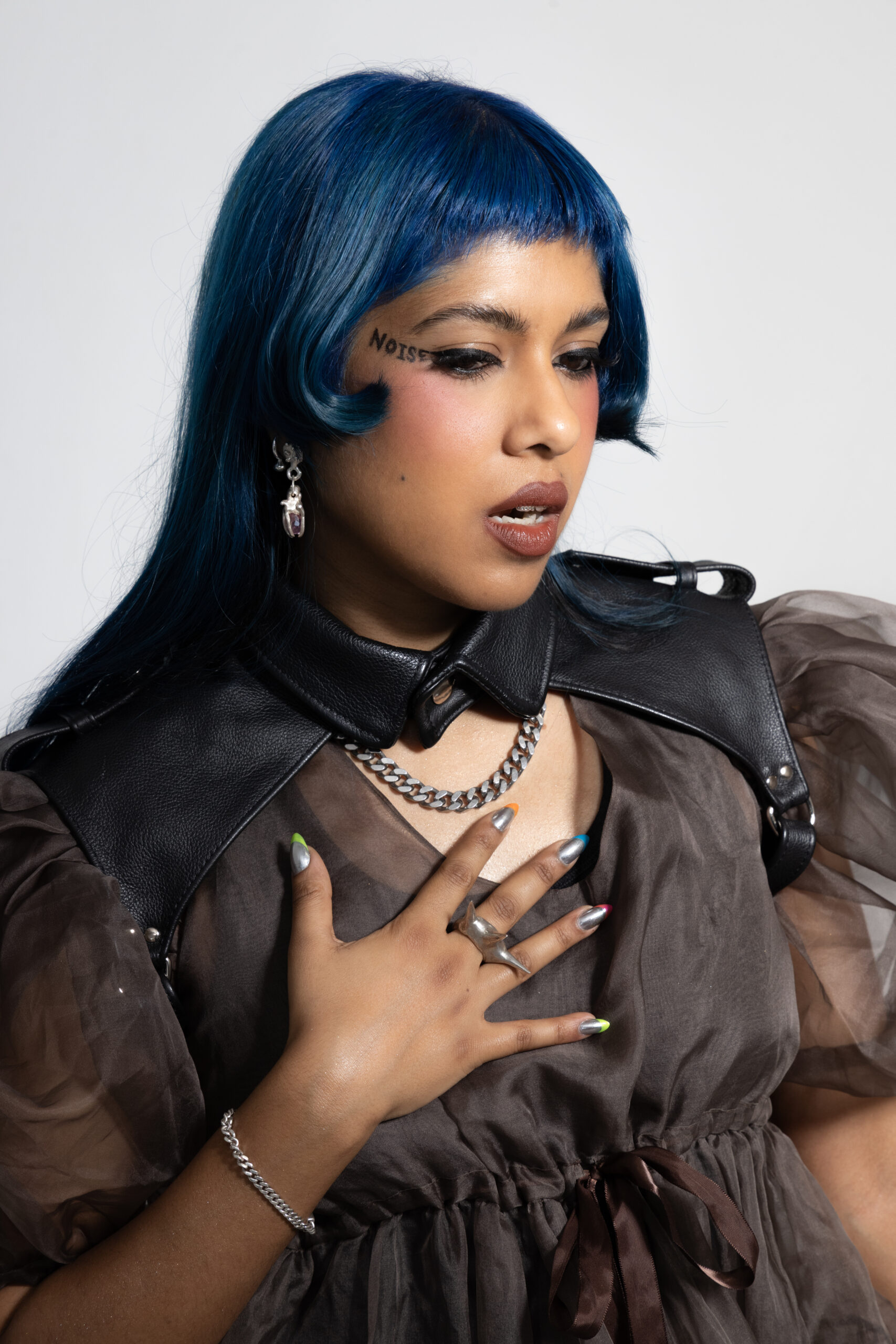
Punk itself, though, wasn’t (and arguable, still isn’t) always an easy space to enter. Born in South Africa to Sri Lankan parents before later moving to Australia, Vandal spent much of her childhood balancing different expectations around identity, culture and femininity. At home, traditional ideas about womanhood shaped a lot of her upbringing.
“Girls are quiet. Girls study. Girls are submissive,” she says plainly. “And I just wasn’t that.” Even as a child, she remembers struggling against those expectations. “I didn’t want to sit still and I didn’t want to be quiet. I wanted to question things.”
That refusal to shrink herself has become central to both her music and stage presence. Watching Vandal perform live is wild in the best possible way. There’s no rockstar distance to it. She throws herself into performances completely, whether she’s screaming into a mic, diving into crowds or sprinting across stages like she’s trying to physically outrun the music. “I now find empowerment in being loud and noisy,” she says. “Especially as a woman in this global moment.”
But despite the confidence she projects onstage, she admits there were moments where she questioned whether she fully belonged within heavier music spaces at all. “Being a female of colour, I didn’t know whether I was welcome in that world,” she says. “I would feel scared to go to punk shows.”
Things shifted over time, though. [Touring with] “bands like Basement and Frank Carter really welcomed me in,” she says. “It felt like a rite of passage.” And while punk still has its fair share of people obsessed with authenticity politics, Vandal seems completely uninterested in proving herself to anyone. “I’m just showing up as myself,” she shrugs. “To me, punk is about expression and freedom.”
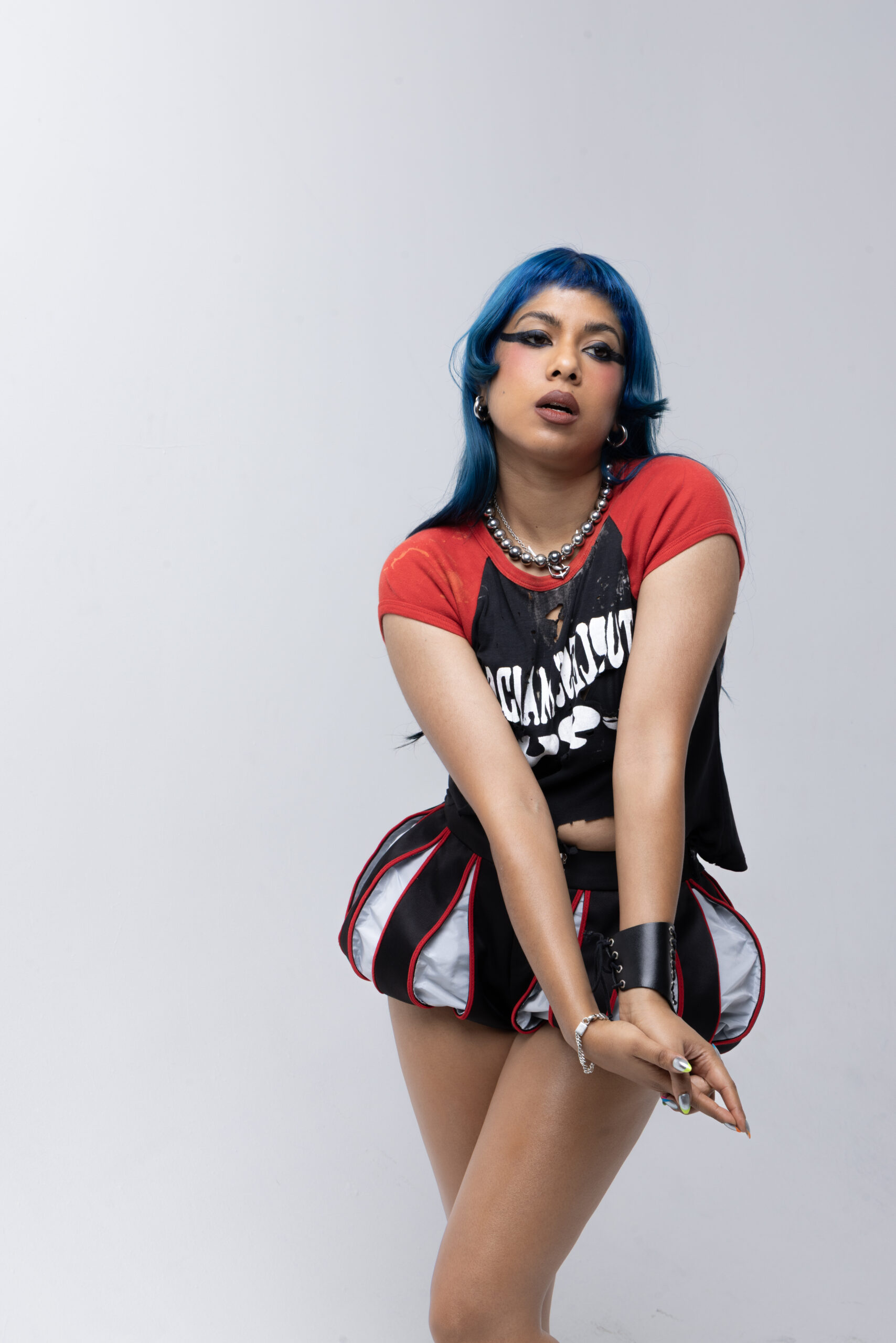
Fashion operates similarly in her world, too. Less about trends and more about instinct. “Fashion to me is another form of expression, similar to music,” she says. “I like to have the same freedom with what I wear that I have with music.” When I ask whether she follows fashion rules, she looks at me semi-confused. “I don’t even know what they are.” Instead, I learn she dresses emotionally and intuitively. “I just wear what makes me feel like me that day.”
Don’t mistake her allergy to rules for a lack of fashion literacy. Vandal might resist neat categorisation, but she knows exactly where her references live. Certain touchstones keep resurfacing: the sharp silhouettes of seventies and eighties punk, the DIY irreverence, the sense that clothes should occasionally look as though they’ve survived an argument. It’s only a matter of time before the conversation arrives at Vivienne Westwood. “What Vivienne Westwood did was groundbreaking,” she says. “And Andreas is still doing such beautiful things with the house.”
The comparison isn’t entirely far-fetched. Like Westwood at her best — think the swaggering romanticism of the 1981 Pirate collection — Vandal’s style feels driven by instinct rather than strategy. Nothing ap – pears excessively polished, focus-grouped or assembled with an eye on an engagement metric. It looks lived-in, slightly unruly and all the better for it.
So when I ask about a dream collaboration, her answer arrives without hesitation: Andreas Kronthaler. “Someone get Andreas on the phone,” I speak into the universe.
Later, I ask what she considers the biggest risk of her career so far, and she answers almost before I finish the question: “Putting this album out independently.” For the last year and a half, Vandal and her band have toured internationally without major-label backing, building momentum slowly and funding much of it themselves. “We did it on the smell of an oily bag,” she laughs.
at Brixton Academy. Years ago, trying to get into a sold-out show, she somehow blagged her way through the venue and ended up drifting into backstage corridors. “All I wanted was to see her perform,” she laughs. Somehow—through what she still can’t quite explain—she ended up in Badu’s dressing room after the show, listening to her talk about creativity with a handful of people. “I was just sitting there thinking, ‘How has this happened?’” she says. “I still don’t know.”
And maybe that’s exactly what makes Ecca Vandal so compelling in the first place. For all the conversations around genre, identity, fashion and industry pressure, she still approaches music with genuine excitement and curiosity. Nothing feels overly calculated or flattened into something easily marketable. She’s following instinct. Making noise. Seeing where it takes her. “I’m just showing up as myself,” she says simply. Increasingly, that feels like the boldest thing an artist can do.
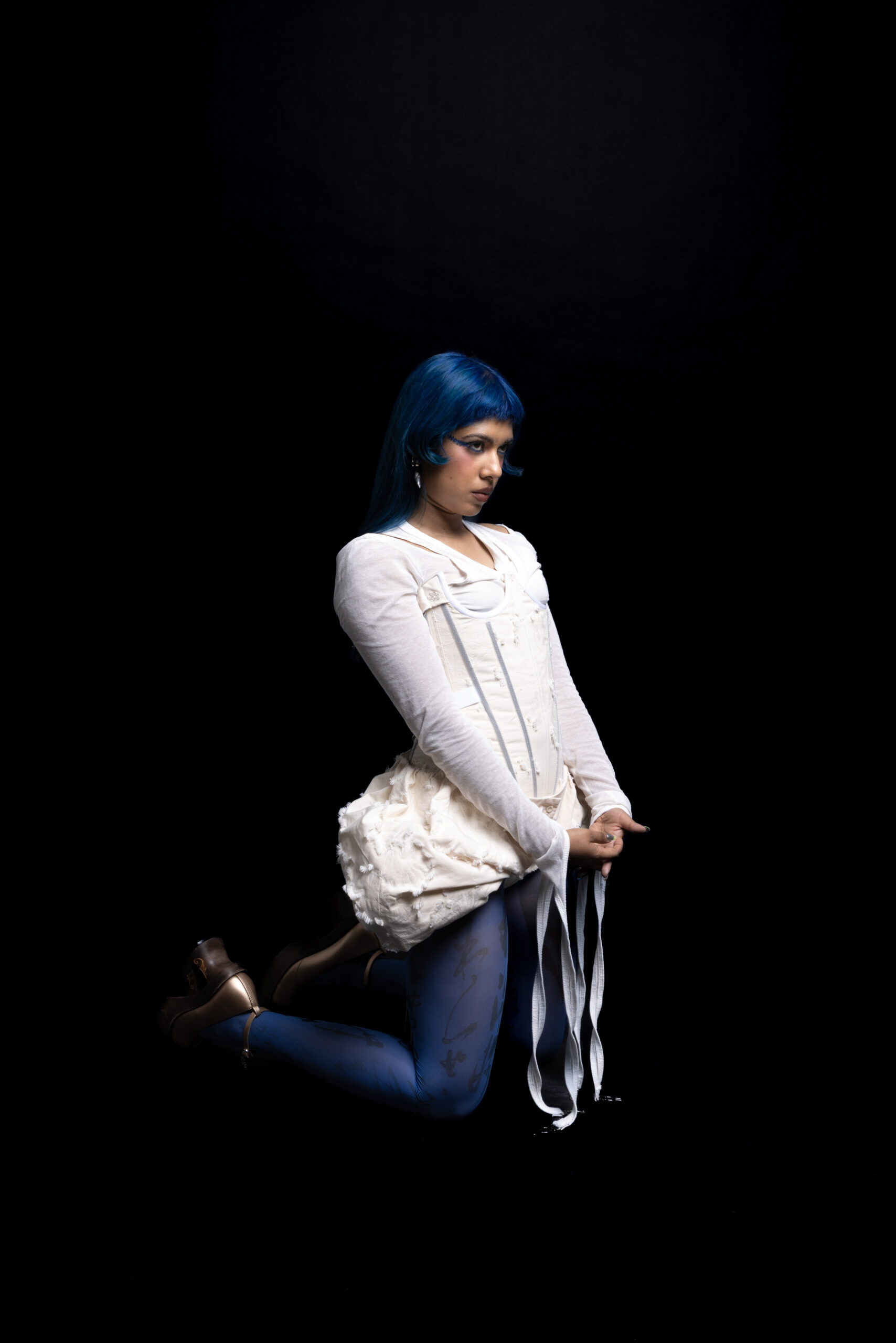
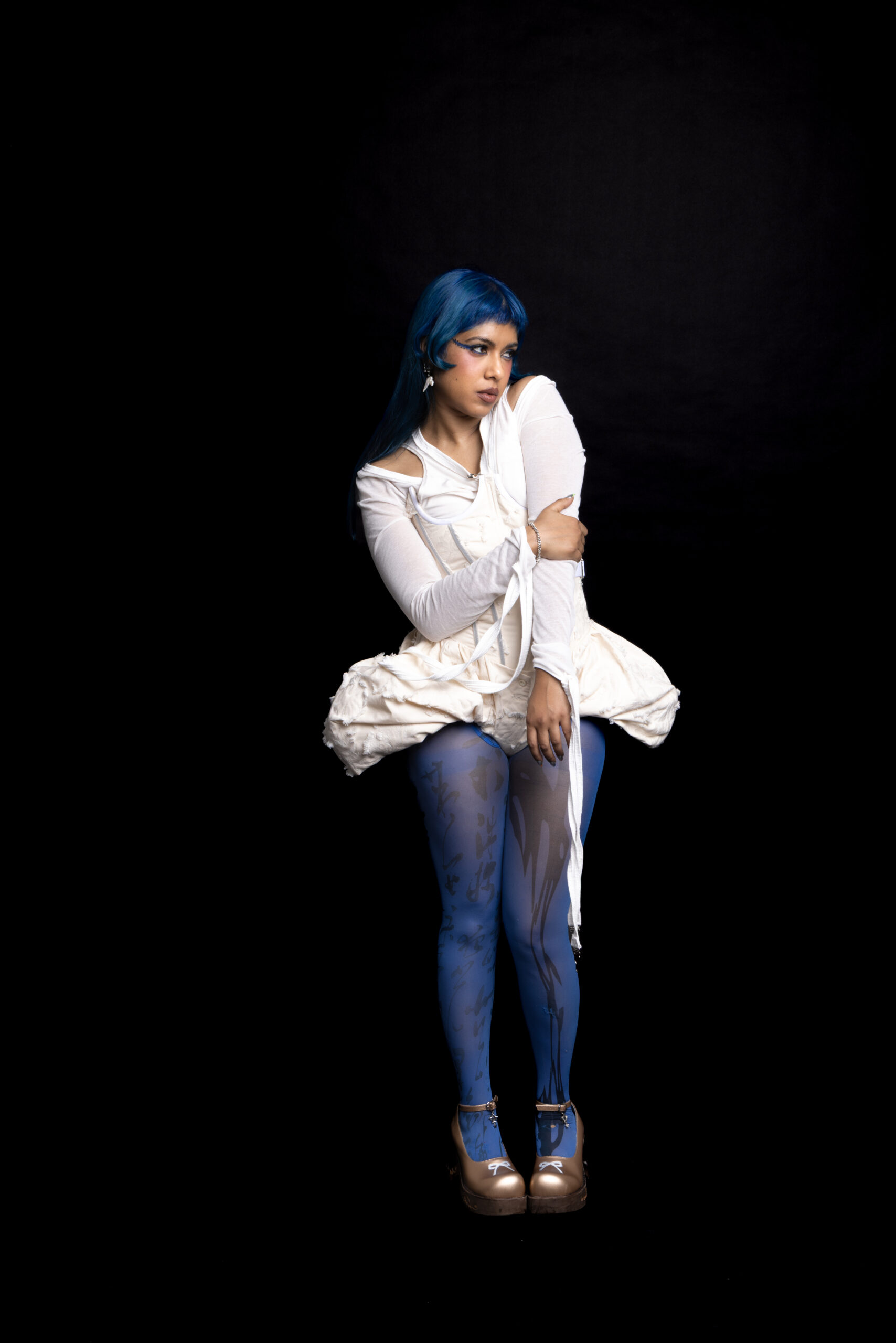
This interview originally appears in Glamcult #144, THE NOISE ISSUE. Shop the print magazine here.
Words by Grace Powell
Photography by Jason Renaud
Creative direction by Glamcult
Styling by Evy Cornelie
Hair and make-up by Nimai Marsden