Meet the duo engineering a new era of club music
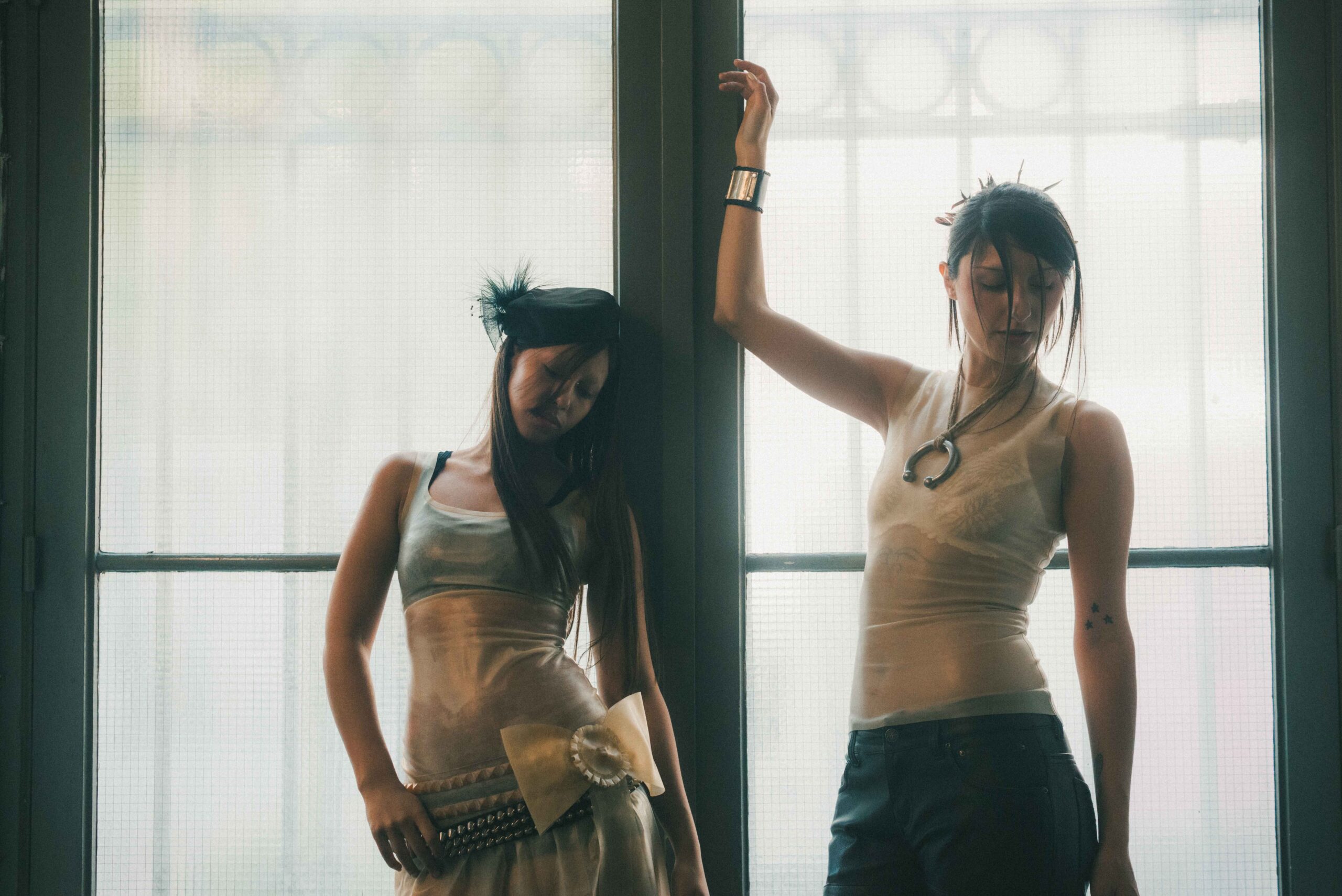
EQ are part of a generation that spends too much money on pastel-coloured drinks, vapes, and shoes with separated toes to ever own a property. What does that leave them with? The club, Ableton, their girls, and, above all, each other. Comprised of Estratosfera and Qiri, the Buenos Aires-born duo first corrupted everyone’s feeds through their Boytoy project back in 2024, pairing Getty Images-style visuals with a dizzying rush of electroclash sweetness — catching the Y2K and indie sleaze resurgence with refreshing accuracy, and before it calcified into a Pinterest moodboard.
Their instinct for what’s next can feel almost prophetic, but it’s less clairvoyance than dedicated years of absorbing the Internet’s cultural debris that have hardened into an internal compass, allowing them to build a world that feels instantly familiar no matter where you’re from. Across neoperreo, shoegaze, electro and pop, they channel girlhood in all its contradictions: bilingual meditations on loving your girlfriends, navigating beauty standards, societal expectations, or fantasising about punching a creep on the subway. In doing so, they’re continuously stretching what “Latin music” can sound like beyond the flattened, export-ready category it’s so often forced into.
Every track arrives stamped with their sticky “EQ vision” producer tag. Pop stars and obsessive music nerds, they approach production with the same care they bring to image-making, internet archaeology and cultural references. The duo are canonising the Gen Z experience — if we’re only promised a future of impossible rent, precarious work and permanent uncertainty, then the dancefloor becomes one of the few places where ‘hopecore’ translates from a meme into a collective unironic experience. Be nice to strangers, look after your friends, shake your ass sincerely, and bring that attitude to your daily life. During their first European headline tour, EQ stopped by our studio to talk about their origins, Argentina’s underground, committing to the bit, and why caring might be the hottest thing left.
You’ve just started the European leg of your tour — how are you feeling?
Qiri: It’s only the second day of the tour, so I feel like it’s starting pretty smoothly. We already haven’t slept much, ha-ha.
Estratosfera: We slept for like three hours today. I think we’re high on the excitement.
Q: And everything is working pretty smoothly so far. I just want to have a great time and connect with people. I’m super interested in reading the crowd.
What have you observed from the crowd?
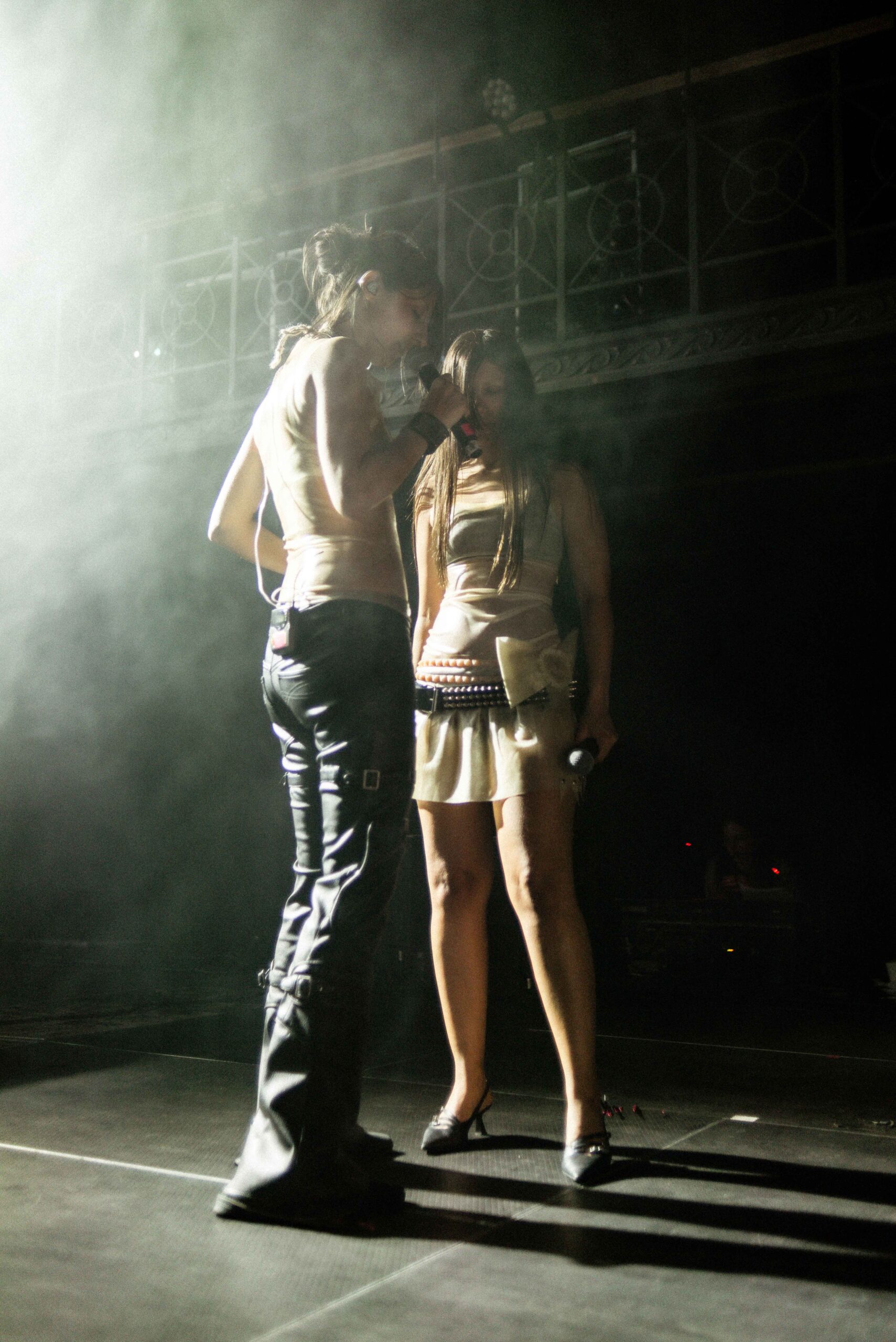
E: One thing we are learning is the difference between the Latin American crowd and the European one. It’s been an interesting thing to see.
Q: When preparing for the shows, I thought of how people, maybe, have been waiting for us in this part of the world for two years. There was a guy from Hungary who came to Paris to see our show. It’s still a small community, but it feels really special. I want to give my all to the show. But then, I feel like we are always discovering new tools — with our bodies, our voices — for ourselves on stage, and that’s very interesting. And computer effects are a very big part of our show as well.
What are the differences in your audience here versus Latin America?
Q: The dressing thing is funny. I already noticed there’s naturally a different way of styling and fashion in Europe and Latin America, as it is in every continent. But then energy too. We come from Argentina, and it’s literally specifically famous because the crowds and shows are extremely hype — people do mosh pits for almost any musical genre. It’s very, very hype, a lot of jumping, screaming. And as a Latina, it’s easy to get used to it. If I dance on stage, people follow along and dance with the same intensity as me. But I feel like in Europe, it’s more a thing of “I want to see, I want to admire.” But at the same time, the European crowd was going along with a lot of different moments in the show, the ups and downs, the more introspective, and then something more party-like. They were fully embracing everything. Whereas in Latin America, maybe they’re more used to this thing where if you are a club kid, you’re a club kid.
E: Even if the European crowd seemed calmer, I could still see in their faces that we were being approved of. They were just more physically chill.
Have you ever crowd-surfed?
E: I really want to.
Q: No. The most we do is, for example, in EQetamine, I always do my verse screaming in people’s faces, kneeling down on the floor. We also like to be with the crowd, that’s because of this Latin American thing where you’re part of the party with us.
E: Probably soon, I hope so!
I wanted to talk to you about the video interviews you did where you were asked ‘What is the EQ sound?’ — I love it so much. How did it come to life?
Q: It’s kind of a mockumentary vibe; it was inspired by Climax and Oneohtrix Point Never. I remember OPN did a video where people didn’t know how to pronounce his name. So it’s very inspired by 90s ads. But what I mostly remember is my friend who’s kind of an emo twink, but he has a twin brother. He’s like a straight little emo kid, and he said he didn’t like our music, whatever. On camera, he said something about liking things that are “more organic,” and that we are “too plastic-sounding.” I love the way that he was describing our music, actually. And that’s the whole point.
E: I love that video. It’s really fun.
Q: I feel like there’s a lot of highbrow, kind of snobbish appreciation of our music. But we also think, if you hear it in a shopping mall or something, you’re going to buy it… And it’s not necessarily a bad thing. We want to make music in an approachable way. And for example, there’s an older woman, so I feel like it’s not so far-fetched. If the Spotify algorithm throws it to you, maybe you’ll go along with it.
Cute. And what do you mean by that there’s a lot of ‘highbrow appreciation’ of your music?
E: Firstly, even the music we like could be considered avant-garde or ‘snobbish.’ We both like noise, ambient, or classical music. We’ve studied music and we just like the ‘freakiness’ of it. But at the same time, EQ was always thought of as a project that doesn’t shy away from the fact that we do want people to listen to it — and not just a niche crowd. There are certain music communities that I really like, but they’re very small because they’re for a very specific audience. And we like borrowing stuff from those sectors, but not just keeping ourselves in that. We’d like people to understand our sound, even if they say it’s weird.
Q: We produce all of the music ourselves, and people are usually super surprised. I often think about how most producers in the industry are men, and I feel like just being a girl producing sounds very different. It’s just very special to produce, write, and sing your own music.
E: It’s fun, but it’s serious, but it’s also fun.
Q: I feel like sometimes some of the songs are not a joke, but a fantasy. And people are seeing that fantasy working — kind of like a puppet with the strings. But I’m the one pulling the strings, and I’m also the puppet.
Very meta!
E: We’ve always had the goal to be the face of something, like an agent in pop culture, but also the nerd behind the scenes. It’s very common, especially with pop stars, to have a team of writers and producers behind them who are usually men. And just the dynamic of producing for yourself changes everything.
Q: Especially as a duo, I feel like I can’t even say, “Oh, Laura’s more like this and I’m more like that.” I feel like we are two very full, complex artists and just people in general. It’s very entertaining and stimulating for me. I can send her an idea, and she takes it to a completely different angle. But being the face and also the producer has been interesting. We do want to be the nerdy makers and the faces. And it’s about how to balance these things.
E: I think that in this structure, the possibilities are infinite. Even if we have a co-producer, we’re still writing and composing the song. So we will never be limited by someone else’s vision. Even in our visual storytelling, we direct all of it.
Q: We’re actually quite strict about EQ rules — what’s EQ and what’s not. We’re open to playing a lot. But when it comes to finishing details, for example, with videos, I’m very nitpicky about editing. I did the editing for the EQetamine visualiser, and we did it for the B.S.A.S. one as well, and people liked it a lot because the editing just translated the euphoria.
Your visuals are also just such a perfect translation of your sound, and that coherence between sonic production, writing, styling and the visual world is felt so strongly. It’s a good reason to go viral for.
E: I think it’s just kind of what happens these days. We made the Boy Toy photoshoot, and that was our first photoshoot ever. It just went completely viral out of the blue. It literally looked like a secret PR strategy or something.
Industry plants!
E: Ha-ha, we can’t explain it either. I do feel like there is a certain social globalisation that made that possible. Especially from that moment, we saw a lot of indirect or very direct references in artworks made by other artists — either straight-up copying or influences that we can recognise. Like, I know I was in the mood board [laughs]. I’m not going to say it, but I know. And the fact that that happened so quickly was insane to us.
Q: We weren’t prepared at all at that time.
Do you mean you blew up because you harnessed a certain momentum that had already been bubbling up?
E: There’s always a curve before something blows up. You have to be tapped into the niches of things. We both were into music as kids, and for example, listening to PC music very early on. And when you’ve been consuming it for so many years, you start to predict what’s going to blow up. We obviously liked that aesthetic. We didn’t predict it was going to go so viral, but we could tell that there was something around that. Also, around 2020, the Y2K aesthetic was really viral, but it was very fake. It’s not how people actually used to dress in the 2000s. When we did the styling of the cover, we were just wearing jeans and a top, and I feel like that resonated with the trueness of the vibe.
Q: Also growing up, we were both very trendy girls, and things happened where we were, like, “Oh, I’m going to do a photo shoot like this,” and then somebody else would do it first because they had more means to do it, and it would blow up, and we were, like, “Okay, noted.” We also connected a lot when asking each other if the other one had heard of an artist. And maybe we were finding out about that same artist at the same time, and then the next month they blew up like crazy. So there are little indicators, and I think we have an eye for what really works. I feel like the theme of EQ connection works because of synchronicity. I really believe in that flow of synchronicity between two creative minds. It’s very powerful.
I also love the name. It’s so satisfying.
E: The name wasn’t even planned. We already had our music aliases, Estratosfera and Qiri. One day, I slept over at her house, and I put the two initials together, and we just realised, like, “Oh my God, it’s an equaliser.” That was the final indicator that we should make a duo.
Also, emotional intelligence.
E: Yes, emotional quotient! Even the fact that you can say the initials in any language. We make bilingual music mostly. And we did happen to grow more of an international audience than a local one. I mean, we have a local one, but it’s not like with certain projects where they first blow up in their country, and then they reach abroad.

You’ve talked about how the Y2K revival is also connected to bringing back the false hopes or promises that technology represented in the early 2000s — how does that translate in the EQ universe?
E: It’s like, let’s just go back to being happy people.
Q: I feel like people are really hopeless again. For example, dance clubs are in trend right now — not that dance clubs are a trend — but I feel like it’s because people just want to forget everything that’s going on in the world, leave it outside, and go on the dancefloor. So we need to have hope because it’s very hard out there again. Especially the 2000s in Argentina were the harshest thing ever because we had one of the biggest crises — my family really suffered. And you’re always seeing these things from imperialism, where they’re trying to shove products down your throat that are super expensive and don’t even exist in your country.
E: Coming from Argentina, there’s like this fake nostalgia. Especially people our age who were also on the internet growing up. We were in it, but not physically part of certain trends — like the 2016 trends. For example, there’d be a certain Starbucks drink that didn’t even exist in Argentina, but we remember it because we were online. It’s a very different perspective. If we were born in the northern hemisphere, we would maybe see different things.
What’s your relationship with your homebase now?
Q: Lately, we’ve been talking a lot about where to go next. Personally, the second I try being somebody else, forgetting where I come from, I remember that this is actually what makes me cool and special. We both have a vision that is already kind of different for Buenos Aires and Argentina, but at the same time, people are receiving it pretty well.
E: We always say the punchline, “Argentinian industry,” or “Made in Argentina.” We are bringing that product to places so far away. These past few days, I was thinking about how I’m really excited for the tour, but also so excited to come back home. I’ve never been away from Buenos Aires for this long.
Q: I’ve never travelled so far away with my music, and it’s crazy that so many people want to hear it — I want to pay more respect to that.
How do you feel about people putting you in the ‘electroclash’ or ‘indie revival’ scene?
Q: I don’t think we ever were in that box.
E: We didn’t know that it was gonna be a part of this whole scene.
Q: It’s crazy for people to put you and your sound in a box where we feel like we’re kind of steering away from that. I don’t think we actually ever belonged to this — it’s cool that people are receiving us, and I feel like it gave us a huge platform, but I’m hoping that people will follow along with the new journey and developments.
Do you mean that the more dominant genres in your work come from more Latin sounds around you or even genres like shoegaze rather than electroclash?
Q: Yeah, 1000%. I feel like both of us are kind of going back to our roots. And when we come together, that makes it really special.
Could you tell me more about what your roots mean here? I’m aware I just kinda used it myself, but I feel like ‘Latin music’ has become such an umbrella term.
E: It reminds me of when Tyler the Creator said at the Grammys, how they just put him in the ‘Urban’ category because he’s Black. I do feel that way, even if Boy Toy has some reggaeton pattern drums, but then the samples are not typical reggaeton samples. And obviously, there is some influence, but it’s not because we’re Latin and it doesn’t mean that Latin music is a genre.
Q: There are so many evolving different genres in Argentina, Brazil, Colombia — we have all these crazy scenes and sounds. And I feel like reggaeton is not even top-notch right now. Not even Bad Bunny is doing reggaeton. People are going for more extreme things. And as a woman, it’s not my duty, but I do feel responsible to still say that I am Latin, and I want people to rethink that this is also Latin music and you guys can like it as well, it doesn’t have to be this weird niche thing.
E: It’s the exact same thing as when people say, “top 10 female… singers or athletes.” It’s the same thing but with Latin music. And yeah, we’re from here, but we’re not separated. We can have a global conversation.
Do you have any examples of the genres or names coming out of Buenos Aires?
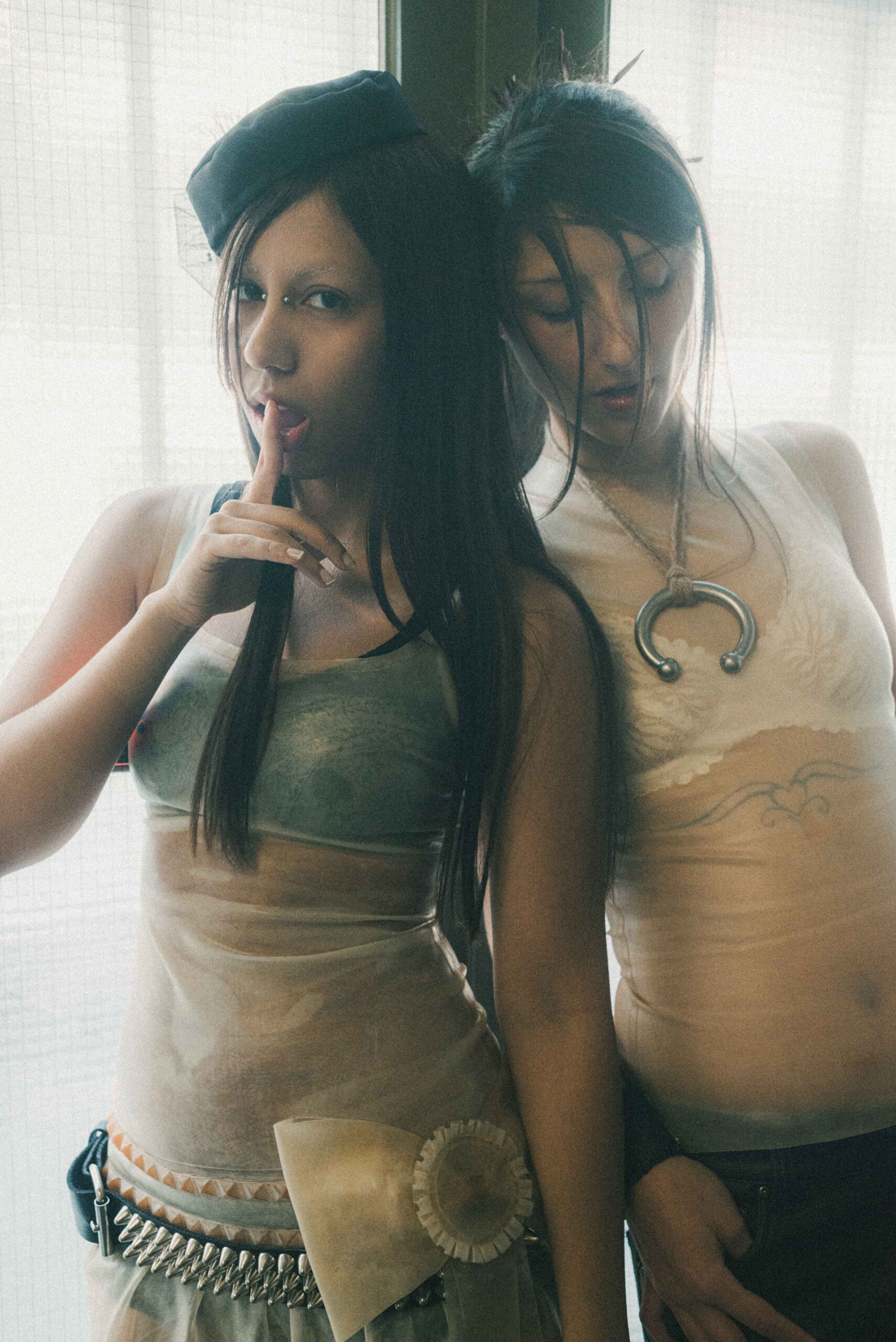
Q: There’s this one rapper we were both his biggest fans ever, it’s Little Boogie. He comes from outside of Buenos Aires, and right now he’s working with two super good producers. He works hard, and he makes really good music, and he has this thing of also representing where he comes from. He’s referencing a lot of things from all around the world, but also collabing locally. I support people who take music very seriously, 100%.
E: I feel like it’s become really common for certain people to make music as a joke because they’re scared to take it seriously. But I mean, it’s cool if you’re aware of it, but we both like music that is honest.
Q: I was gonna say, if you’re gonna do a joke, commit to the bit. And do it seriously. I have a lot of respect for people who own it. If you’re going to shake your ass on stage, you can do it, but do it seriously. I like people with intention. Even if I’m playing for 15 people, I like to do it with a lot of intention, convey my emotions, my movement, with lighting — we’re very serious about lighting right now. So, I feel like Argentina is changing a lot musically as well, and I hope we get a bigger space in music, because I feel like there’s not a space that we belong to in Argentina.
I feel like this ‘doing things ironically’ ties into this narrative around Gen Z, where we don’t commit to emotions properly, we don’t have sex, we don’t party, we’re nonchalant etc…
E: I think it’s really tacky and boring. There is a culture of shame in the world, especially in a generation where, economically, we don’t own things. So I can see the correlation of the moment. We can’t own material things, and that translates to feeling emotionally ashamed and not being loud. And we try to fight against, and if I don’t own a thing, I own myself and my art — that’s my currency.
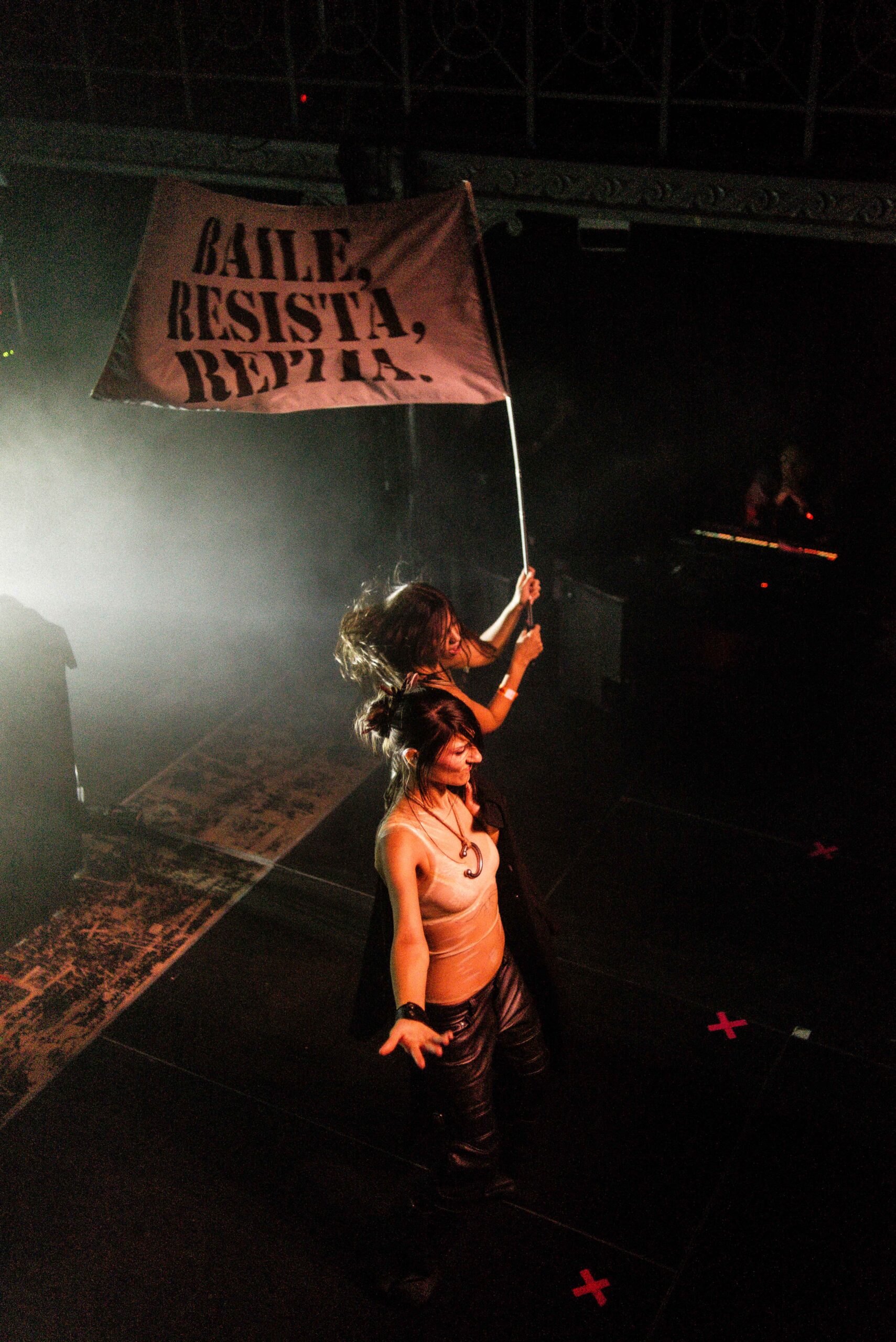
Q: We play a lot in clubs, and I feel like if we don’t say it in our music about being expressive and having a lot of emotions, people still feel it. I feel like the Gen Z apathetic stare is real, but we have to fight against it. It’s also a way you’re letting the bad guys win, because it’s as if you don’t care about the people next to you, what’s happening in the world. You’re completely disconnected from reality. Heroine chic is not chic — people need to be more expressive. We talk a lot about not having shame in the dance club. Whatever your vibe is at the club, and if you’re having a great time, you should find more of that essence in your daily life, and accept it as much as possible. If you’re out dancing all night, why are you not saying hello to the person you see on the streets every day?
Words by Evita Shrestha
Photography by Linde Stevens and Selena Mendolia
Styling by Camila