A sublime record about the beauty and brutality of creation, and the self that survives it
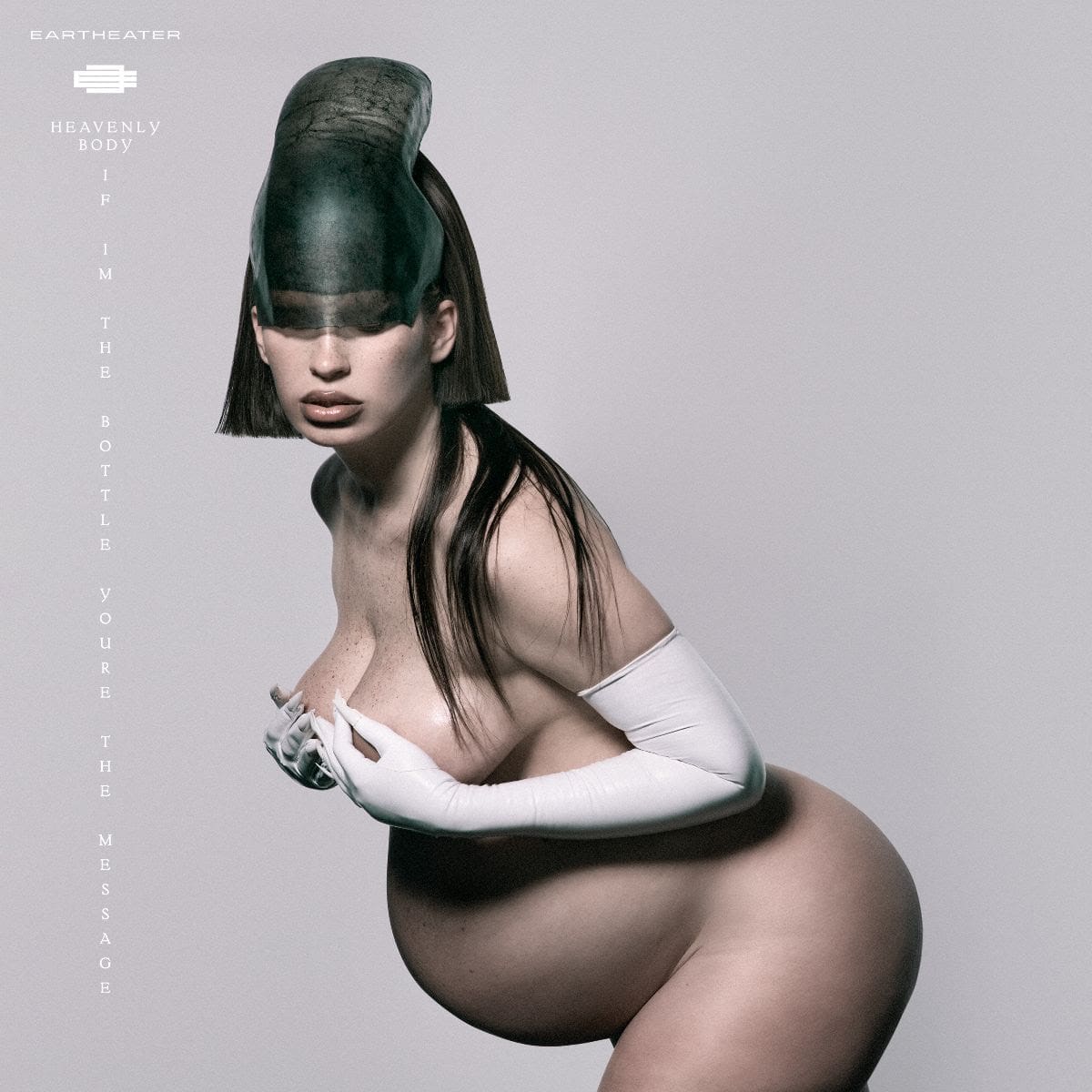
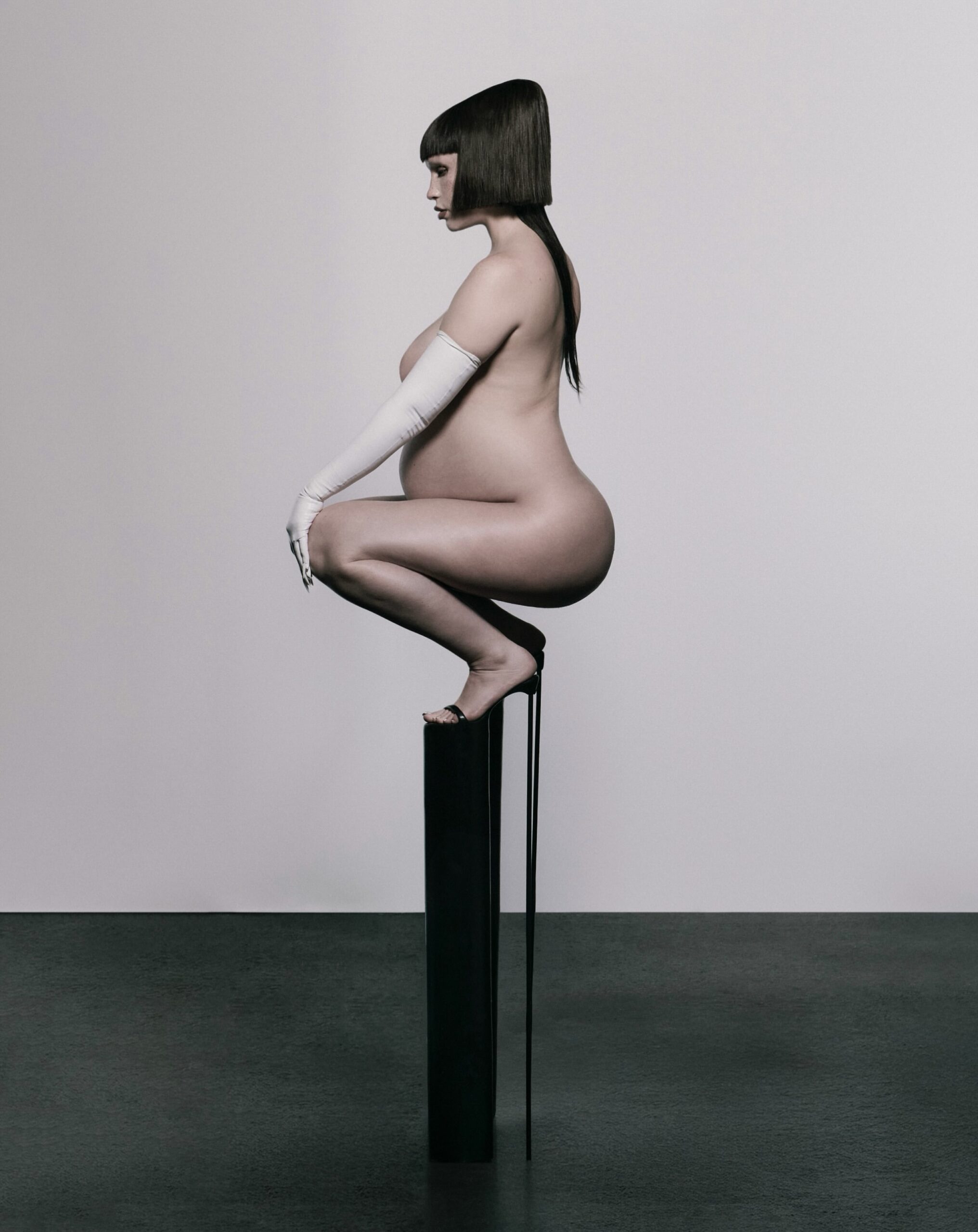
Childbirth, however sacred, has not been known to be a friend of elegance. Pregnant bodies swell and rearrange themselves whether you want it to or not; the womb becomes a place where the sacred, miraculous, and the grotesque are forced to share a room, where love can feel infinite and still leave scars. Perhaps this is why pregnancy has always seemed so difficult to describe: it is too often made into either a miracle or a wound, a glowing image or a horror story. Eartheater’s Heavenly Body: If I’m The Bottle You’re The Message doesn’t place itself into that dichotomy. It stays close to the miraculous creation of life out of love, to the mind’s ability to forget the horror it just went through to deliver said creation, it dives deep into the bodily mess that is giving pregnancy, giving birth, and also the erasure that traditionally happens when becoming a mother. On the cover, Eartheater is like an extraterrestrial sculpture, her pregnant body transformed into an object of cosmic importance. This is a visceral album about blood, organs, memory, sex, pain, the process of creating another life right underneath your own skin, and continuing to be yourself in that same body.
In “Malka Moma,” Eartheater draws from Bulgarian folk traditions and the religious imagery of her Orthodox upbringing. But she does not disappear into these traditions, she does not become merely a vessel through which motherhood passes. Her voice sits at the centre, alone, where a chorus might traditionally have stood. The song is not a surrender to inherited ideas of womanhood while claiming individuality. It’s symbolic of the main tension running through the record: the child is a miracle, but the miracle is made through both love and violence upon women. The body performs an astonishing act of creation, and yet that act demands something almost brutal from it.
Throughout the album, Eartheater seems fascinated by the ways the mind protects itself from what the body experiences. “Practical Amnesia” explores the eerie way the mind softens the memory of childbirth’s brutality, allowing love to exist alongside trauma. In “Glowing Guts,” pregnancy becomes almost alien. The rhythms resemble the relentless machinery of a hospital, a body monitored and measured. She sings of a body that no longer feels hers entirely, one where everything has shifted inward and upward, where even the act of making sound becomes difficult: “How am I supposed to sing” when the lungs and guts have become occupied territory? This is where the album’s central question emerges: what happens to the self when the body changes beyond recognition? Motherhood is often treated as a kind of sacred disappearance. The woman becomes holy because she brings new life, her sexuality is politely removed from the story. Not on Eartheaters album. In her experience, the body that creates life is still a body that desires, suffers, remembers, and belongs to itself.
In “Paradise Rain”, the title itself plays with the expectation that paradise must be untouched, that even rain would be an interruption of perfection. But Eartheater reverses this idea: the rain is the paradise, the disruption is the blessing. The song connects the conception of her daughter with the return to her family farm, a place where the past and future turn into each other. There are echoes of Eden, saints, heaven, inheritance — but alongside them is the bluntness of the body. The sacred does not arrive without desire. The mother is not simply the recipient of a miracle; she is the maker of it. “Hers Before Hers” moves through the notion that the child is both someone entirely new and yet connected to an endless chain of women who came before. A daughter carries the evidence of her mother’s body, just as her mother carried the evidence of the woman before her. But Eartheater also considers the ways women inherit restrictions alongside inheritance itself. She herself, considered the “scandalous” daughter, the one who caused her mother’s wrinkles, becomes the mother who promises her own child freedom. Nothing her daughter does will shock her. The cycle ends here. The album’s gentlest moment is in “Fast Asleep,” featuring Oklou, another artist who recently became a mother. Their voices move together like a lullaby heard from another room. After all the blood and transformation, this part softly explores the ordinary miracle of watching a new person exist, wondering “What are you dreaming of, having only been born for a day?”
The album exists in the sublime: the place where horror becomes beauty, where suffering becomes devotion, where desire and fear and love turn into one overwhelming feeling. It understands motherhood not as purity, but as excess. Not as disappearance into some holy vessel, the body does not become less human when it creates life. It becomes more impossible for any man to ever understand.
Words by Pykel van Latum