CHAOS
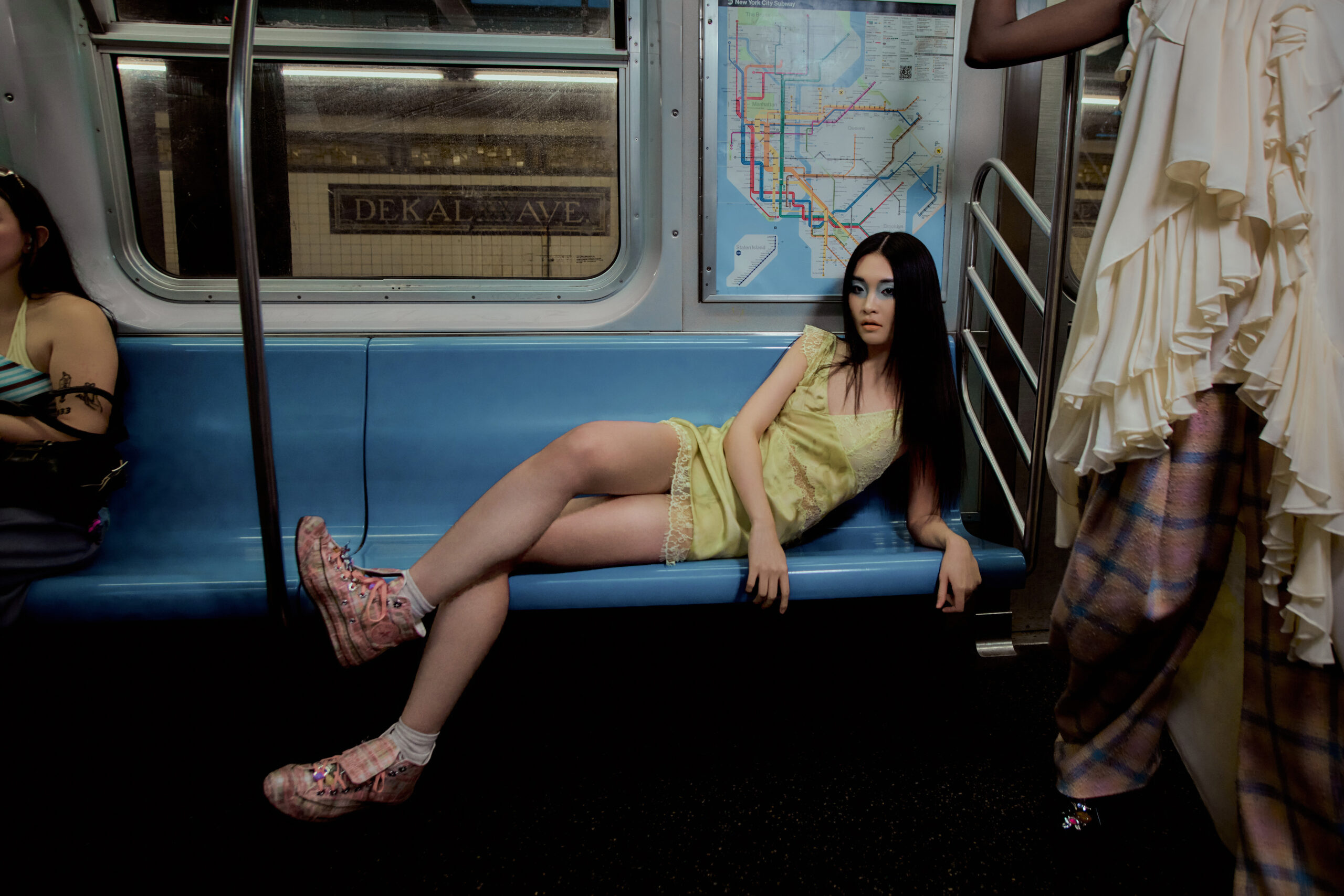
“I can spiral about climate collapse and then get excited about a tiny beaded frog bag five minutes later,” says Hillary Taymour — and it’s a perfect entry point into her mind, and the creative practice that has beautifully spawned from it. That manifestation has taken shape as Collina Strada, a New York-based label that treats contradiction, both visual and conceptual, as a fertile starting point, a place from which to build, distort, and constantly re-question reality.
Collina Strada began as a relatively small, quietly subversive label in 2009, and has since grown into one of the most recognisable voices in contemporary independent fashion. Its instantly identifiable runway shows feel like erratic, unruly fantasy dress-up boxes assembled from fragments of the everyday — familiar sartorial tropes pushed just far enough to come across as renewed. Sustainability sits at the core of the brand’s identity too, with a consistent emphasis on deadstock, recycling, and lower-impact bio-innovative materials. But what distinguishes Taymour’s approach is how openly she refuses to present ‘ethical fashion’ as a solved system. Instead, she keeps its tensions visible, acknowledging the industry’s inherent fallacies, navigating how to build transparency alongside consumption.
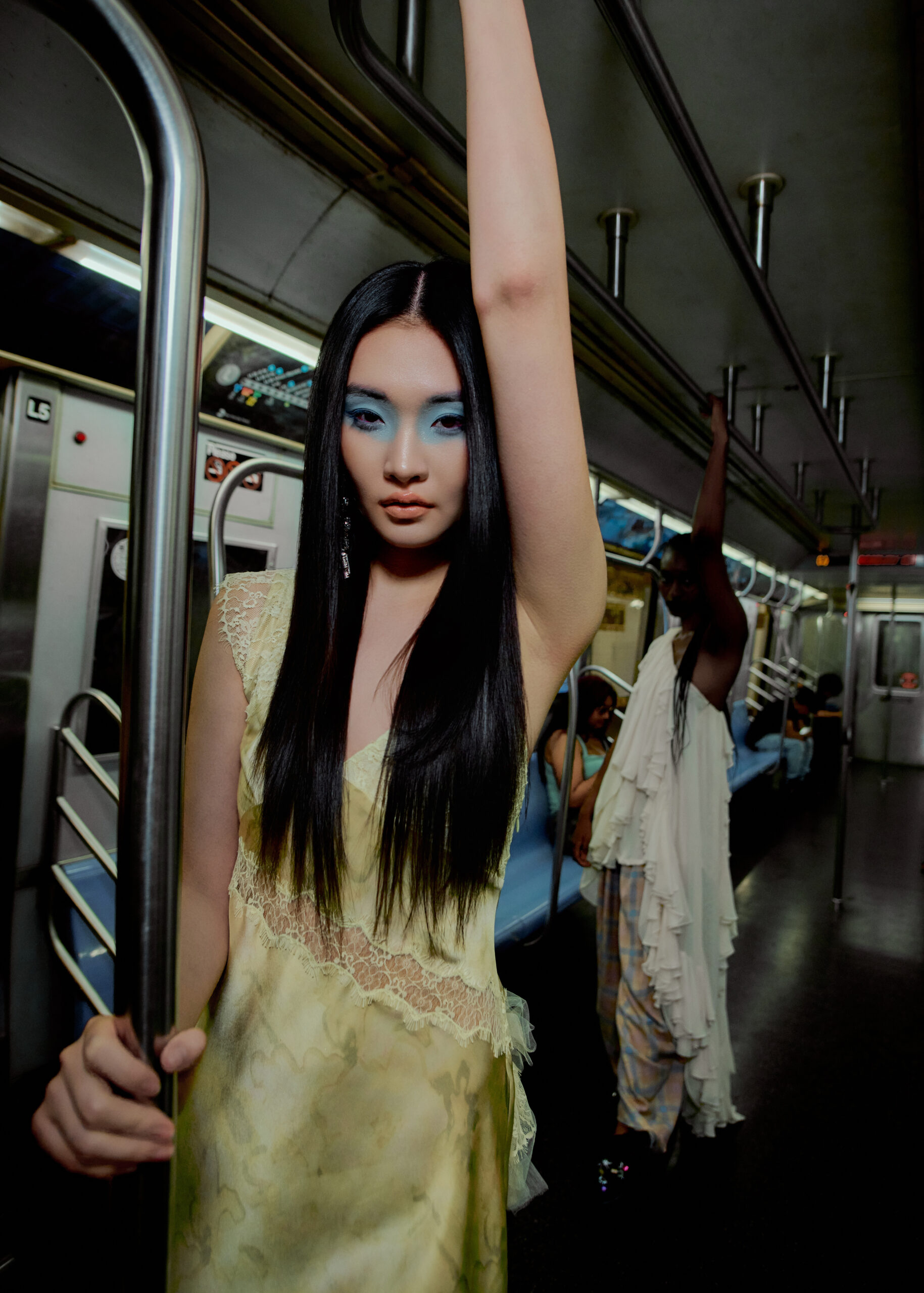
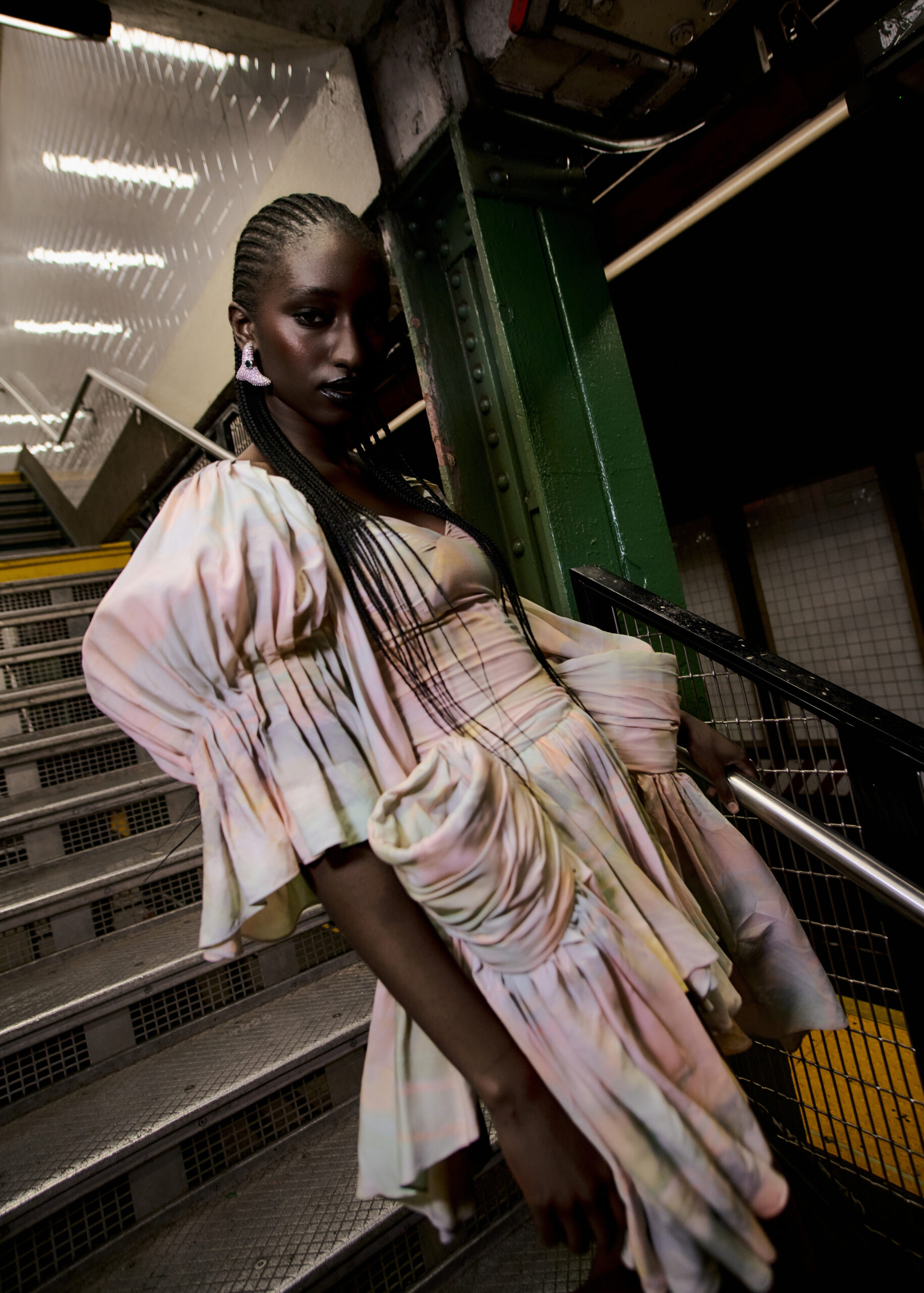
Visually, the brand thrives in controlled clashes. Almost naïve prints and sun-washed, slightly sentimental palettes sit next to distorted silhouettes and intentionally awkward proportions that push against conventional ideas of what is ‘flattering.’ Collina Strada practically perfected the OG slip-dress-over-denim formula. The iconic bug glasses. Exaggerated puff sleeves, hyper-layering, clashing textures — everything feels slightly feverish, like the most outrageous fit you’d pull stumbling into a bodega at 2am, an energy engulfed in NYC’s saccharine delusion. There’s also a recurring digital texture to the collections: hyperreal flowers, airbrushed surfaces, nature endlessly re-rendered through an overstimulated yet balanced design language.
The process itself usually starts from Taymour’s own wardrobe. “I usually start with garments that are lacking in my closet,” she says. “So I’m designing for the creature version of myself.” The word creature feels particularly important here — because that is exactly who the clothes seem designed for. Her clothes encourage you to play and morph, to become an individual beyond the restrictive implications of what it means to be a socially acceptable, ‘proper’ human being.
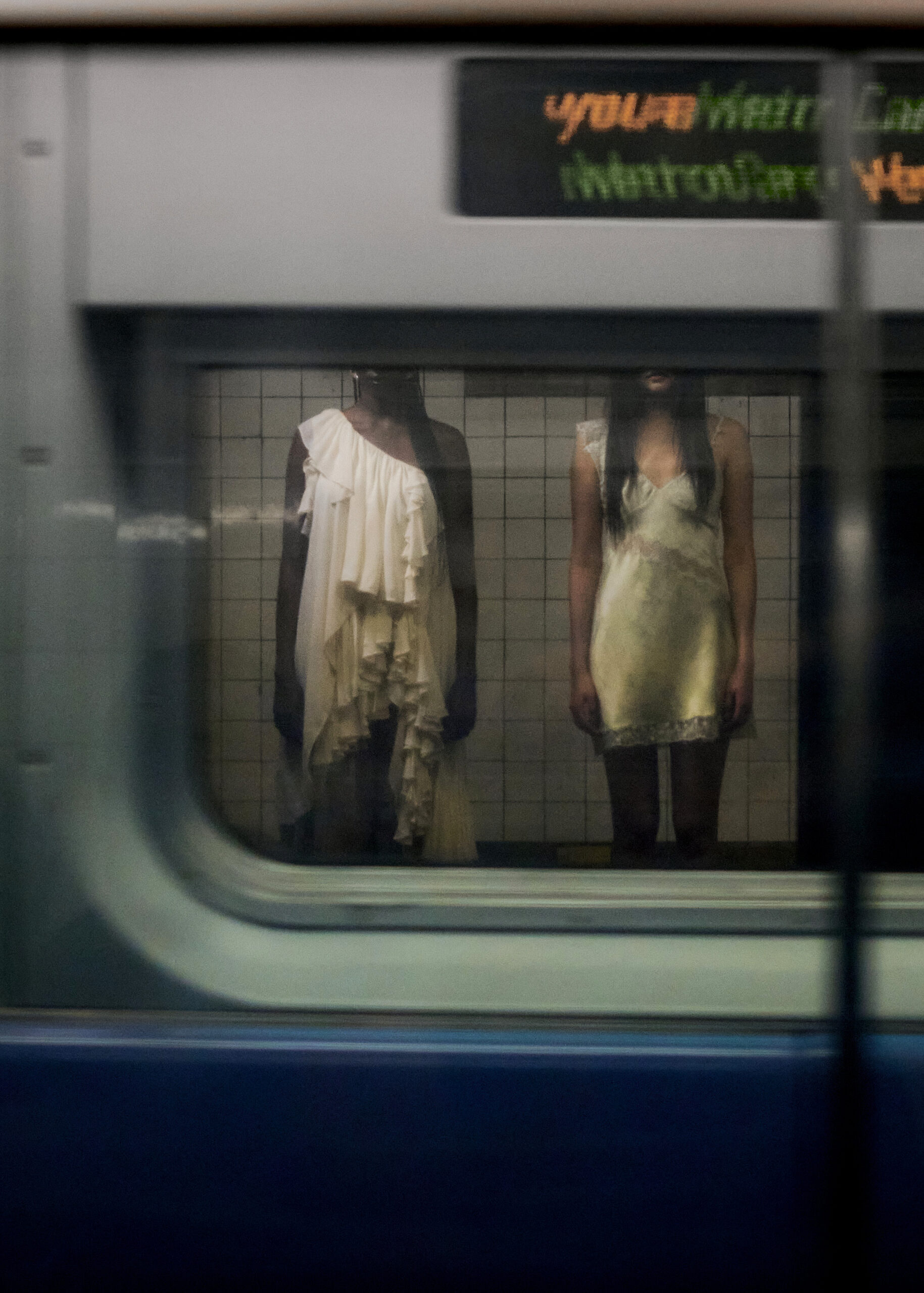
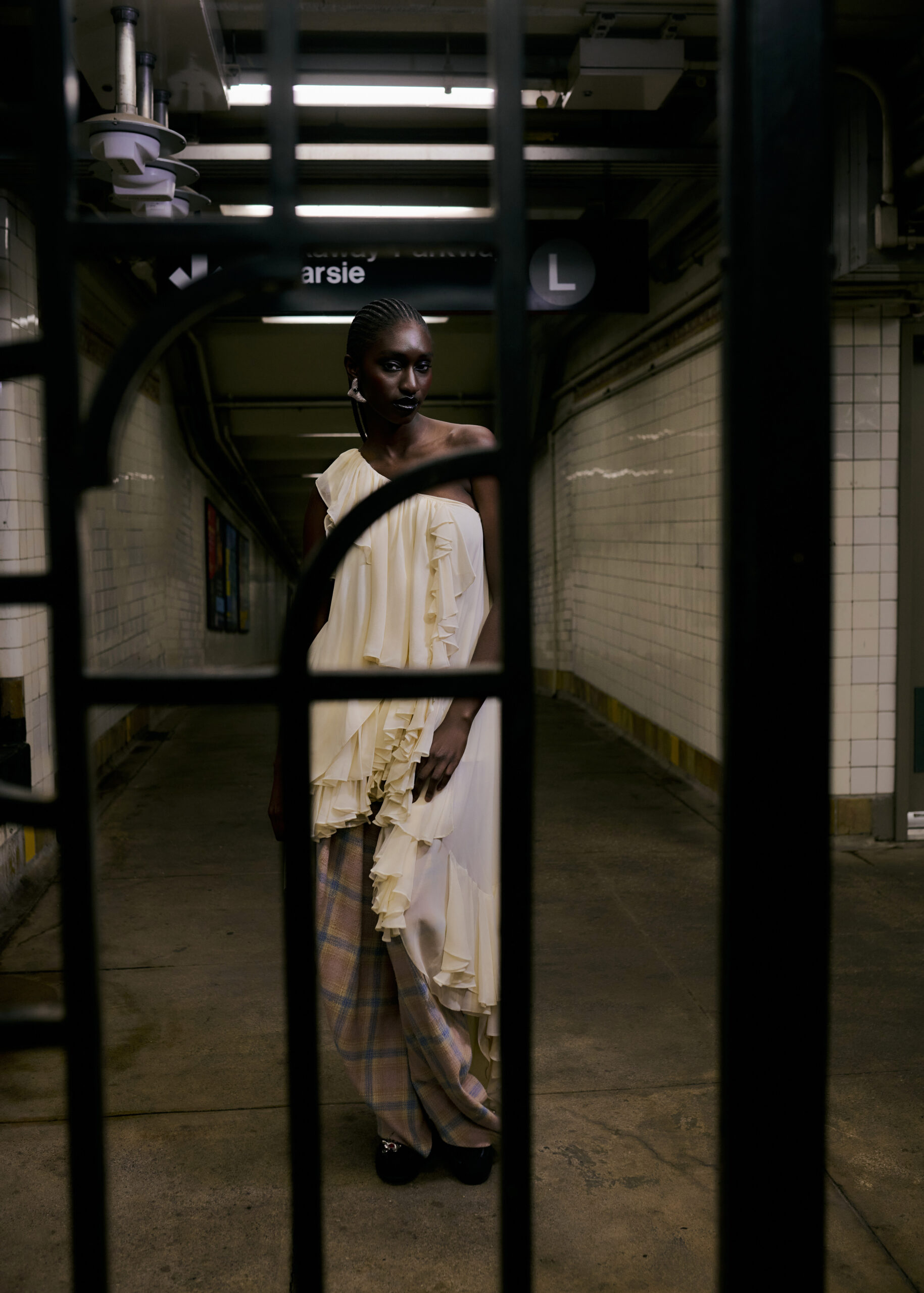
In fittings, this philosophy becomes tangible. Taymour talks about looking far beyond whether something ‘fits’ in the traditional sense. “I like people who look like they’ve lived,” she says. “I like awkwardness, emotion, humour, sensuality, weird posture, weird walks, and someone who is just down.” It becomes a heavily vibes-based process, rooted in connection — “like building looks towards the individual’s style and aura.” And importantly, this sense of humanity is already embedded into the garments long before they reach the body.
A piece, for her, is only finished “when it feels like it has a pulse.” She says it with self-awareness: “I know that sounds insane.” But by that point, immersed in her universe, it actually sounds completely logical. “Sometimes a piece suddenly feels emotionally complete, and I get really attached to it. Usually, there’s humour in it, or tenderness, or a strange proportion that makes me feel something physical.” That emphasis on physical reaction — on clothing as something capable of triggering sensation, emotion, discourse, even discomfort in the same way a joke or a poetic line might — is central to how Collina Strada operates.
Inclusivity, alongside sustainability, is often attached to the brand, but in practice, it is just a default state of being. Taymour’s runways have featured everyone from artists and activists to internet personalities and downtown New York fixtures — like ‘Green Lady of Brooklyn’ Elizabeth Sweetheart, who walked the brand’s SS23 show in one of her signature monochromatic green looks. The only way you build a brand that actually has a community, she suggests, is by “actually knowing and caring about the people involved.” She adds: “Collaboration has to be real, or it reads immediately as fake. Fashion people underestimate how intelligent audiences are now.”
Circling toward her SS26 collection, Shade, Taymour describes it as another extension of this ongoing emotional exposure. “I think everyone’s shadow is very loud right now,” she says. “There’s so much suppressed fear and rage culturally. The collection was partially about what happens when the things we avoid emotionally start leaking into the surface.” You can read traces of that tension directly into the clothes themselves — even when the surface appears playful or chaotic or joyful. Beneath all the colour and theatricality sits a sense that fashion can function as both armour and release. This is how her process renders itself — for Taymour, “dressing up is emotional survival.”
Eternally resistant to fashion’s pull toward smoothness and sanitisation, Taymour is blunt about the pressure to conform. “People always want you to become more ‘elevated,’ which usually means less weird and less human,” she says. “But I think over-polished fashion is emotionally dead.” And on impact, she’s equally blunt. “I think meaningful work usually risks alienating someone. It has an opinion or vulnerability, or ugliness inside it.” The point is not to smooth those tensions away, but to recognise them as signs of life. “Empty noise is too smooth. Too algorithmic.”
Somewhere between the existential spiral and the frog bag, Taymour has built an entire universe. We shot Hillary a few questions, and it’s clear that her mind is an (ethically sustained) goldmine. “Sometimes the only honest response to collapse is a girl wearing vampire eyeliner and a chiffon gown,” she says. And honestly, amen to that.
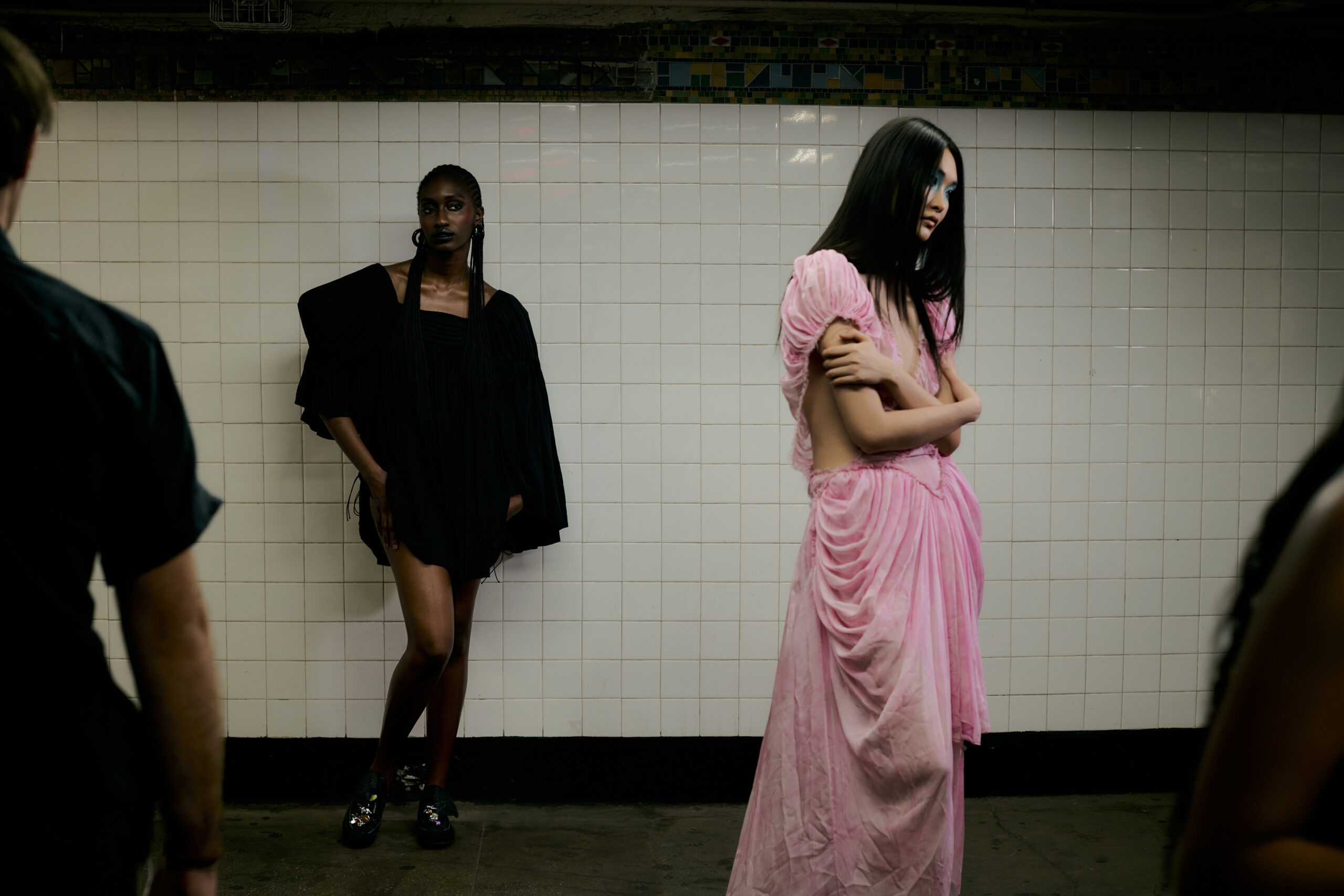
What were you like as a child? Were there early obsessions, fears, textures, fantasies, or aesthetics that still live inside Collina Strada now?
Fully outside collecting worms, doing flips on the trampoline, obsessed with animals, anything horse girl culture, Limited Too, and the Olsen Twins. I was also deeply emotional. I think that combination still exists in Collina. A hyper-feminine horse girl goblin-core.
Where does the name Collina Strada come from?
It means ‘hill road’ in Italian. Hill being short for Hillary. I wish there was a cooler story, but honestly, I just wanted something that sounded romantic and cinematic, like a place you accidentally end up in after missing a train.
New York feels deeply embedded in the brand. What does the city give you creatively right now, especially with the current political and cultural energy in the air?
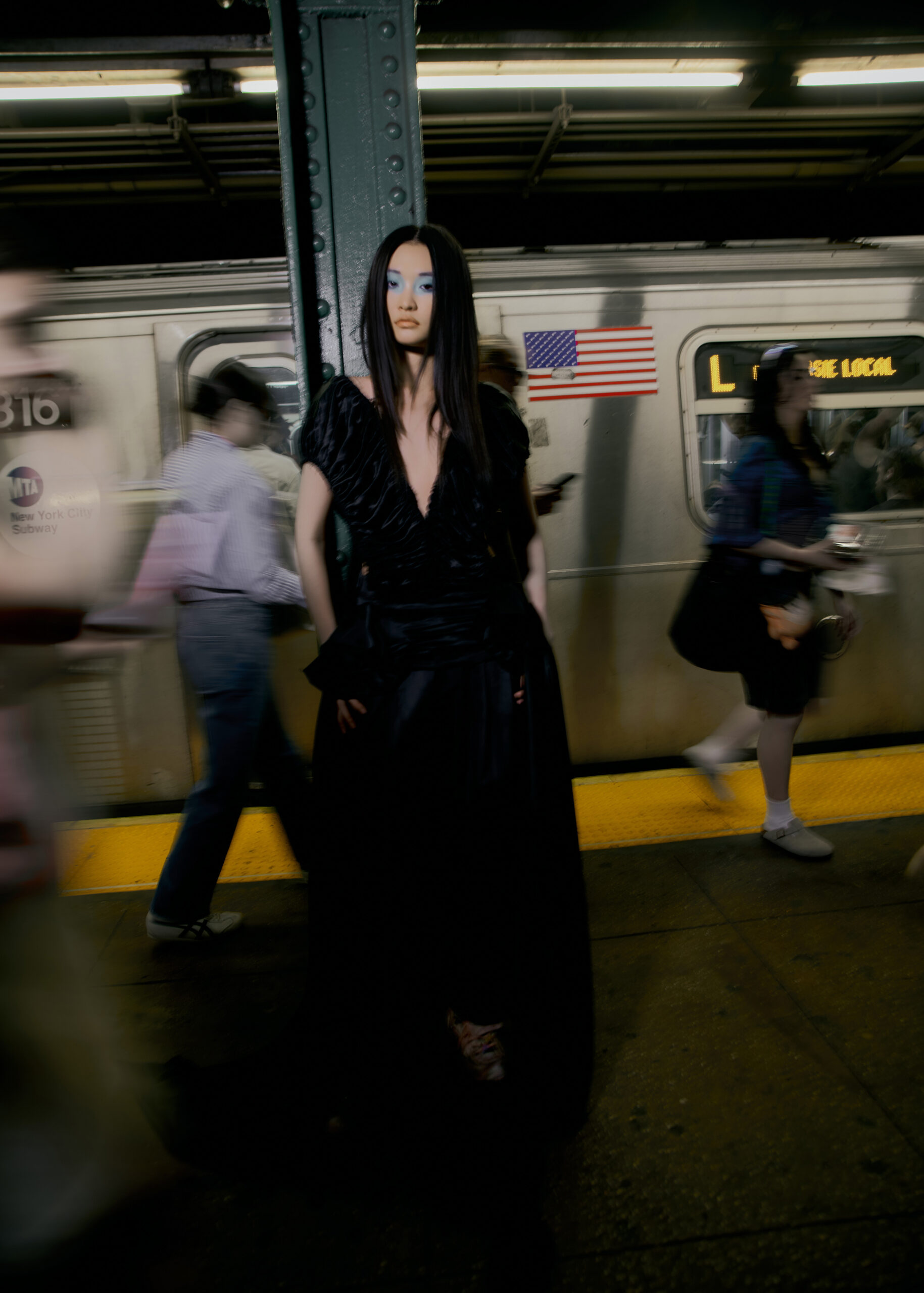
New York gives me constant overstimulation, which, unfortunately, is my creative fuel. The city feels both completely broken and completely alive right now. Everyone’s exhausted, everyone’s hustling, everyone’s trying to survive emotionally, financially, spiritually. But there’s also so much weirdness and humanity still happening here. Someone will be screaming on the subway while another person is carrying a rainbow cake, and somehow that’s the exact energy I want clothes to have.
One thing I appreciate about Collina Strada is that it doesn’t pretend that ethical living can be pure to its fullest. How do you approach rejecting the fantasy of perfect sustainability that the industry pushes so hard?
It’s impossible. And I think pretending otherwise is dangerous. We exist inside systems that are already compromised. I still ship products. I still make clothes. I still consume things. Sustainability isn’t sainthood. It’s just trying to reduce harm while being honest about the contradictions. I don’t trust brands that act morally flawless. It’s a version of a superiority complex.
What are the biggest false promises or aesthetic performances you see brands making right now in regards to sustainability?
Putting a model barefoot in a field and calling it sustainability. Beige branding. Using one recycled fabric while producing 900 collections a year. Also, the language gets very funny. ‘Conscious luxury’ sounds like a meditation app for rich people.
You work with experimental materials like Rose Sylk and other bio-based textiles. What materials are exciting you lately, and do you think there’s always some level of tradeoff hidden inside innovation?
Always. Literally always. You have to remember that people telling you there’s a perfect miracle fabric are selling you something. But I’m excited by materials that rethink waste streams and by people experimenting fearlessly. Fashion innovation is always a bit messy and feels like a WIP. If it feels too polished too early, I get suspicious.
Is it possible to make responsible fashion inside a fundamentally broken system? Or is the goal more about learning how to work honestly within contradiction?
I think it’s about transparency and progress, not purity. The system is broken because capitalism is broken. But that doesn’t mean you just give up and start making Shein-core depression garments. You try to build better habits, better supply chains, better conversations. You stay uncomfortable.
How do you feel when people frame the brand primarily through inclusivity language? Your casting often feels less like ‘inclusive casting’ and more like… actual society.
That’s exactly it. I’m not trying to create ‘inclusive optics.’ I’m trying to reflect reality and fantasy at the same time. Real people are infinitely more inspiring than fashion archetypes to me. Also, people can feel when something is tokenised. Humans aren’t trends.
Speaking of runway shows, I’m always so impressed by their balance of absurdity, decay, horror, and humour. Why are you drawn to theatricality as a language?
Because reality already feels theatrical. The world is literally absurd right now. Humour is survival for me. I can’t process darkness through minimalism. I need exaggeration, camp, and discomfort. Sometimes the only honest response to collapse is a girl wearing vampire eyeliner and a chiffon gown.
Your work often feels inspired by nature, but not in a sterile way. There are vegetables, mutations, dirt, slime, decomposition. What attracts you to that aesthetic vocabulary?
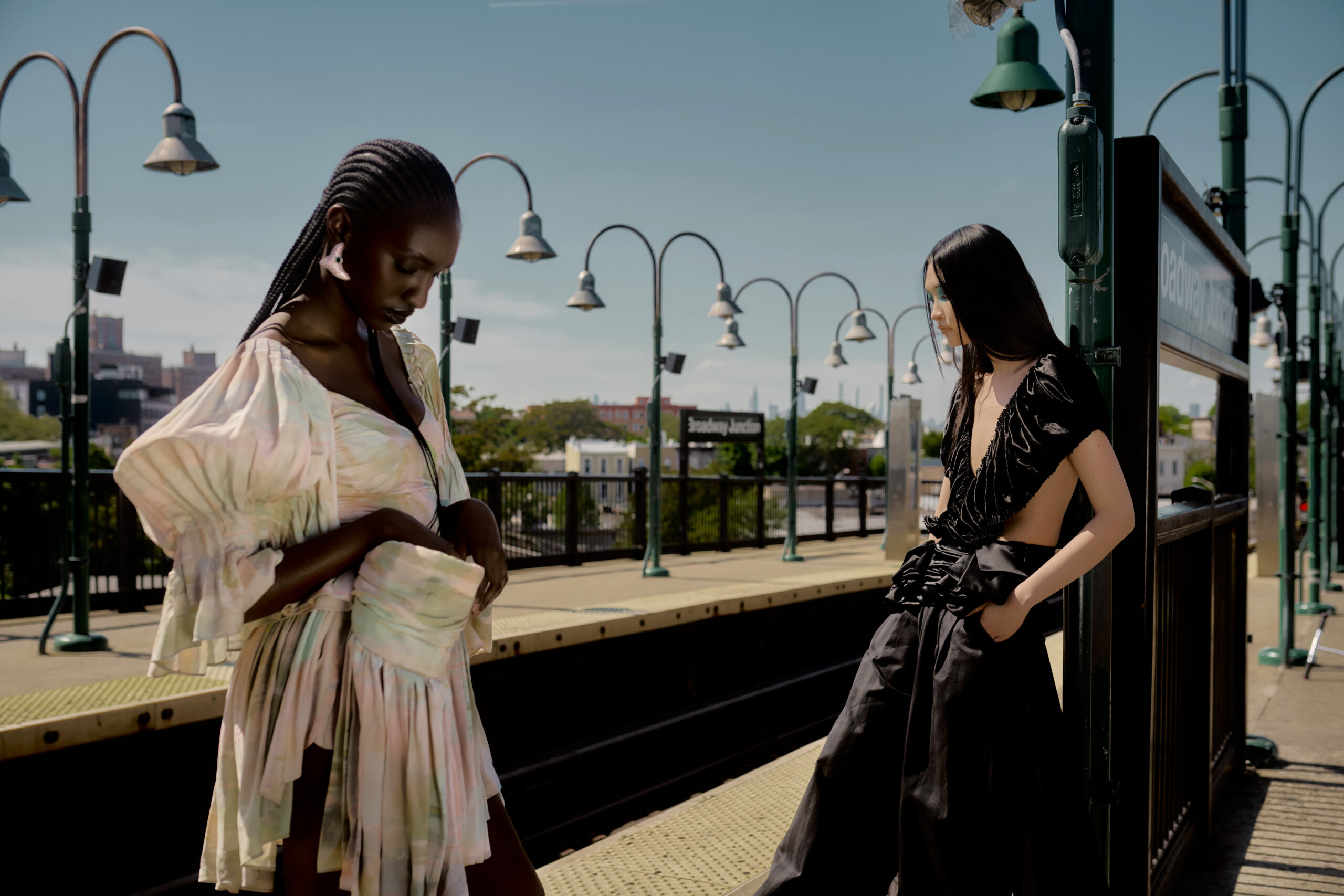
Nature embodies all the adjectives. It’s wet and decaying and constantly transforming itself. Humans romanticise nature as this clean spa experience when it’s actually deeply sensual and violent, and you can grow the best things with decaying compost. I love that.
Do you think recreating nature through fashion brings us closer to the natural world or further from it?
Probably both. Fashion is inherently artificial. But maybe imitation creates emotional connection. If someone wears a dress made of Rose Sylk that reminds them of flowers and suddenly they care more about the environment, that’s still meaningful to me.
Has there ever been a moment when you realised the audience understood exactly what you were trying to say?
I can’t wait for that moment.
Your work can feel childlike and apocalyptic at the same time. Do you think those two emotional states are connected?
Maybe? Childlike energy comes from a place of honesty and healing. Whereas apocalyptic ideals usually stem from instability. I guess if you connect it, it comes from my unstable childhood, lol.
There’s something very tactile about Collina Strada — fabrics that look wet, airy, fuzzy, disintegrating. How important is texture emotionally for you?
I think my ADHD plays a huge role in this in regards to texture. Sometimes a fabric can feel comforting and disgusting simultaneously, and I’m very into that emotional confusion.
What kind of world do you hope exists around the brand ten years from now?
More local production. More care. Less overconsumption. More emotional intelligence. And I would love for it to stay focused on creativity.
If Collina Strada disappeared, and you lived alone in a caravan on the other side of the world, surrounded only by horses, would you still make clothes?
Unfortunately, yes. I think I would still be sewing weird little garments for trees or horses or whoever was nearby. I’d probably make textiles out of random scraps and spend most of my time gardening, and accidentally adopting injured animals. Which honestly sounds kind of ideal.
This interview originally appears in Glamcult #144, THE NOISE ISSUE. Shop the print magazine here.
Words by Evita Shrestha
Creative direction by Indiana Roma Voss
Photography by Jess Brohier
Styling by Indiana Roma Voss
Hair by Chiaki Morimoto
Make-up by Anthony Merante
Styling assistance by Shin Odu
Light assistance by Fet Hilario
Photography assistance by Yemi McGregor
Production assistance by Evangeline Heflin
Modelled by Mariama via Dreamland and Jiyoung VIA Industry NY
All clothing, shoes, and accessories COLLINA STRADA