It’s time to embrace the ‘Job Your Love’ mentality, folks.
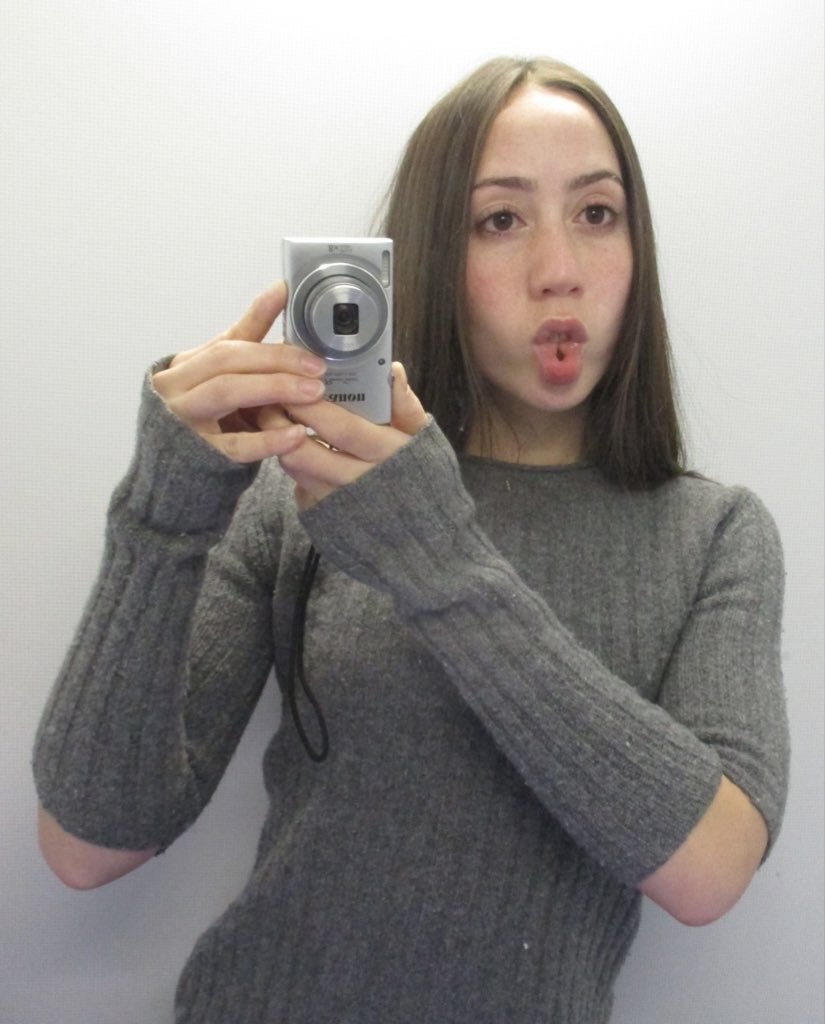
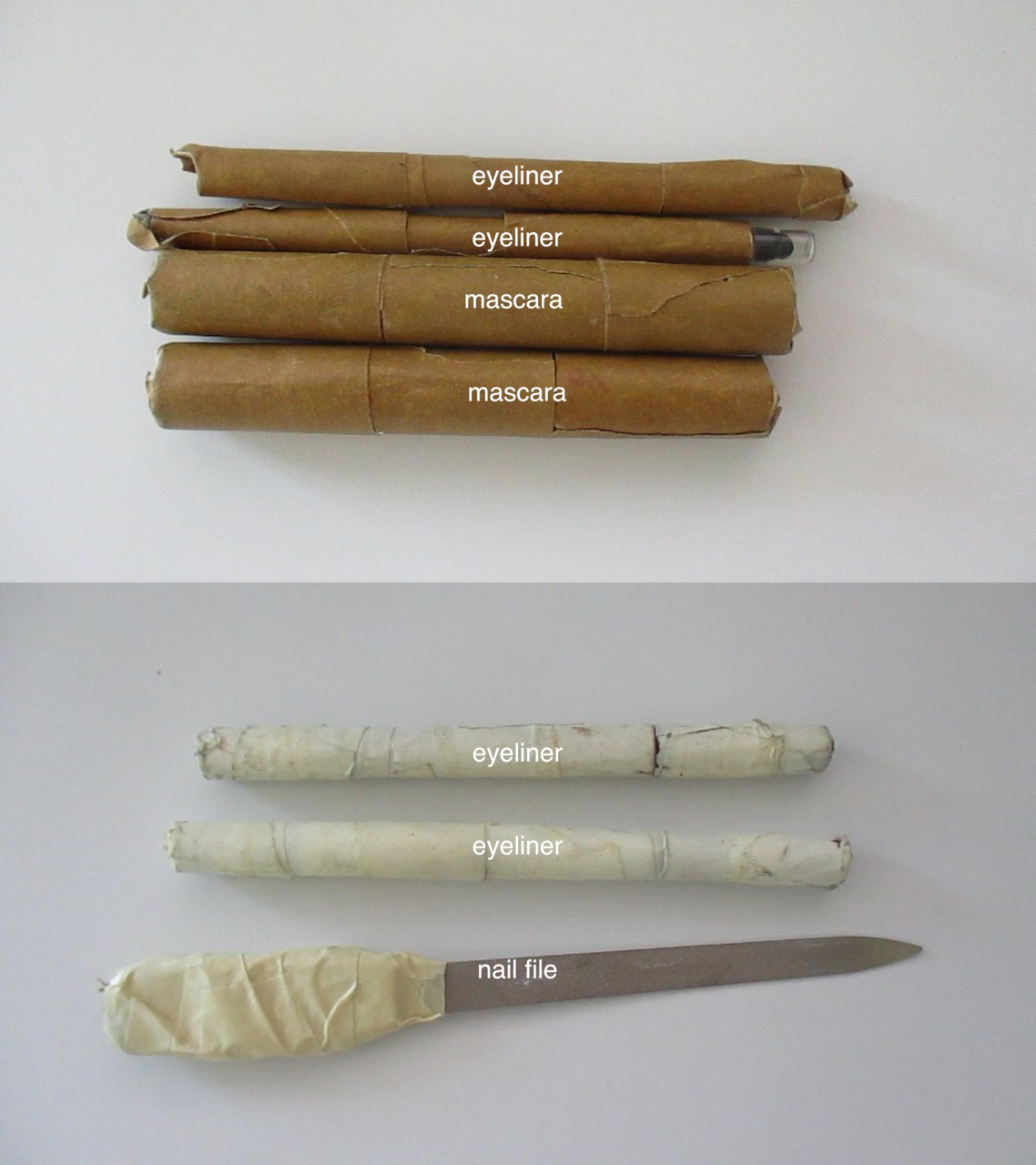
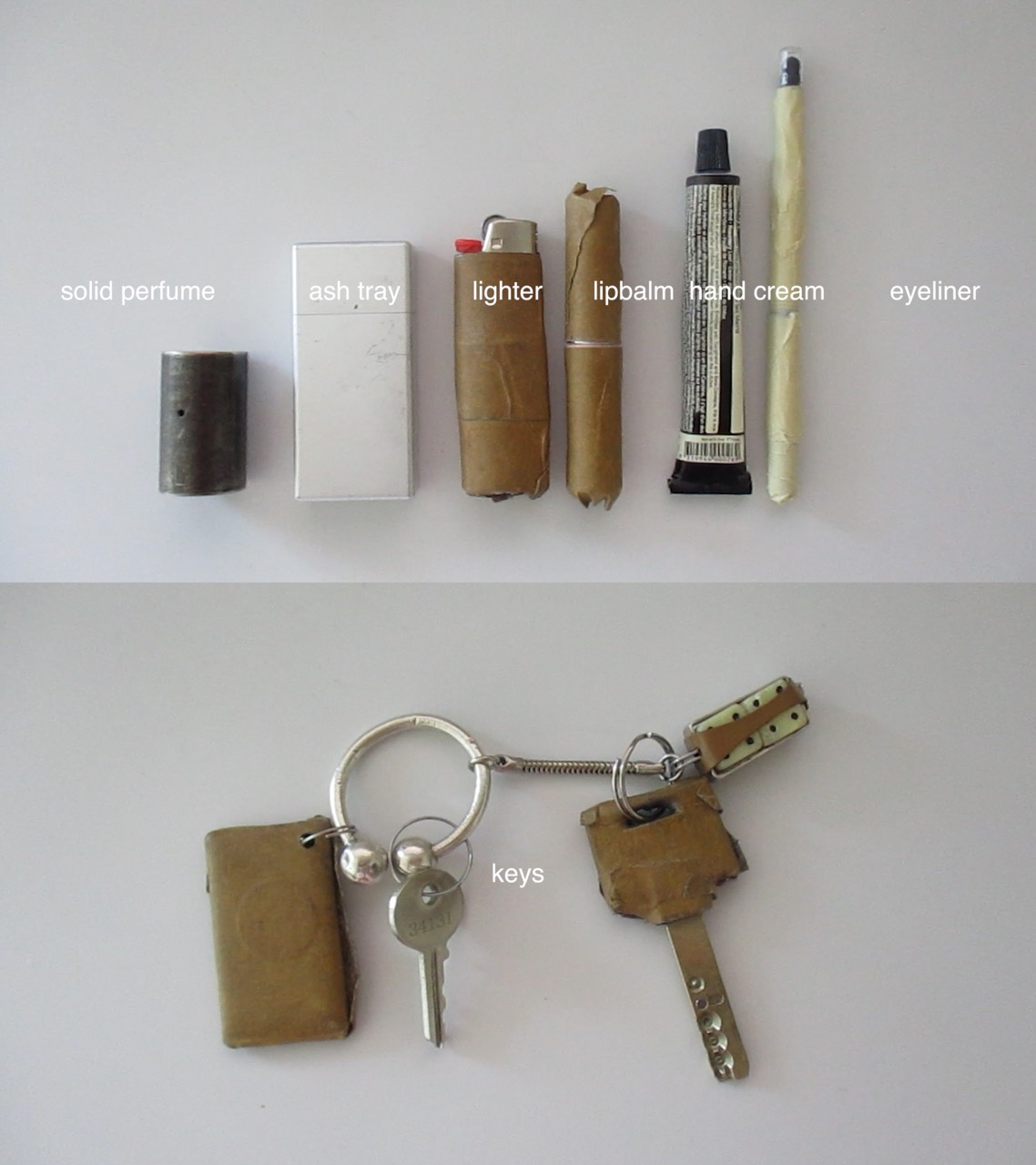
Lola Dement Myers might do it for no reason, but there’s definitely rules. A video with about 50 likes (at the time) on TikTok changed my world. It was @loladementmyers, lowercase l-o-l-a, telling us how she wraps all her household items such as toothpaste, moisturiser and pills with tape, to cover the branding most of us take as a nonnegotiable. Her artistic practice and the detailed life curation that follows out of it is right on the crossroad of purity and obsessive behaviour. There are small, profound, invisible-turned-visible laws governing the way she photographs, arranges, shops, writes, and even eats. The charger, the cracker, the pebble, the carton of eggs, the raw asparagus, the plain glass water bottle: In Lola’s world, they are all beautiful, so they must be documented.
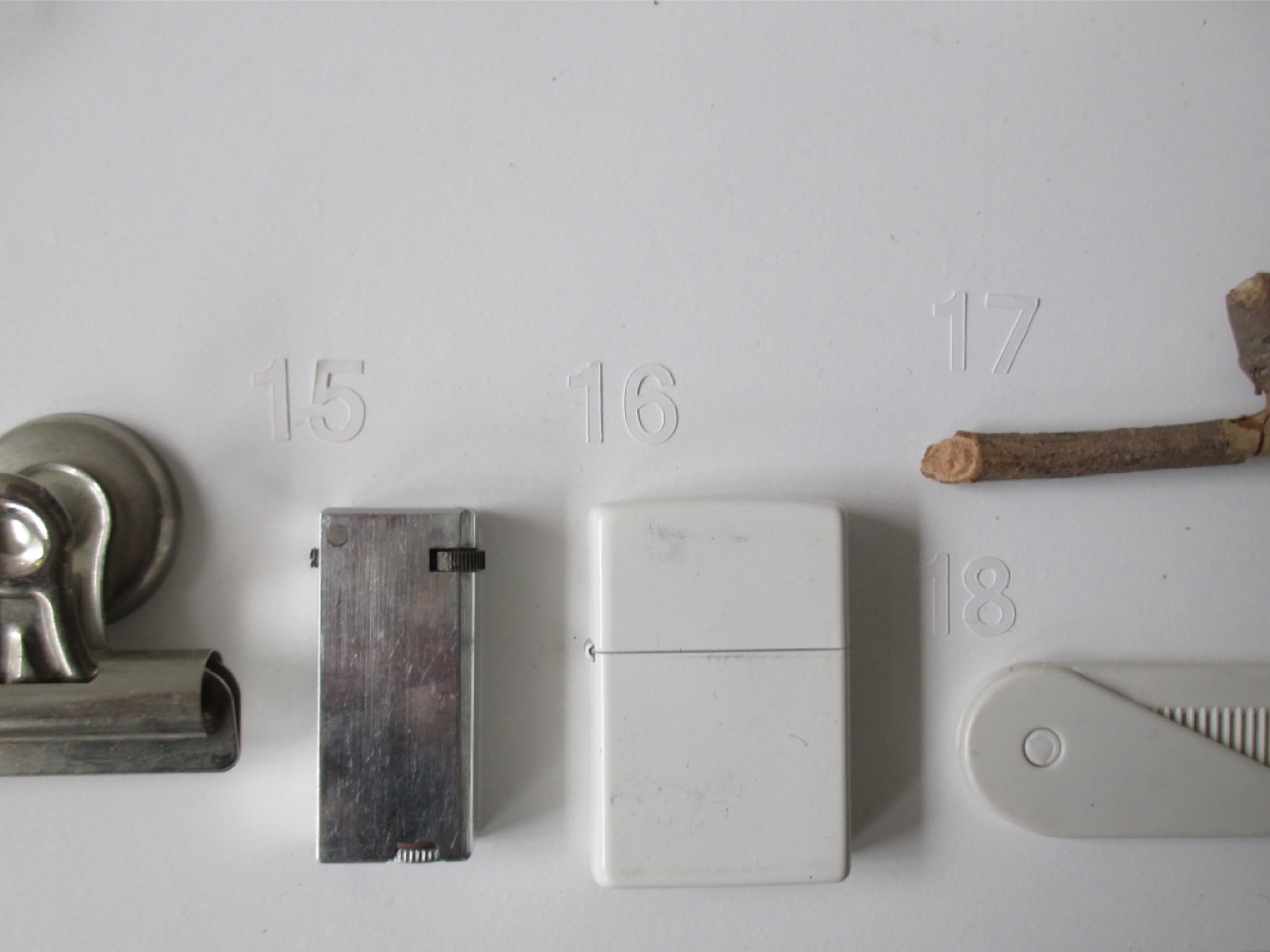
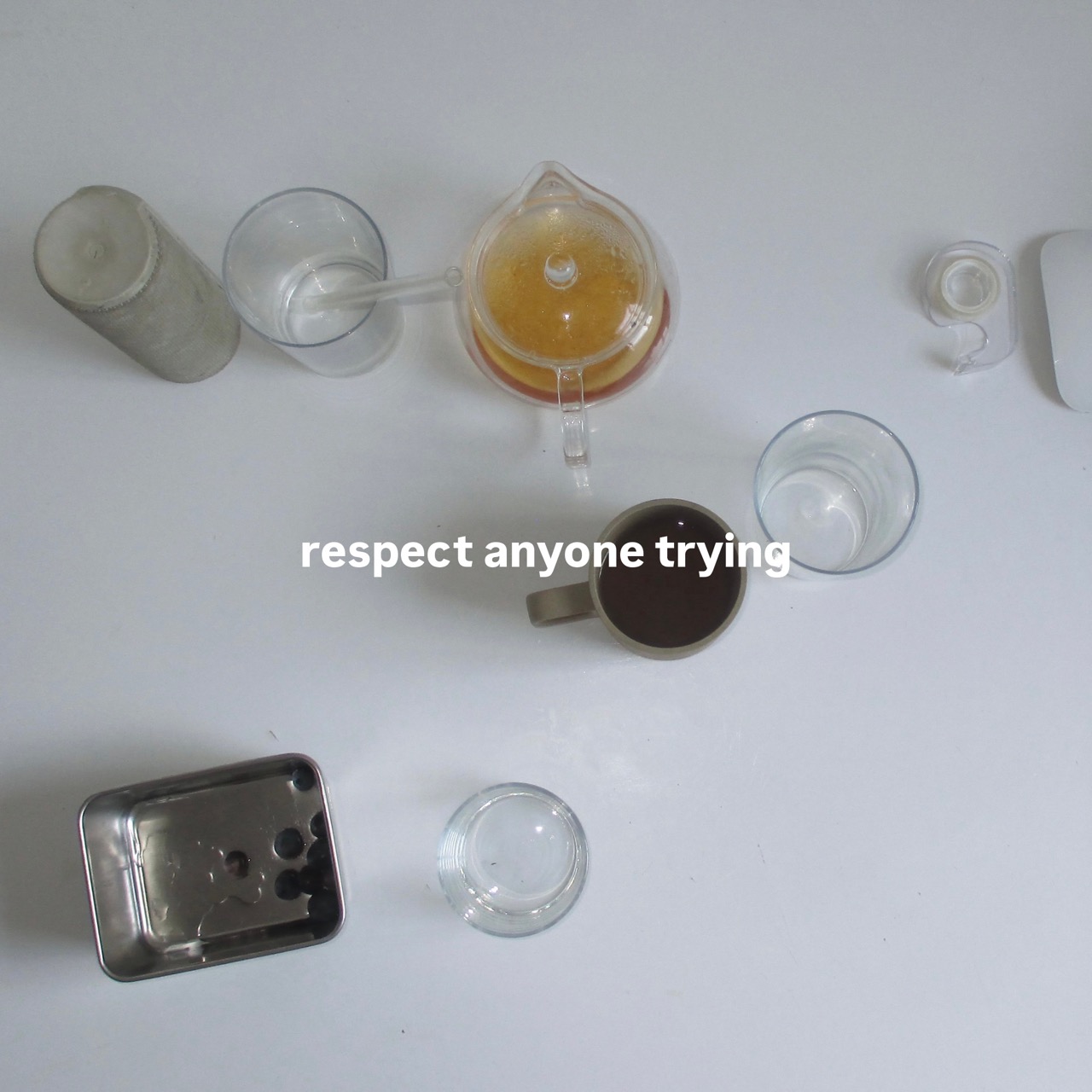
Lola is a New York-based artist and designer whose creative work spans basically everything her mind can think of, which is perhaps another way of saying that there is no boundary between work and life. Image-making is the common thread, but so are lists and catalogues: indexing personal obsessions, capturing mundane objects, controlling how things are presented online, creating repetitive visual systems, turning personal habits into aesthetic rules, treating the internet as a place for world-building. The list of her projects is endless, but to give you an idea: In 2021 she made a catalogue of her 79 pieces of clothing. She loves compartmentalising so much that at some point she made her own food trays. Her images of seemingly random collections of objects —a stick, a comb, a metal bowl— are often accompanied by simple philosophies she swears by: “respect anyone trying.”
And trusting your instincts (and just having good taste, I guess) can open surprising doors. Recently she made hypnotic videos for Nikki Nair, diligently organising and re-organising popcorn kernels, she designed 65 charms for Tom Hancocks, she’s behind the visuals for Pretty Sick’s new album Anarchy, she’s made her own jewellery and has a metal doll house in the works, she documented Suki Waterhouse before the MET gala, did a video series with Balenciaga on the people of New York, the list goes on and on. Which is why it’s important to call the seriousness with which she applies herself to things like crackers Work with a capital W. Everything can be work. Which brings me back to “lola does it for no reason.” Because she does, in fact, seem to do everything for a reason. The reason is simply that she wanted to.
Are you ready?
I am.
So I wanted to talk about the death of clutter. What is Clutter to you?
Did it die?
I thought you were killing it.
I don’t know if I’m killing it, but it’s just not for me. Well, it’s not even true. I think my ideal self doesn’t have an excess of stuff, but of course I do. It’s just a daily practice of mindfulness and checking in with yourself on what you actually need. But I have some clutter around, for sure.
What is it that survives all your subtraction?
The things that don’t want to leave. Recently I re-bought this Brandy Melville hoodie, a hoodie I wore every day for years. One day it got rid of it, and I’m not really sure why. And I found myself wanting it again, so it found its way back. I think objects have, like, a sentimental connection, and if that’s strong enough, it will keep coming back. They kind of tell you, you know?
Yeah, the genes I got from my hoarder grandma are nodding in unison. Is there anything you’ve ever regretted decluttering?
Oh yeah, all the time. It’s such a funny thing. So often I’ll do it with clothing, because I love clothing, and I think it should be known I love shopping, just not buying. But with clothing I’ll often give something to my sister and of course I would play the normal sister game of ‘I want that back’. So yes, things come back for sure.
What’s an example of something that has come back?
There’s this one book, this is maybe a little different, but there’s this one book I give to all my friends. When someone comes to my house, I always give them my copy of it, and then I have to rebuy it, and I feel like I’ve probably bought it, like, six or seven times, something like that.
Whoa, which book is it?
It’s Tan Lin’s ‘Seven Controlled Vocabularies and Obituary 2004, the Joy of Cooking’. It’s a beautiful, strange poetry book.
What a fun habit. Is there anything you’ve stopped wanting?
I feel like I used to want furniture more. I still want furniture, but I feel much more comfortable buying it slowly. I’d rather have an empty house than too much furniture, or furniture I don’t like. So I used to buy it at a higher velocity, and now I’ve really slowed down.
Is there anything that you’re obsessing over right now?
So I just bought two pairs of Celine shoes. And I’m pretty excited about those, I guess I was obsessed and then got them. It’s this pair of platform loafers, and a sandal. Oh, my desktop computer, that was a big obsession, and then I finally got it.
I was wondering about your communication style, because it’s always very filled with symbols, equals, and minus, and plus signs, and lowercase letters, and kind of replacing words with mathematical icons, almost. What draws you to these symbols?
Well, something I don’t talk about so much is I’m super dyslexic, so I just try and make my communication as simple as possible, really for my own benefit. I just found it’s easier for me to think when there are fewer words, so simplify it, and then amplify it, and that’s all I need. The lowercase; I don’t know, I used to do all my formal work in all uppercase for a long time. But now it’s nice that I can use the lowercase in my everyday communication, I do it in my work emails.
It’s almost like a signature. And what changed to go to lowercase letters?
Maybe I became quieter, I don’t know.
Did anything prompt that?
Definitely, I realised my boyfriend had all lowercase on his phone, and I really liked how that looked, and I was like, okay, yeah, this is an aesthetic choice. I actually just asked another designer ‘Why do you think designers go for all lowercase or all uppercase?’ Ultimately, it’s an aesthetic decision for uniformity.
I wanted to talk about your podcast Sex Talk. It’s not really about sex, is it.
No, it’s a collaboration with Sex Magazine. Name-wise, I just thought, you know, it’s provocative of course, and it immediately lends itself to the magazine. Why not keep it short and simple and get people to engage.
Which question do you ask there is your favourite?
Hmm, that’s a good question. There are about 100 questions. I really like, ‘what is success?’, ‘What is career?’, ‘What is working?’ I like what is working, because of the double entendre: What is going well? And what is work for you?
Not entirely coincidentally, I feel like you have like 5 million jobs. Is that why you like that question?
A goal of mine is to debunk the myth of the creative class and just show that to be an artist is a job, and positively so, like, if you want to do this, it’s super possible. I want to demystify it a little bit, I want to help people see how vast the job market can be and how we’re in such a beautiful time where you can kind of create the job you want. I think that’s really special.
Reading what you were working on I was also thinking, I completely get why someone would ask you to do any of these jobs. But in all honesty these job titles would kill any Victorian child.
Exactly, exactly. And all of them are hardly work, especially if you’re having fun. You know, we’re taught such a narrow view of what the job can be. And it really can be like yesterday, I was collecting candy for a music video. Like, that’s my job on that day.
Dream! Is there any question where the answer surprised you so much that you had a different perspective on what the answer could possibly be?
That’s an interesting one. It’s hard for me to remember people’s individual answers. But I often ask, ‘what is wrong?’ You know, it would naturally be negative, but a lot of people just answer nothing, or people have spun a lot of the questions very positively when I haven’t expected them to.
And what makes a good answer?
Honesty and as minimal thought as possible. I want it to be the most natural answer. I try really hard not to give people the questions before the interview unless they really request them. I like it to just be their first thought. My mentor always says ‘first thought, best thought.’ So whatever their first thought is.
And are there any of the questions that you would ask yourself if you were in the video?
In the last video of the series, I’ll answer every question myself.
I’m excited for that. Do you feel like the internet has made people more or less performative?
Neither. I think people are naturally as performative as they need to be. You know, like you go to a party and there’s someone who will be performing for the crowd or on the internet, I think it’s the same thing. I also don’t believe in being performative – it’s a funny one. Like, what does that even mean? It’s just someone trying something.
I think that there might be a distinction for how you act when you’re alone, whereas if you’re in front of people, you act differently. And then in front of a screen, you act maybe even differently.
Yeah, I don’t think that’s a negative or far away from the subject. Of course, I’m going to act differently if I’m not with you, because I’m not with you. I’m not interacting with you.
Maybe that’s a better question, is performativity a negative concept?
Probably no.
So I heard, or you said, you emailed, that there’s a Sex Talk book coming out.
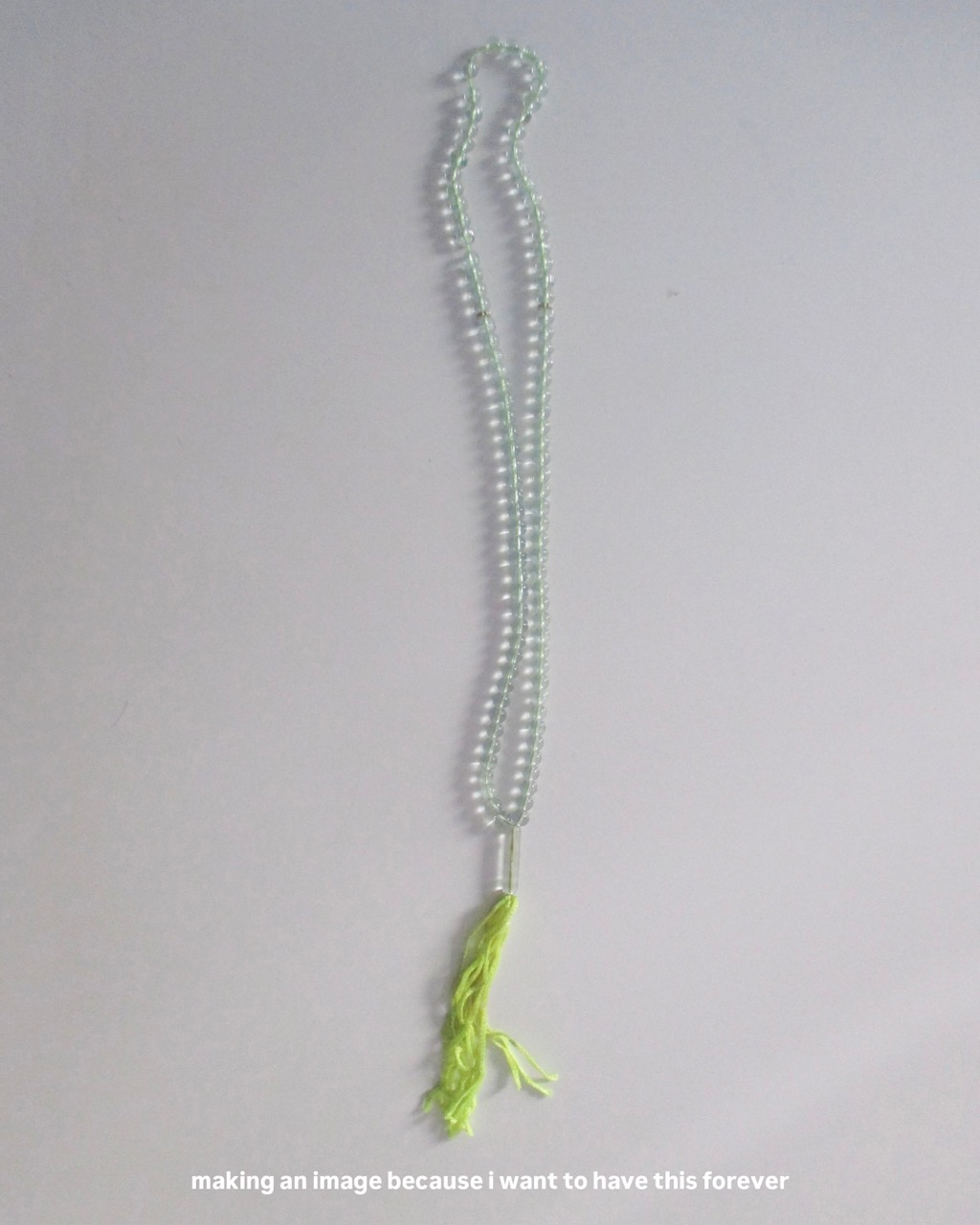
Mm-hmm. I just think it would be nice to have a physical form of all of the video interviews. I take photos every time, and I think, you know, it’s nice for it to live on the internet, but the way to make something last forever is to make it an object, so.
Exciting! And you have a daily photo practice. I was wondering, as your photography consists mainly of mundane things like breakfast and iphone chargers on a white background, what makes something worth capturing to you?
If I think that I should take a photo of it, then I take a photo of it. Even if it’s just the smallest thought, like, oh, I like how this looks.
What’s your favourite picture that you ever took?
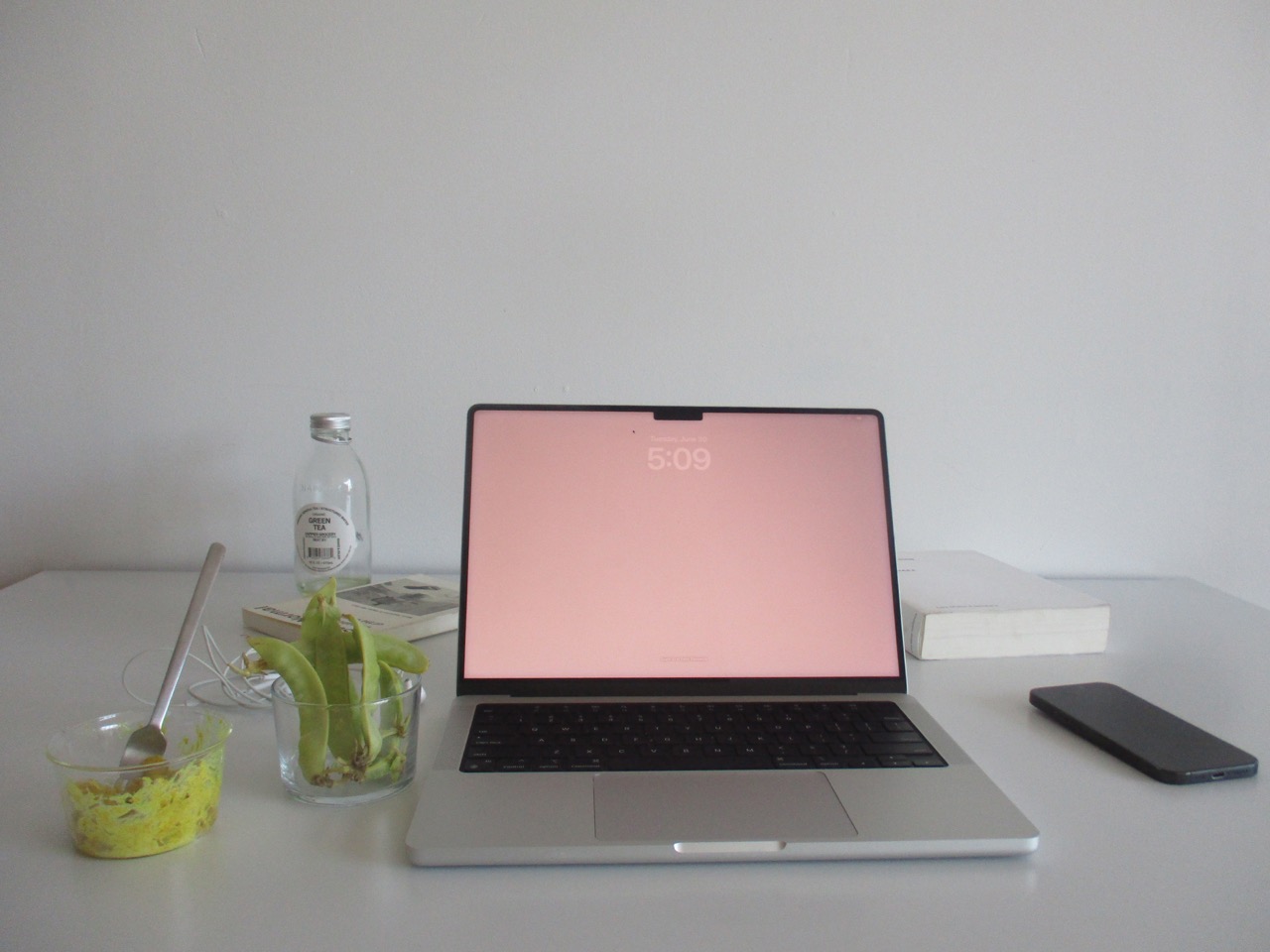
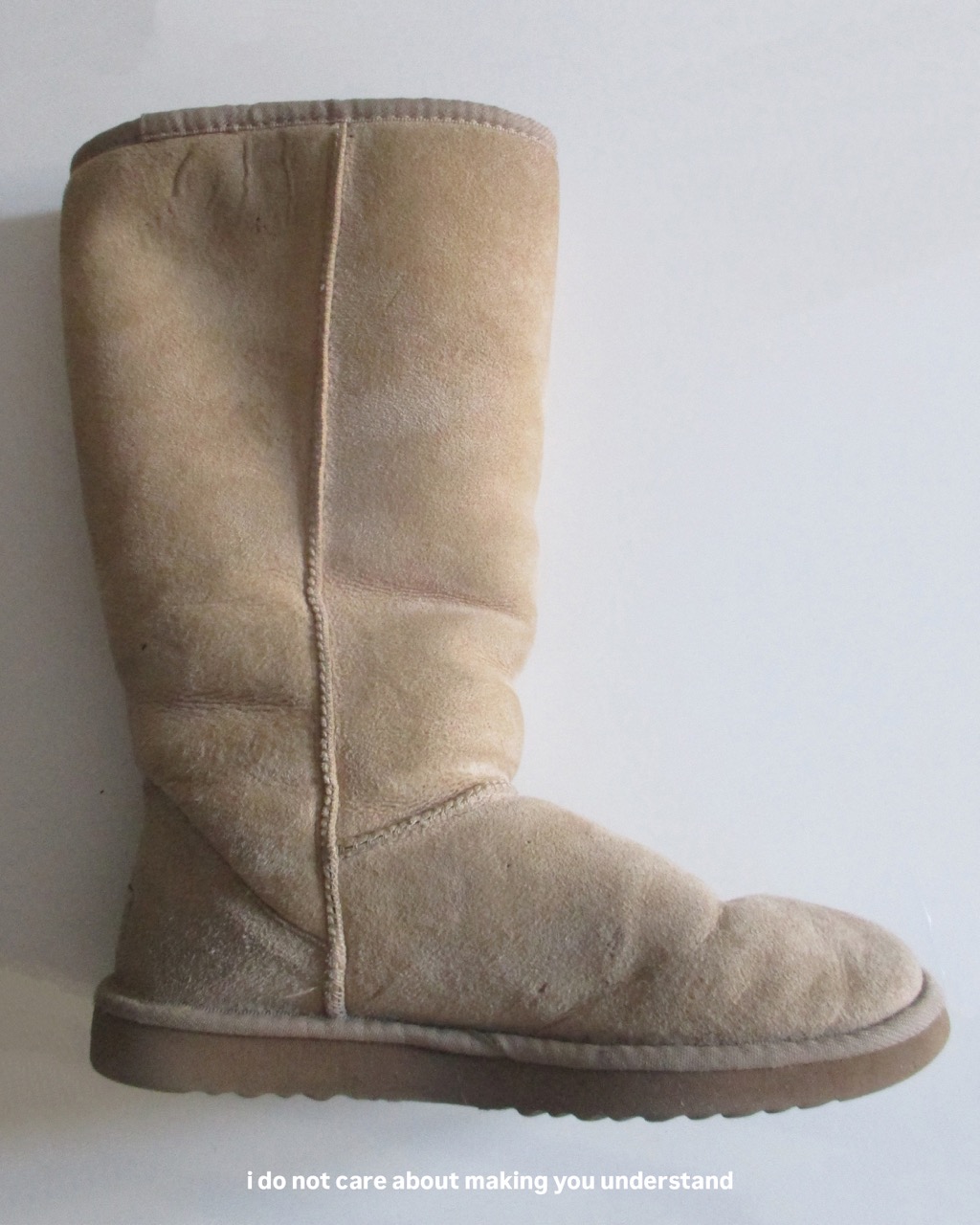
Whoa, that’s a great question. Probably one of my boyfriend, or my sister. I like portraits a lot. But right now, I feel like every week I’m obsessed with one photo that I’ve taken. There’s this one where my laptop screen is really pink, and there’s the green of some green beans, and a book, and my phone, and just like the colours in it are perfect to me. And I just keep thinking ‘I want to post this 1000 times. This is a perfect image.’ But then the week before, it was a photo of two cucumbers. So it changes.
And I wanted to briefly go over some of the other creative jobs that you’ve mentioned doing recently. You wrote 1000 words on personal style, which to me sounds like a lot of words for you.
It is. It was.
What’s the shortest version of your theory?
Style is about creating yourself, not finding yourself.
That’s a great one. I think that goes into our conversation about performativity.
Yeah, like, there’s no shame in trying it out – like, there is no natural state. It’s your job to figure out what you want. And like, I think that’s how you kind of free yourself of being nervous to live how you want to live, or be who you want to be.
Yeah, I was talking to Lauren, actually, your friend from OGBFF. We had a really long talk about living in this post-cringe era, actually. I was thinking of just being so unbothered by other peoples opinions. How do you feel about that? Where are you on the cringe mountain?
I’m happy to be cringe. I always say I act corny on the internet because I value my privacy. And by that, I mean, I don’t really associate the person I am online with myself. So it allows me to kind of keep this performance going. I love it. It’s such a rampant time of self-expression. Every person gets a chance to do it and gets an audience to do it in front of, like, that’s such a beautiful thing. And whether the outcome is cringe or not, like, it doesn’t really matter to me. Look what Lauren just sent me. [shows the viral OGBFF fringe phone case]
Oh, my God. So cute. I’m so into it. I can’t believe that they all came in too late for her pop-up in New York.
I know. I know. So funny.
So you also recently worked for Tom Hancocks. His work is incredible. You said you made 65 charm designs?
I just started to make one. And then I was like, I’m going to make five. Oh, then I need to make five sets of this, and this. It kind of just went that way. And sometimes it does, sometimes it doesn’t. But Tom is a friend, and we’ve worked together in the past. I wanted to make sure I got something he liked. In the end he’s going to pick a series of five.
From what I’ve perceived from you, 65 feels like very – I don’t want to say unedited, but just a very large number.
Yeah, that’s true. I had a design teacher that was like, ‘draw the thing you’re designing 100 times’. And I just always think about that; it doesn’t hurt to make more and just see how far you can go. Because honestly, the more you have, the easier it is to be like, oh, this is the one. It puts too much pressure on them if there’s only four.
Yeah, that’s true. Then they all have to be the perfect one.
Exactly.
And so you are also managing food.xyz?
Yeah, that’s an ongoing project. So one of my mentors is Richard Turley, who is an amazing graphic designer. And we started working on one project for Rosalia. And that just continued. Now it’s been like eight months or something with her. I have a background in project management. There are four, I think three or four partners in London, and then Richard in New York, and his designer Echo. And yeah, now I manage that as well, which is cool.
That’s so fun. Did you have anything to do with those Guess Jeans billboards? Oh my god, that was before me. But that was amazing.
Damn. They’re so, so good.
Such a special project. I feel like it kind of set the tone for advertising this year. And that’s just like my amazing designer, in the studio, like Snapchat-editing. It’s so cool working with her and working with Richard has been amazing, he really hones in ‘first idea, best idea, trust yourself’.
Sounds like you have amazing mentors. So are there any things that come back in your art practice now that you already lived by when you were a child?
Everything I do. My extracurriculars were always art, ever since I was little, like photo class at eight years old kind of thing. My mom is an artist. And like, yeah, I feel like maybe not necessarily the themes are still there, but the ways of working are from the same grand ideas as when I was a kid.
So what do you think the grand ideas are that you keep wanting to make again and again and again?
Well, I mean, the crux of all art is like showing how you see the world. I feel like I’m tirelessly trying, trying to express that in everything I do. And like, maybe not minimalism since I was a child, but just like worshipping beauty is a huge one, I think. And that’s part of minimalism.
Is there a moment in your life that you pivoted to this minimalism?
When I learned about Fluxus artwork in school, my 19-year old self just realised like, oh, this is what makes sense to me. To have style is to have rules and to have rules is freeing. You’ve set this groundwork. But in my freshman year, I was wearing bright orange, and I loved Looney Tunes, and I had a totally different look. I just developed into something that felt more comfortable.
So fun. You also told me one of your current ‘jobs’ you’re working on is getting 100 grams of protein a day, which feels like a whole lot.
Oh yeah.
When did that become a part of your identity?
I think health is such a funny practice and I’m not stronger than health trends. I try to approach it the same way I approach my work; it helps me feel less scared by it. The 100 grammes of protein practice is like, comical – how much work has to go into actually getting there, you know? And 100 is like not even like enough, allegedly, which is crazy.
It’s not?
It’s supposed to be equal to one pound of body fat. So I’m just like, this can’t be right. I don’t know, whatever.
I feel in the whole protein discourse, there’s a masculine thing going on with all the meat-eating and protein-based things.
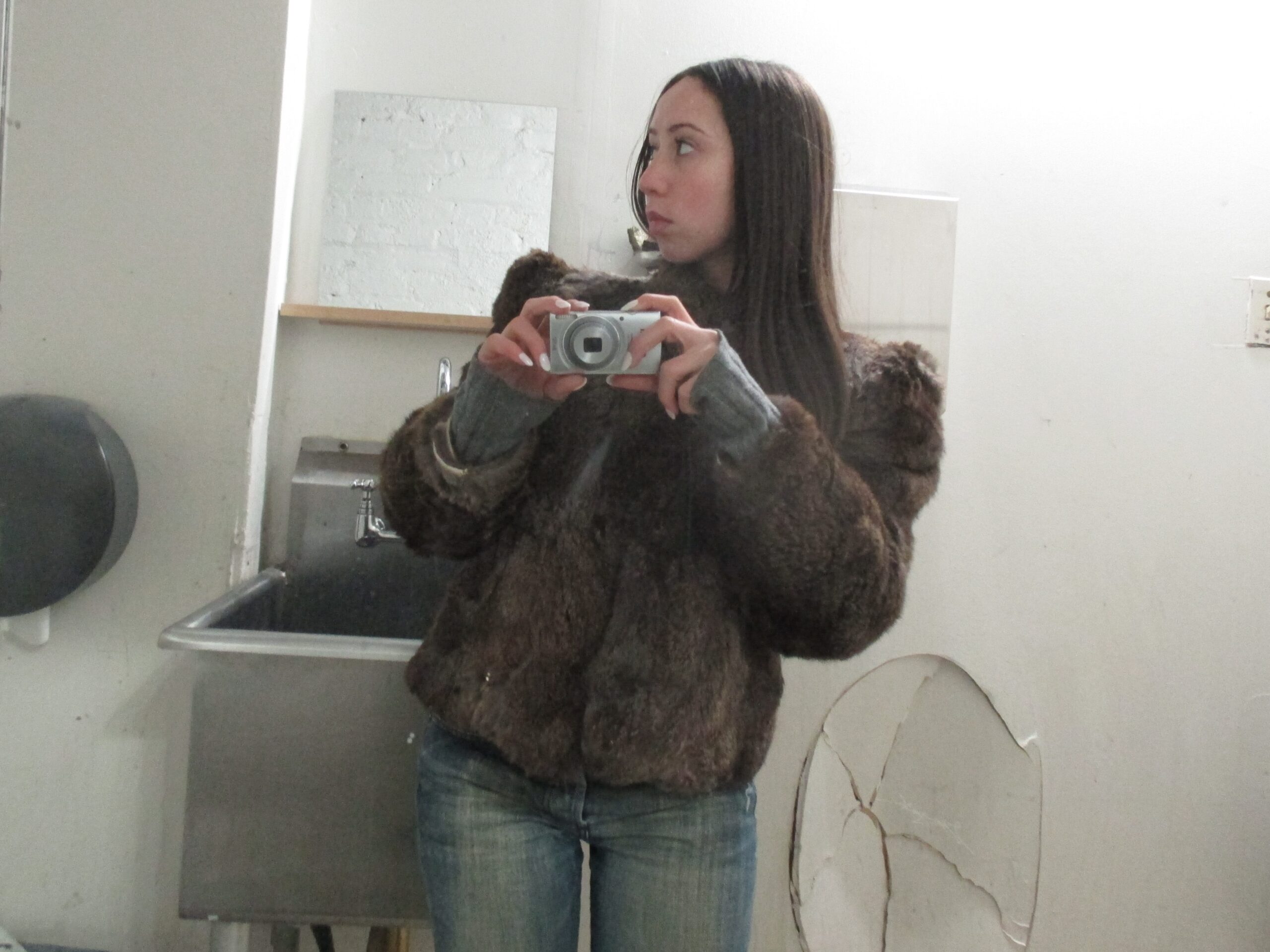
I was just thinking about that. Like, not gender envy, but like, I do love exercise. I love weightlifting. I do like figuring out this health aspect of my life, but it makes me feel really masculine. And I love that. Like, I have this thought where I’m like, I’m pretending to be a boy. Like in the gym, I’m listening to EsDeeKid or FakeMink, and I’m sweaty. And I don’t know, like, I love that. But I need to bring it back to being a powerful woman and not being a powerful man. I don’t really mind wanting to be a boy at that moment. I don’t know.
I understand the resistance to wanting to be any kind of man. But at the same time, what you’re describing sounds highly queer coded to me.
For sure. Like, exactly.
So then we’re like on the safe side of masculinity, I’d hope.
Yeah. For the most part.
What’s your favourite Lola-coded protein meal?
I try to do real protein, whole foods. I’m just obsessed with grilling a chicken thigh, doing a little bit of rice with dill and lemon, and then a big tomato salad with onion and dill and lemon. And that’s just like the perfect lunch for me. And I’ve been doing it for lunch and dinner.
The same meal twice a day?
Lunch and dinner are the same. And I think in like a week I’ll be done. But this week I like it.
How long have you been doing it for?
Only a week. So it’s not crazy. And then yoghurt too. Normal yoghurt bowl.
Okay. Nothing crazy.
Nothing crazy.
Just eating the same thing every day.
I mean, obviously I like regiment.
My last question for you is, what is sacred?
Everything?
I was thinking you were going to say regiment.
Rules and regiment are not sacred, but honesty is.
Words by Pykel van Latum