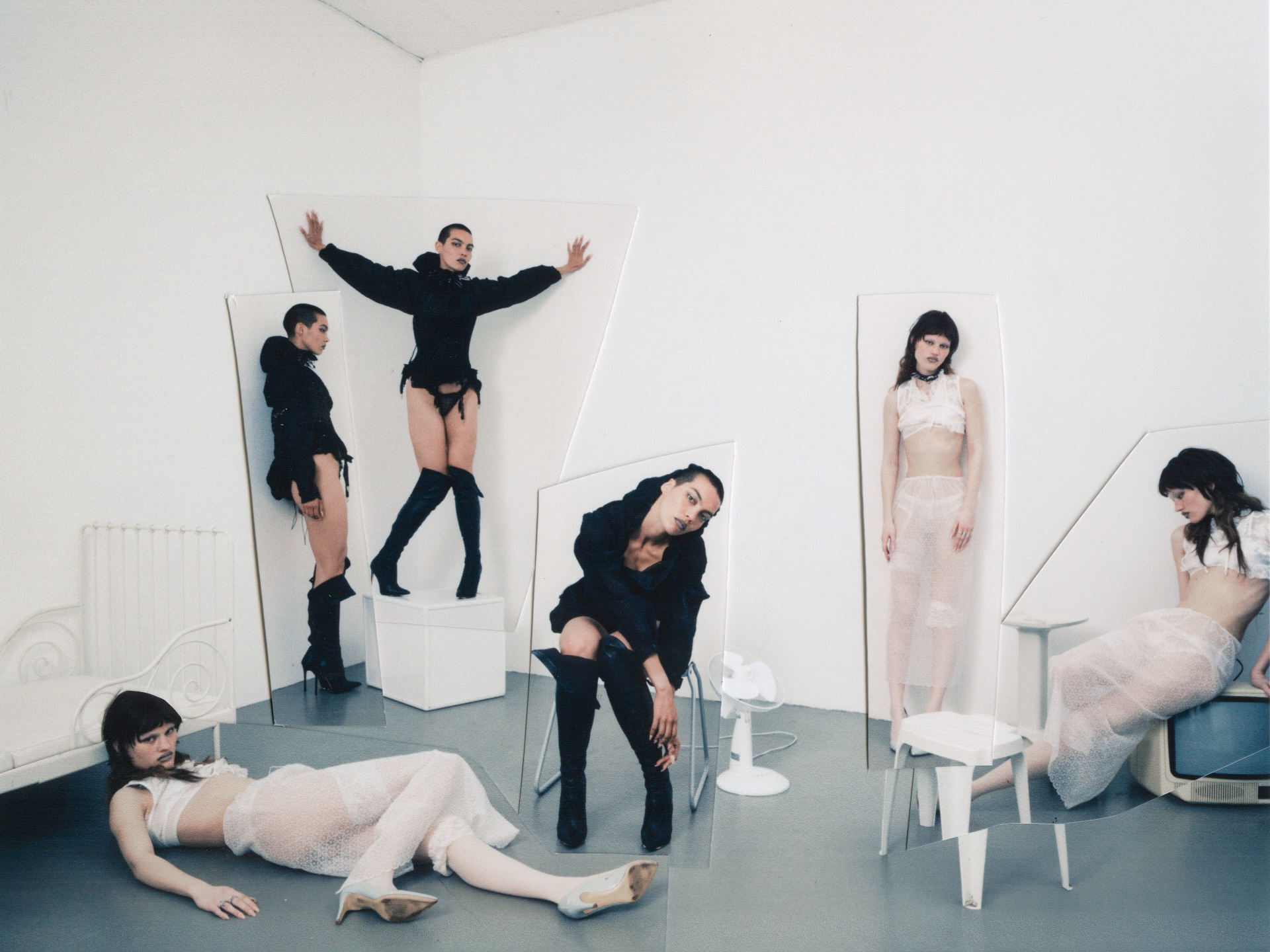
This piece originally appears in Glamcult #144, THE NOISE ISSUE.
Cecilie Bahnsen came into my life at an impressionable enough age to permanently alter my relationship to puff sleeves. I say this with some self-awareness: I have always been fundamentally predisposed to things that could be described as “girly.” But I’m hardly alone in loving the brand. There’s been a larger cultural shift in recent years where femininity — the visual language often dismissed as frivolous — is finally being afforded the dignity of seriousness. And, dear reader, the very first PFW show I ever attended was also hers. It feels fitting to return to her world this way.
We meet over video call, where Cecilie answers everything in an upbeat, whimsical way. She’s confident, and rightfully so, as she’s someone who has already built the world she wants to live in. She speaks quickly, constantly braiding and unbraiding her hair as she talks. It’s noteworthy how little she tempers her enthusiasm for her own work — she has an outspoken confidence in her world, where gentleness, repetition, and insistence become their own form of volume.
On call, I can immediately see she’s wearing her own designs. As it turns out, she doesn’t wear anything but her own designs actually, and why would she? Her universe, once mainly consisting of dresses, has rapidly expanded to a full wardrobe that is as bold as it is pragmatic. Colossal silhouettes, cloud-like fabrics, cutesy little utilitarian details… she’s constantly teetering the line between opulence and functionality.
Her world is evidence that femininity can be excessive, technical, romantic and entirely livable. What’s striking is how consistently that language survives contact with everything else. In collaborations with ASICS, The North Face, and Alpha Industries, her bows and florals persist, regardless of the ‘masculinity’ of the item in question. The effect is that her visual vocabulary has become one of the most immediately legible in fashion right now. After a decade of the brand, a monograph with A Magazine Curated By, and a steady accumulation of collaborations, we talk about softness, ornamentation, practicality, romanticism, and the persistence of bows even past their pop-cultural trend peak.
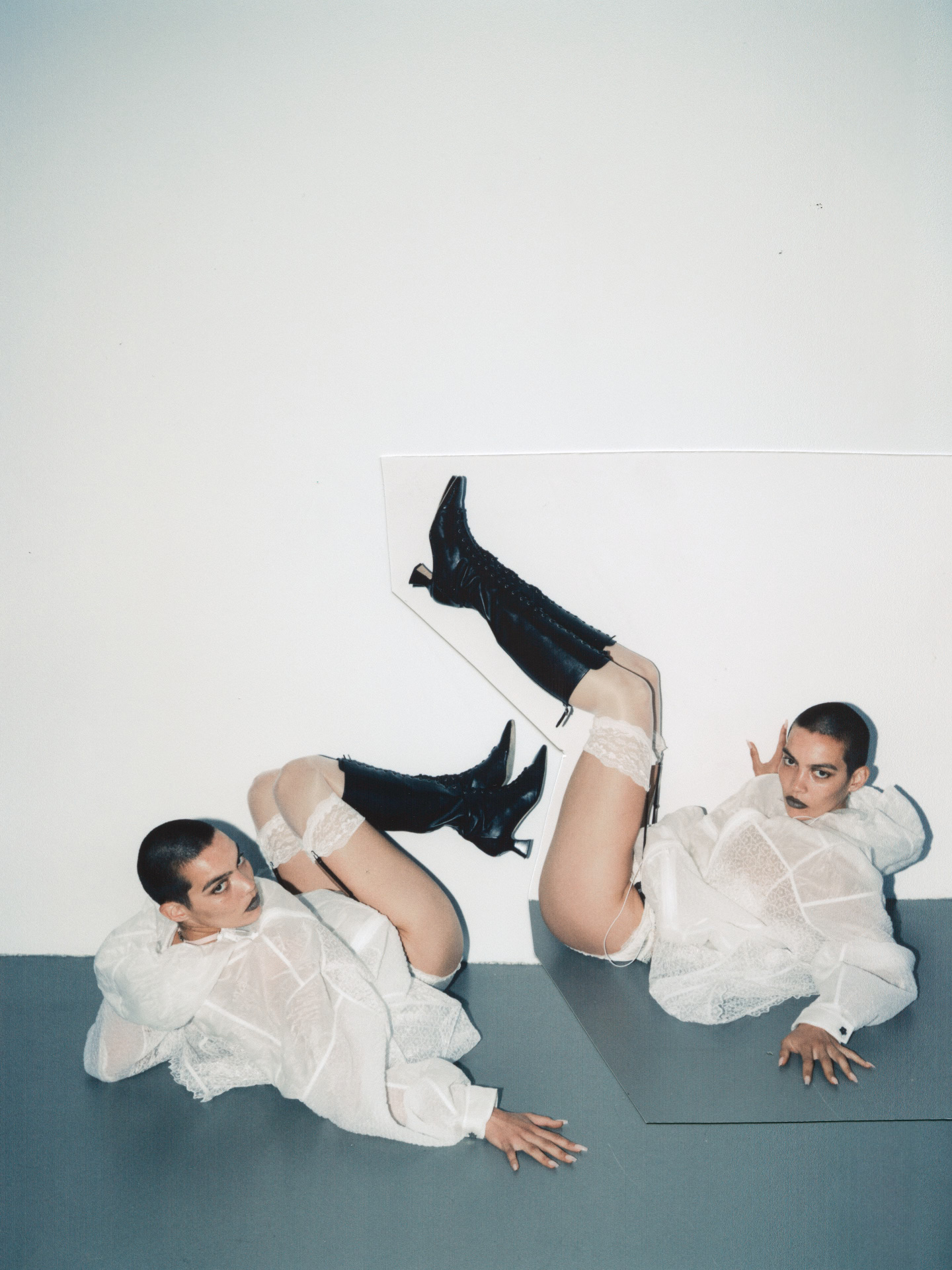
Hi Cecilie, so nice to meet you. I was thinking people must also talk to you about girlishness a lot because this is obviously a very big part of the brand. Spoiler, I will be doing that too.
I’m glad!
So, can you tell me about your formative, or favourite, childhood experiences? Were you a girly girl?
I was definitely a mix. I’ve always loved to dress up and had personal style, and loved making my own dresses and outfits. But I also always loved nature and building cabins outside with my dad. I was girlish without being too precious about it. My grandma would also make me and my sister nice dresses so we could match for family parties, so there’s definitely been this ‘properness’, but always combined with the bow on the back coming undone at the end of the day. Having a sister has also played a big part in my life, whether it’s playing, seeing each other through life, finding out how to approach it — these memories have also been important for the brand.
And my grandma inspired me a lot with her craftsmanship. Every time I was with her, we would embroider, crochet, or knit. There was real peace with that.
Long live parallel play! More generally, do you feel like there is a historical uprising in taking femininity more seriously?
I think people are definitely embracing it again. People are really looking for pieces with personality, where you can see the designer’s handwriting. This touch of hand has become extremely important in a very digital world.
And who do you think your contemporaries are, in terms of navigating the industry right now? Because there are obviously so many more women in charge now.
You mentioned the glassware at the Paris show you went to, which is my friend Nina Nørgaard’s work, who is a glass blower. Her work is so delicate and feminine when you see it, but she’s there blowing it all by hand. And there’s such strength and power in that process behind the scenes, with the high temperature you need to make it. And there’s my friend, Sophie Bille Brahe, who has also really stuck to her aesthetic and pushed her luxury feel and delicacy, and really found their own language.
It’s really incredible and rewarding to see this female stubbornness of creativity, believing in your vision more and more, and especially when you’ve been following their journey for longer.
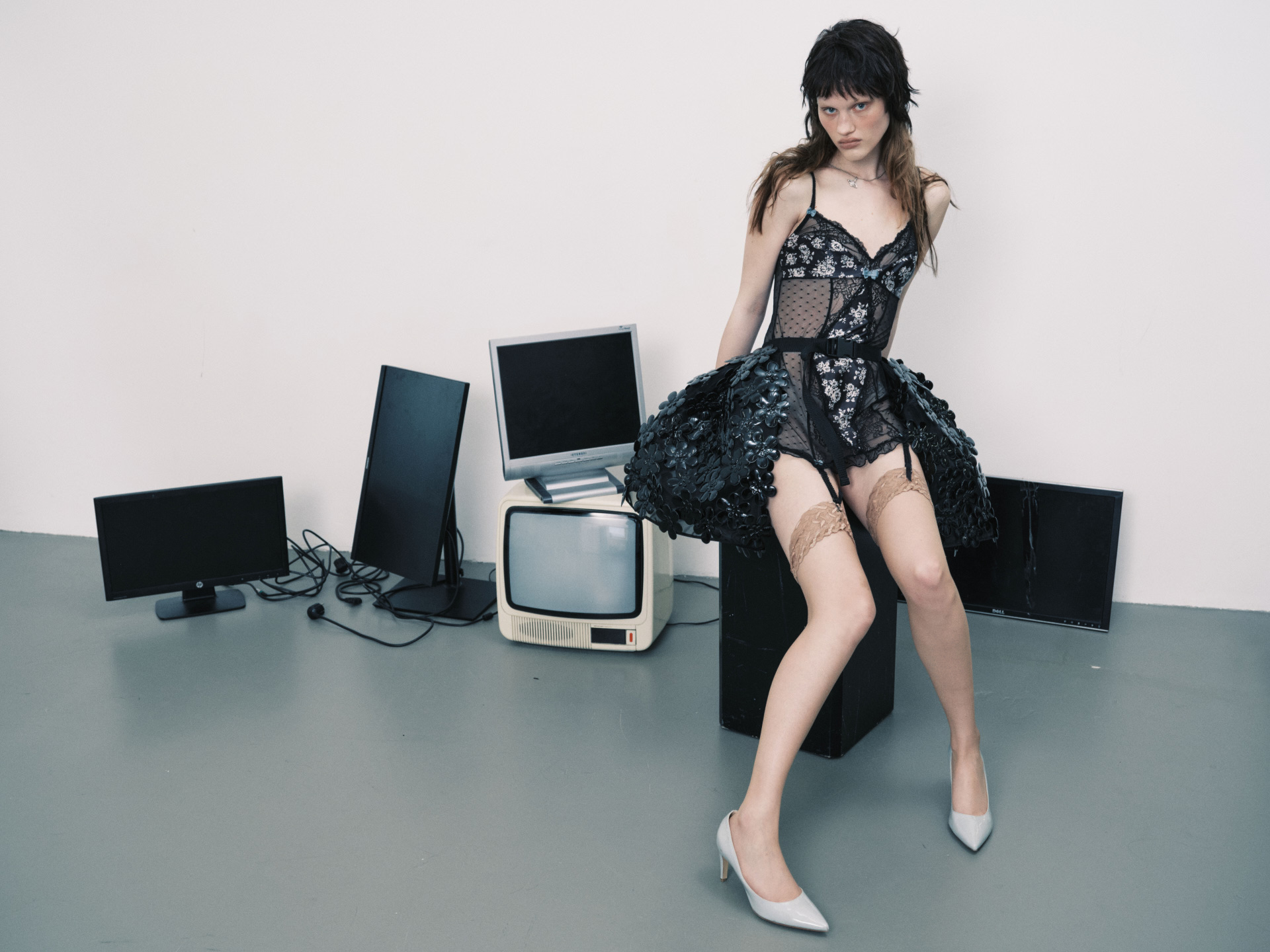
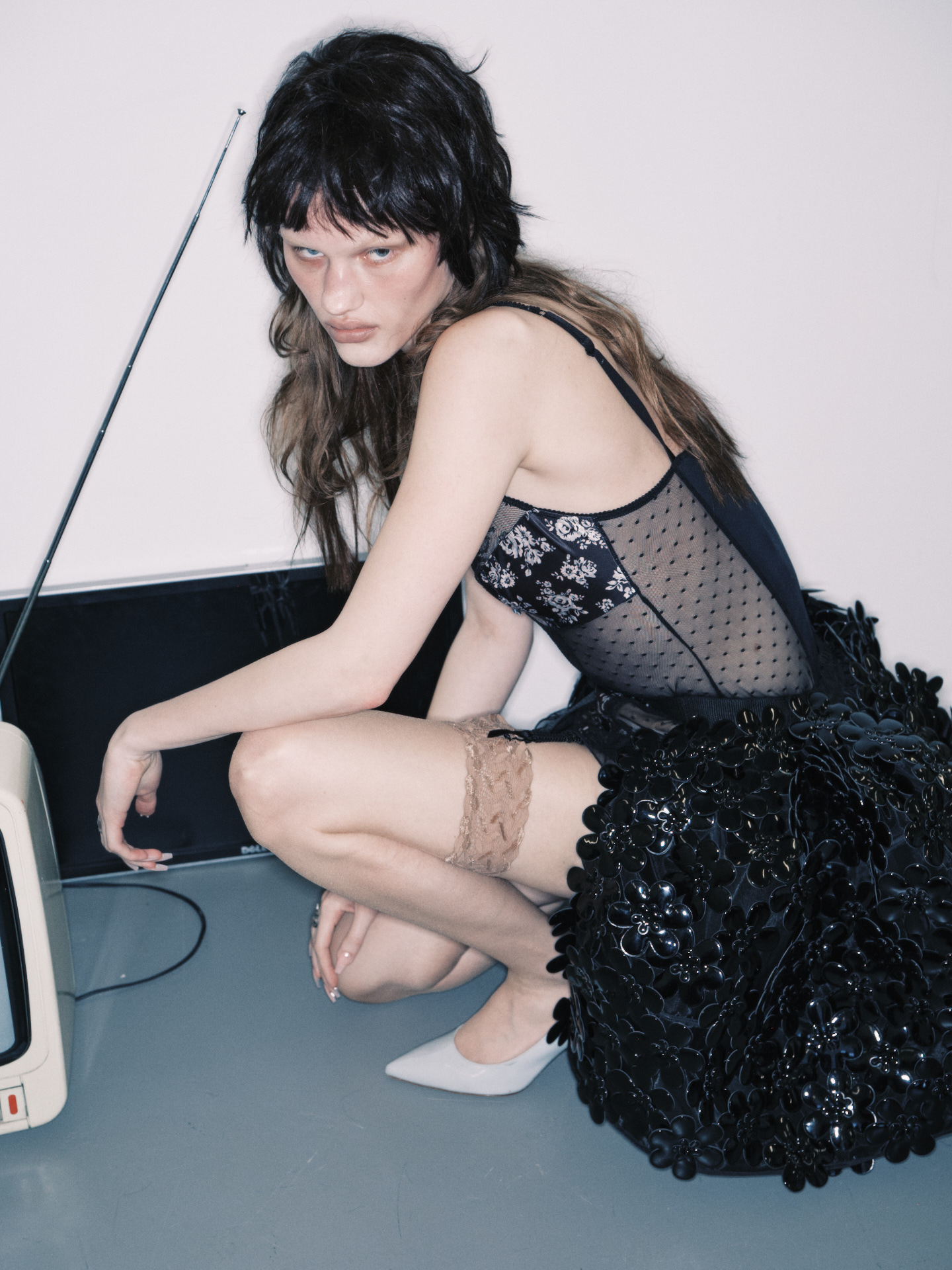
You’ve spoken about this female expression of women finding their voices, and how it has always inspired your brand. So, who is currently inspiring you?
This morning, I was just texting Fumiko [Imano] — she’s a photographer — because I’ll be going to Japan. I’ve always loved her “twin” images and the way she looks at herself and her femininity. She also shot my son last year in Japan. Or there’s my friend, Anna Karlin, in New York, who’s designing furniture and interiors.
As an independent designer, you need partners to discuss what their daily life is like, how they seemingly do it all with kids, and how both things can be the most important things in the world. And I think it’s those partnerships and dialogues that are so amazing and special.
The theme of this magazine’s edition is NOISE. And it’s about how a whisper can be as powerful as something loud — from quieter to more rebellious forms of expression, it’s all worthy noise. Where do you feel your work sits within that range?
My work for sure has a softness to it, especially at first touch. It’s never been about a ‘loud rebellion’, even though I think there still is a form of that, in the stubbornness of continuation, and of believing in my own universe. I also think there’s a lot of that in my creative process — quietness is central. I need to have time in nature to reflect on things, and then suddenly it makes sense. But other times, everything can be loud and hectic, and you get 10,000 inspirations at once. So, it’s this constant juxtaposition of the two worlds, loud and quiet, that creates this magic, and that drives each other forward. If it’s always quiet, then it wouldn’t happen, but it can’t always be loud either, because you’ll never have that pause to stop, reflect, and create.
I recognise that necessity. In that same differentiation, I was trying to categorise your designs into either soft-spoken or loud. And I was wondering if it was possible to distinguish it in your world, as your designs are conceptually soft, but actually, your designs take up a lot of space and volume
You definitely have to be confident. And I think I’ve done some amazing collaborations with athletes, for example, we shot a campaign with The North Face in Fontainebleau. The athletes were climbing on the mountains, and it was so special with their strength, all their muscles, the ease with which they just moved — it was like vertical ballet. It was so incredible. The tension between the two: how effortless it looked, but you also knew that it took incredible strength to do it.
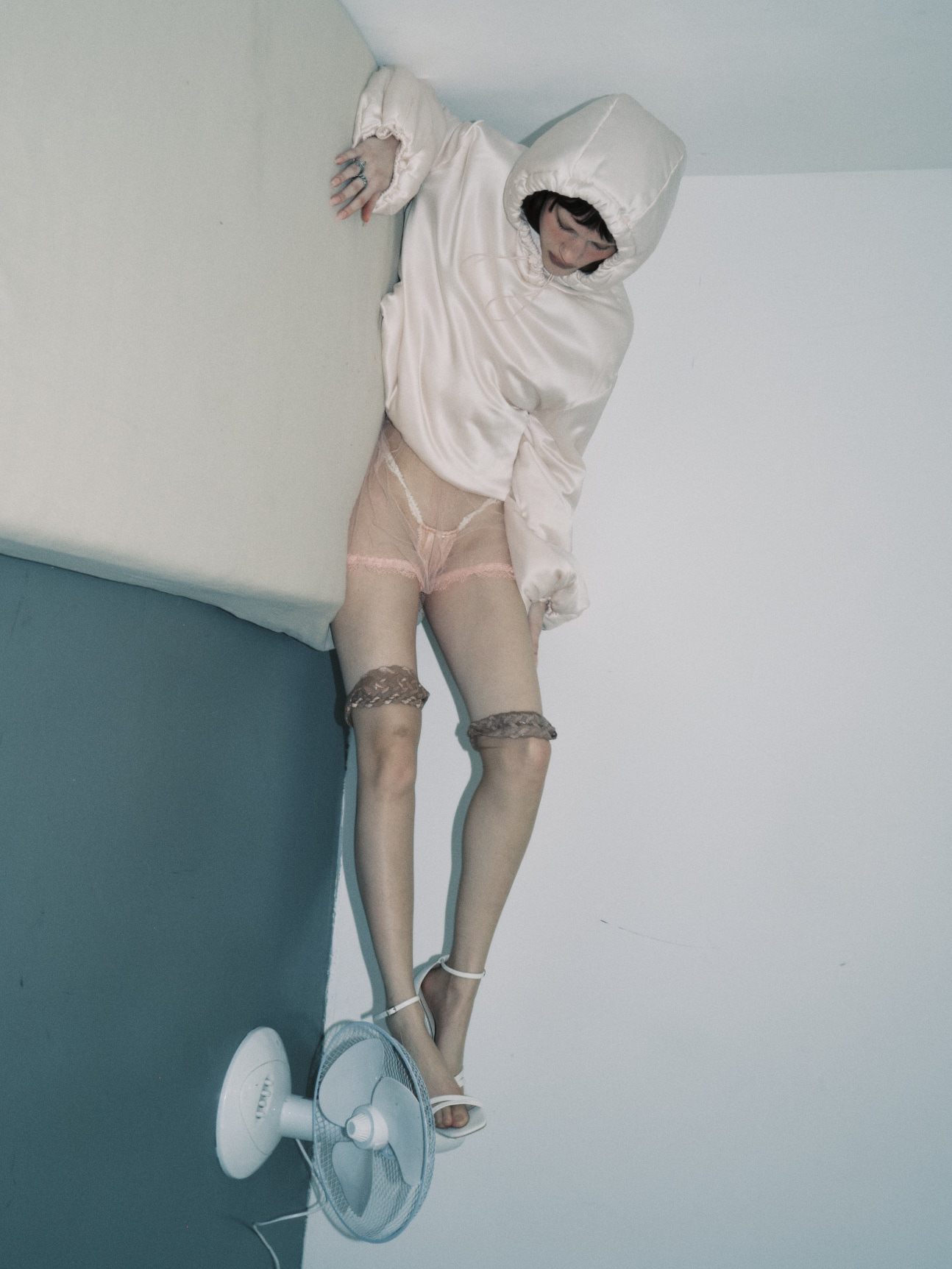
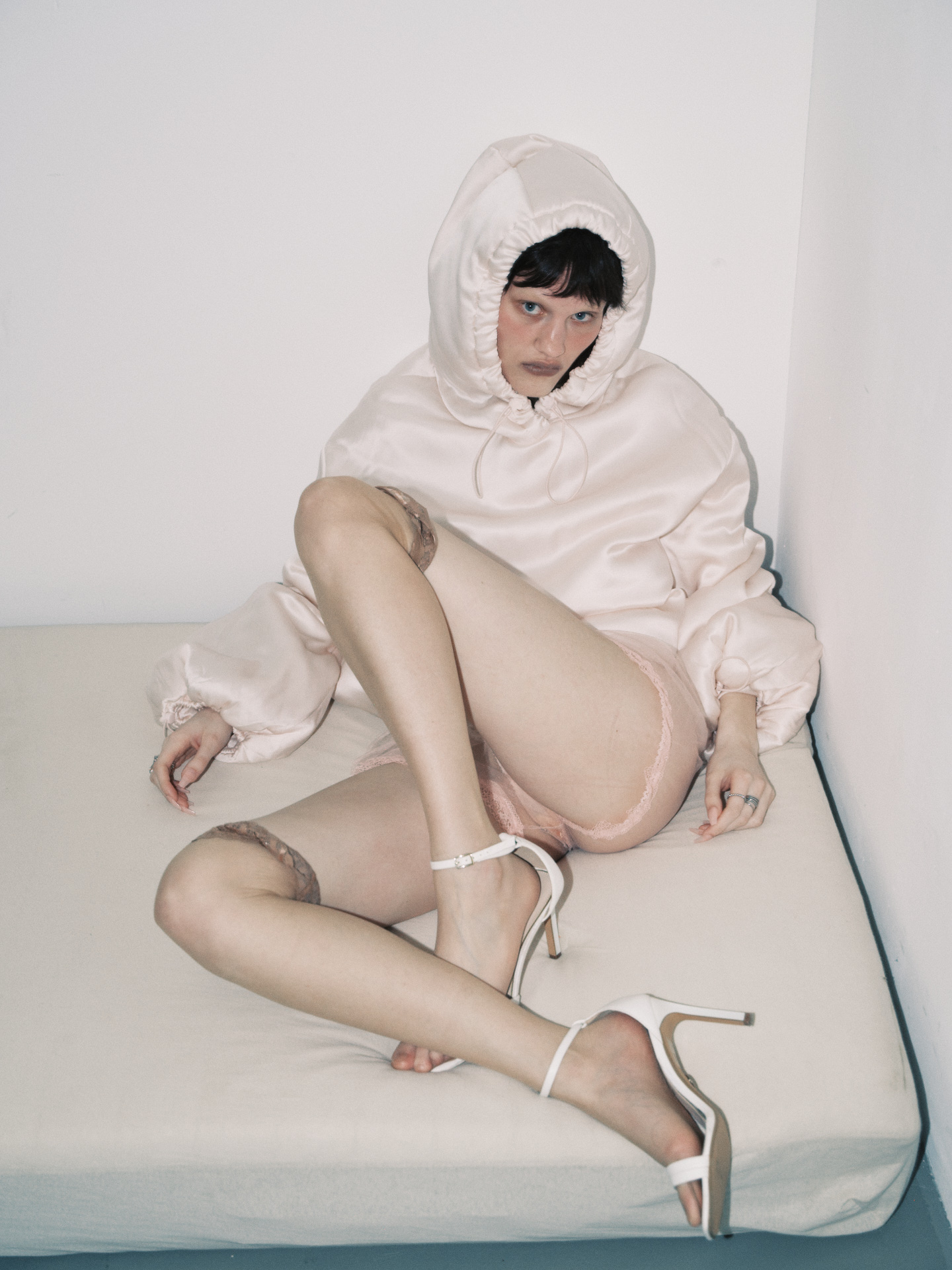
There was this excerpt from A magazine that I was inspired by: In Scandinavia more broadly, there’s this ethos called ‘Janteloven,’ the idea that nobody should stand out too much to fit in. I was wondering how you view the traditionally quiet or understated nature of Scandinavian design? How much room is there for making statements?
I think Janteloven is definitely one of the Danish things that are more complex. There’s a lot of rebelliousness against it — especially as a creative or as an artist. I think Scandinavian fashion is not as minimalistic as many people think it is; it’s much more playful and colourful. And the minimalism actually comes in the furniture, the interior, and the architecture that we surround ourselves with.
It’s about the balance between that cleanness — the refinement of the cut, the sculptureness of it all — and then adding the decorative or feminine details, which is what I learned when I was in Paris. Sometimes people laugh a bit when I describe the brand as minimalist, but I think there are still parts of it living there as well.
I guess with minimalism in fashion, people often think of Jil Sander or The Row, but there’s definitely something simple and composed about your looks. Whether it’s considered minimalist or not, you’ve become somewhat of a blueprint for the Scandi girl look. How do you feel about being categorised in this way? Is it accurate or limiting?
It’s definitely been an incredibly exciting journey to be on, because it felt quite scary to start a brand in Copenhagen. But then, I thought of the design heritage we have, and that it should be possible to do it within fashion as well. And over the last 10 years, so many amazing Danish brands have come out.
I feel like, together, we’ve shaped the voice of Danish Design, and the very specific aesthetics that come with it, while creating collections that you can live in, jump on your bike in, and really embrace this very effortless way of living. So I’m really proud that I get put into that box — or that there even is that box — because I feel like it didn’t exist when I started.
You created this box! Although your ethos lies in the pieces being wearable for daily life, I feel like your collections could also belong in a softer, parallel universe. If you design for a world you wish existed, what would it look like?
I think what’s amazing about fashion or creativity is that it is a dream, right? The last collection was inspired by childhood, when creativity has no limit, and you’re not starting to be critical of your own creativity and way of expression. And the way you look at the world is exciting and exploratory, it’s this positivity and openness to new things.
I imagine your dream world would have a lot of women in it. Would there be men in your universe, too?
Yes, for sure. We have incredible guys in the design team as well. Our pieces can be worn in so many ways, and especially with some of the collaborations now, like the ASICS shoes, and the floral bomber jackets, the big sizes are the ones that sell out first. Suddenly, men have something where they can express their personality a bit more. I just love that you think you create one thing, but it can just be lived and worn in so many other ways than maybe what was originally intended. Or maybe that was the intent, that it is actually up for total interpretation, and it gets a new life once it leaves the catwalk and leaves the studio. I really love that.
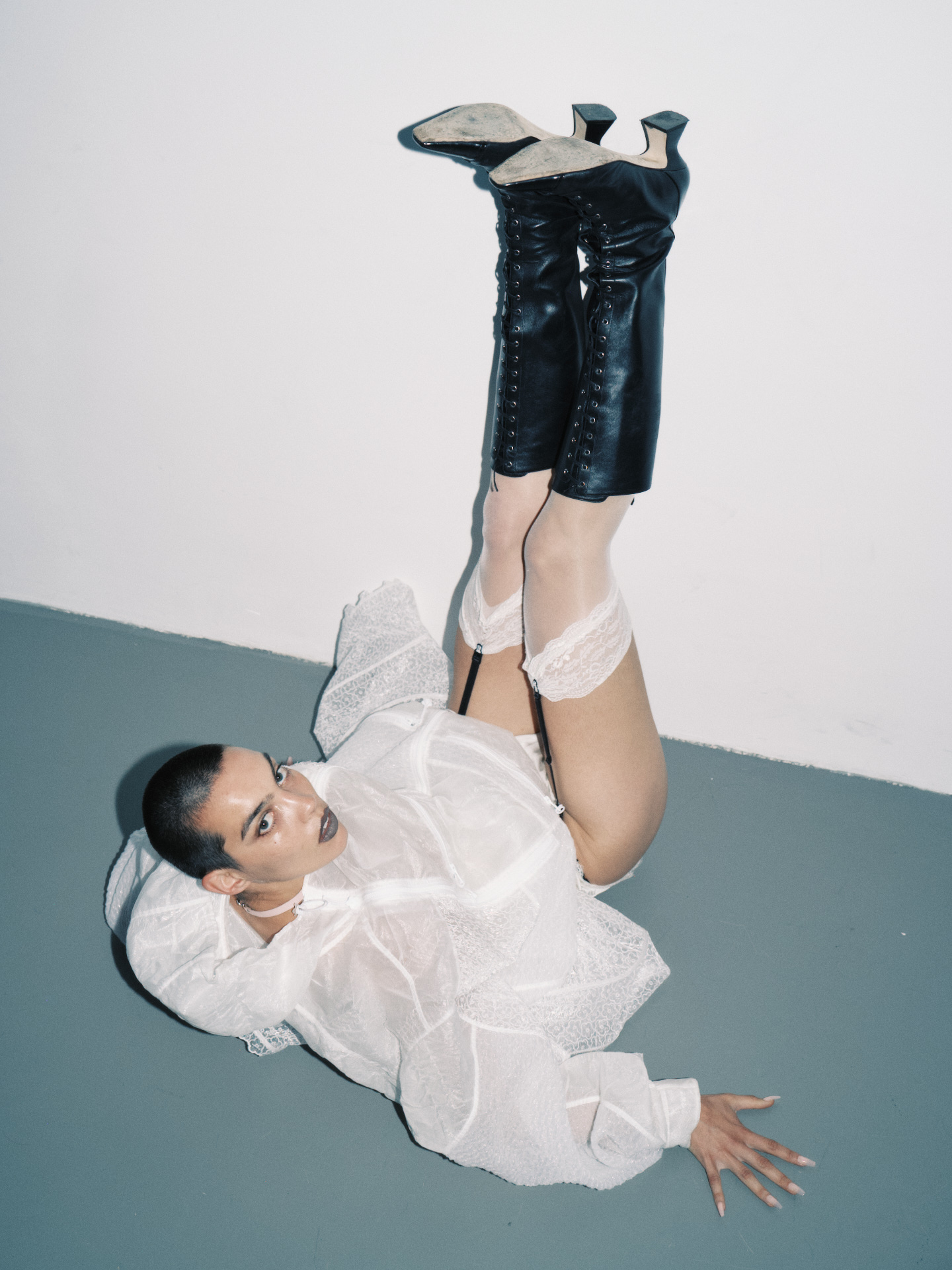
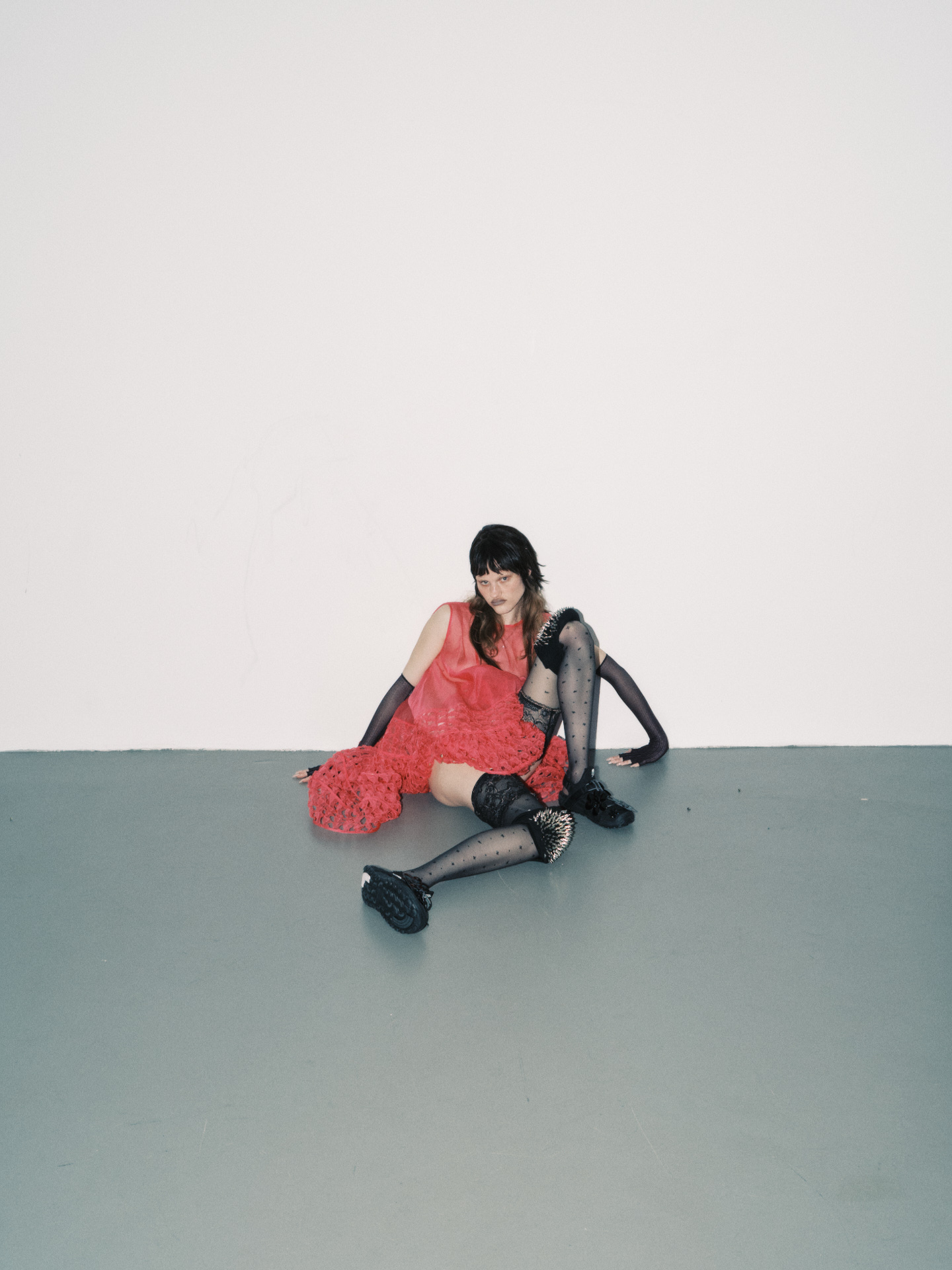
So I was also reading this news piece about bows, where you were also featured. Someone said that bows, in the end, always come back to sex, as “they’re a way of closing or opening something, but depending on where the bow is, you can’t escape from the fact that you’re tying yourself up as a gift for someone. And it’s a gender signifier, but also an erotic signifier.” She said, “A bow says, untie me.” How do you feel about this?
Hmm.. I’ve never seen this piece.
Haha! Not the eyebrow raise!
It’s interesting. Sexiness, for me, is dressing for yourself — though I do love the sisterhood that happens when the girls in the studio tie each other’s bows. I do think there is a soft hint of what is maybe talked about in terms of sexiness, this ‘revealing’ of something. But for me, it’s always been the less obvious sexual parts of the body that have been interesting to hint at. I think, again, back to softness and strength, I think more than sexiness, there is a strength to a bow, like it can hold the whole thing together. And then when you untie it, it all comes undone.
Do you intentionally move away from overt sexuality?
For me, it’s more like alluring or hinting at something. Of course, a lot of the dresses are transparent and show the female body. So we have sexiness, but it’s in a soft way, and it’s more of a female expression of alluringness.
You’ve said before that you don’t love zippers and much prefer a bow to keep something together. Now, I feel like bows culturally have had a really big moment, but are also a little bit saturated. Do you feel productive over them? Or are you also ready to move past them?
They’re part of our universe. So, I think, they will always be there in different ways. For the pre-fall collection, the whole inspiration was bows. I was like, ‘Now let’s fully live it out.’ And it was interesting, because instead of working with just how you tie it, we actually worked with it more as an icon or as a motif.
I loved the last collection, where you used the North Face clip fastenings, and how you incorporated those instantly recognisable elastics that are on a backpack, on the torso of your dresses. It’s funny that you actually take this utilitarian, bulky backpack apart, and you zoom in on the one part that is closest to being a traditional bow, an elastic string in a loop. Even though the original context has no “feminine” connotation at all, actually.
Yeah, it’s funny!
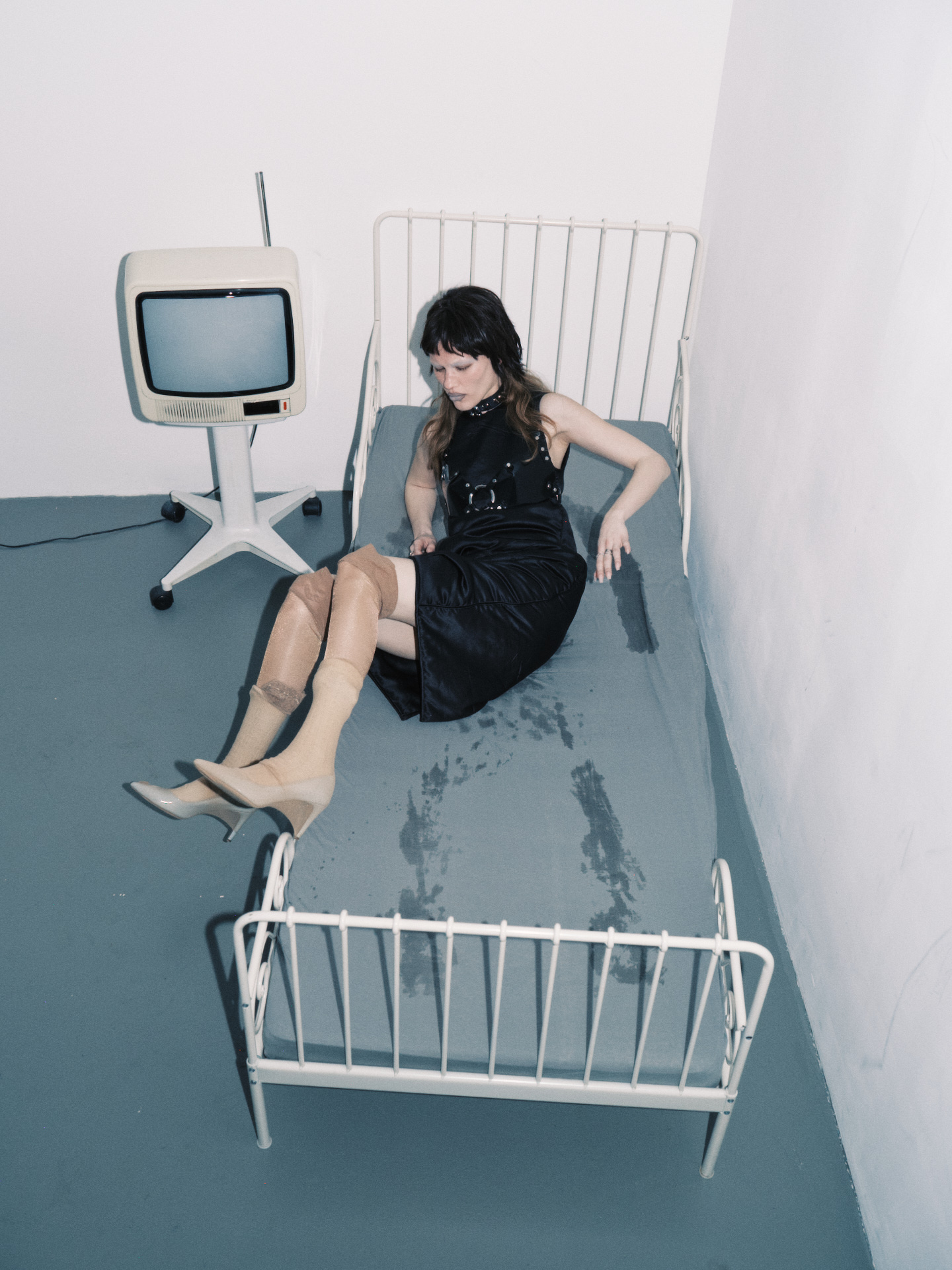
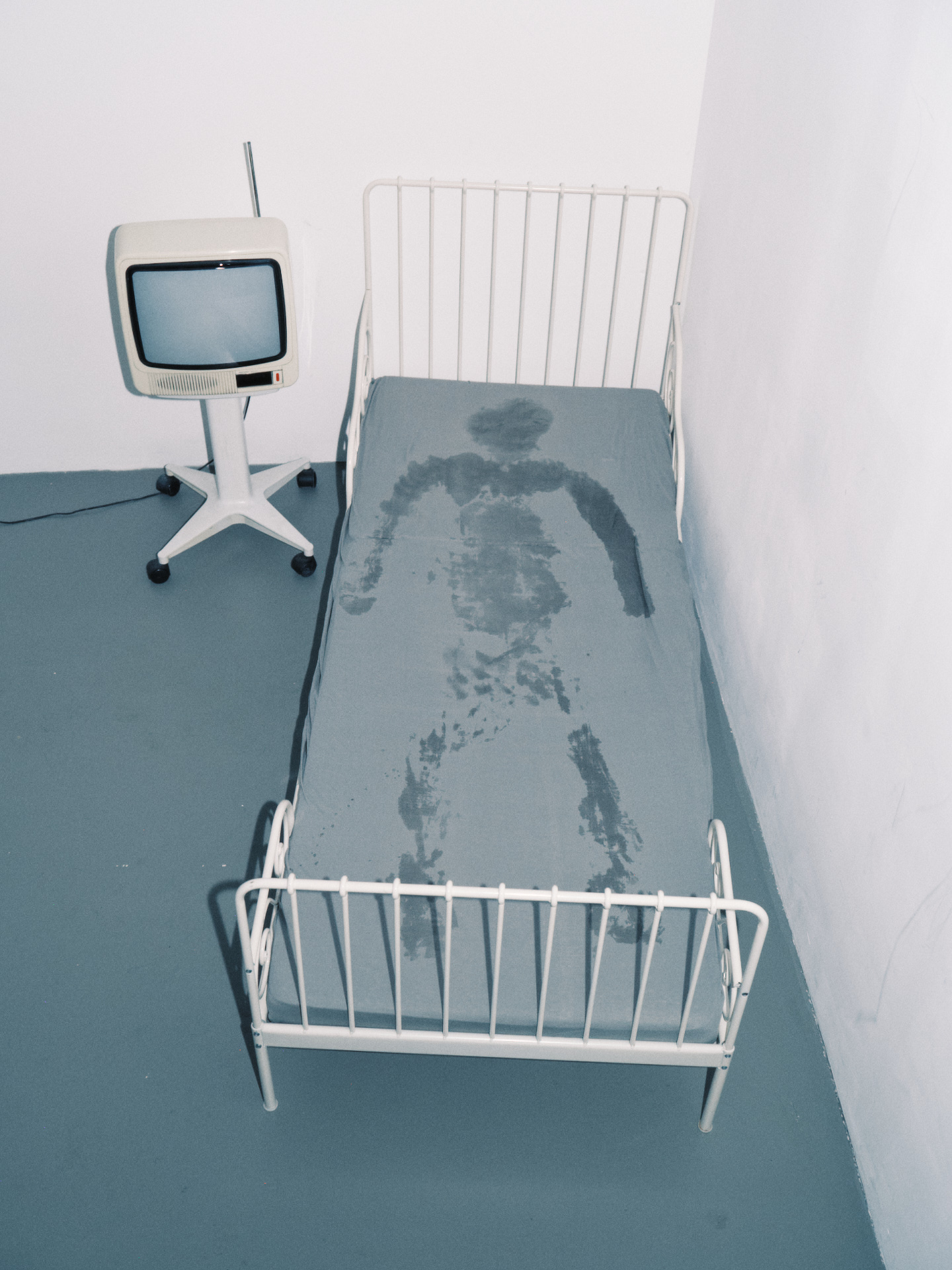
It sometimes feels like the masculine elements in your collections come from other brands’ design languages that you sort of hint at. Are you interested in building more of that masculine language into the brand itself?
I think we’ve been incredibly lucky with the collaborations we’ve been able to do, and how much creative freedom we’ve had in turning things on their head. I love the objects we’ve created that carry so much DNA from both brands. It has inspired me to think about what that could also be in our own collection. You can fall in love with the whole universe by just wearing the bag alone, because it has the details, the trinkets, and the contrast.
For me, outerwear naturally lives in the collection because you want to protect your dress when you go out. You want that right bomber jacket or that right Mackintosh. As the brand has grown, these pieces have become complements to what I felt was missing in the collection. We’ve been very fortunate to learn together with the best and to develop the language together, and eventually it will exist fully within the universe.
Are there other traditionally masculine areas, in fashion or elsewhere, that you’d be interested in reinterpreting through your lens, like workwear, cooking, or gardening?
My different obsessions, like gardening, are a good example. My sister and I just got a countryside house, and we’ve both started gardening. I know some of that will eventually feed into the collection and the inspiration. For me, it’s the most amazing therapy. We plant things and see them grow together. Sometimes we fail, but it’s really special. Inspiration can come from these different moments that stay with you and shape how you think. Brand-wise, I think it’s more about these different icons or people who are best in class, or how you can add to that. For me, the Alpha bomber jacket, I even had one as a teenager, so I remember them through time.
Are there any other brands you’re thinking about?
For now, it’s more about what feels like it’s missing, maybe sunglasses or jewellery. But as we’ve done a lot of collaborations, I’m also really excited to focus on our own product and really develop that side as well. Things like bags and shoes can almost become small souvenirs of the brand, in a way.
I really like that you can combine basically the first piece you got with something from the current collection. If someone said your work was repetitive, would you agree or disagree?
Regarding repetitiveness, I’m always inspired by the collections and seasons that come before, and I think about how I can refine them, make them better, or add what felt like it was missing. Sometimes it’s even about bringing an archive fabric back one-to-one. For the archive collection in Copenhagen, it was incredible to see how there was a piece from every single collection we’ve done, and yet it still felt so cohesive and tight, but also new and energetic.
Would you ever expand from clothing into other territories?
With the boutique we opened, it’s amazing to see that there isn’t really a limit. It’s been nice to think about things like what would be the right sofa with the right floor pattern, and then how the racks should be more metal, but with these chrome flowers. Maybe that’s my Scandinavian interior roots speaking, but I think all of these elements are part of the universe. So maybe furniture, or even a scent when you walk into the store, that becomes part of the experience.
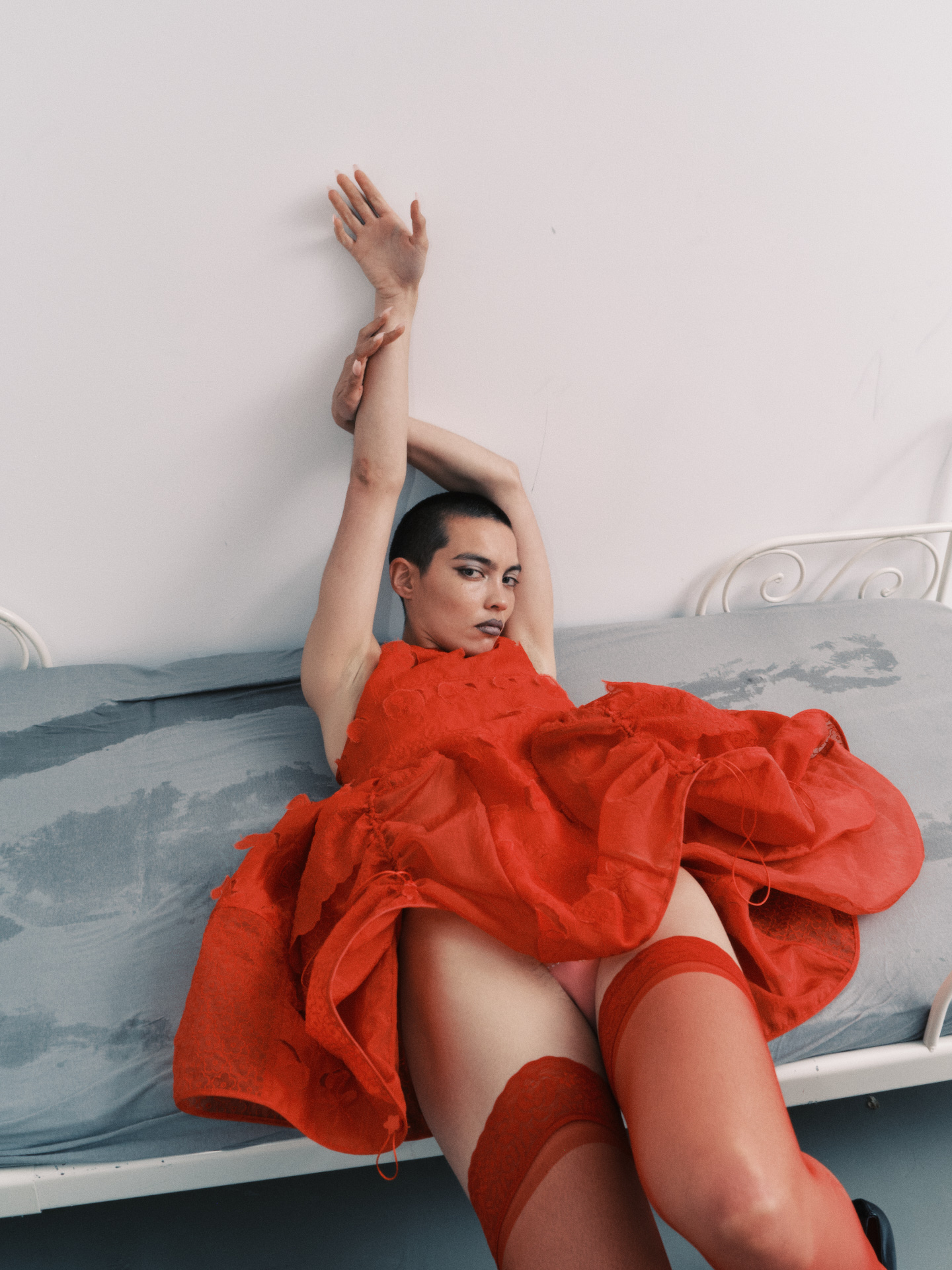
What would a Cecilie Bahnsen scent be like?
Probably something from my garden, mixed with something textile-related.
Is there someone else’s wardrobe you would raid for a day?
I really love vintage Comme des Garçons and the pleated Issey Miyake pieces. So maybe someone Japanese who has kept archive pieces very, very well. I have a couple of friends who have incredible style, and I love looking in their wardrobes to see what they’ve collected when they’ve been travelling.
From a business perspective, what do you do differently as a woman in business compared to more traditional approaches?
I think there’s a lot of emotion in how we lead the company and how we build the team. We had a colleague leaving yesterday who’s been a big part of the dream team, and half the team was crying while saying goodbye. It’s really amazing that you can express that type of love and excitement for what you’ve built, and still be strong and confident about the next journey you’re going on. Crying is not really a taboo, but just a way of expressing things, which is really nice.
Then my final question: you make women feel like the most romantic version of themselves in your dresses. What’s the most romantic thing someone has ever done for you?
I think one of the things that makes my day the most is when I put something on, or when I dress my son, and he says, ‘Oh mom, it’s so beautiful. I love that on you.’ That he picks up on something I’m wearing, or has paid attention to it, is really special.
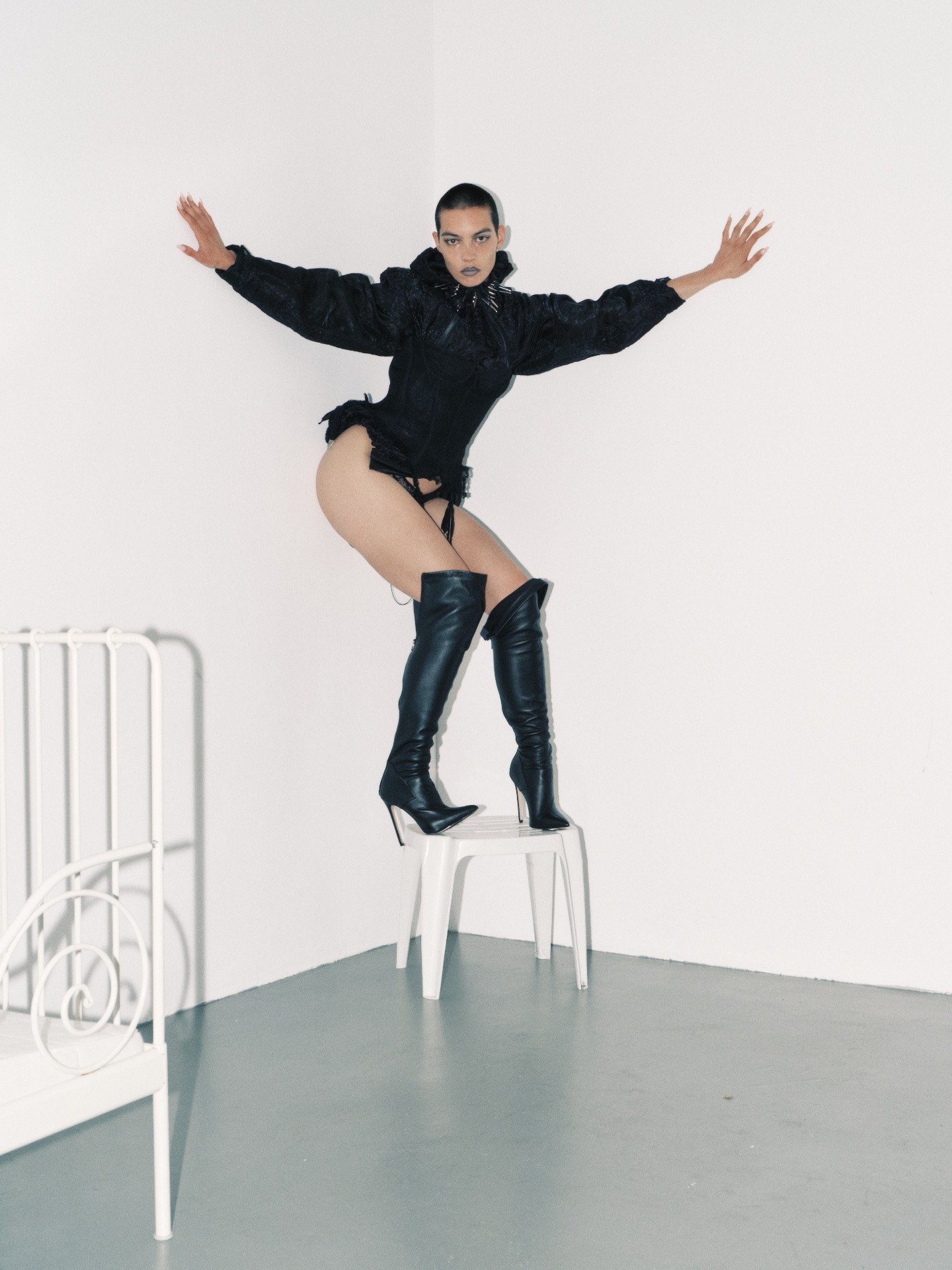
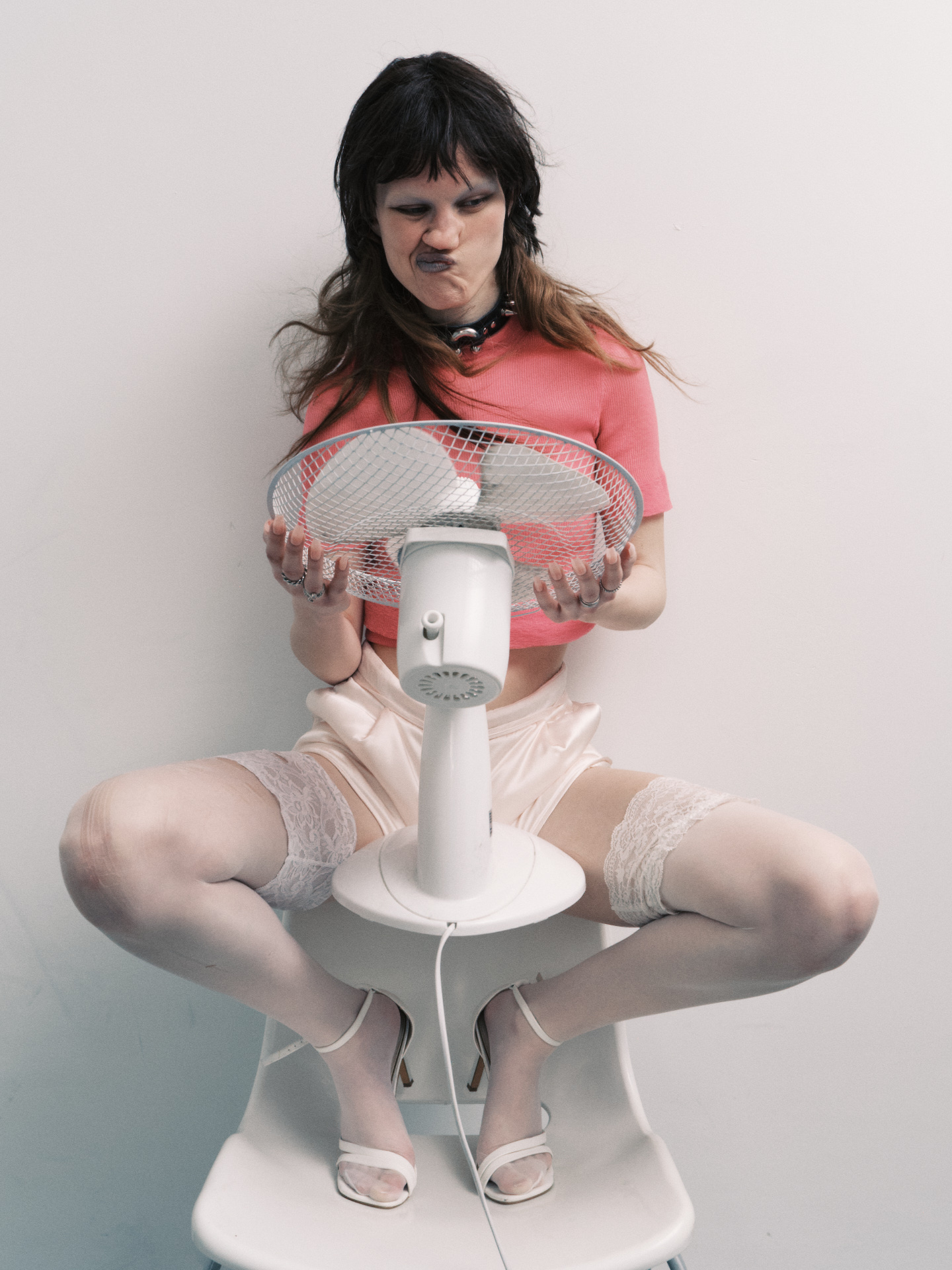
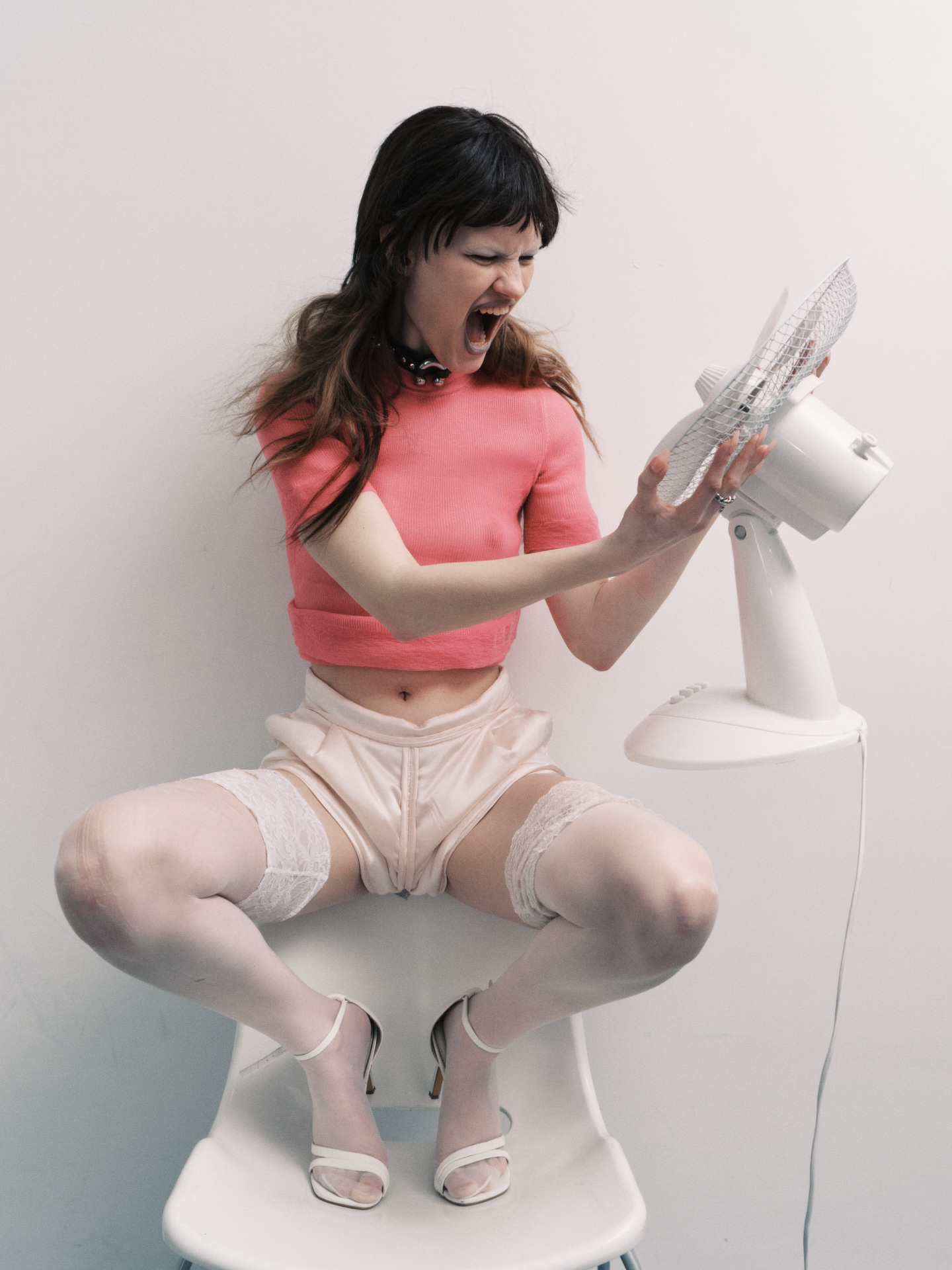
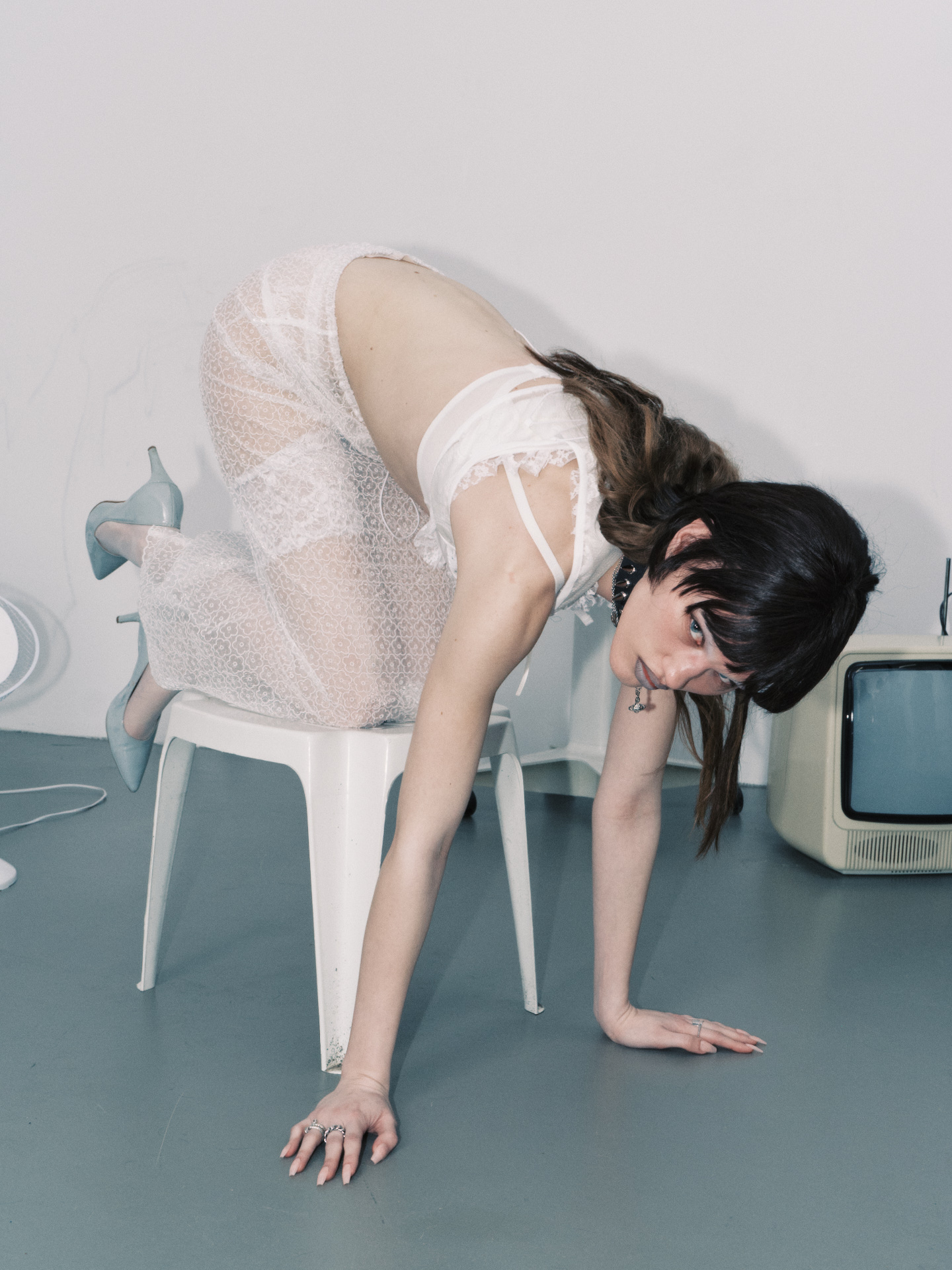
Words by Pykel van Latum
Art Direction by Helen Robertsson
Photography by Jorre Janssens
Styling by Lidewij Merckx
Production by Hannah Lund
Hair and make-up by Kathinka Gernant
Set Design by Helen Robertsson and Hannah Lund
Casting by Michiel van Maaren
Hair and make-up assistance by Annemiek Jonkman
Lighting assistance by Rick Erfmann
Production assistance by Roos Bijleveld
Location FLINT Studio
Modeled by Justine Cornelissens and Vera Vollebregt @ Elite Amsterdam
All clothing CECILIE BAHNSEN
Special thanks to Cecilie Bahnsen, Brogan Clephan and Tallulah Atkin