Meet the mind behind JOUISSANCE, the perfume brand built around erotic feminist literary icons
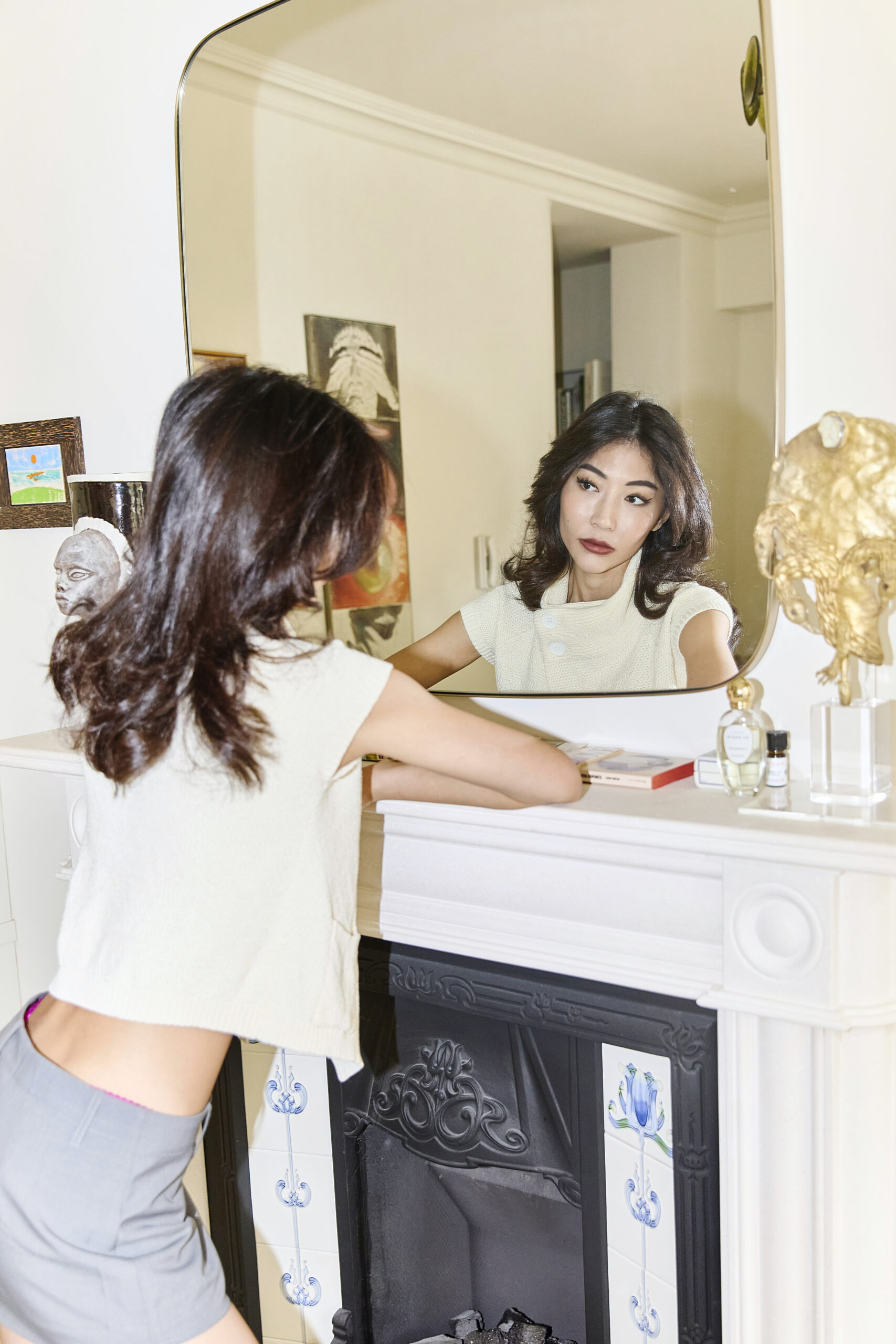
Female desire has long occupied a strange, uneasy space — endlessly theorised, mystified, exorcised, abstracted — yet rarely approached from within, as something lived, embodied, and sensorial. Enter Cherry Cheng, a London-based multidisciplinary artist, theorist, and perfumer, who has built an entire universe around precisely this absence. And what better vessel is there than fragrance?
Her brand JOUISSANCE began by alchemising the desires and personalities of feminist erotic writers, think Anaïs Nin and Anne Desclos, into scent. Inspired by their intoxicatingly vivid, intellectually and physically stimulating literary worlds, Cherry draws on the deep parallel between scent and desire. Both operate beneath language, irrational and immediate, capable of collapsing time, summoning memory, and rearranging the emotional architecture of the body. Both linger and transform. Seduce, unsettle, or both at once. Cherry’s work makes this invisible circuitry palpable. Through scent, desire is no longer an abstract condition but something that can be worn, carried, projected — an aura that clings to the skin, extending the self beyond its physical limits.
To celebrate JOUISSANCE’s landing at Glamcult Store, we caught up with Cherry to talk about her journey, her creative ecosystem beyond fragrance, and how her practice responds to the sterilisation of women’s bodies and the relentless commercial packaging of something so untameable as desire.
If we can rewind all the way, could you tell me about a specific memory where the importance of smell came to you?
There is this water every Chinese household has, it’s called Hua Lu Shui. It may be rose and jasmine, but you can basically spray it on everything. People use it for bedding, linen, clothes, as perfume, or on their pillow to help them sleep. It’s kind of like an all-purpose, functional fragrance. Growing up, perfume wasn’t a very big part of Chinese culture, we didn’t have many Chinese or Western perfumes. Hua Lu Shui was the only fragrance I was familiar with as a child. Then, when I moved to America for high school, it was the smell of Abercrombie & Fitch and Victoria’s Secret. Every time you go to a mall, it’s these two brands that just had such a strong signature where the smells of the stores played such an important role in the images of the brands.
And how did the marriage of literature and smell come about for you?
I’ve always been interested in books and films, especially those written by women, and exploring desire or sensuality in feminine terms. When I was studying Contemporary Art Theory at Goldsmiths, I was given this reading list of all the important feminist theorists and was introduced to the essay The Laugh of the Medusa (1975) by Hélène Cixous—which is where the name of our brand, “jouissance” came from. In many ways, that text encapsulates the kind of work I’m most inspired by. The writers behind the fragrances all share a certain sensibility: they explore feminine desire and its embodiment through language, often in ways that are intimate, complex, and deeply felt. Translating that into scent felt like a natural extension—another medium through which those same emotional and sensual landscapes could be expressed.
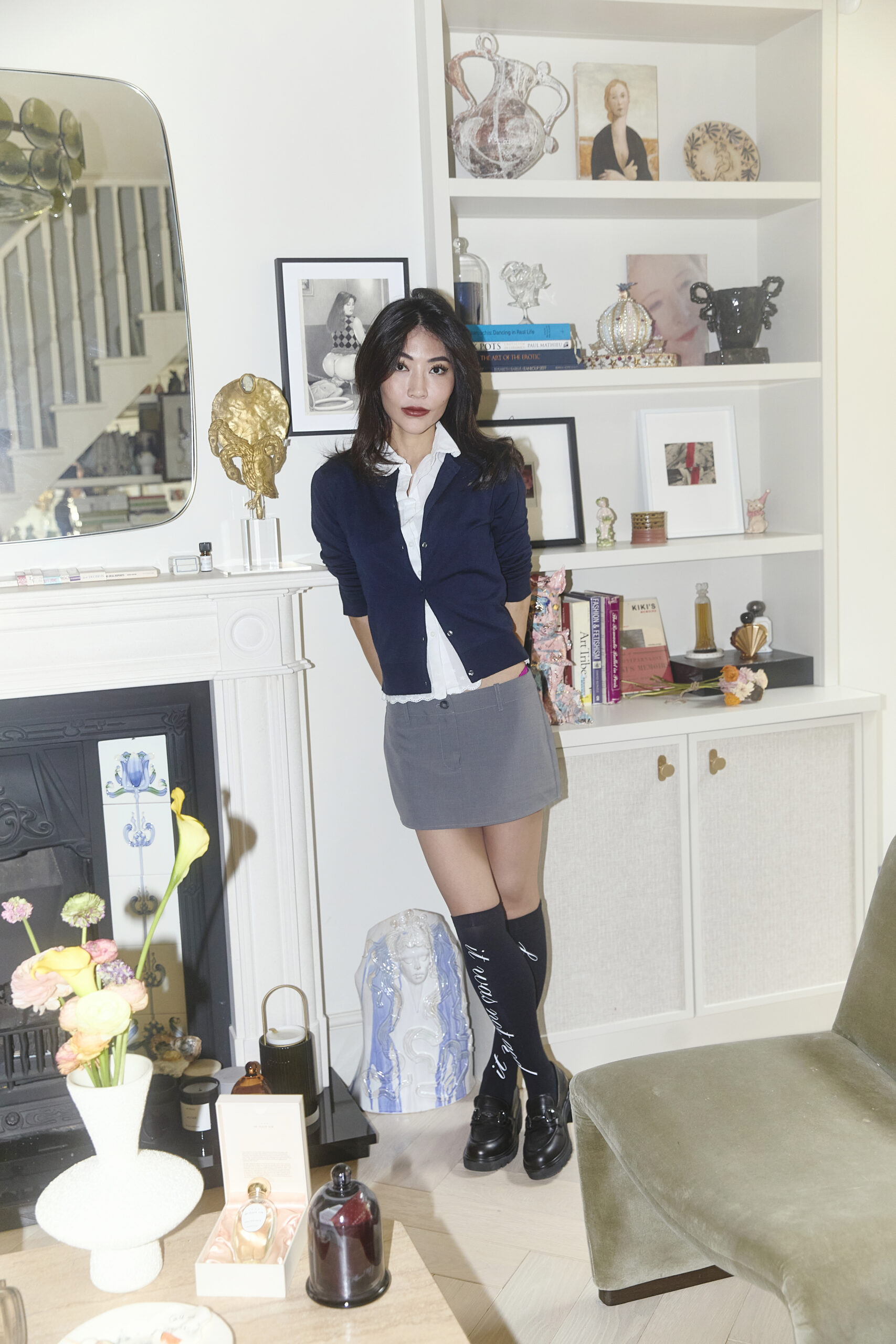
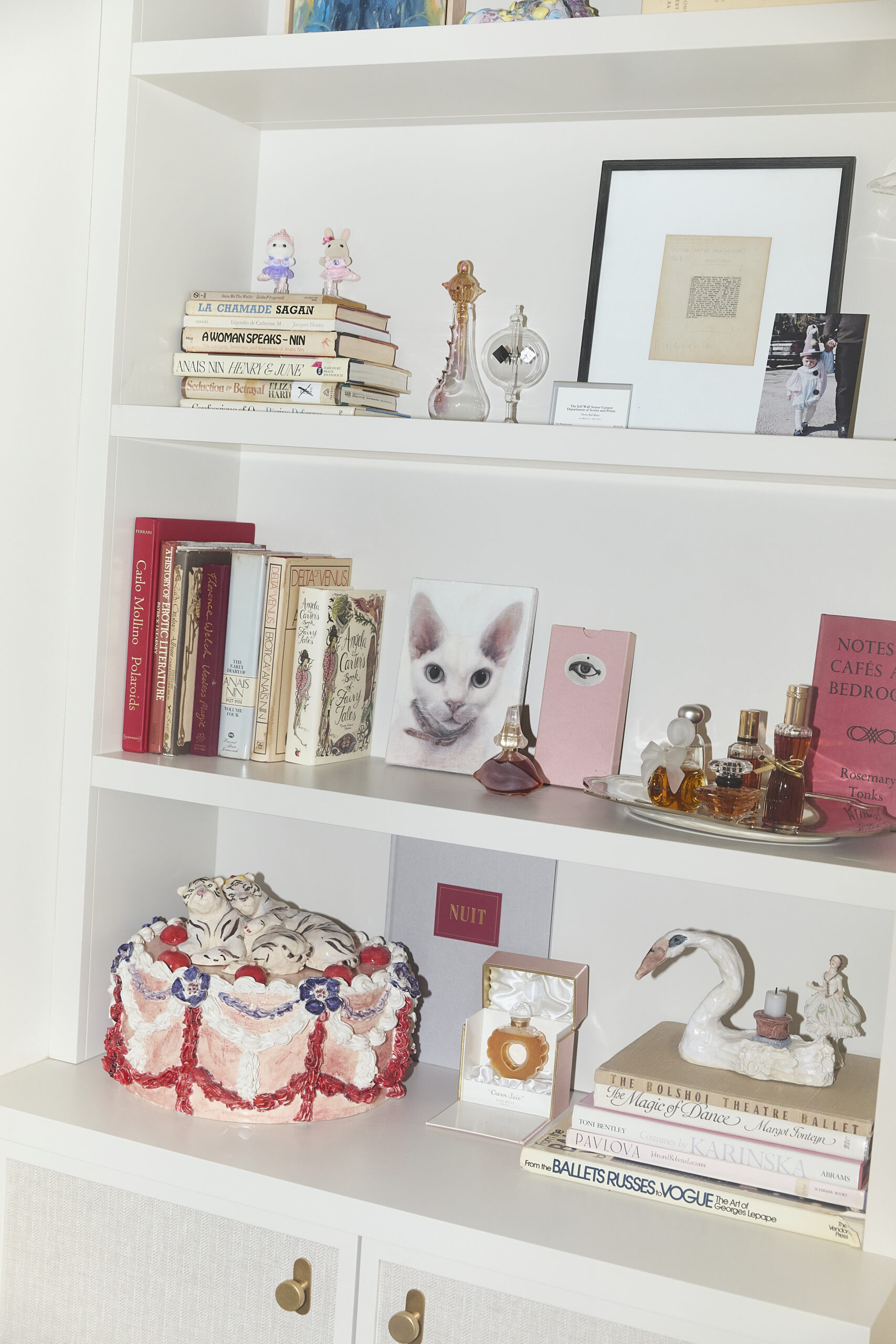
I want to talk more about the term “jouissance”. I went down a rabbit hole on its etymology and definitions, specifically in psychoanalysis, where it means desire that goes beyond the pleasure principle to the point that it can become destructive. I’m curious what that term means to you personally and for the brand?
I was really drawn to this term through Hélène Cixous’s use of it, which essentially urged women to write from their bodies—to reclaim language as something lived, felt, and embodied. I was also reading writers like Audre Lorde, particularly her essay The Uses of the Erotic (1978) which similarly frames the erotic as a source of power and truth, as well as a heightened sense of being.
What resonated with me was this shared insistence on writing from lived, bodily experience—something visceral, instinctive, and at times even uncomfortable or disruptive. It felt like a way of breaking away from the phallocentric structures that have historically shaped language and literary expression, often in ways that don’t fully account for women’s realities. I think a lot of the more “formal” academic style writing in the past has been constructed around male experiences. And for many women, it’s not enough to articulate the fullness of their experiences. I find the tension between what can be said and what is felt to be very compelling.
I suppose as women, our bodies are the only territory that we truly own.
Yeah, and I guess that means we should not deny ourselves of what is true for us. Even if it resists easy articulation, or doesn’t neatly fit within existing language. In many ways, it’s about inventing a language of our own—one that can hold those truths more honestly.
Beautiful, thank you for sharing. And how do you approach translating that into smell, the notes and extracts that you feel drawn to?
For each of the works, I started by thinking about what this writer would smell like when they’re writing. Most of these books are somewhat based on their own life, like the mémoire or the diary, or fiction that’s somewhat autobiographical. And because I admire these writers, I want to imagine what they would smell like. It has always started with a mood rather than with very specific details. I would always think about the perfumery structure, for example, Story of O (Desclos, 1954), I think it’s very feminine, and vintage in a 50s way. Whereas compared to EN PLEIN AIR inspired by Catherine Millet — she’s an art critic — she’s a lot sharper, cool and intellectual, but less romantic. Her fragrance is more based on citruses, fresh and green notes, and a musk drydown—nothing sweet, but fresh and sharp like she is. I always begin by imagining the character this fragrance would embody.
Do you have a smell composition that embodies you, if you had to imagine yourself as the writer?
If I had to choose, I think it would be LA BAGUE D’O. There is a lot of contrast in the chypre structure, particularly between the sweet orange and patchouli notes. In the past, bergamot and oakmoss were more often used for this type of structure, but we used sweet orange, pink pepper and patchouli in ours. I’m very drawn to this play on the contrast of very bright and sharp top notes and very deep and murky base notes. It feels unresolved and indeterminate. And I think I am very divided like that—the idea of holding opposing qualities at once, never being entirely one thing.
Coming back to this eroticism and desire in your work, I’m curious to know how you see the relationship between desire and intellectualism. I feel like in a lot of erotic literature, like in a way Anaïs Nin writes, for instance, there’s always this level of constant analysis and examination. The described desire runs deeper than a bodily response.
I think that tension is really central. Desire is never just physical—it’s also something we think through, reflect on, even question as we experience it. And that’s where it becomes complicated, especially from a feminist perspective.
There can sometimes be a feeling that being a “good” feminist is at odds with fully embracing one’s desires—particularly when those desires don’t align with what is considered acceptable or empowering. Some fantasies can feel difficult to admit, even to ourselves, because they risk being judged or misunderstood.
I think that’s why Story of O caused such a shock when it was first published. People assumed it must have been written by a man because of its explicitness.
But for me, that paradox is essential. It’s not about resolving it, but about allowing those contradictions to coexist. The women who inspire the brand all, in different ways, inhabit that space—where intellect and desire are not opposites, but deeply intertwined. And ultimately, it’s about refusing shame, and allowing ourselves to be honest about what is true for us, even when it’s uncomfortable or difficult to define.
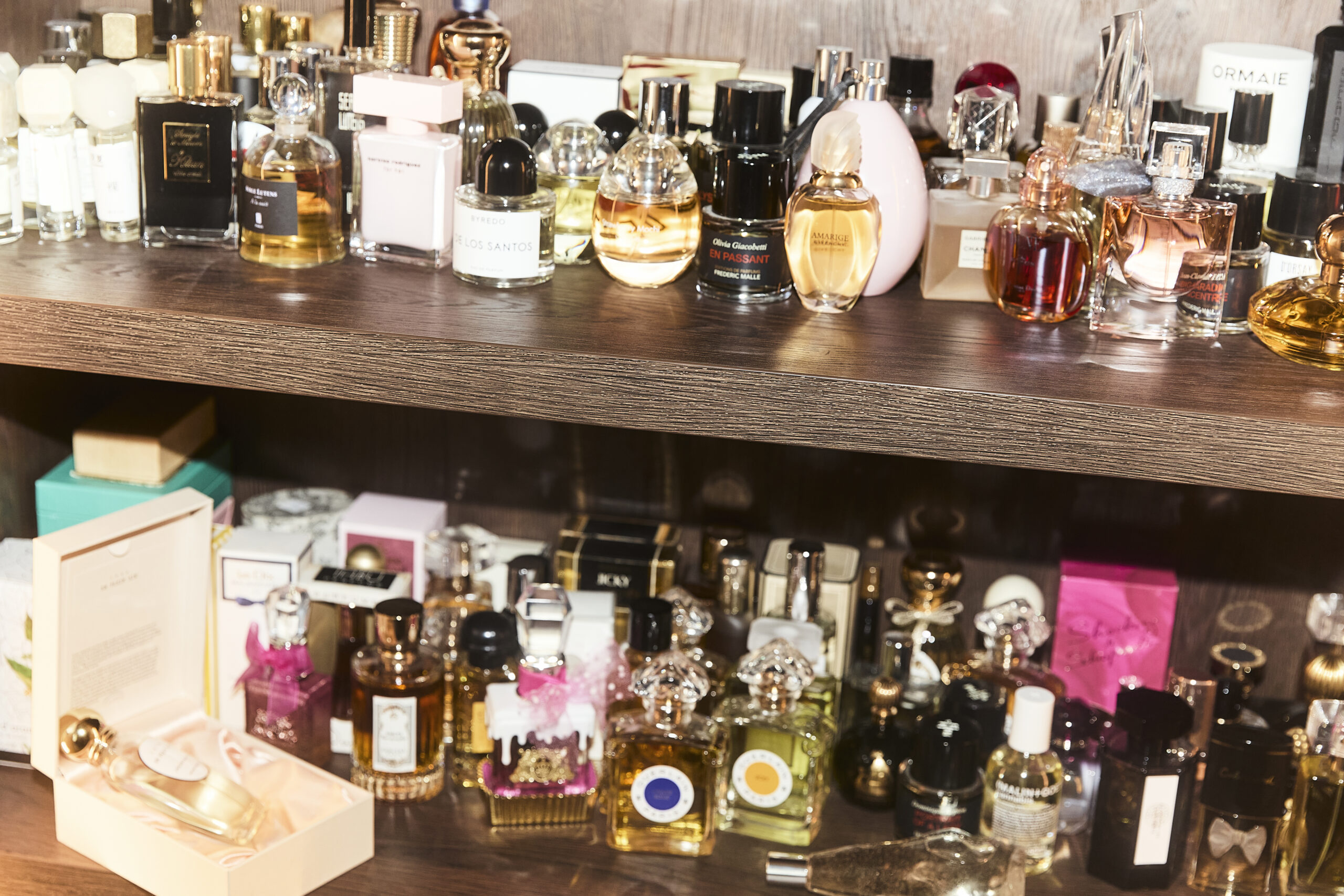
Do you have an example of a note that you brought into a fragrance that was unexpected but worked really well?
I’m generally interested in starting from something quite classical, compositions that feel traditionally beautiful and familiar, and then disrupting them with an unexpected note. For instance, in LES CAHIERS SECRETS, we introduced a touch of cumin. It’s a note that some people pick up on immediately, while others don’t register it at all. In perfumery, cumin can evoke something quite bodily—like skin or perspiration—which isn’t conventionally pleasant. Without it, the fragrance would have been soft, sweet, and traditionally feminine, but also a bit flat. The cumin adds contrast, warmth, and a kind of tension. You don’t necessarily smell it directly unless you’re very sensitive to it, but you feel its effect, and that’s what makes the composition more interesting.
Bringing the perfume closer to the body.
Yeah, I guess it’s also closer to reality. We have this whole idea of how perfumes should smell. They’re often hypersanitised and very unnatural, even if we use materials extracted from nature. But the smell of perfumes exists outside of nature, they’re artificial, and increasingly abstract compositions, invented by humans. But by making something a bit more unpleasant, you make the perfume closer to how real people smell and how they exist in the real world—a bit like when you smell the natural extracts of a material versus its corresponding isolates and synthetics.
I think this is so important! Perfumes, especially those targeted at women, have estranged us so much from how actual bodies smell. Which is actually the sexiest smell.
Yeah, totally. I like perfumes that do not mask the natural body scent completely. They are there to enhance it.
Speaking of connection to the physical, your universe extends beyond fragrance, which I really appreciate. How has it been fostering community?
We’ve been building that in a few different ways. We run a small bookshop where, every three months, we release a selection of out-of-print titles that relate to the world of Jouissance—usually in very limited quantities. We’ve also worked on a publication project, commissioning contemporary writers to create erotic short stories, which allows us to stay connected to a living literary community.
But what’s been most meaningful is creating experiences in person. Before launching the perfumes, I had been in touch with many people online—through email or Instagram—but meeting them face to face is completely different. That’s why it felt important to organise dinners to mark new collections and publications, as well as writing workshops. Those moments of gathering, conversation, and exchange are essential—they allow for a deeper kind of connection that can’t really exist digitally.
Do you have one particularly memorable reaction from the public, or an unexpected connection that you made?
I’ve really loved all of our in-person events, but one that stands out is what we did at Tenderbooks last Valentine’s Day. We had a window display for a week, and then hosted an evening where people could come and experience the fragrances in a bookshop setting. It felt like a very natural environment for the brand.
We also invited two of our writers, Susana and Julia, to read from the erotic short stories they had written for us, which created a really intimate atmosphere. Afterwards, we held a smaller writing workshop with Susanna, and that felt especially meaningful. It allowed us to connect with people through a shared activity, rather than just presenting something to them. That sense of participation—of doing something together—is really important to me.
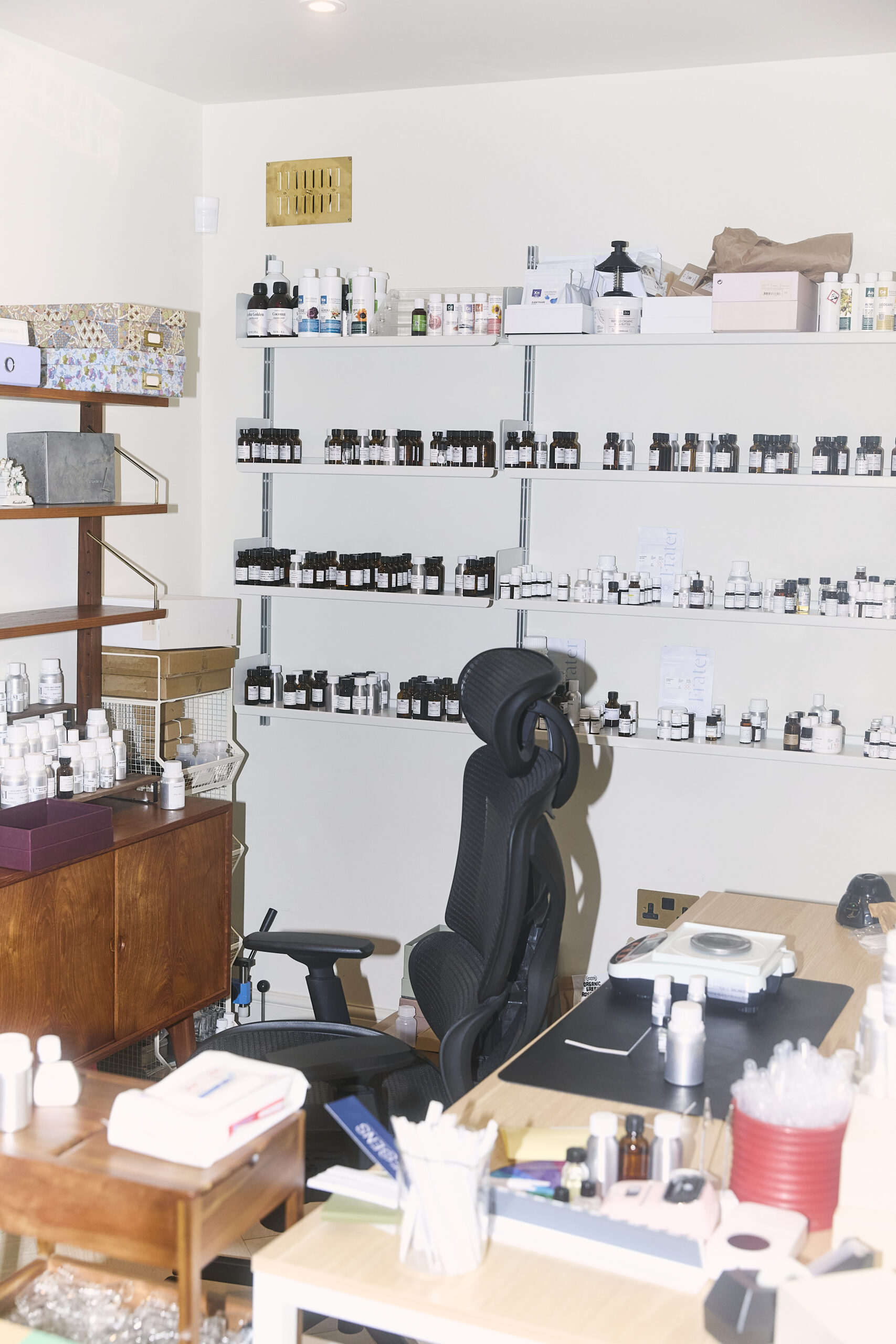
What do you hope to still learn about perfumery?
I think there are always a lot of things to learn. I might be doing a third Master’s, which is totally crazy. I’m going to come to Paris to study at ISIPCA — they have a one-year Fragrance Expertise course. It was founded by Jean-Jacques Guerlain in the 1970s, and probably the most well known perfume school in the world. I didn’t come from a classically trained perfumer or chemistry background, so I’ve always felt a bit inadequate in that way. Of course, today there’s much more space for independent and niche practices, and I’m very comfortable working in that way. But part of me still wants to properly understand the structures and foundations of the industry. I feel like you need to learn the rules in order to break them—and I never really had the chance to do that in a formal sense, as I was largely self-taught and trained privately with mentors. So this feels like a way of deepening that knowledge, while still holding onto the freedom of working independently.
Know the history so you can make it your own.
Yeah, exactly, and then to break boundaries on an even higher level.
What are some of the things you’re looking forward to, or directions you want to take JOUISSANCE to?
We’re working on several things at the moment! We have a special collaboration collection with French perfumer, Antoine Lie, who has also been my perfume teacher for the last two years. I’ve always admired his work—he’s been one of the most inspiring perfumers for me creatively—so it feels very meaningful to be developing a collection together. It will include three new fragrances, all rooted in a shared literary inspiration, but I’ll keep the details under wraps for now. The collection is planned for spring 2027.
Alongside that, we’re preparing to launch our fourth fragrance in the current core collection, which I’ve formulated myself. It should be released toward the end of this year, and it leans into something warmer, more wintery in character.
I’ve also been working on two smaller, more experimental projects: the first one with Rachael Crowther, who invited me to create a scented bookmark to accompany the latest Interjection Calendar by Montez Press. It’s something we’ve been developing over the past few months, and I’m really excited to see it come to life, launching at Chisenhale Gallery on April 29th. The second collaboration is a scratch-and-sniff scented sticker pack for Temptress Magazine, launching at Schinkel Pavillon in Berlin towards the end of May.
Lastly, I have been developing bespoke fragrances for the iconic East London lesbian bar La Camionera, as well as for writer and artist Ella Fleck, whose practice I deeply admire for its experimental and transgressive use of scent within the context of contemporary art.
A scented bookmark, that’s such a perfect match!
I can’t wait to share more about them soon.
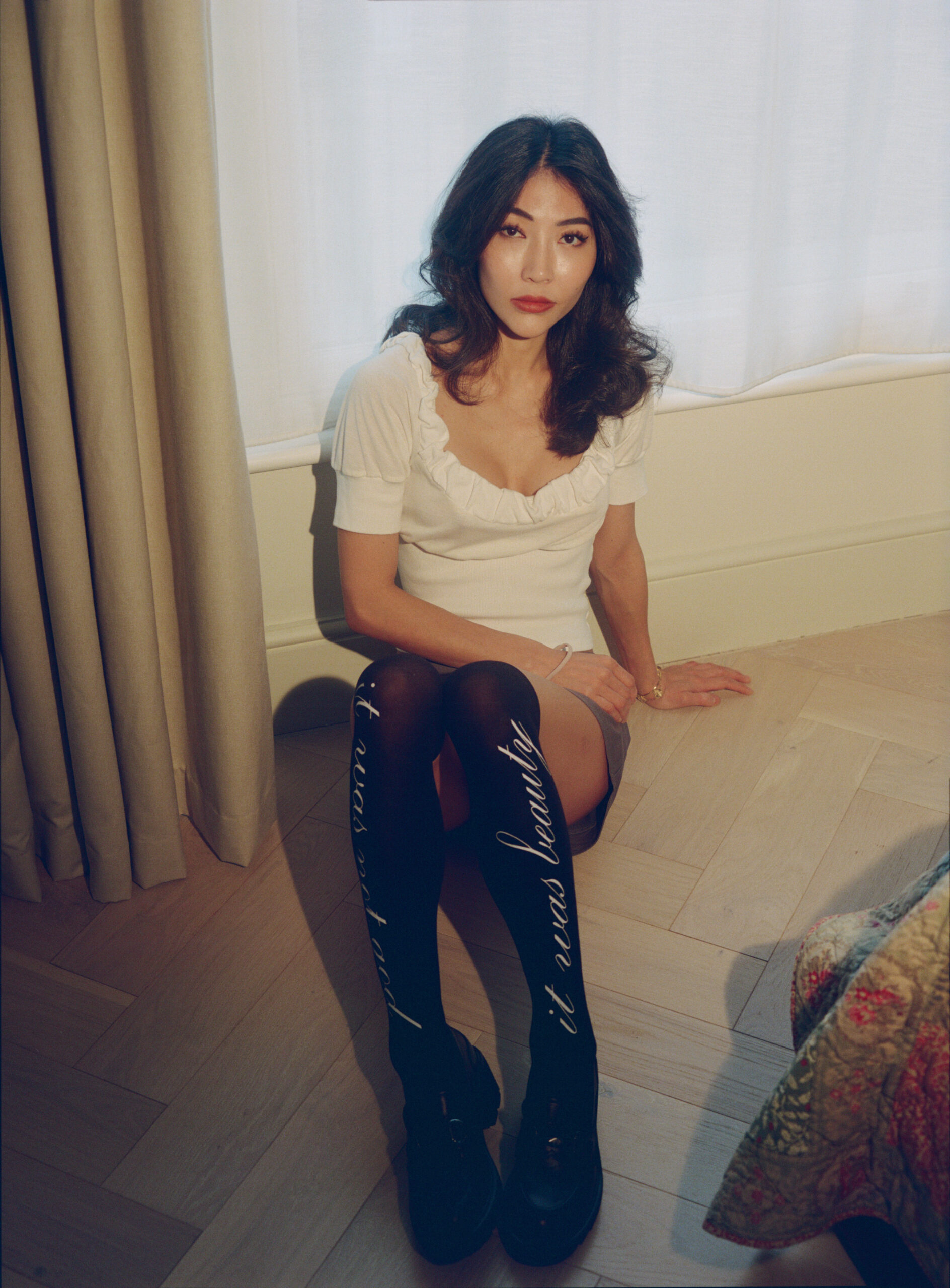
Images by Nicole Ngai
Words by Evita Shrestha