“I like that we as humans are not perfect, even though we all try to hide it.”
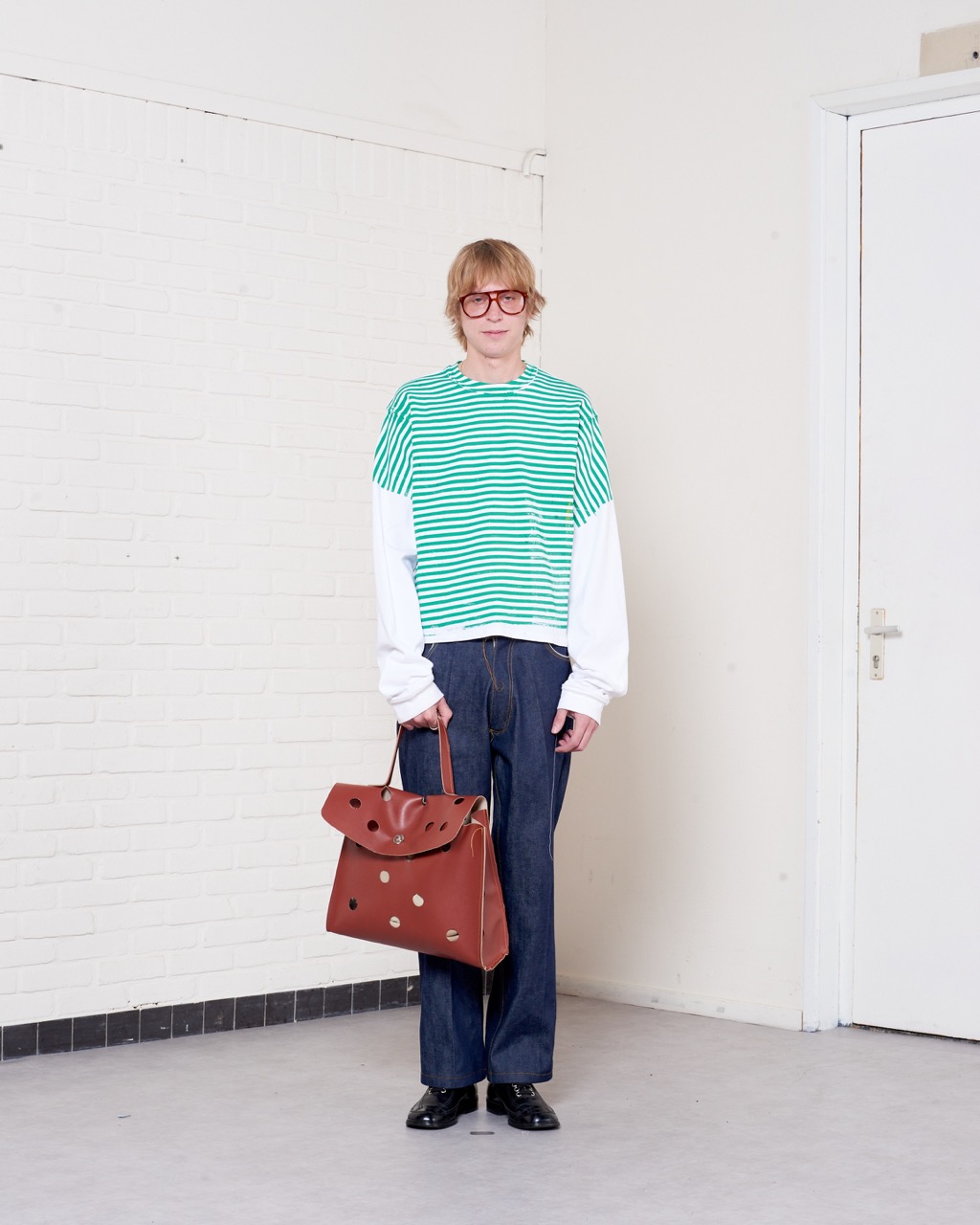
Camiel Fortgens strikes a rare balance between intentionality and nonchalance, endowing clothes with the specific magnetism of ingrained confidence and unpretentiousness. The collective’s garments exist firmly IRL: reserved without being identity-less, distinctive without screaming in your face. They grow into perfection through their humanity — the hand felt in hems and zippers, functional imperfection, a resistance to over-polishing and unnecessary spectacle. Catching up with the creative director following the brand’s PFW presentation at Camiel’s apartment, we spoke to him about the philosophy of the unfinished, normcore, style as a litmus test, and the art of people-watching.
Welcome to Paris! How was your time here? Is this the brand’s first time on the official PFW calendar?
Thank you! It went great. This was actually the second time on the official calendar. Last time, we did a show on the Parisian streets, and this time in an apartment. It went really well, even better than last time. The intimate and personal setting of an apartment felt very true to the brand.
Personally, I have been continually inspired by Amsterdam and its different phases. It very much feels like an ever-evolving deserted island. A bubble, if you may. How do you get inspired by Amsterdam?
I really like Amsterdam. There’s an absence of fashion and, therefore, pressure. There’s not so much happening or going on! This allows us to, in our own time and place, work in that void without noise. It has quite a personal or small-town vibe, which may be quite true to the brand. I grew up here, and I don’t feel the need to move to Paris, for instance. My inspiration follows me anyways and it’s a very good environment for growth.

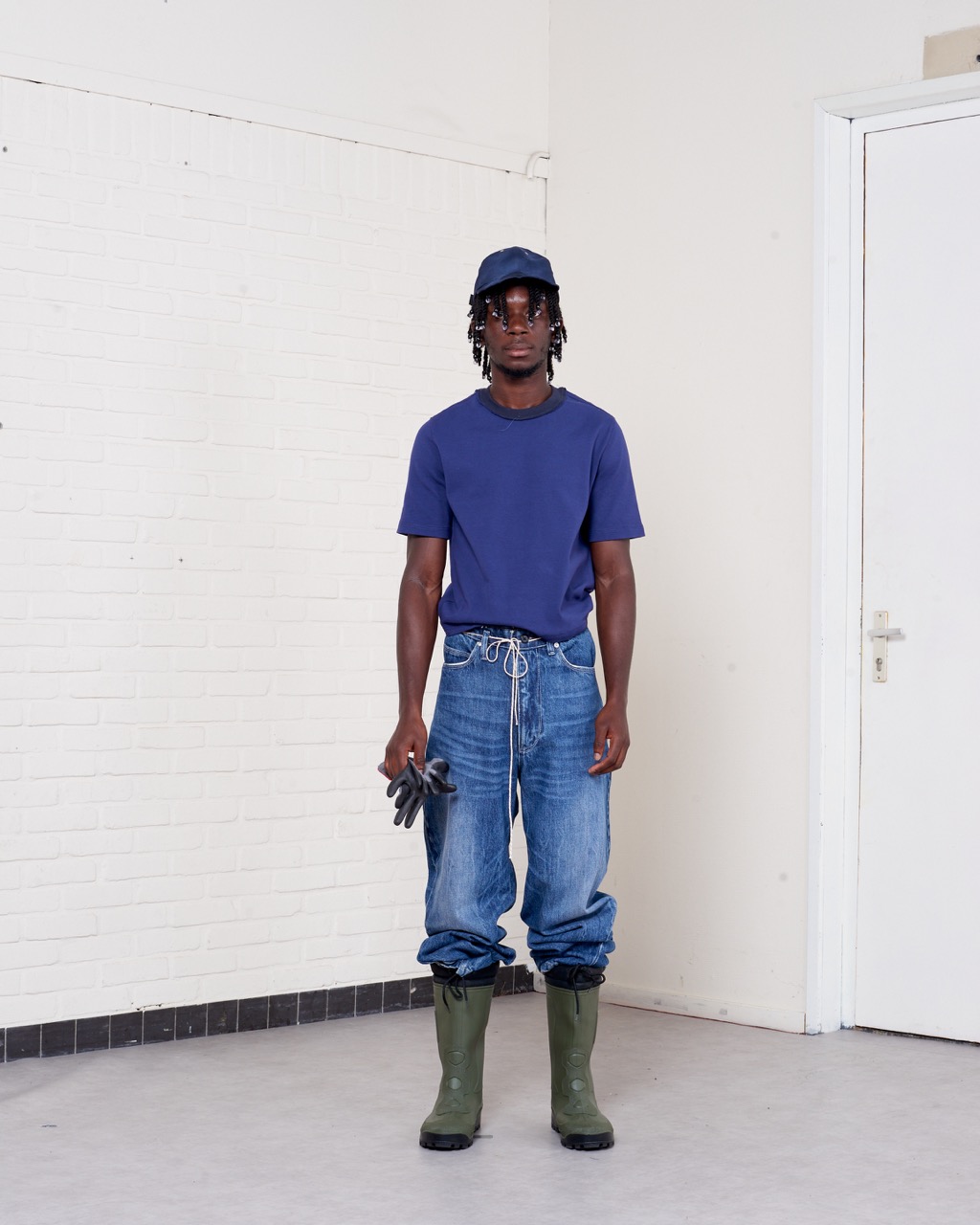
With the new show in Paris, the elements of Dutch and French culture both felt present. Does Paris play a part in the brand as well? How do you see it in contrast to Amsterdam? Have you entered a new bubble?
I believe Dutch culture is quite straightforward, maybe a little humorous. Someone once compared us to the “Droog” interior design movement, where it’s quite constructionist, a bit rough, and witty. It seems like that fits quite well. I don’t know if that comes from Dutch culture, but I do personally relate to that. In terms of the comparison to French culture, maybe there’s a contradiction to French fashion culture. Yes, we do go to Paris, but it’s a place where we meet up with people from around the world. The Amsterdam bubble is very much removed from the global fashion bubble, which does give us a certain narrative outside of the classical French fashion culture. Showing out in the streets or in an apartment, making the imperfect garments, unfinished garments, working with friends as models… all feel quite surprising within the Parisian landscape and industry. I always like to see if we can authentically do things, and I do believe maybe our heritage leads us to do things in a different way than how it is usually done. We try to make it feel genuine, where I can imagine if you’re in the Paris bubble, you could get sucked in with what is expected for a brand and what the industry is doing. So I feel we can still authentically do things without being influenced too much. This might relate to being based in Amsterdam, or maybe even to being Dutch: no nonsense, straightforward, blunt even.
I believe your affinity with imperfection derived from an early struggle with a sewing machine. I don’t know if you’re a big Adam Sandler fan, but I admire your ‘Just Go With It’ mentality. How would you define perfect imperfection? In your eyes, what has made you perceive imperfection as perfect?
Haha, I haven’t seen the movie –– but perfect imperfection might be a feeling. I believe perfection is a made-up construct, a thing that is conformed to the norm, something that is commonly accepted. I think in fashion that thing is usually perfectly finished and symmetrical. You don’t really recognise the human touch in it. In the beginning, making a garment was something I struggled with. I’m very impatient, and I didn’t master the skill, so things turned out rough and imperfect because I wanted results within the hour. So, then it all comes down to a feeling, letting go of the norm, and opening yourself up to seeing new possibilities. New things grow because of mistakes and imperfections. I also need to keep reminding myself that this can occur in all fronts of the business. For instance, during the fashion show, we did not have enough seats, and people ended up sitting in the bathtub, and maybe that’s actually quite interesting. The backstage was so full that it blended into the crowd. At one point, I was just standing near the exit, and I ended up shaking everyone’s hand while they left the apartment. It ended up actually being quite nice, open to imperfection. The sharp edge where something is just right, or not, is what’s interesting.
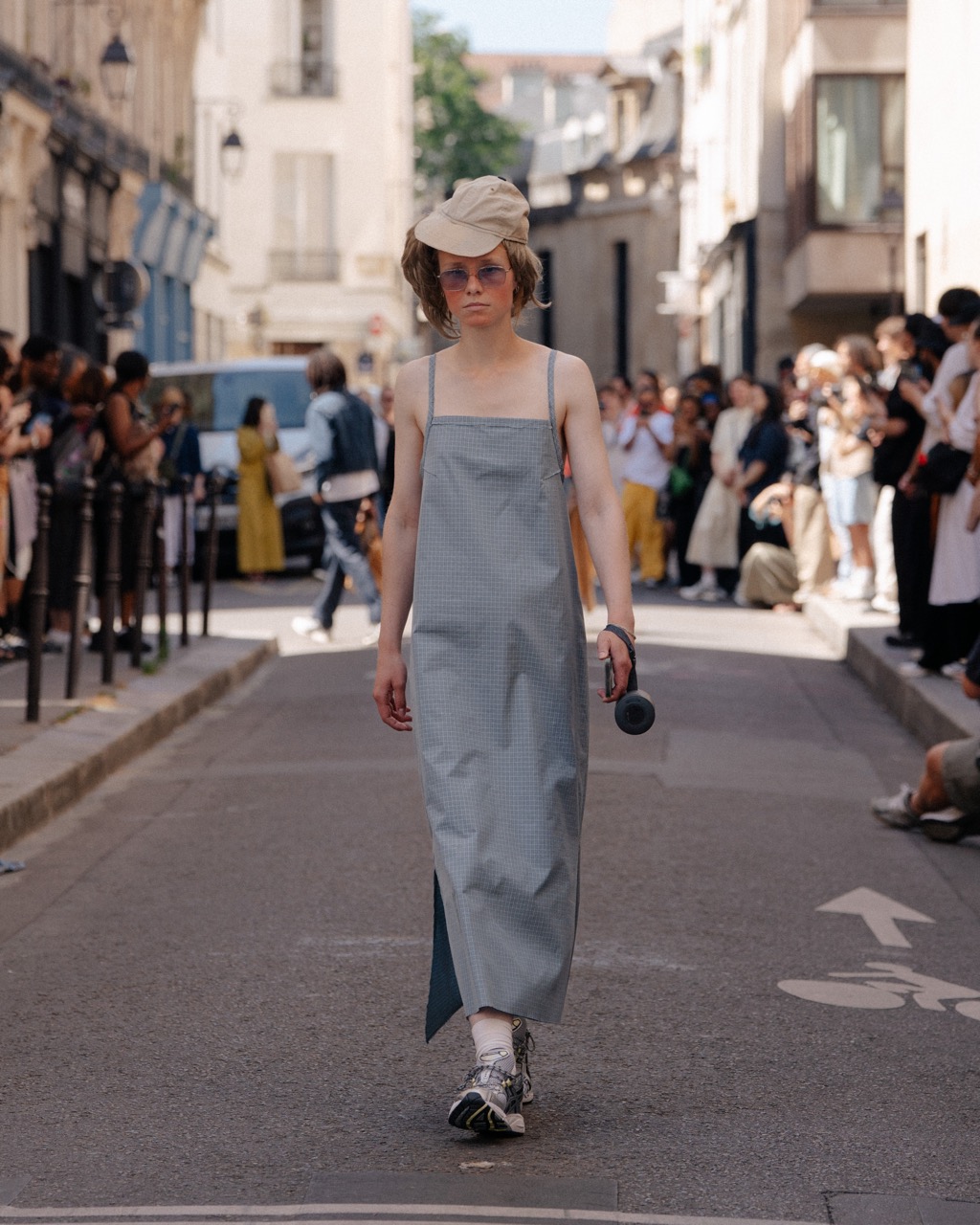
Image by YANNI CALOGHIRIS
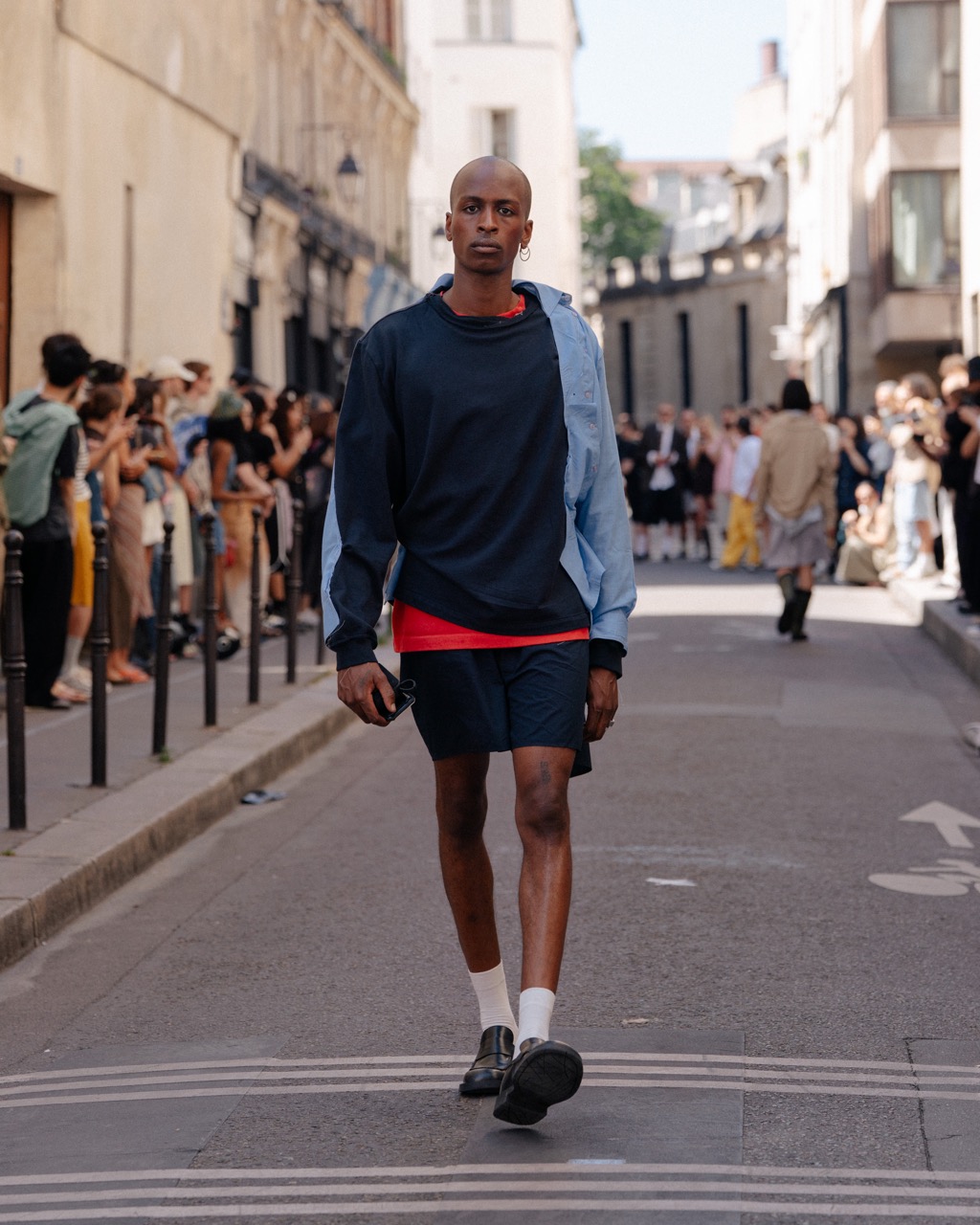
Image by YANNI CALOGHIRIS
Yes, like embracing all aspects of the process.
Yes! Maybe like your movie, which I might need to watch, haha.
Congrats on the Stedelijk Museum collab! Do you like the interaction with an audience in the design process?
Thank you! I like that people are involved in the design process. Normally, consumers are quite detached from the making of a garment or the people who made it. They just buy it without thinking further, and it basically becomes a dead object. With this project, we really wanted to emphasise the process and the people behind it. By being involved, the garment automatically becomes more special and valuable to the buyers. It fosters a connection between the garment, the designer, and the consumer.
What does an intentionally unfinished hem mean, philosophically? For someone who perhaps does not get it.
I think for me, nowadays, everything has an underlying branding, concept, or filter. Everything is polished in a way that’s better or cooler. I like that we as humans are not perfect, even though we all try to hide it. It’s almost impossible to find anything that’s natural, or does not try to hide its imperfection in order to blend in. Maybe that’s a metaphor for the garments. It’s showing an alternative where not everything is finished, and the imperfection can be embraced.
What is your opinion on the ‘norm-core’ trend? I can understand that it might be a ‘reclaiming’ of normality. Is that something you think about?
I don’t really think about it that much, but what I see within the men’s market is that brands that are offering more “normal” garments, more non-branded basics, or kind of like the “quiet luxury” trend, in contrast to the very branded non-basics. But I am personally not quite sure, we have been doing this for ten years already. I don’t know if I was just there before the trend started or if I am just doing my own thing. I am not that focused on what is happening trend-wise, even though I am of course also slightly influenced by it –before we did a bit more oversized and now we’re doing a bit more fitted styles, for example. Most of the time, I look to more “archetypal” garments that are in a way quite “normal” and were already out there. I would rather rework those.
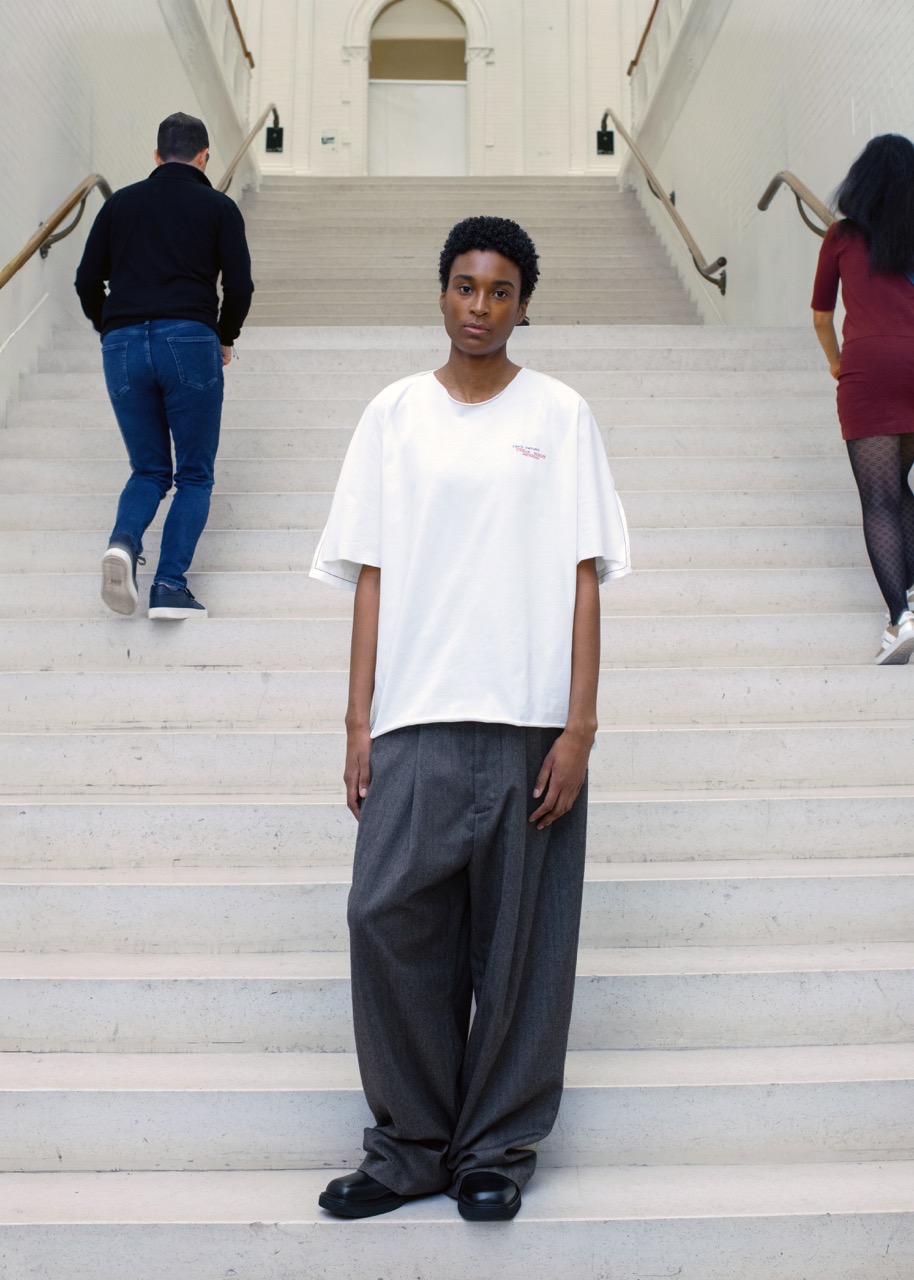
Image by Pieter Numan
How do you try to remain conscious of a capitalist system while working within it?
In a way, that is the world we live in. We need to earn money, haha. And in order to do creative stuff and do more research, more fabric development, we need more people. So, we need more money. We could do crazy stuff, but in the end, the stores still need to sell it. So eventually, what they buy is based on what they sell, which pushes everyone into a capitalist system. Which I always tried not to be. But to do this, I still need money, and in return, the buyers also need to earn money by selling the clothes. So unfortunately, it goes hand-in-hand. I definitely try to avoid being on trend and pushing the brand into something that becomes a hype. Also, because I think that brands that become a hype also tend to die out. I try not to care about the system and just go slowly and steadily, so we can keep continuing to do the things that we authentically want to do.
To dig even deeper, metaphorically. Do you focus more on the individuality and ultimate difference between people, or are you more fascinated by society and the human condition as a whole?
I draw a lot of inspiration from already existing garments that stood the test of time. I am very interested in the interaction between garments, people, and life. Garments that adapt to people’s lifestyles. Vintage pieces that fade and handmade pieces. Pieces where you can really see the traces of the human’s life.
Like a parasitical relationship.
I like it when clothes grow with a person. Though on the other hand, they can sometimes grow parasitical to the human, when a piece becomes a façade, or a thing to hide behind.
During the show, I almost felt like I was people-watching. What’s your take on people-watching?
I think humans are quite interesting, the way they act and interact with each other and with their garments. The first contact we make is dictated by how another person looks. “Is it my kind of person?” I believe appearance is the first form of contact between two people. I like watching other people; it is kind of a psychological thing that is happening. The show just felt like a normal setting. You see Chanel building a forest inside of a warehouse, and Balenciaga a storm inside of a building – or just a regular catwalk, and I thought: come on over to our house and we’ll show you our collection. Which is why last season we thought we would show out on the street.
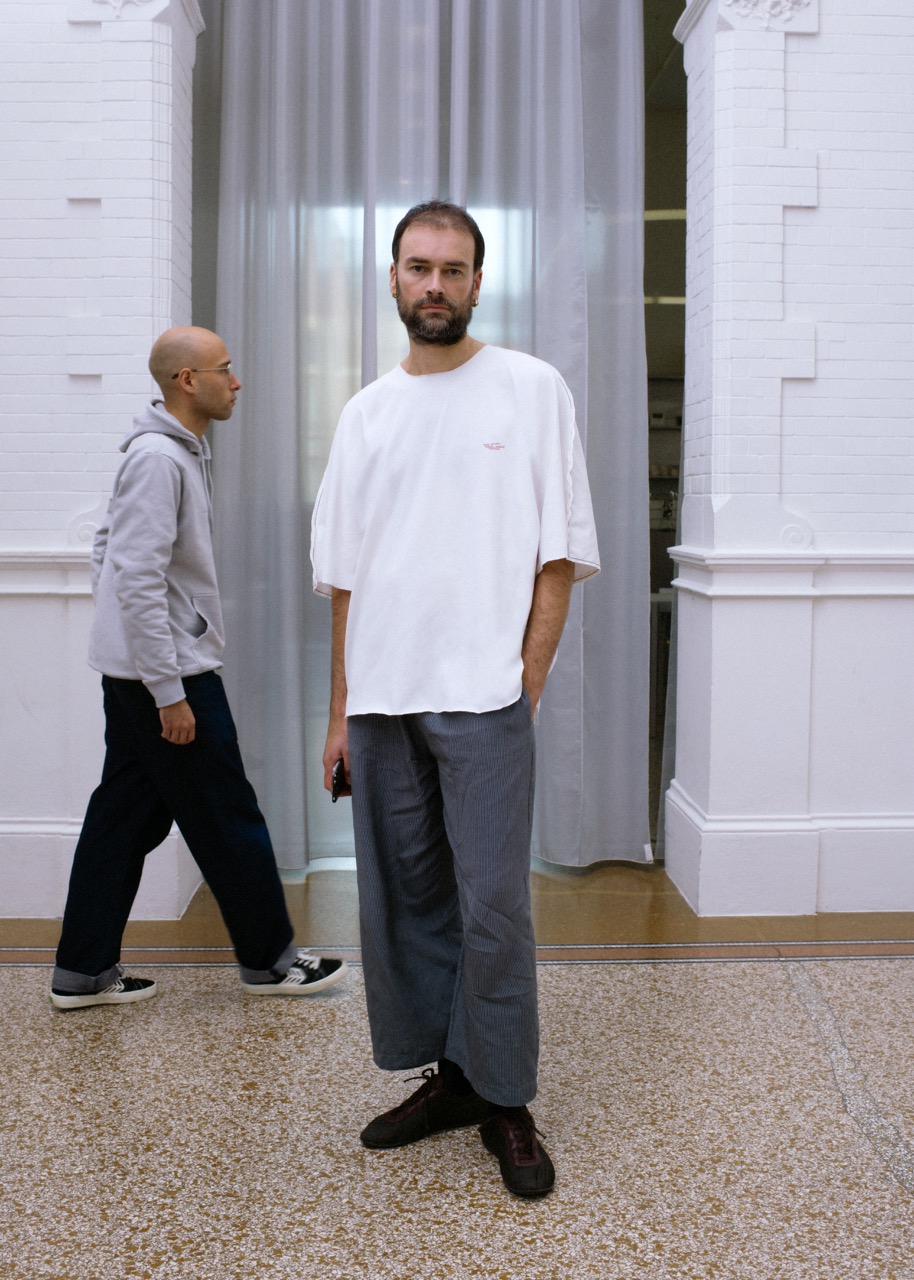
Image by Pieter Numan
I read that you did not attend fashion school. Do you ever feel like that choice makes you work harder or have to prove yourself? Or does it lend you a certain freedom within your view on clothing?
It’s hard because I am not sure if it is nurture or just my nature, but I feel very free. I wasn’t told what to do or how to do it. Everything is being found out in our own way, which sometimes is the hard way. But it does make a lot of space for trying out new things. Finding our own way within the collection, but also in the way we do our shows. So, no, I feel very free and very happy with that choice.
How do you find new inspiration?
In the beginning, it came very naturally, and I would just bike through the city or go out. See everything on the streets, take a lot of pictures of people, very much people-watching. I think you can still really see that on my personal account (which I haven’t touched in years). But now that I have limited time, I really go and hunt for inspiration, take time to sit down, and try to get in a lot of input to combine that with inspiration that comes naturally through daily life.
Do you have a current hyperfixation?
Pink and red, and ton sur ton.
What should we expect to see next from Camiel Fortgens SS27?
We’re going to do fun stuff! An enrichment of what we were already doing. Rich fabrics, European fabrics, Japanese fabrics, new dyes, and prints. We’re going to work towards a very nice show this season, very different from what we have done before. What you can expect for next season is: real clothes, an investigation of the relation between observing each other and each other’s clothes.
Images courtesy of Camiel Fortgens
Words by Pilar Madimin