In conversation with Cobrah
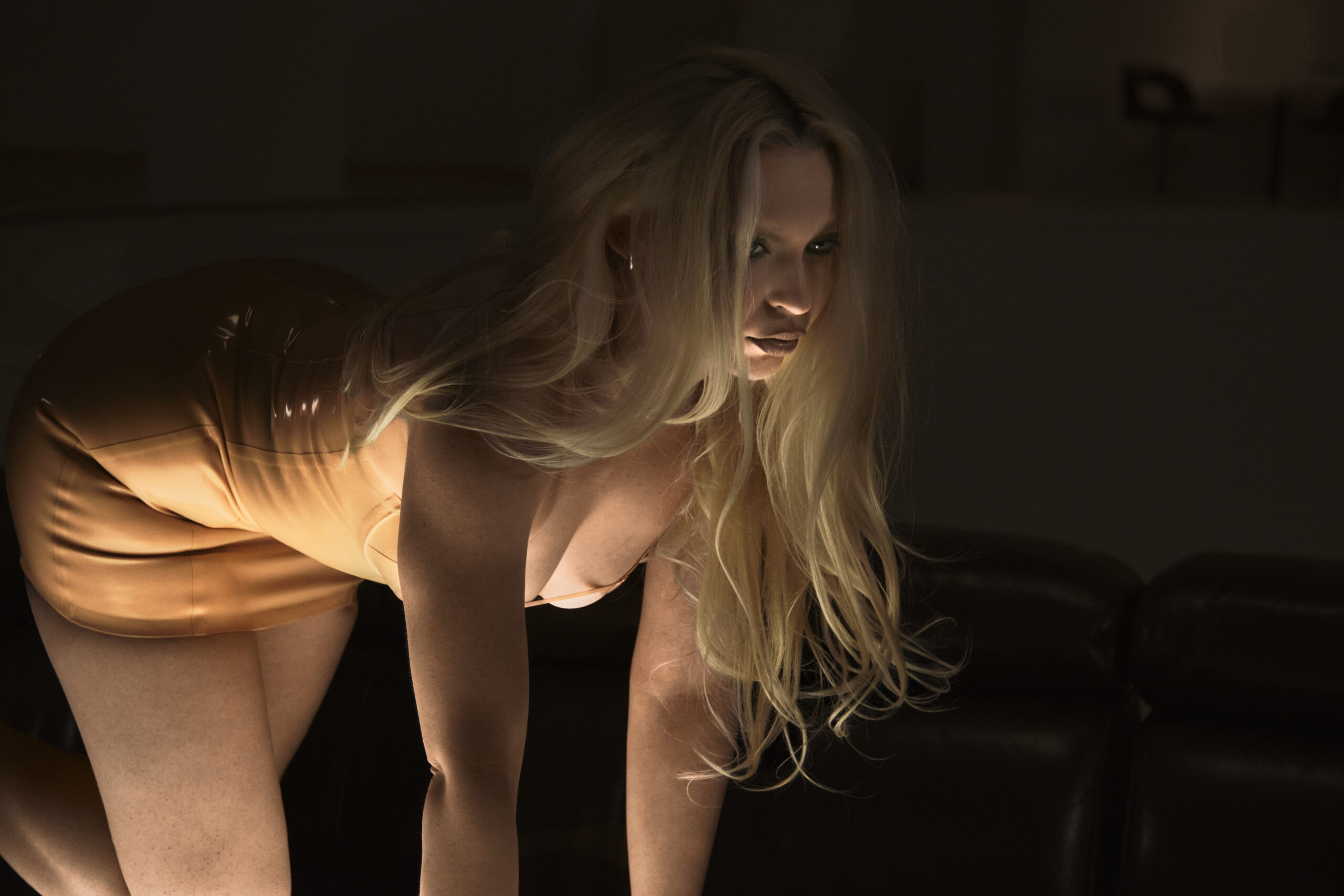
Cobrah sits in front of me, glowing – relaxed, even – despite the position she’s folded herself into. She’s lying sideways to accommodate the iconic thick latex flesh-like dress, but she doesn’t complain. It’s a mermaid-with-her-skin-turned-inside-out kind of gown, making her feel like an otherworldly creature spawning in our studio like a mirage. That creature-esque essence is heard in her music, too. The release of Torn, her first full-length album, marks an evolution: sonically denser, emotionally sharper, still pulsing with the raw club energy that first defined her, but now stretching toward something more narrative, more exposed. Now, her snake skin is shimmering, glistening, refracting in new patterns, revealing new crevices.
Cobrah is still horny, but now there’s a tension — raw desire entangled with something like… desire for romantic commitment? The tracks on Torn lean into theatrical passion, amplifying complex emotions until they almost rupture, balancing abrasion with vulnerability. Everything is self-directed, from bathing in mud with Dobermans to staging a love affair with a bald Frankenstein. She’s at a peak (though clearly not a final one) of creative expression, unafraid of being too niche or too pop. Catching her just after her Glamcult TV performance, we spoke about how the underground seeps into the mainstream, femininity on her own terms, and her favourite dessert recipes.
How are you doing today?
I’m doing very well. I’m really happy that I got to record that live set. I feel great.
Fun! Happy to have you here and happy to see you doing well. And being so patient with this dress.
[laughs] I mean, it’s an honor. Anyways, I like being in it, so it’s just a joy.
I want to talk more about Torn – I’m really curious about what it means for you to come out as yourself in this album and really shed all the characters and personalities that you’d previously been stepping into. What’s that process been like?
I feel like the more you give, the more you get. I feel like I get more interesting questions in interviews now. When I’ve performed some of it live, I get a connection with the audience that is a little bit deeper than I’ve had before. I feel like I’m always searching for the thrill in my work, and that’s when I stopped feeling the thrill of doing the characters. I felt like I was – not faking – but it was starting to feel fake. I was really kind of interested in putting myself more out there and being more of a person, and so it’s exciting and also slightly – I don’t want to say the word “scary” – but it’s a big step, really.
Which makes sense if you’re seeking the new thrill.
Yes, exactly. It’s exactly that. Just being naked all the time was not thrilling enough, haha.
You have to be emotionally naked, too.
Yes, exactly! I’m like, ‘Yeah, let’s strip it down one more layer!’

And what does that mean for you? How do you show up as yourself?
I think it’s about the music in the album. It’s called Torn because it’s a combination of what I’m known for doing, like going out clubbing and being a glam person. But it’s also opening up the spectrum of showing softer parts of me, showing more vulnerability, like falling in love, falling out of love, being in a relationship. The last song is about a car accident I was in. It’s more things that have happened in real life. So I try to be more myself through my work, mostly.
You mentioned earlier that you get more interesting and personal questions in interviews. Do you feel like in the past versions of yourself, there was something that people misunderstood or got wrong?
Yeah, I think what I do has become very political, but it’s also all about having fun. It’s always been about doing what I enjoy and doing the aesthetic I enjoy. Obviously, when you write, you have to have an angle on things. But often the angle has been that I like to push boundaries or that I write and create from a perspective of a political point.
It’s interesting because if you’re a woman and if you’re naked or if you sing about being horny or going out clubbing, it’s never this thing by itself. It’s always perceived as something that must be super radical.
Yeah exactly, and it’s also supposed to be fun because it’s radical. It’s not fun if it’s not radical, I wouldn’t do it if it didn’t feel like a little, “hehe,” so it’s not like I’m like, “Oh, I want everybody to be able to do this and I want to normalise it.” I just like dancing on the edge, that’s the thrill. I want people to see me as a person who does radical things. If that makes sense? I do pretty crazy things all the time, and it is cool because it is pretty crazy. I like to play with the boundary more than wanting everybody else to do it too. [laughs]

While we’re talking about your background and your artistry, what would you say stayed the same, or what is it that you’re staying true to?
I think I have a very strong artistic intuition, and I lead with that all the time. I grew up really into subculture, and I didn’t really like Britney. I was very anti-mainstream growing up. I’m not anti-mainstream anymore, but I think you create your language from a young age, the way you sing, the way you talk, the things you like. I just think that I have a creative language that evolves but has the same core, whatever I do. I could be making a Britney album in pink, but it would still be something that would feel like Cobrah because I make it all.
And how have your feelings about mainstream changed? What do you think made you feel less averse to it?
I think when you’re a kid, you’re still searching for your identity. And when you grow up, you calm down a little bit, and you become open to more things because you see the value in them as well. I think it’s just part of growing up, where you’re kind of like, “Oh, I can listen to Britney because she’s a slay, and I can appreciate it now.” But when you’re 15, you’re like, “No! I’m different! I am so unique, and I cannot be associated with this mainstream thing because that means that I lose value.” But now, obviously, there’s so much good pop culture. And because I do pop culture and I do just generally music, I can also see the extremely high value of it. Although it’s commercial, I see how fucking hard it is to do that, so we’re all doing very hard jobs, no matter if we do metal music or folk or club or pop. It’s just different work, but equally hard.
Do you feel like your artistry is kind of becoming mainstream in some ways?
Yeah, a little bit, but I like it. I think also with this new music, I wanted to play other types of venues, meet other types of fans, talk about other things. I was like, “I’ve done quite a lot of EPs because I never got the chance to do an album.” First, I did one EP, and then I was going to go abroad and play it live, but then the pandemic happened, so everything was on pause. So then I did a second one, and put out songs like GOOD PUSS and BRAND NEW BITCH, and they did well. And then I signed with a label, and then they were like, “Can you make another EP?” I was like, “Yeah, I don’t know how many EPs I’ll make until I die!” I think when you make an EP, you have five songs and they have to be to the point because people have to get you as an artist in a very short amount of time. When you get to an album, you get to unfold a lot more. And so I took it as more than doing 11 songs about feeling beautiful and going to the club – which is also in there – but I just got the opportunity to be more personal.
I feel like there is such pressure on underground artists to stay underground.
It is, yeah. I don’t think people understand the hardship of just doing music. And people think that because you do commercial music, you have it somewhat easier. You still have to write the songs, you still have to put on a dress, you still have to do all of these things. And also, I believe that people who do more – not like me, I feel like I’m on the boundary of that – really commercial things, they have it much harder. Because they don’t really stand out, and it’s just extremely hard to do something that everyone’s going to like, but that’s also very unique and personal in the same way. One is not more valuable than the other – at least not for me. And I think we, as a society, are also moving towards that. I think there are a lot of people who really like underground stuff, and also really like commercial stuff. I do also feel like there’s a shift in commercial music where a lot of things that were, maybe 10 years ago, viewed as what underground or niche music is, now are major, like the Brat movement or FKA Twigs, who just won a Grammy. I feel like people from the space where I work as an artist are also becoming commercial. So we’re closing the gap a little bit, or the rivalry between the two.
What do you think it’s driven by?
I think people just really like authenticity. And I do think it’s hard to do something that pleases everyone and still be authentic because the more you please, the more you compromise, in a way. And I think people kind of like that it doesn’t please everyone. It thrills them as well a bit more.
I guess everyone likes to be challenged a bit as creators and also as an audience.
I think we’re kind of over-saturated with influencers and AI artists, and that lack of … you know, punk. We’ve been more conformative culturally. So I think it’s slowly shifting to people being more interested in the artists that have opinions again.
Yeah, I can definitely feel that too, and it’s really exciting to witness it unfold.
Yeah, for sure. I think it’s cool. I love that there are artists who have opinions and have been doing art for a very long time and are getting recognition for their work. I feel like we come from a post-pandemic world where, during the pandemic, there was lots of hype around artists who did a few songs that blew up, and they had a long career based on that. But now, you feel like for the past two-three years, the recognition has been given to people who have been doing it for a very long time.
To come back to your own work, I would love to talk about your visual language as well. What really stands out to me are the elements of the slightly grotesque, there’s almost like an element of transhumanism. It makes me think of the love interest in the music video for Hush. What pulls you towards that?
Well, I’m a gamer, and I’m pretty fantasy-inspired – it’s my favourite interest. I also think just being sexy is very boring. When I grew up, I always thought that the “girly girlies” were not for me. I was never wheeling into the classical feminine things. And I think I grew up, and I did not want to be a woman. I remember I would just have really baggy pants and really big t-shirts and try to stay away from the feminine as much as I could because I did not want to be identified with being like a really cutesy little girl. But now, as I’ve grown as Cobrah, I enjoy being a woman so much, and it’s because I find ways to make my femininity and my sexiness, and bring them to a place of power and excitement. So if I’m wearing a nice gown, it’s not a silk gown – it’s a flesh gown. I just like to spice things up a little bit. It feels more like I’m in control. I’m naked, but there are aliens. I love someone, but he’s a monster. It’s just like trying to take it into a space where it’s just slightly not as conformative. Not that it comes from that space, it’s just the way I enjoy doing art naturally.
It’s always really interesting to talk about how negatively girlhood is perceived when you’re a child. But it’s also because we, sadly, have such flattening associations with what womanhood is, and it’s really nice to see how these visual codes get reinterpreted. You can be girly, and it doesn’t negate any other qualities or interests.
Yeah, exactly. I think it’s important to me that I’m an adult in what I do. I think that’s the thing about growing up that doesn’t sit well with me sometimes. Sometimes, I think it’s playing on the border of being very childish, and I try to bring a very mature view to what I do. It’s important. I don’t like to feel small.
And what does maturity mean to you in this context?
It’s being in control of the way I want to present and not playing – I like to be very straightforward in how I present, and have a dominant approach to the way I write music. I don’t like the cutesy stuff – I’m not a cutesy one. [laughs]
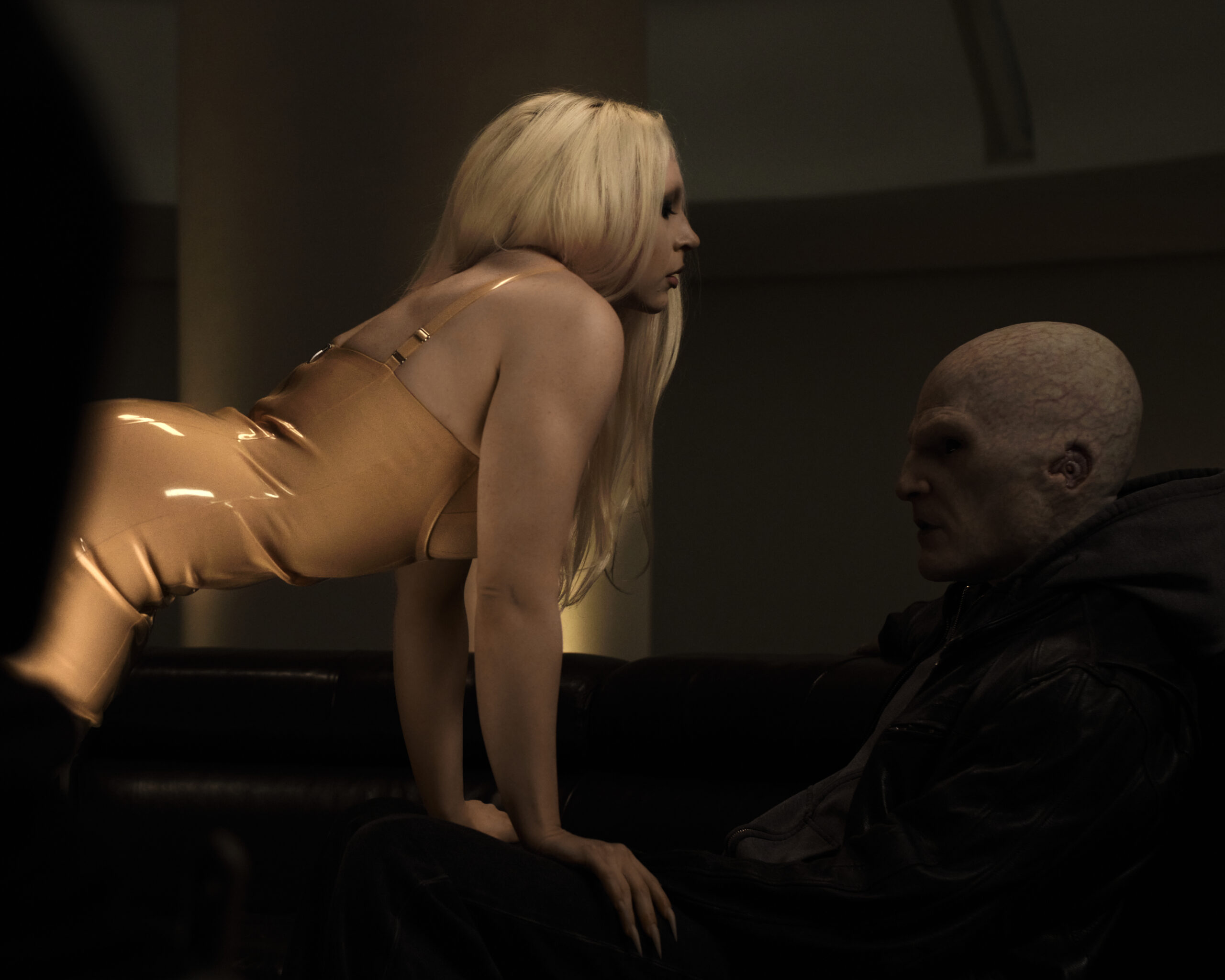
It feels like there’s almost an animalistic part in the sense of having flesh – like your nails, for example, with the snake-like texture. Is that intentional?
Not that animal per se, but when I make the music, I’m very obsessed with textures. I like the bass to sound like tape, or it sounds like you would slap a bowl. I like to wear corsets, I like to wear leather. I’m very touch-sensitive. And yeah, I do have this really hard desire to transform. As Cobrah, I am transforming all the time – I have the tiniest waist, the longest nails, or the highest heels. It’s always about becoming something.
Is that also the origin of the name Cobrah?
Well, it has all of the letters in my real name. So it’s not an actual acronym, but it is somewhat that, and it also comes from my first song. I wrote the first song before I called myself Cobrah – because with the whole girly thing – I didn’t want to have a girl’s name. I’m more of a creature person than a reality person.
And with this new era of Torn, do you see this creature as being your most authentic self and not a character?
Yeah, I think I’m the most myself for the first video of Torn – there are two of me there. Although we’re doing these kinds of surrealistic spaces, because I would never do a video where I’m like on the streets of New York, and there are people around. I like to bring the vision to life in a way where it’s this place that does not exist, that it’s a fantasy. But now, I’m not wearing wigs, I’m not doing lots of different makeup, I’m trying to stay present in my face. I bring the fantasy parts now more into the monster who represents the love of my life, but it’s not like an actual person. There’s a symbol. So I try to bring the otherworldly into space, or by doubling myself. I’m playing around with that, with everything around me, rather than myself.
It feels like such an intimate and inward-looking process. Was there anything that surprised you about yourself or a realisation that felt revealing?
I guess we all learn the same things from ourselves all the time. And I learnt that I have the power to rely on my own intuition and that I don’t have to compromise so much. As you grow, you work with more people, and you want to enjoy and take part in their expertise. Sometimes, I’ve compromised because I think that maybe you think better than me because you’ve worked longer than me or you’re more well-known. For Torn, I really just chose the close friends that I like, and I’ve got to decide everything, and I could really rely on what I wanted to do. And it’s the thing that I’m most proud of, this album and these visuals. I guess I learned that I have the power to decide everything, haha.
And what has been the most challenging part of working on Torn?
All the high heels that are not in my size. It’s really awful. Honestly, I was thinking about this question, I was like, “is it the flights?” No. “Is it the sleep?” No, no one needs to sleep all the time. There are so many things. But what is really painful and hurtful? It’s the high heels that are too small. It’s so painful. That’s the most challenging thing when you’re doing a choreograph, and you can’t really use your feet because you’re bleeding – it’s the most awful thing ever. The fashion of what I do is very extreme. I mean, I can rock a corset, I’ve been tied up in chains with a whole catsuit and a latex mask and a pipe of water, waterboarding tied back like that [demonstrates the twisted pose]. And still, it’s the heels that get you.
Speaking of pushing yourself to the extremes – you’re also known for super iconic live shows. And you have the tour coming up. What are you most looking forward to, and what can we expect?
Because it’s a more diverse album, it will be more of a dynamic show. So I’m excited to do a full hour where it doesn’t have the same vibe throughout, where I can get more introspective at times and more flashy at other times. I’m building the set design together with the director of the video for Hush, Julius Hayes. So I’m really trying to get it all to be one fluent thing, and I’m also directing the set list. I hope to bring lots of energy, lots of fun, and hype. But also more of a journey, something you could also watch in a theater.
Really exciting! And now time for a speed round. If Torn had a smell, what would it smell like?
Licorice, probably, because it’s like salt and sweet and yum. It’s black, and it’s latex-y.
What is something that instantly ruins your mood?
A wake-up alarm. Mood-ruining.
And something that can instantly lift it?
I would go back to licorice. If I get candy. If any bad situation happens and I get a little candy on the side, I’m like, “Great.”
One needs emergency candy! And if you weren’t doing music, what would you do?
Well, because I have a sweet tooth, I bake a lot. I would be a pastry chef. Or a deep-sea diver. Yeah, it’s a border between both of them.
You found the perfect middle.
Pop star, diver, pastry chef, kind of… [laughs]
You get to do it all. What is the go-to pastry that you make?
Oh! I make so many! Well, I make lots of different flavors of ice cream, which is not very difficult, but I do like to play around with it a lot. I do lots of cakes, and I do mochi. I do great mango sticky rice – but that’s not really a pastry. I do a little bit of everything all the time. I try.
What is the most outrageous ice cream flavour that you’ve made?
Well, one time I did make bacon caramel sauce. It’s good; it’s all-American. But my favorite ice cream flavor in the world is ube Ice Cream.
And my final question: what are you manifesting for the rest of the year?
I’m manifesting cooler, better fashion – more extreme fashion. I’m manifesting cool, fun, collaborations. Both in features and just do collaborations in fashion and makeup.
I just want to be a bigger part of the world in that sense, where I’m more integrated in other things than the music. I would love to do that.
Collaborate with a sea diver.
Yeah! With a sea diver, with a pastry chef, you know, with the fashion, with the makeup, with other artists and painters maybe. I don’t know. Just expanding on the Torn universe with other people would be really sick, too.
Words by Evita Shrestha
Images courtesy of the artist