When the afters is at an art gallery…

Photography by Agustín Farias
What if the afters were at an art gallery? Flowing between the club, gallery, and screen: Courtesy’s artistry doesn’t bind itself to one particular space. As a DJ, the Danish artist explores the eclectic, euphoric and campy side of club music: her sets are trancey, uplifting, and delicately sincere. Sound, image, and performance are inherently entangled in Couresty’s work as she spans her practice across music, mixes and film. Through her platform and event series Against Interpretation Club, she asks how much art can live inside a nightclub, testing the limits of participation, context, and control to imagine the museum after hours. Ahead of Against Interpretation Club’s Amsterdam debut at Raum on November 7th, we caught up with Courtesy to gain insight into her multidisciplinary methodology and newest party, of course.
Hi Courtesy <3 Firstly, where do our questions find you today?
I’m in Berlin finishing the last preparations for our (mine and Samuel Haitz’s) 10-hour queer art film screening at Club Raum in Amsterdam this Friday, also simultaneously working on an Against Interpretation Club night at ICA London (Dec 6th) with Lolina, Josephine Pryde, Angharad Williams and a few others.
As a multidisciplinary artist, producer, and curator, how would you describe your curatorial and artistic vision? Are the two related? Is there something that centres or connects your artistic research and curatorial practice?
My work as an artist and curator blends together on a lot of points, obviously in terms of which part of art history I think is worth looking into / relating to, seeing events and people congregating as a potential for art making, without it being something forcefully set up to be participatory. Currently reading about Pat Hearn Gallery in NYC in the 80s and 90s and thinking a lot about how she played with the roles of artist and gallerist.
In previous interviews, you have said that you approach creating music as a research project, as you feel it frees you from “the rules of club culture”. Your event series is also named Against Interpretation Club. What limitations do you find club culture imposes?
There is a certain room of freedom in the work I do as an artist and music producer because it sits between a few different worlds, all with particular rules and histories, and I can choose to engage with them or not. I think the level of campness in my own music productions and video work doesn’t necessarily translate to a typical nightclub audience in the commercial scene, but then there is a different place for them in art and at the more interesting parties where representation is more open. Nevertheless, my DJ sets tend to work most places I play, maybe due to my promiscuous relationship to music genres.
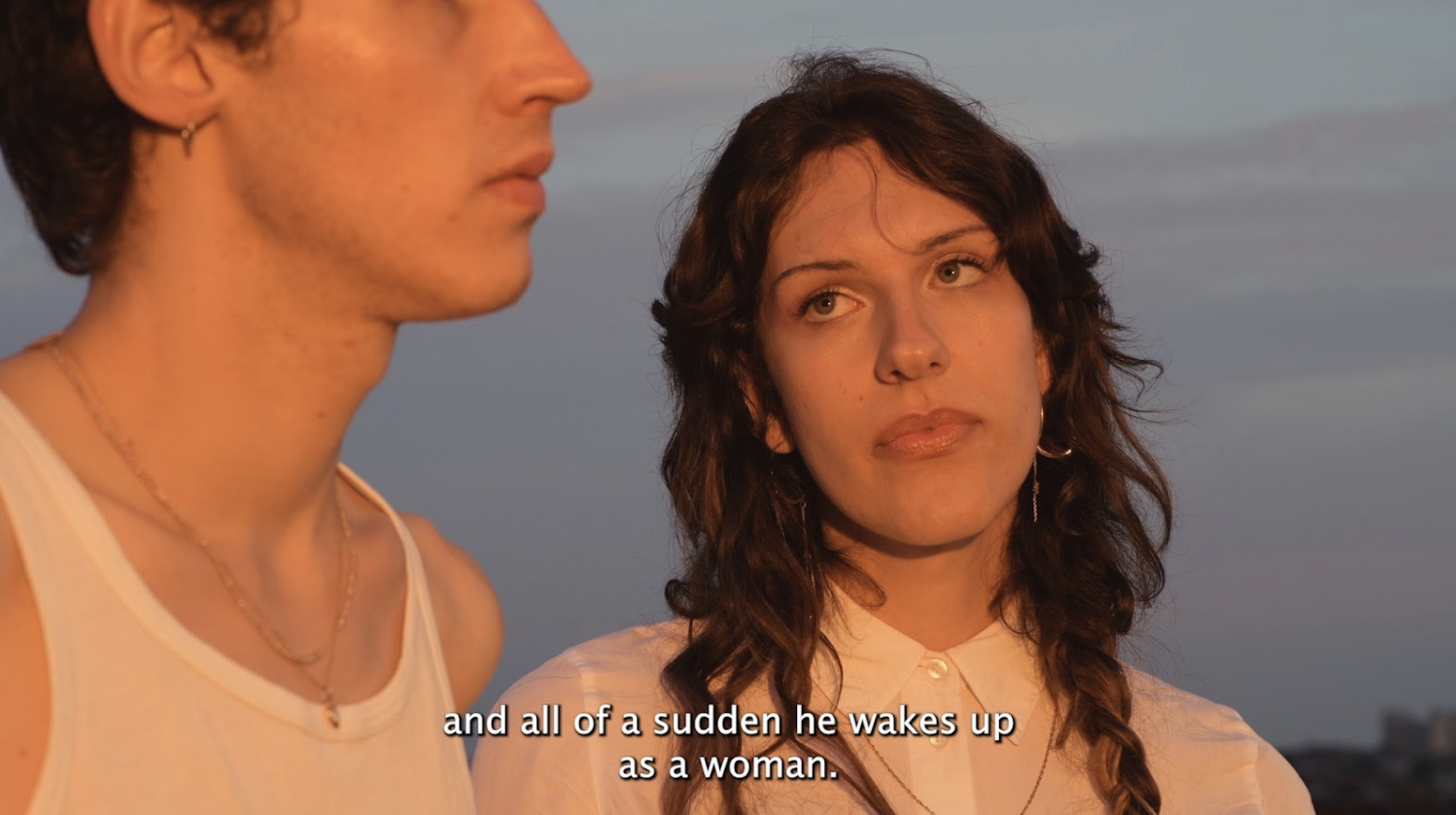
Courtesy with Laura Schaeffer, intimate yell Chapter II, 2024
Favourite track on your USB?
SOPHIE – MSMSMSM
Most recent nonmusical inspiration?
Obsessed with Ulrike Ottinger’s 1979 film Bildnis einer Trinkerin
With Against Interpretation Club, you ask, How much art can you put in a nightclub? Why do you feel it is important to place art in these spaces?
I wanted to explore how interesting you can make an experience at a party without losing the immediacy and fun pivotal to a good night out.
In your past editions, how did you find the club environment informs or transforms the artwork and the audience’s experience of the piece(s)?
All contributions so far have been commissioned and made specifically for the events, whether that was a sculpture (Mathis Altmann), a DJ set (Merlin Carpenter), a performance (Michel Wagenschütz) everyone interested in the architecture of a club where these happened. I guess the really interesting thing is if a given piece works or not in this context, or how it works, if anything unexpected happened when it met the audience in the club. There is a big element of lack of control in a club (alcohol, drugs, many people, etc) compared to a gallery. I like the unpredictability of that, but you would need to be there to tell.
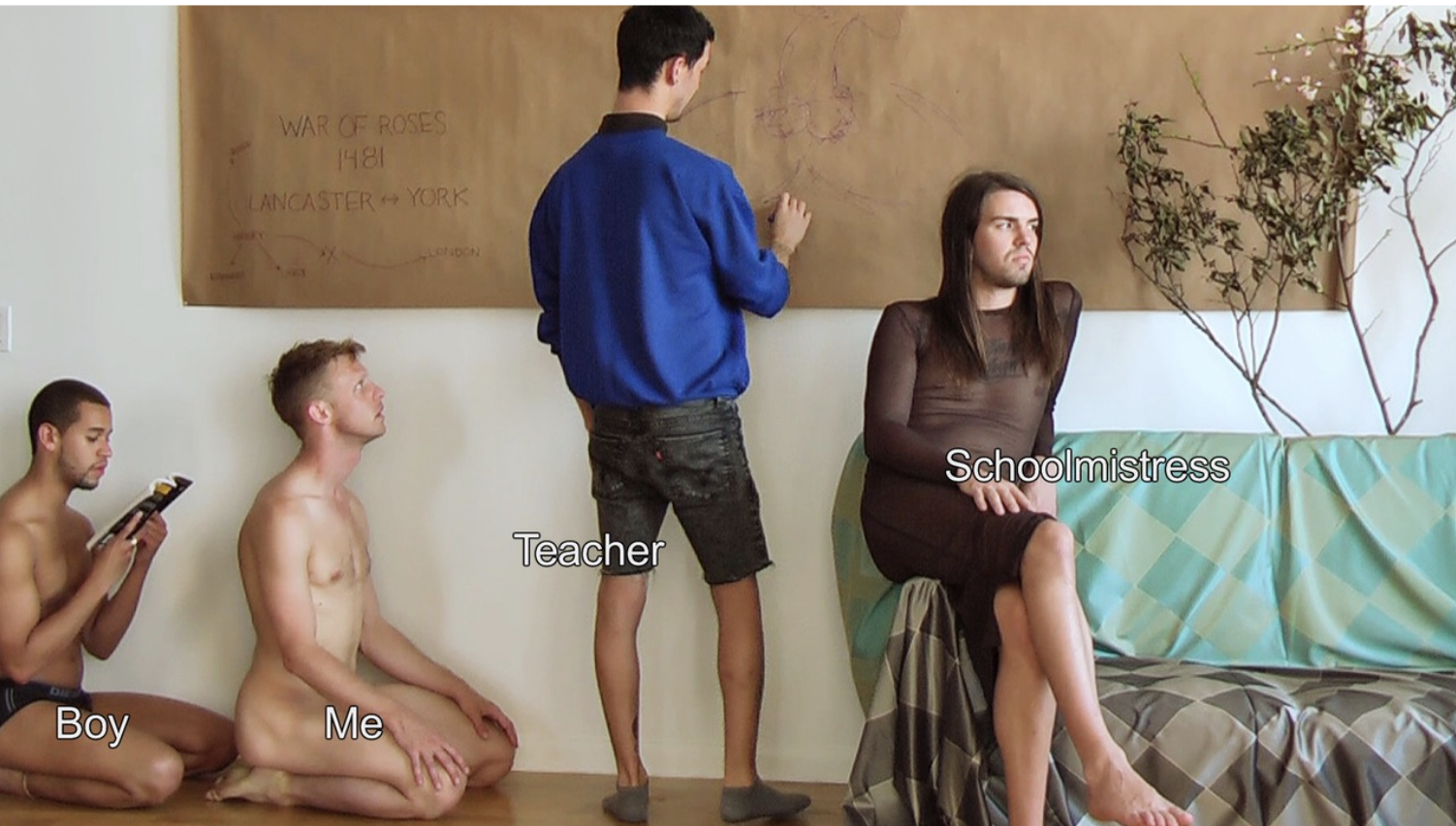
Loretta Fahrenholz, Implosion, 2011
On November 7th, you and Samuel Haitz bring the Against Interpretation Club to Raum, focusing on the theme of queer worlds. How did your collaboration come about for this edition?
It’s not the first time Samuel and I have worked together. I shot him a few times, and he wrote a text for my album launch at the Centre for Contemporary Arts Berlin last year. A close friend and I have been wanting to curate an Against Interpretation Club event together for a while. When I got the date, November 7th at Club RAUM (queer-run club space) that was it. We started listing video works we liked, and the theme became discernible. The last work we added to the program is by Loretta Fahrenholz, which I saw at a screening organised by Eyeslit at Kunstkneipe Schmetterling in Berlin a few weeks ago.
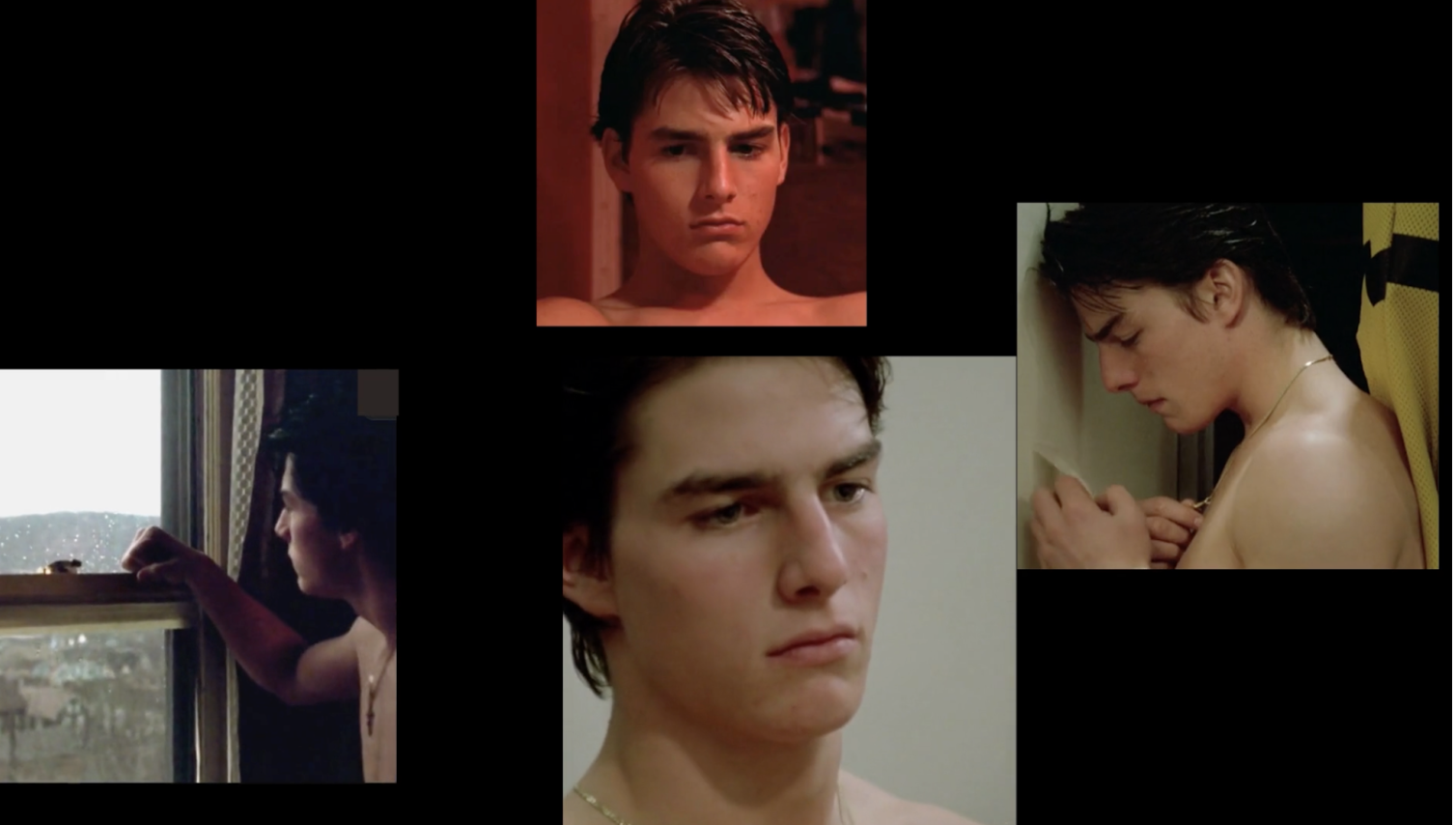
Richard Hawkins, The Lust for Evil Sequence, 2024, digital video, 9 min 17 sec, Courtesy Galerie Buchholz
Against Interpretation Club
Friday, November 7th
Club Raum
Courtesy, Upsammy & Bill Kouligas
Click here for tickets and more information
Words by Gabriella Meshako