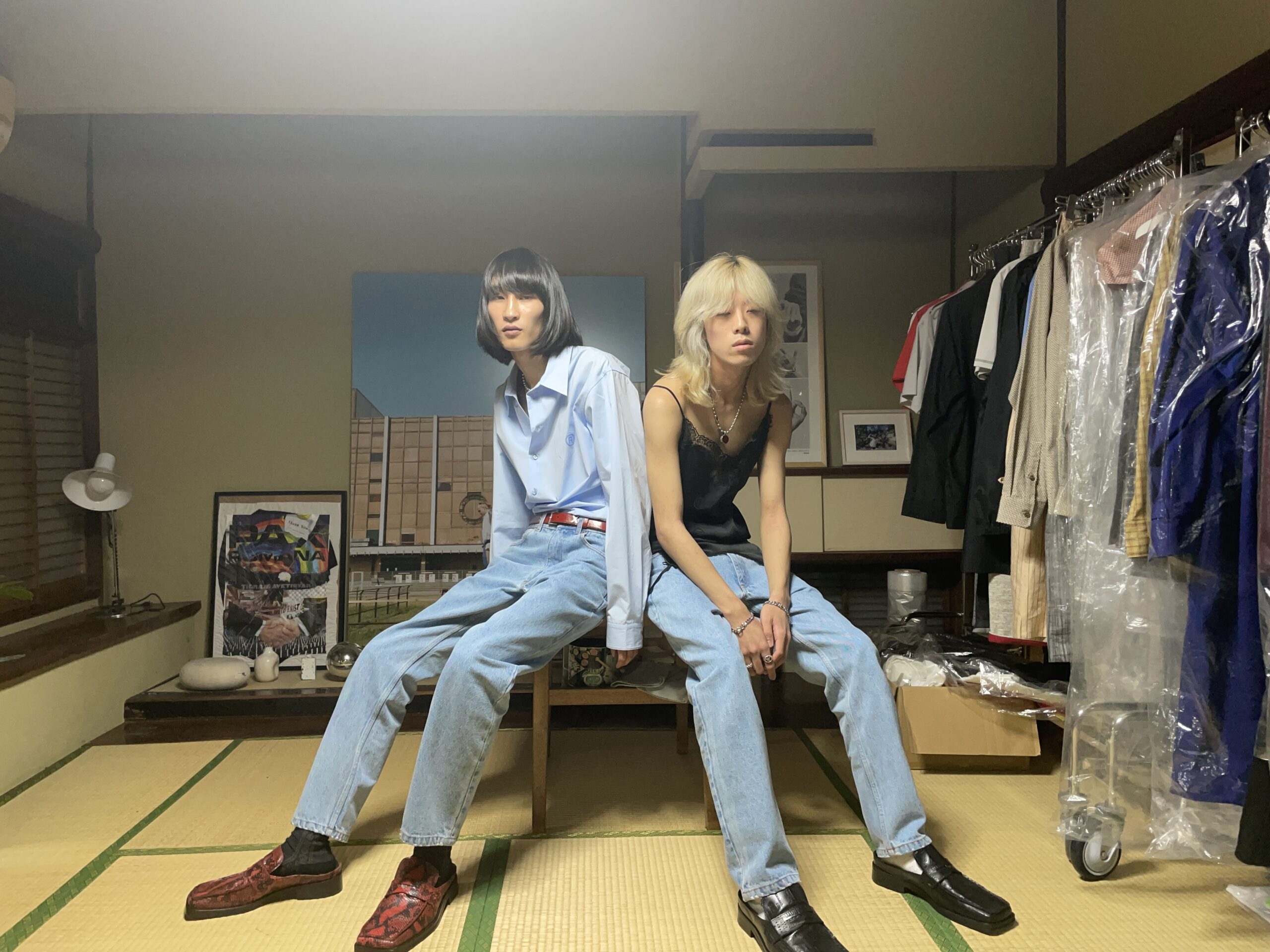
What We Do All Day, SS21
Before being one of the most influential designers working today, Martine Rose is an observer. The British-Jamaican artist has built a career on looking closely at the people around her, magpieing references from the small acts of self-fashioning that happen far from runways. Club culture, construction sites, football terraces and family gatherings become source material, while recurring characters — the rude boy, the skinhead, the uncle with the immaculate jacket — are pulled apart and rearranged just enough that the familiarity remains, but so does the space to question it.
It follows that Rose’s way of doing fashion has always been inseparable from its context. Her shows have unfolded in community centres, clubs, markets and primary schools, placing clothes back among the people, histories and emotions that give them life in the first place. Again and again, her work shifts the industry’s gaze away from its pampered front rows and towards the worlds where style (not fashion!) is actually practiced. Clothes are seen as a tool for connection, a way of locating yourself in relation to others, a kind of everyday anthropology rooted in participation rather than observation. It’s a record of allegiances and aspirations, of borrowed codes and shifting ideas of masculinity, taste and class.
That same interest in the social life of clothes persists even when social life as we know it stops. What We Do All Day, the virtual project Rose created during the Covid pandemic and now revisits for State of Fashion, opened windows (virtually yet still literally) into the routines of people around the world at a moment when physical proximity was cut off. While the pandemic is often remembered through isolation, the project paid attention to what endured despite it: the rituals, relationships and improvised forms of togetherness that continued behind closed doors.
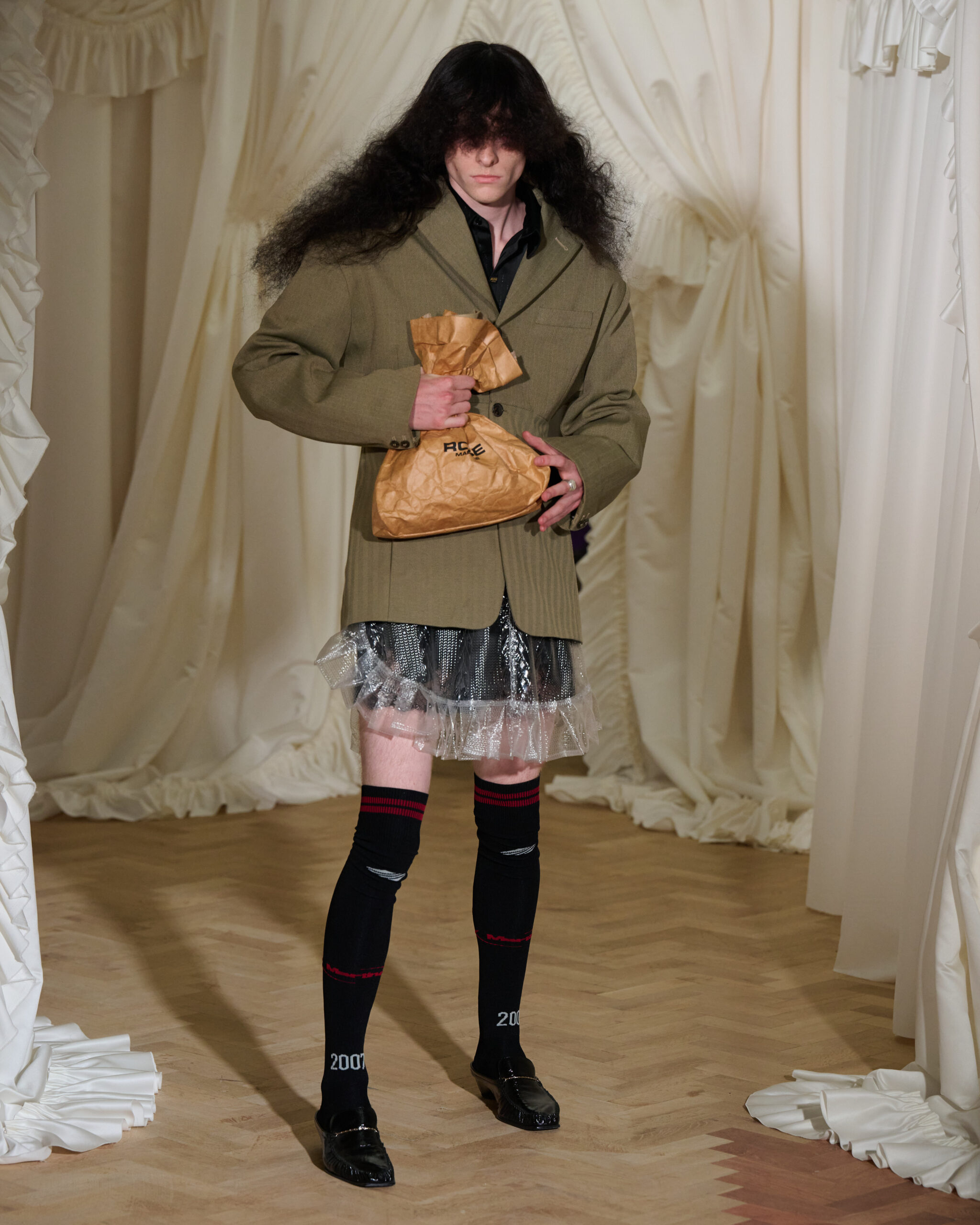
SS26
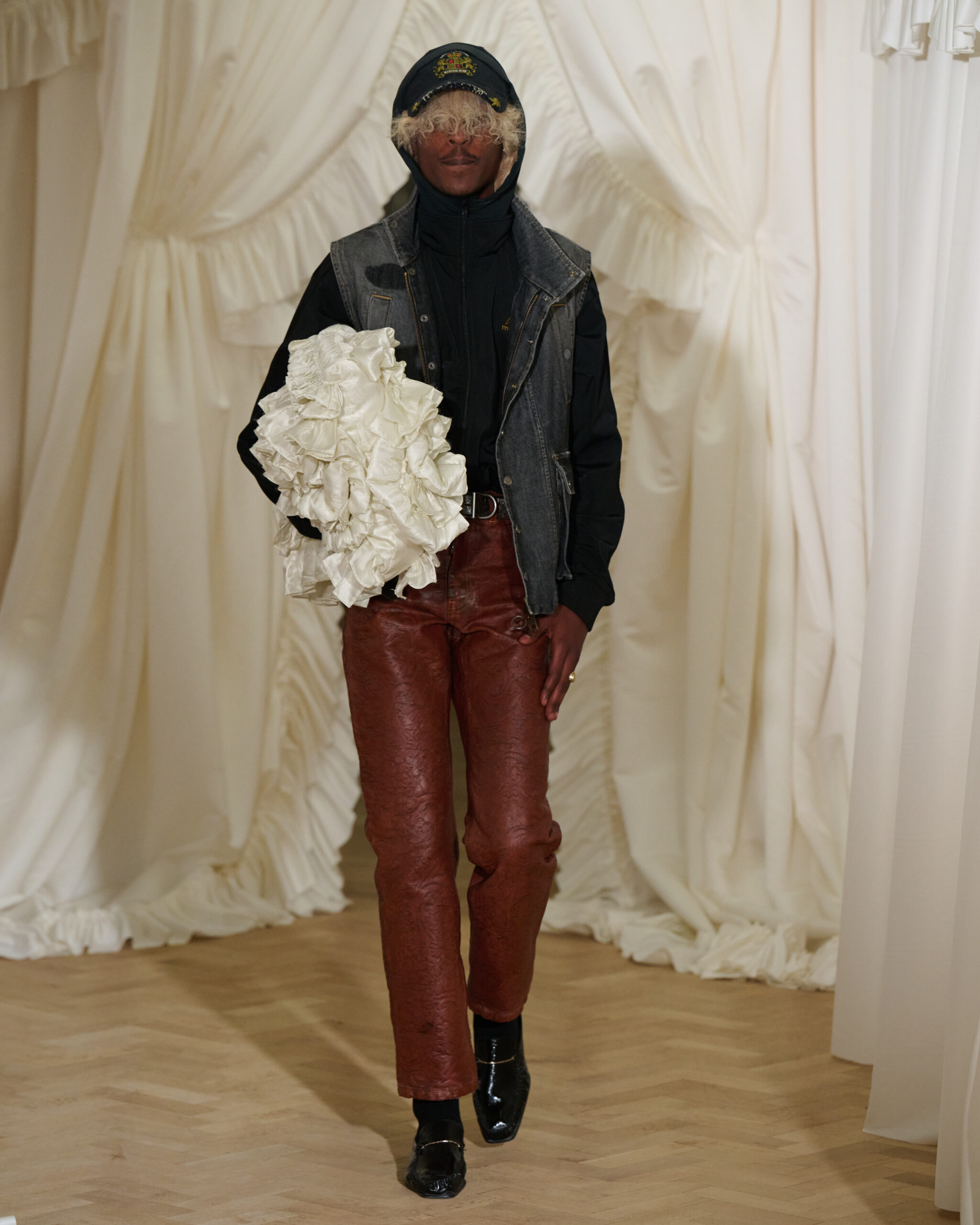
SS26
You often speak much more passionately about clothes than “fashion” as a system. What is the distinction for you, and how has it evolved throughout your career? What can clothes do that fashion can’t?
Fashion has always felt more like a concept or institutional. Whereas clothes have always by it’s very nature indicates something much more relatable, human and emotional as fashion as a concept. Clothes are real living vehicles of expression.
I love your quote that said that “clothes are a vehicle to look someone eye to eye.” Could you expand on what that means to you and how you achieve that within your practice?
It only occurred to me that actually my obsession is people. And clothes are a vehicle to get close to people, to tell stories about people and moments in time, in the future. But putting people in the centre. Clothes are what is left when you strip it all back.
Your work often captures masculinity with a kind of intimacy that feels rare in menswear. While of course your practice is less focused on specifically menswear now, I’m curious how you think about designing for men as a woman. Do you feel that distance gives you a different kind of clarity or freedom in the way you observe masculine behaviour and dress? Or is it about abolishing the distinctions between femininity and masculinity at all?
For me it’s always about asking questions and proposing something that is not my decision to make people’s mind up about it, but to ask the questions. Does it really undermine someone’s masculinity if they’re wearing a camisole? In my mind no, but I’m just raising the question. I don’t feel like it’s something I think about, but it’s more about responding to bigger questions about what a man can wear and what a woman can wear — what’s the difference? What does it mean anyway? What do these codes really mean? And having fun.
You once said that one of the questions you design with is essentially: would someone want to have sex with the person wearing this? I love that because it cuts through fashion-speak immediately and brings clothes back to instinct, chemistry, awkwardness, fantasy, reality. What does that question unlock for you creatively that more traditional ideas of “beauty” or desirability don’t?
I’ve never been inspired by chicness or ‘taste’ contrary to what we actually find attractive in the same way that beauty is really broad. Those are the questions I always enjoy challenging. What I’m really asking with that question is, is it appealing to you? Does that person look appealing?
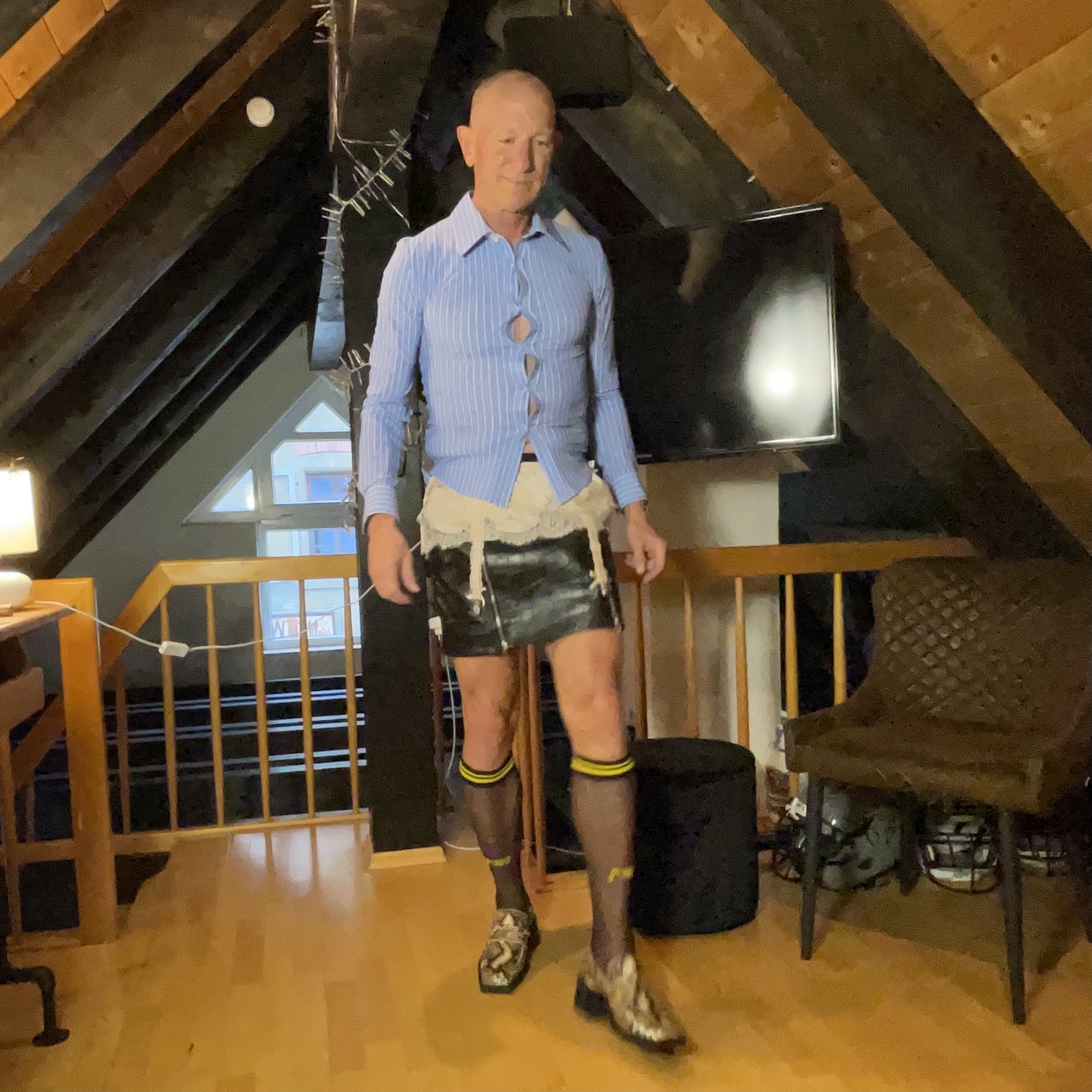
What We Do All Day, 2021
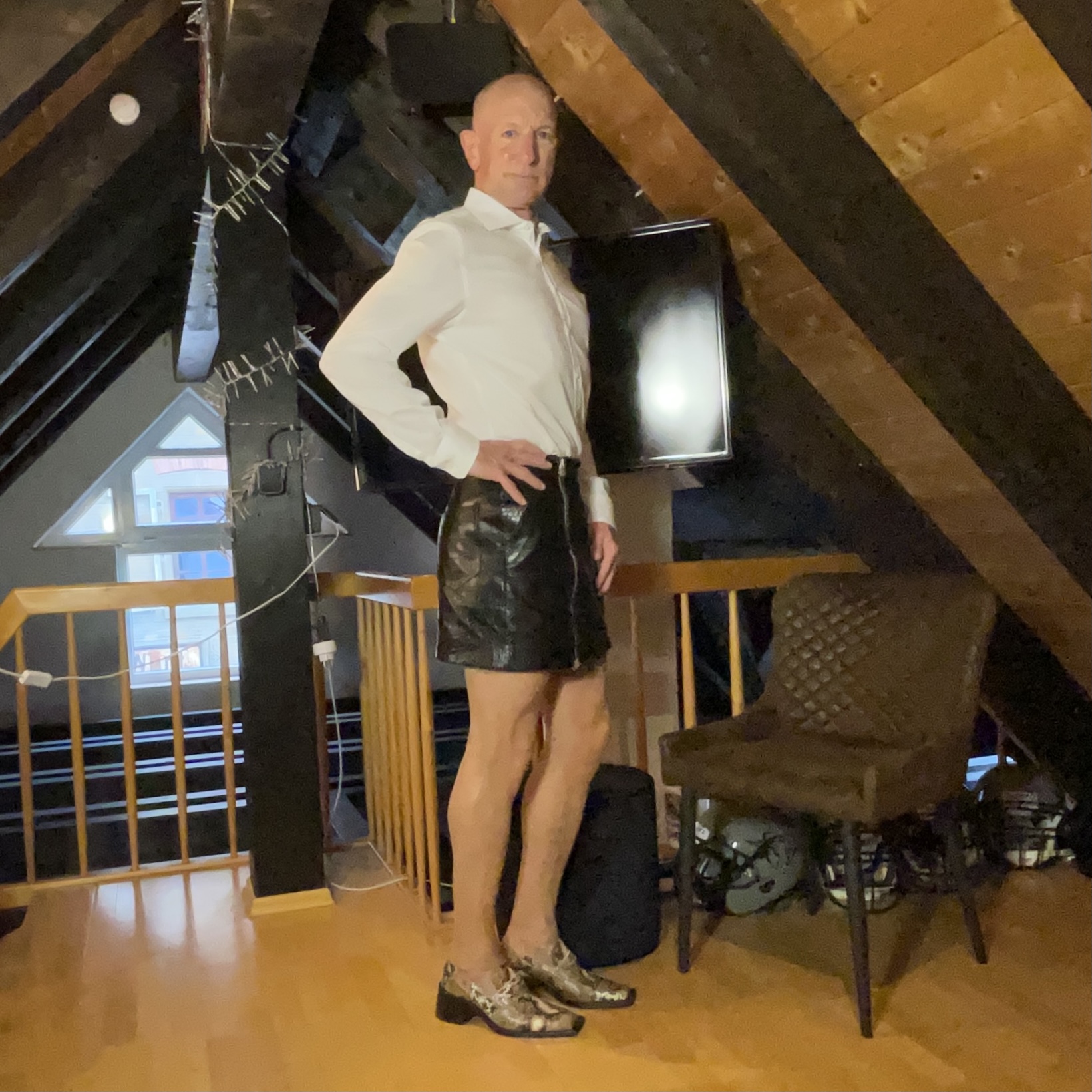
What We Do All Day, 2021
Reading about the London you grew up in — a less gentrified, more lawless version of the city — it feels like a particular kind of social freedom where community thrived differently and identity felt more fluid and unobserved. How do you see that energy now in relation to nightlife today, and the ways people gather together and connect to a subculture?
Observation is a key word in your questions and I feel that has fundamentally changed the landscape of how young people see each other and connect, and how they see themselves and edit. It also limits the amount of time for pockets of subcultures to really develop and thrive on their own terms, before they reach millions of views.
Club culture used to generate style from the ground up. Now trends circulate online before they’ve even properly lived in the real world. How has that changed the relationship between subculture and mainstream fashion in your experience?
Essentially it’s the other way round. Validation from the mainstream narrative appears to have more value than it did before. Capitalism has really done a good job in convincing young people that you can buy style off a peg.
Your work still carries the feeling of honouring subculture(s) and street fashion history without becoming nostalgic cosplay. How do you keep reinterpreting those codes rather than simply archiving them?
I guess it’s really about finding a common language. Something familiar that connects people and then reimagining it through a new lens. So it feels like a new proposition for today.
How has your own relationship to eccentricity evolved since your club years? Has it become quieter, sharper, more emotional?
I’m always drawn to the eccentric in every aspect. I don’t expect that to change anytime soon. As I’m preoccupied with people who exist through choice or otherwise on the fringes. And they tend to have eccentric tendencies.
You’ve often referred to watching your older sister get ready to go out as an early source of inspiration. Do you think that early experience of looking up at someone slightly unknowable shaped your visual language? To me, your work has always read as a balance between representing very real archetypes and characters, while also having this imaginative, almost child-like gaze.
The characters I present are always heroic to me, so I guess within that there’s something child-like in that gaze with the generation above me and the generation of that. So I feel like I’m always standing on the shoulders of giants.
You’ve spoken before about operating slightly outside certainty — not always fully knowing if something is “good” while you’re making it. How do you protect that uncertainty creatively?
I just trust the uncomfortable feeling of being unsure.
Your work is the way it plays with the unspoken codes of luxury fashion, often through humour or awkwardness. There’s almost a pleasure in making the industry slightly uncomfortable. How has the reception to that changed as your profile has grown? Do people now “understand” gestures that (I imagine) initially unsettled them?
I have developed a language over a period of time, so yes people do understand the language now more than they did in the past.
I’m curious whether your relationship to your Jamaican roots has changed over time through the process of making work — through research, casting, music, memory, community. Has designing ever brought you closer to parts of your identity or cultural inheritance that you hadn’t fully understood earlier in life?
You don’t finish fashion school really knowing how you will bring her personal influence into your design. You try on lots of different styles before you figure out who you are as a designer. So over time I’ve had the confidence to draw my own (heritage, experience, family, observations) design language.
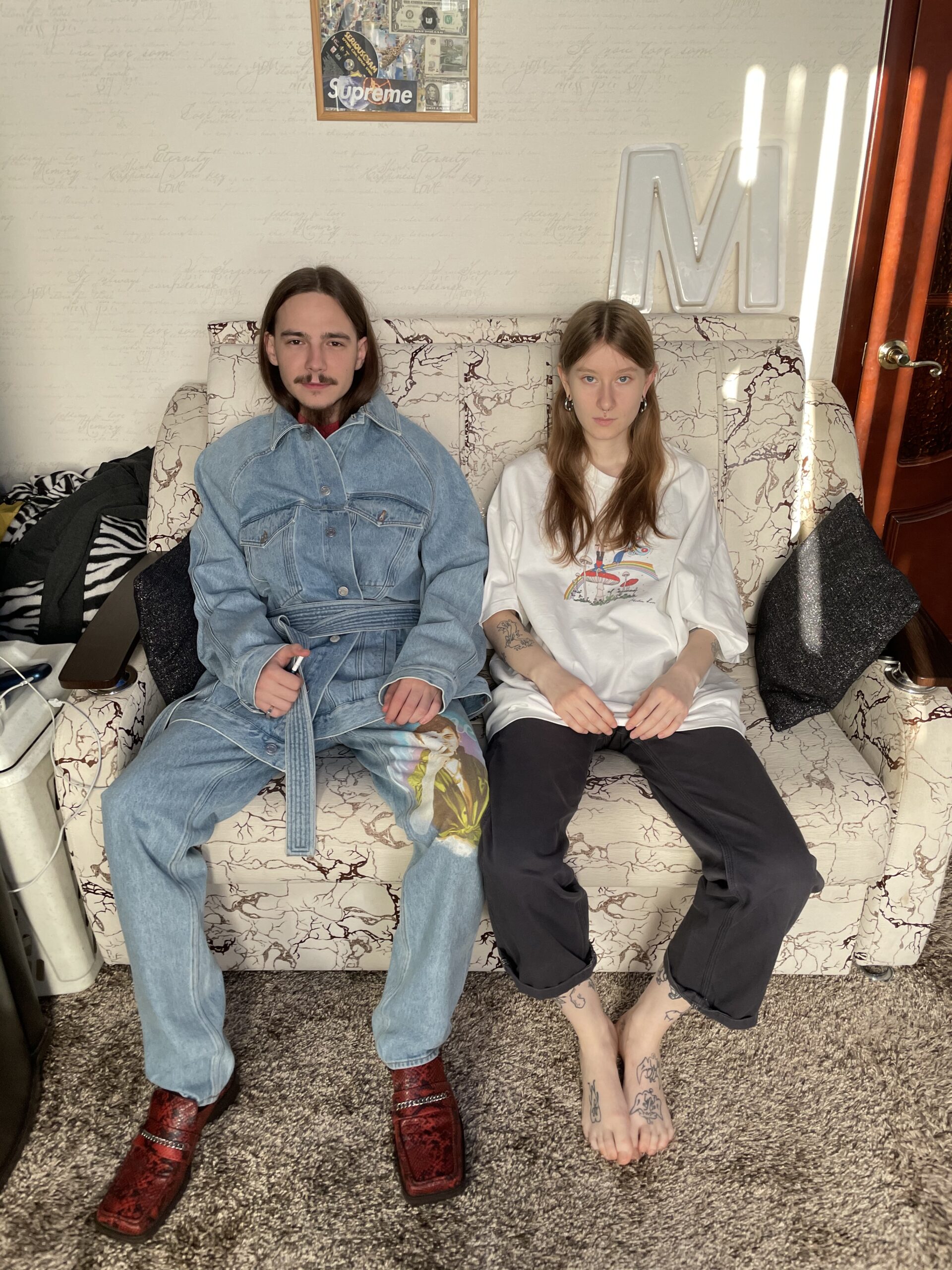
What We Do All Day, 2021
Your casting is so central to the emotional world of the brand. You also ask people to really step out of what they might be accustomed to. How do you build trust with the people you cast? Do you think that trust is actually the backbone of the entire project?
It is a really central part of the casting process and actually the feeling of the overall presentation/show. It’s really important that people there feel relatable, not just in the clothing but also the people they see. It really takes time to build that trust, it normally takes place over several intense days but that outcome is indescribable.
I’d love to hear a casting story — maybe someone unexpected who completely embodied, or maybe even reshaped, a character you created.
There have been so many profoundly moving incidents over the years. One that really sticks out is when we did the AW24 show, and we worked with Chuck who was a local legend in Atlanta but had never left. We flew him to London and then to Paris and the experience was overwhelming for all of us.
You’ve managed something very difficult: maintaining underground credibility while also becoming globally successful. A lot of brands lose tension once they become widely recognised. How have you protected the emotional core of the work as the scale around it has changed?
Well, I think it’s partly because of what and who I reference is who and what I see and where I go. So much of my brand is rooted in telling stories about the lives of people; and that never changes and so I think it’s partly that I have stayed in my lane in that sense and the feeling has stayed.
And of course, we have to talk about music. What are you obsessively listening to at the moment?
Honestly I’m such a magpie with music and I love all sorts of music. I get obsessive about music in general but not necessarily one genre or person.
Are there particular sounds or scenes right now that still give you the feeling of discovering yourself again?
Markets for me always give a sense of discovery, and people who generally refuse to follow a rule book and live by their own terms. Market pop ups like Fantastic Toiles, which is a collective of independent designers set up by Nasir Mazhar, featuring designers like FS4B, Jonty K Mellman, Pig Ignorant, and so many more.
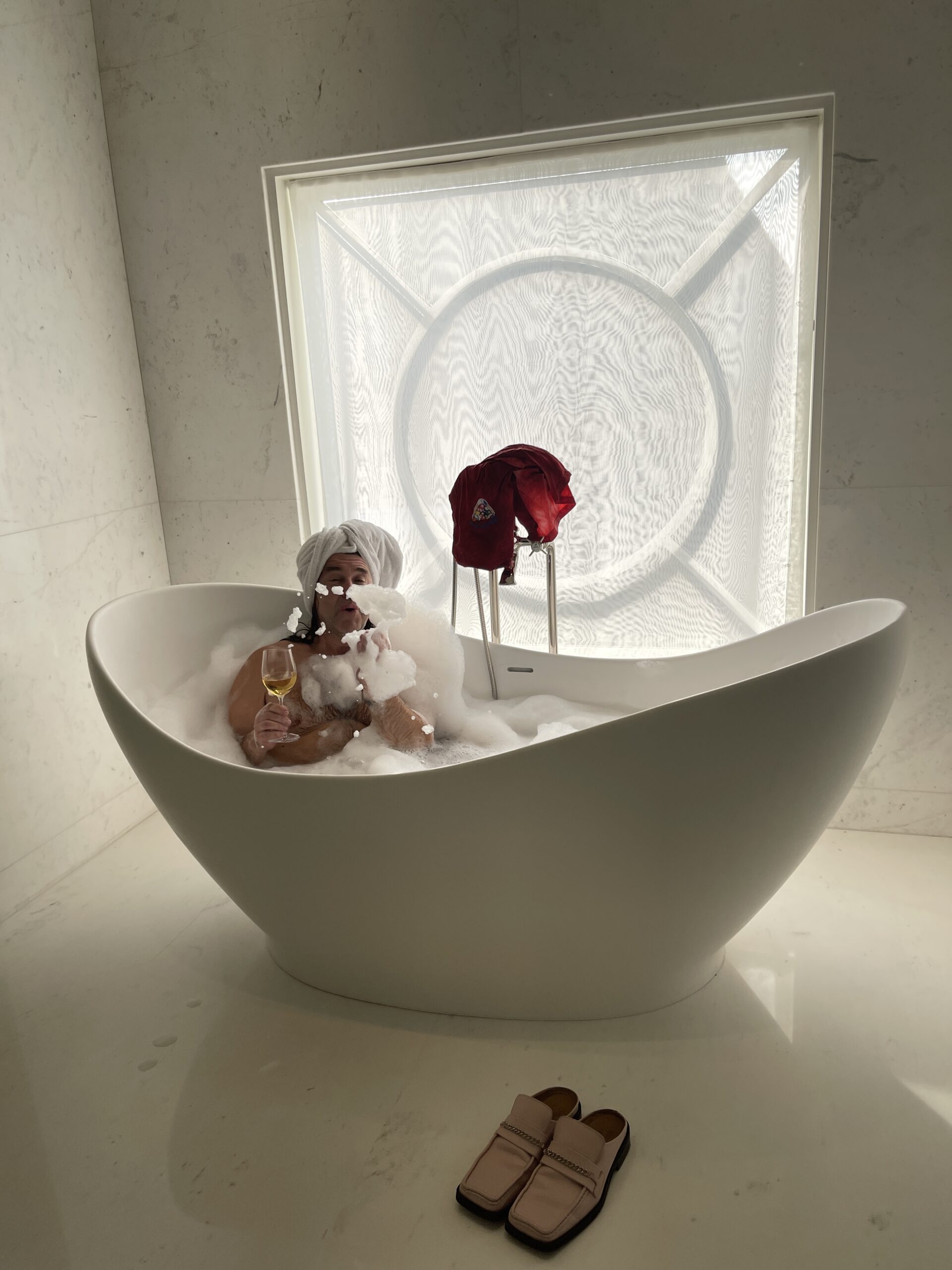
What We Do All Day, 2021
Can you tell me about making What Do We Do All Day?
What We Do All Day is like a time capsule that represents such a watershed moment in all of our lives. It was during lockdown when we were all living the most insane reality inside our own lives. I wanted to find a way to communicate these stories around the world and so we met hundreds of people from around the world, and looked at all of these houses (because that was such a big part of the brief) and asked them to do the most mundane everyday tasks — things we were all doing really. It was so moving how much people let us into their lives. It’s so touching being able to reach across continents into all these cultures and characters and find our similarities. Because that’s what it was about really showing how similar we all are.
What was the most meaningful or unexpectedly moving moment during that process?
How much people embraced the project and really worked hard to get it right. It was so hard because we had to coach them and get them to feel good in the clothes — all over Zoom! They were not actors or models so we really had to build relationships with them and all of them without exception did everything to make it work. It was beautiful.
Why did now feel like the right moment to rescreen it now for State of Fashion? Does the work mean something different to you today than it did originally?
I’m so proud of everyone. It was a magical project and like I said a snap shot of a crazy seminal time for us all. Full of sadness and loss for a lot of people, but with this project even though it’s hard to remember exactly how it was, somehow it shows the power of togetherness and connection.
How do you stay naughty in an industry where rebellion itself is often pre-approved and PR-managed?
Haha! Well I avoid all of the above!!
Explore Martine Rose & International Magic’s project at State What Do We Do All Day at the State Of Fashion Fashion Biennale 2026
Words by Evita Shrestha
Images Courtesy Of Martine Rose