“I wanted the music to breathe, to be alive – even if it wavered.”

Photography by Sarah Liisborg
The Danish-Chilean musician Molina is a true gem in the Danish music scene. Her debut album “When You Wake Up”, is an inner reflection of what is characteristically Molina. It is a gentle exhale after riding the high of a rowdy weekend: all fresh linen, tranquillity, and emotional stillness – soft, lived-in and full of quiet revelation. Her sound seems to have reached its destination with this album release, not in a way that indicates finality, but rather showing that she has come home within herself. And don’t confuse her reservation with timidness – she just prefers to explore her inner realm through her most trusted companion, music. Working organically, she follows the ebbs and flows of energy bursts, and more remarkably, even into her final days of pregnancy – wrapping up the album just two weeks before her due date. Now, find yourself a cosy couch, a gently swaying hammock in the summer breeze, or whichever sanctuary you claim, and let her tranquillity seep into the marrow of your bones.
Hey Molina! Super nice to have a chat with you. How are you doing this week?
I’m slowly starting my summer break with my daughter and my partner, which feels really nice. Last year, I was away almost the entire summer, so I’m appreciating being home this time.
I’m glad you’re getting some well-deserved summer holiday. I’m curious, could you walk me through your formative years – what drew you to use music as a form of self-expression, rather than other forms of media?
I’ve always felt that playing or singing melodies gives me a sense of something recognisable and safe – something reciprocal and consistent. It’s almost like a kind of unconditional love that’s always returned. I always know where I stand with a melody.
That’s so beautiful and also comforting. And what about your background – how does your Chilean and Danish background inform your work? How do you balance these two identities, and how is it translated in your music?
It’s still an ongoing process, but I’m very curious about my father’s family’s history, and I try to understand and connect with it through the music my grandparents listened to, often while watching old VHS tapes from back then. Artists like Victor Jara and Quilapayún had a big presence. The music I grew up around had a very distinct sound – with pan flutes, acoustic guitars, harps, different kinds of percussion, and strong, expressive vocals, both in melody and texture. That sound world has definitely stayed with me and shaped how I listen and create today.
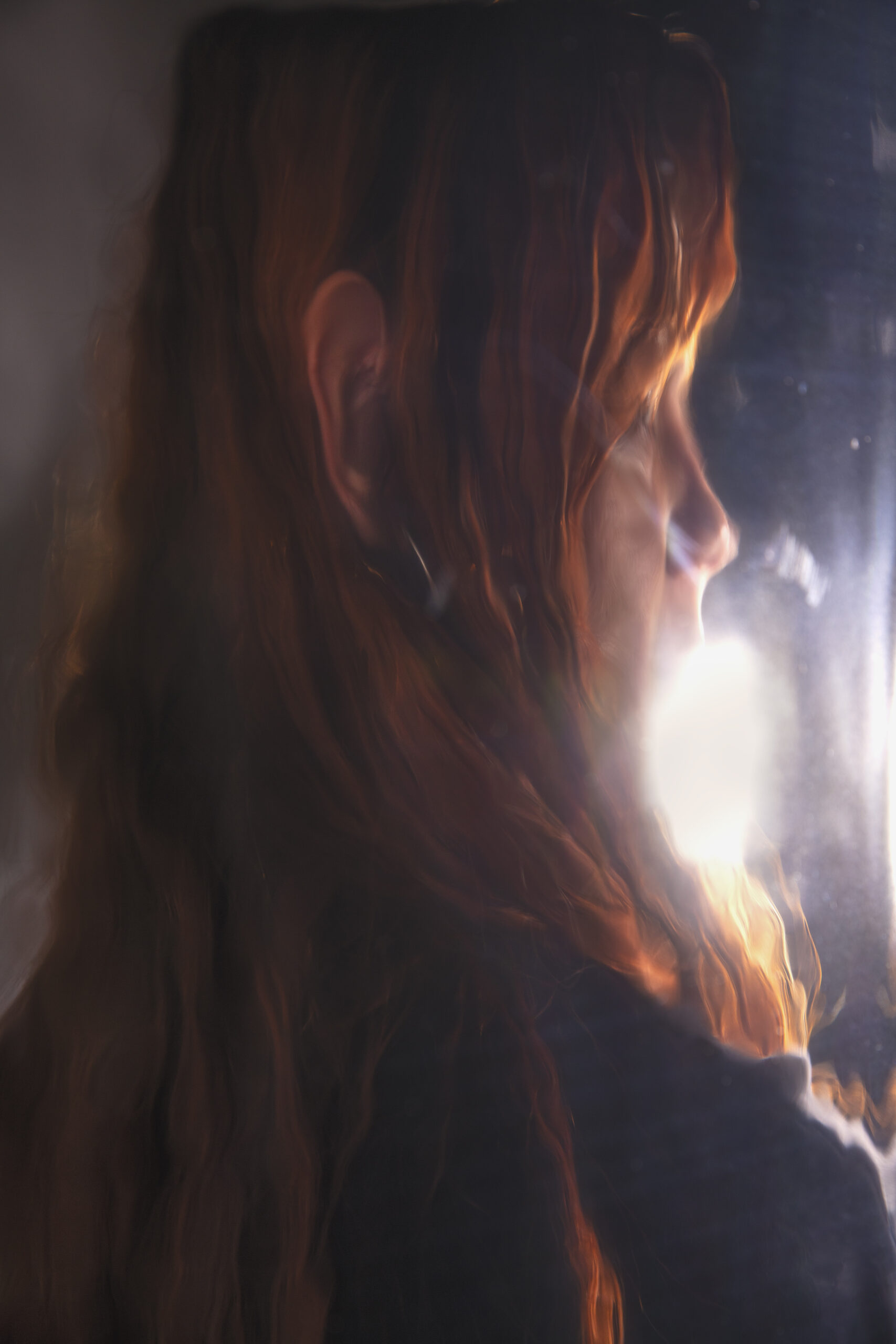
Photography by Sarah Liisborg
I can feel hints of this, especially in the songs where you sing in Spanish. Are there any pieces of media that shaped how you create?
Maybe MySpace. It was definitely the platform where I started discovering and exploring music on my own. I spent countless hours finding new music. I remember hearing Gang Gang Dance there for the first time.
The mention of MySpace transported me back to my emo days, haha. Anyways, something must be in the water at Rhythmic Music Conservatory to be churning out train-blazing artists, and your former classmates like Erika de Casier, ML Buch, and Astrid Sonne, who are currently taking over the alternative music scene in Denmark, not to mention your wondrous self. How was your experience at the conservatory, and what lessons or insights do you still find yourself coming back to from those school days?
One of the most important things I took with me from the conservatory was curiosity. The idea of trying things out and sometimes viewing the creative process as ongoing, rather than aiming for a specific result from the start. I also really enjoy working with self-limitations: something I learned from one of my teachers, Anders P. Jensen. For example, diving deep into a single theme, like polyrhythm, and building around that in a focused way.
I get it. Zooming in on one thing can also be liberating in a way. Let’s talk about your biggest project yet – your debut album “When You Wake Up”, written and composed while pregnant. In a way, you gave birth not one, but two babies – a deliverance of both body and mind. How did this experience influence your process of making the album?
I finished mixing the album on my own two weeks before my due date and sent it off for mastering. It was really important for me to have something concrete to focus on – I knew I had to complete it to be mentally prepared for motherhood. Being physically limited also shaped the process – I worked in short but very focused bursts.
Woow, finishing it off in two weeks before due date is insane. Kudos to you! In the past, you mentioned struggling to find fulfilment in the music that you put out. How do you resonate with your own sound these days, and what helps you stay grounded in your sense of self in moments of self-doubt?
I feel very calm and happy about the album I released last year. I think a good process can lead to a sense of peace about the final result. So now I really focus on creating environments and workflows where I feel happy and comfortable.
Your previous EPs are dreamy, featherly light and almost whimsical at times. In contrast, the album feels solid and wholly grounded. It made me feel like I was touching grass, both literally and metaphorically. Why is there a divergence in terms of sounds from your previous EPs? What aspect of yourself did you particularly want to reflect with this debut?
I wanted to make an album that gave more space for harmonies and melodies – the elements I trust the most in my composition process. I wanted to highlight the part of myself where I feel most secure. So I ended up making a record with a simpler, more organic production, using hand-played elements that weren’t locked to a grid. I wanted the music to breathe, to be alive – even if it wavered.
You’re often described as falling under art-pop/and synth pop. Do you feel like this is accurate? If not, how would you revise the description of your current sound?
I really like many different types of music. But, I do love a strong, present melody. At the same time, I’m also drawn to music that “demands” a bit more from the listener. So, I understand why terms like art-pop, experimental pop, or left-field pop are used to describe what I make.
Also, I missed your show at Rewire festival in the Hague earlier this spring! I believe this was your first show since November of last year. You’ve expressed some discomfort in the past regarding performing live. Despite this, you take the bull by its horns, and it’s so cool to see you blossom and take on more and more live performances. Has it been getting better? Any practices or rituals you have to get you into the headspace of performing for an audience?
It has definitely gotten better, but I still feel like I’m figuring out how to feel most at ease on stage. I’m someone who feels happiest in the process of creating and writing, rather than being at the centre of attention. Playing live with ML Buch helped me feel comfortable on stage. However, singing, playing, and connecting with an audience in my own project is very different from playing in someone else’s. I’m not particularly outgoing when I don’t know someone, but once I do, I really don’t hold anything back. So maybe I just need to keep playing until the stage feels familiar, like someone I know. Sometimes there’s a special energy in the crowd, a sense of gratitude for the music, and that really helps. Bene (drummer), Troels (guitarist), and I have started telling each other what we’re looking forward to before we go on stage. That helps too.
Friendship and collaboration seem to be an intrinsic part of your musical exploration. From collaborating with GB on “a new day” to your friend ML Buch featuring in the song ‘Organs’. What does collaboration mean to you, and how has your personal chemistry shaped the way you collaborate creatively?
It affects it in a very positive way. I can be quite productive, but only in short bursts, and I lose focus easily. So it really helps to work with people who know me and my mind well. It’s also important for me to feel a creative and aesthetic connection. When I started working with GB, we didn’t know each other very well, but I was very curious about his process because I adored his music. He was super inspiring to work with – really good at spotting those magical moments in one-takes that I might not have dared to use myself.
If you had to describe your music using only abstract descriptors, how would you do it?
Insistent echo-pillars in a dusty sunrise.
Vivid, and very fitting. Any recent peaks and highlights that have happened in your life recently?
I’m incredibly grateful that I’ve been able to make work and family life work together, even though it can be challenging at times.
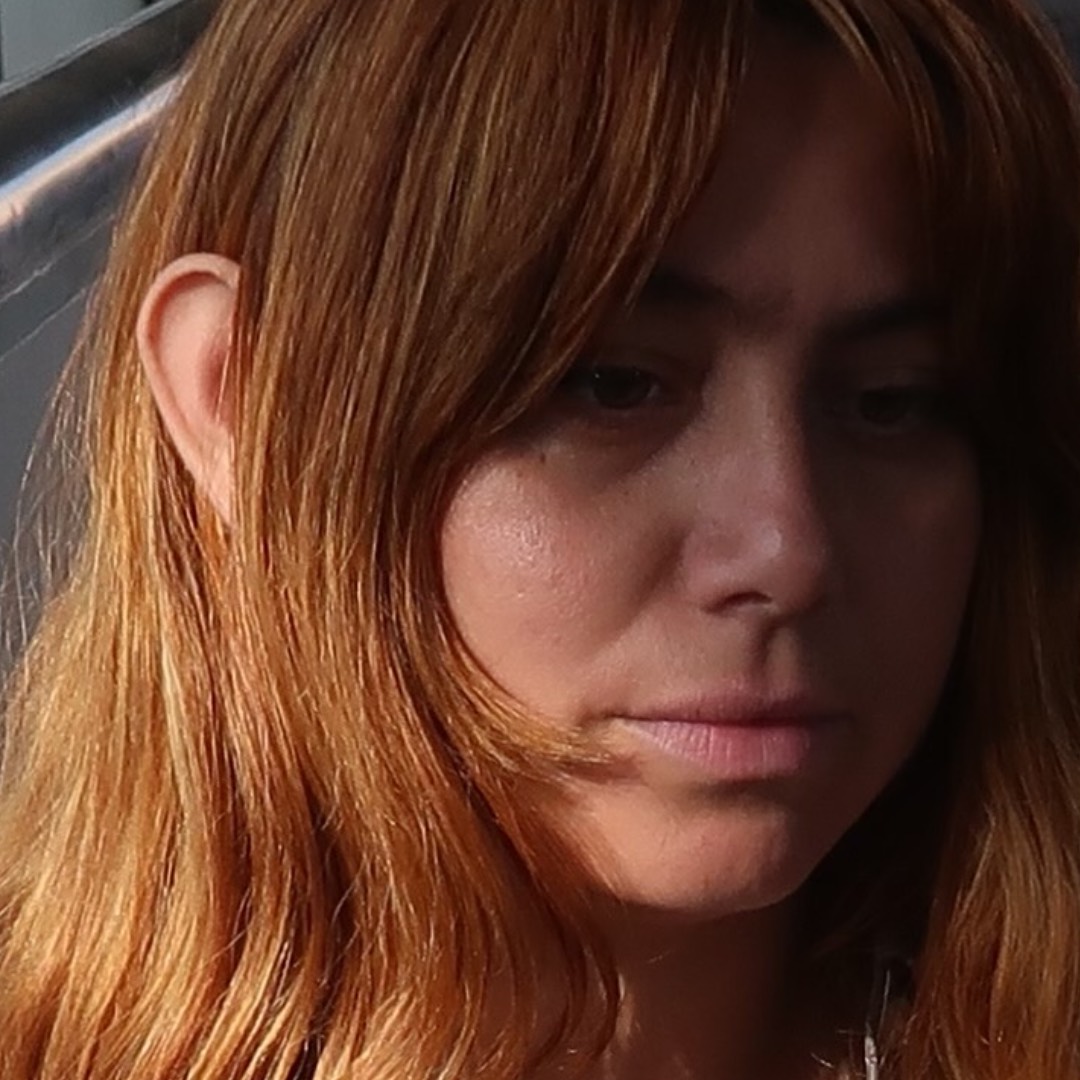
Photography by Nis Bysted
Here comes some rapid-fire, short questions! Favourite spots in Denmark?
Vestegnen: places like Albertslund and Høje Taastrup. I love the architecture out there – lots of concrete, worn-down grey buildings, but, at the same time, areas with old farms and houses. It’s also just 25 minutes outside of Copenhagen, so it’s a lot quieter with beautiful nature. I’m drawn to that contrast. I grew up there and spent a lot of time trying to get away, but now I actually miss it.
An album you’ve been playing on repeat?
Connectivity by Mahogany. I listened to it a lot as a teenager, and now it’s made its way back.
Dream collaboration?
Trish Keenan from Broadcast. She had such a gift for writing beautiful, clear, and direct melodies. I’m curious about what her way of thinking is in a process.
Favourite feeling in the world?
When I pick up my daughter from daycare.
That’s honestly so cuuute. To end this interview on a little teaser, if you will: What future projects should we keep an eye out for?
Right now, I’m in a phase of recording lots of sounds – percussion, guitars, and pan flutes – so I can start building a library of samples to play with. I’ve also been experimenting with my SPD drum sampler, using it to trigger guitar, bass, and drum sounds to shape new compositions and explore form in a more hands-on way. It’s a very playful and intuitive process, and I’m excited to see where it leads.
We’re excited to see what you’re gonna come up with next!
Words by Sharon Calistus
Photography by Nis Bysted and Sarah Liisborg