Meet the LA-based artist mapping emotional mazes with plexiglass, scroll-stained screenshots, and tender debris

How can you denote a feeling as being true and singular when each one sprouts from tangled networks — the architecture of ourselves, pressed against the informational gang-bang of the outside world? The LA-based painter (in the broadest sense of the word) Zoe Alameda doesn’t even try. She stacks cut-outs of emotionalities, personal mini-histories, scraps of life, forcing them into constant negotiation and near-presence. Inner states are formed in real time, through surfaces that beg to be touched while keeping the coldness of cement. Sensitivity is laminated onto hardness.
Zoe is a lucky girl, and she reminds us that maybe we are too. In a world this absurd, we might as well invent our own iconographical traditions. If your luck, or a cosmic message, appears in an esoterically fallen McDonald’s fry container or a deranged Hinge message, why not lean in? Signs and transmitters of faith and irony are always hovering over our shoulders (or under our feet) — temporary belief systems if we choose to notice. If the ground under our feet feels unstable, we might as well identify it and learn to walk on it. As patterns stack onto patterns, and feelings fold into feelings, Zoe invites us into her densely beautiful emotional swamps.
Lovely to be in touch <3 What’s been feeding you creatively lately?
I’m visiting New York right now. It’s freezing here. I just de-installed my solo show before I left LA and needed a break from making, so I came here. I’ve been feeling especially social these past few months, I need a beer and to stay up past my bedtime.
What state of mind usually pushes you to create?
I see my work in between a series of journal entries, self-portraits, as mirrors. I usually create from a mix of frustration and excitement — when I feel like I have to figure something out emotionally. I sit with a lot of unanswered questions while making. There’s a strong “just do” and “figure it out later” mentality in my process. A constant push and pull between control and release, intention and accident. Urgency feels important. It’s less about clarity and more about following a tension until it takes form.
And do you feel like that transports into the viewer? What feelings would you like your work to evoke?
I hope the tension translates. I want viewers to feel intimacy and distance at the same time. Contrasts heavily anchor my work — I find it hard to declare one single feeling as true.
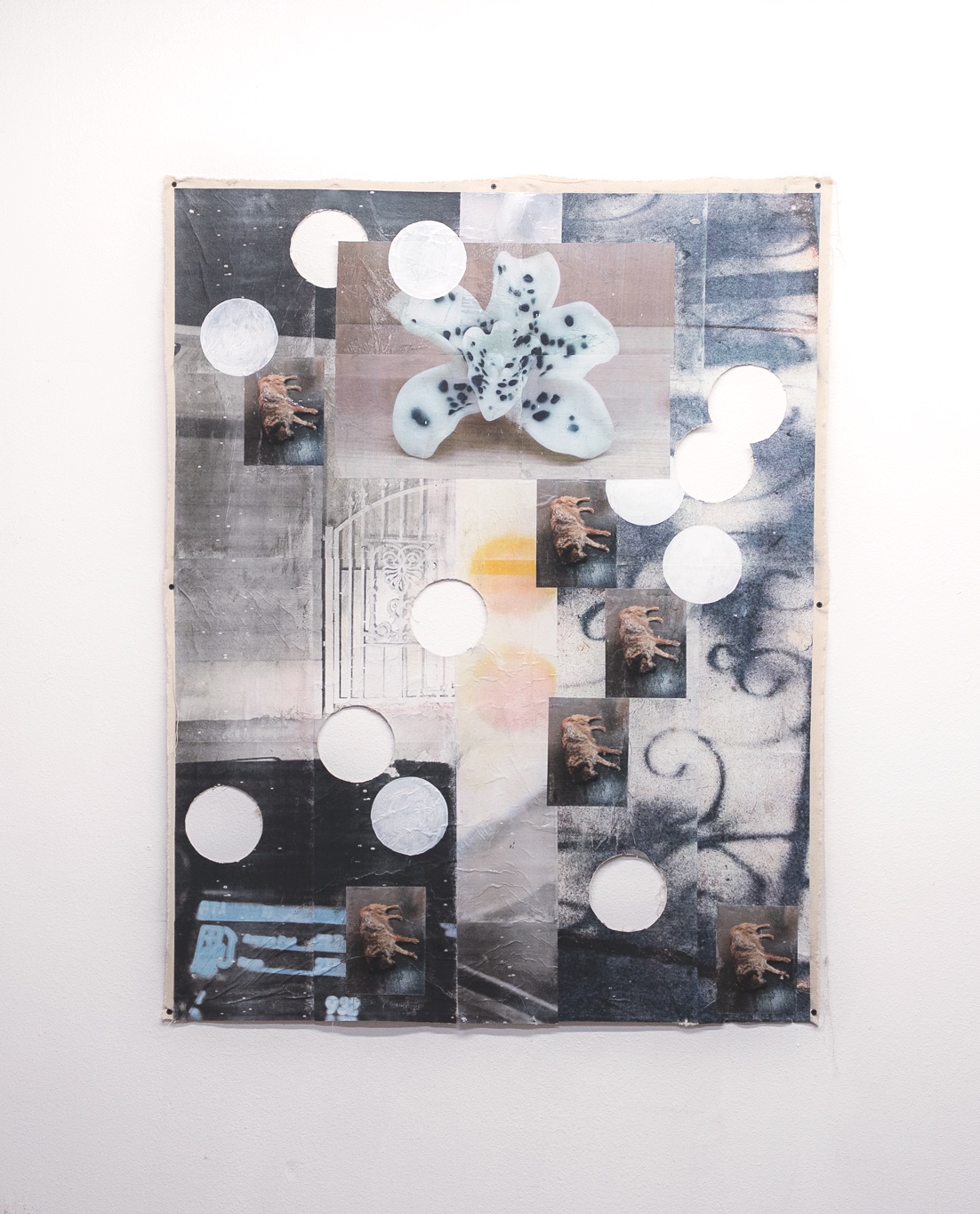
Soil Falling Over My Head
Can you tell me about the importance of materiality? I love your use of garbage bags or crocs, for instance — how do they find their way into your work?
There is a doubleness in the materials I gravitate towards. I want the surfaces of my work to suggest touch, so I lean towards material that feels bodily, skin-like, transparent, or fluid. Silicone, resin, tar gel, and plexiglass really conjure that for me. Without depicting the body directly, texture becomes a language for vulnerability. At the same time, I’m drawn to materials that feel distant or disposable. There’s something compelling to me about hard, industrial materials like cement or scrap wood — their weight, their rigidity, their implied strength. I think about what happens when these materials hold onto something tender or personal. And I like the idea of relocating found objects out of their original context into one that feels intimate. I stare at the ground a lot. Lately, I’ve been collecting Little Trees, McDonald’s fry containers, and bottlecaps. These items carry cultural memory, and when placed within my work, shift from something impersonal into something strangely personal.
You work with imagery found online as well as portrayals of your friends and daily life. How does your selection process go?
I’ve been trying to collect more from my immediate surroundings for recent work. Like taking pictures while driving or going on a walk. Or even screenshotting a funny Hinge message. Traveling is new for me. And being online is like traveling. I like the idea of looking for signs, the irony or faith in objects. Memories attached to something so simple like pan-fried eggs. Feeling lucky in spotting a four-leaf clover vinyl decal adhered to an old truck. I’ll squeeze the symbolism out of anything to make a moment feel more special. I have a folder in my camera roll titled “Pumpkin” where I add new images daily. I look to anything that feels sentimental, makes me laugh, makes me feel heavy. Sometimes I’ll pick an image just because. I’ll discover what these mean later. I try not to overthink this part. If I feel drawn by an image, whether emotionally or aesthetically, it will find its way into the work. The image will inevitably transform, as it will be imperfectly painted or reprinted, tiled, off-colour, out of context, reborn.
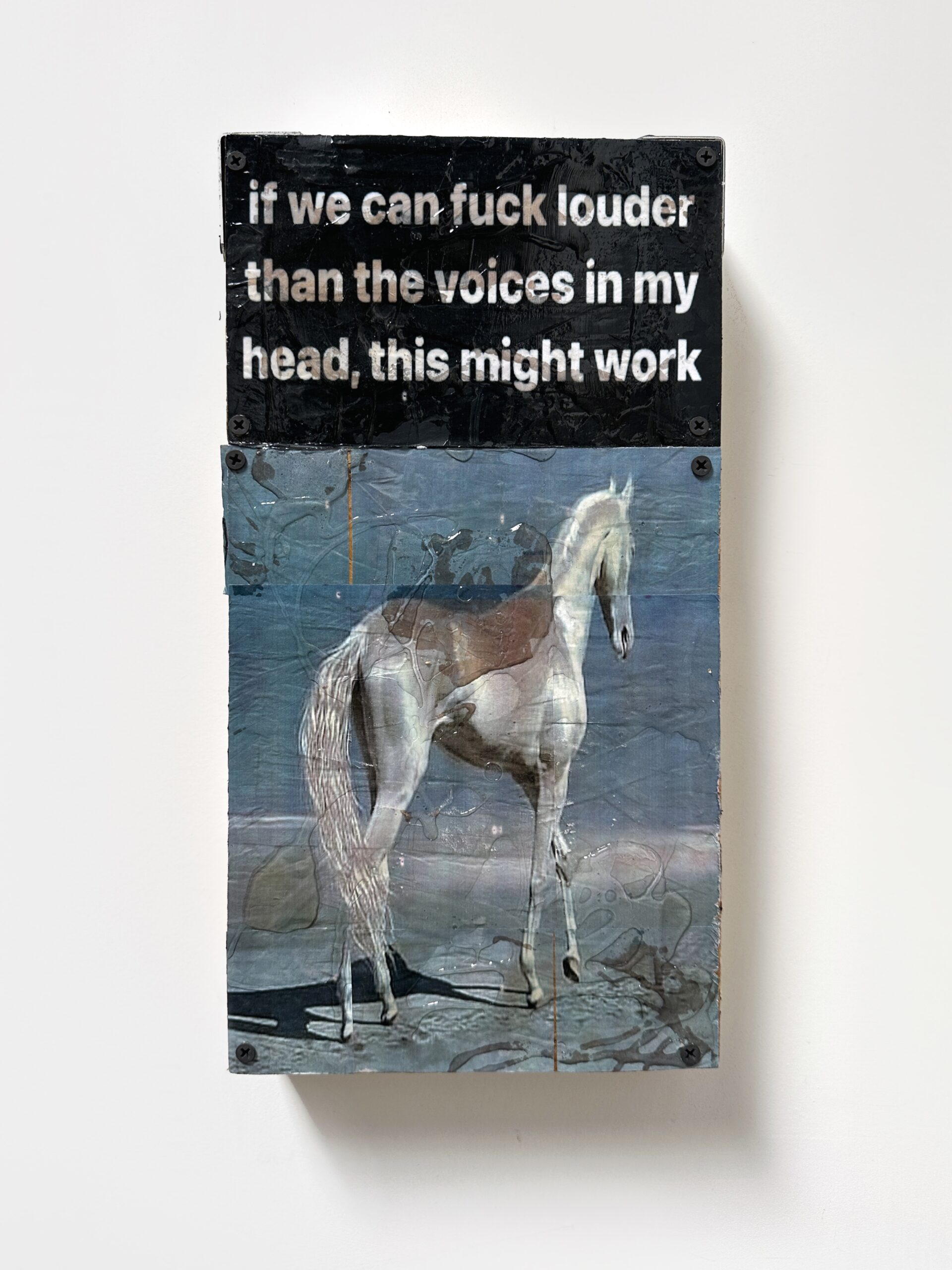
My Love
How does the notion of personhood come into your work? There are often abstract elements present in your work, such as hands or almost indistinguishable close-ups, which to me signify a certain human presence, but remain pretty impersonal. How do you use it as a space to explore identity?
I like that my work can feel almost vulnerable. Personhood comes through in my work through fragments. Images of skin, hands, and tattoos suggest a body without fully revealing one. These moments that want to be direct and honest, yet still hold a reflex to hide behind a mask as interrupting layers of images, materials and noise disrupt its singularity. But these layers also feel like an attempt at presence. Reveal and conceal — I think of identity in the same breath as something constantly shifting and negotiated, never entirely stable.
I really resonate with your work also as a chronically online girl in her 20s, and I’ve been thinking a lot about what shapes our taste as Gen Z. Your work is such a perfect translation of that mood to me – a certain sense of irony, dissociation, cryptic messaging, while still exhibiting a very palpable sensitivity and tenderness. What do you feel defines our generation? And where do you see your work within that?
Our generation is defined by contradiction. We want to embrace an authentic self. To allow oneself to be truly open and vulnerable. Deeply longing for connection, yet so burdened by endless distractions and short attention spans. I see my work sitting inside this tension. I want to see how irony and sincerity can coexist, to hold vulnerability in a tactile, physical way.
You describe your work as painting primarily, and I’d love to know how you expand the definition of what a painting can be (with ‘double-sided’ paintings, for example). Building on that, what possibilities within painting are you excited to push forward?
I think of painting as a loose term. It’s less about material and more about an engagement with surface. Painting as an object. Painting as an expression, an energy. My double-sided works come out of that. I want to reject a single frontal image. When both sides hold information, the work refuses a fixed point of view. It asks the viewer to move around it, to consider what’s visible and what’s hidden. Even without the use of paint, I still think in the language of painting. I’m interested in pushing against its assumed flatness. Letting it become tactile, layered, uncertain.
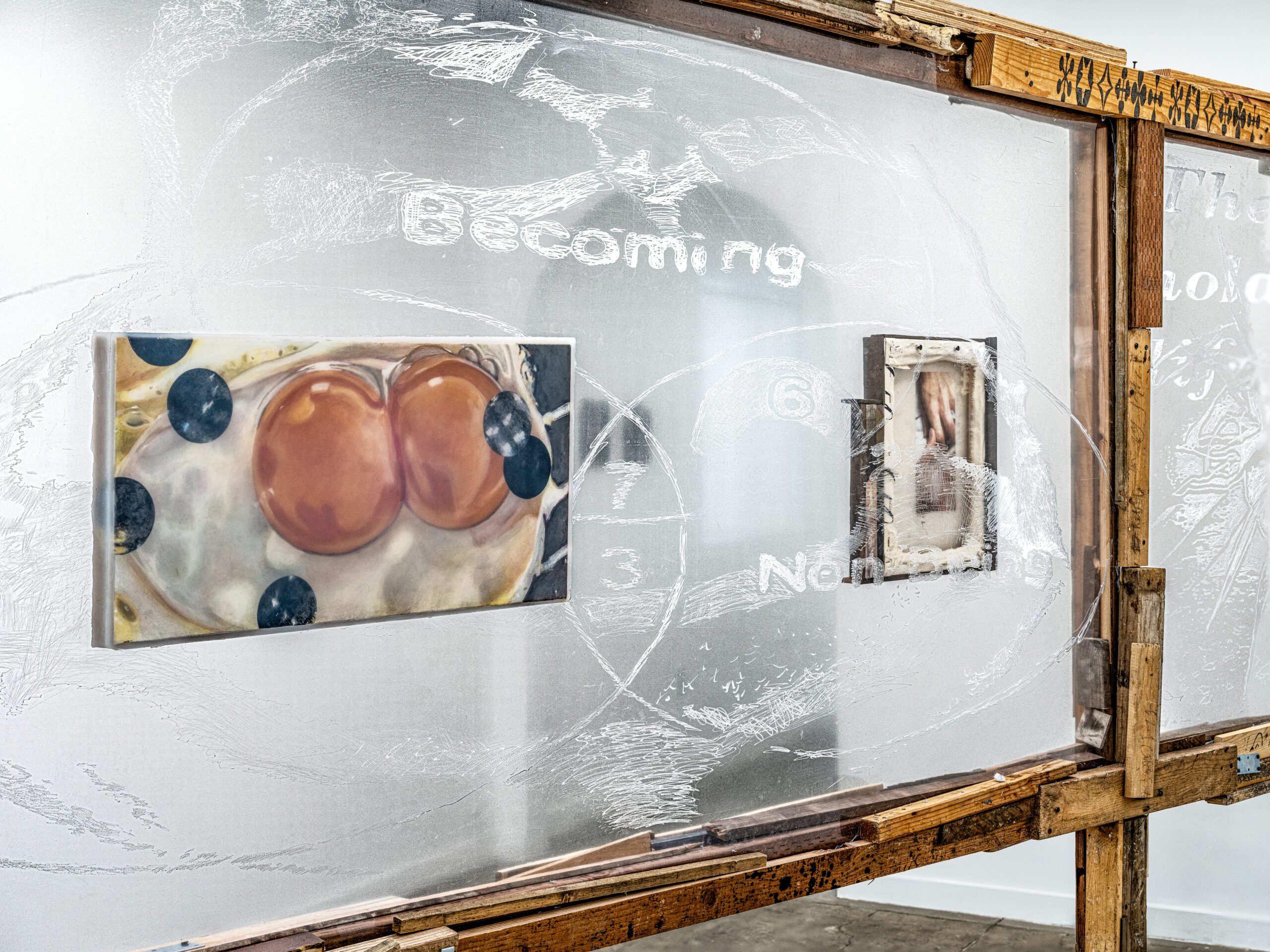
From Here On Out
Are there any other innovative ways in which painting is being reimagined that you see in the current artistic generation?
I’m a fan of airbrushed paintings, Liza Jo Eilers is killing it right now. And paintings where its object-ness and its entire installation are considered, like works by Lance Zuniga. Forever the biggest fan of my dear friend, Andrew Hunczak.
What has been a recent piece you made that challenged you, and why?
Painting for the first time in over a year brought forward a lot of frustration. I’m thinking specifically about Fold in Half So Easily (presence is a gift) and Laughing Makes It Worse, two acrylic paintings that I made for my solo show back in December. I got so used to the immediacy of printing, that painting almost felt unfamiliar. Slowing down to meticulously render forced me to spend so much time with myself, which was so uncomfortable. But I had to suck it up. Seeing a painting through is so rewarding. These ended up becoming two of my favorite works to date.
What have been some non-visual-art-related inspirations for you?
Cooking at home. Cameron Winter. Seeing my friends’ bands play on the weekends. Traveling abroad. Bar crawls.
Material, concept, or space you’re excited to explore?
Framing more paintings with silicone. Or pouring it directly on top of its surface. Tattooing that. And safely using power tools. Maybe getting back into bookmaking. A motel show…
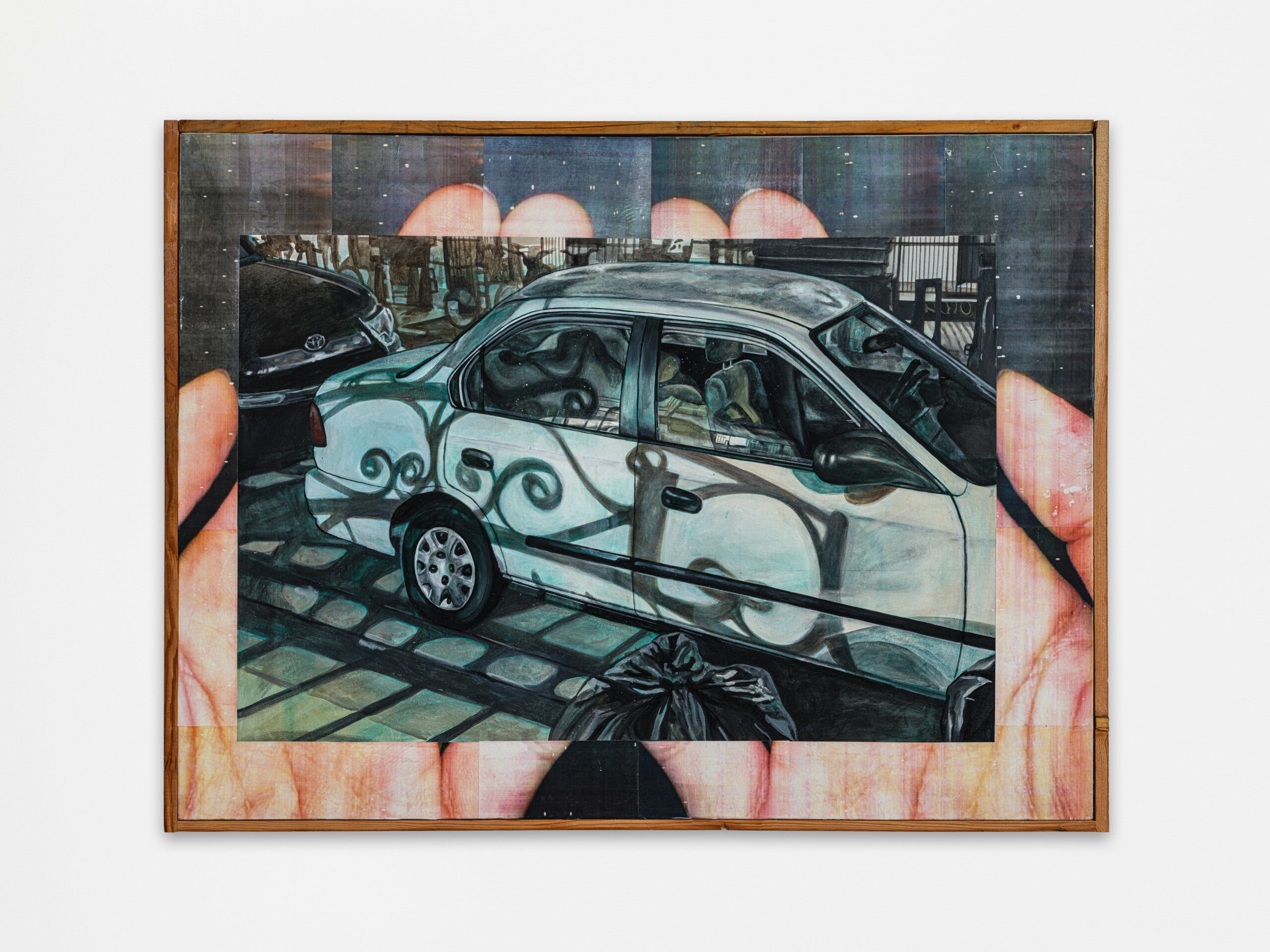
Fold in Half So Easily (presence is a gift)

Give It All My Love Drive Safe
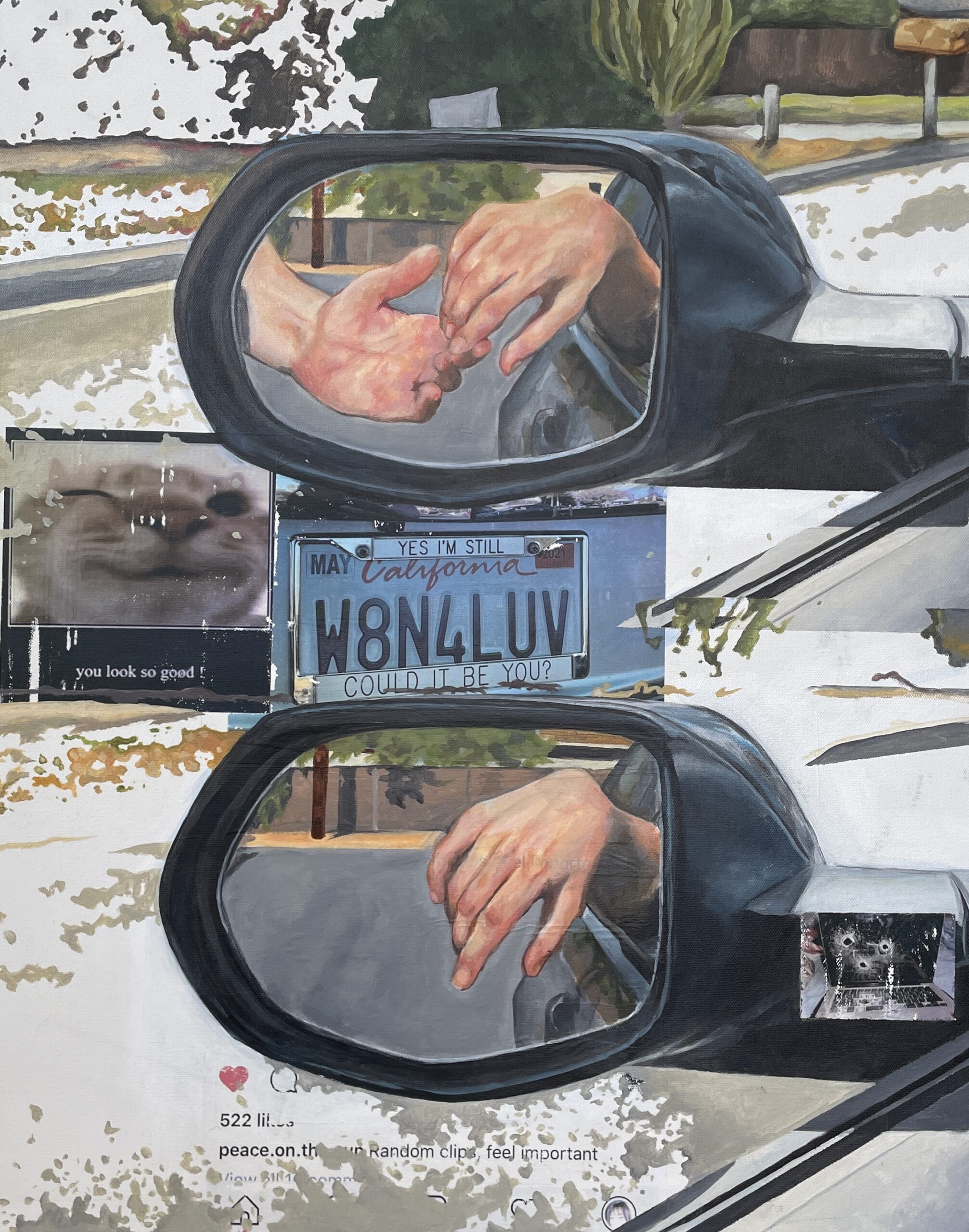
feel important
Images courtesy of the artist
Words by Evita Shrestha