STEROIDS
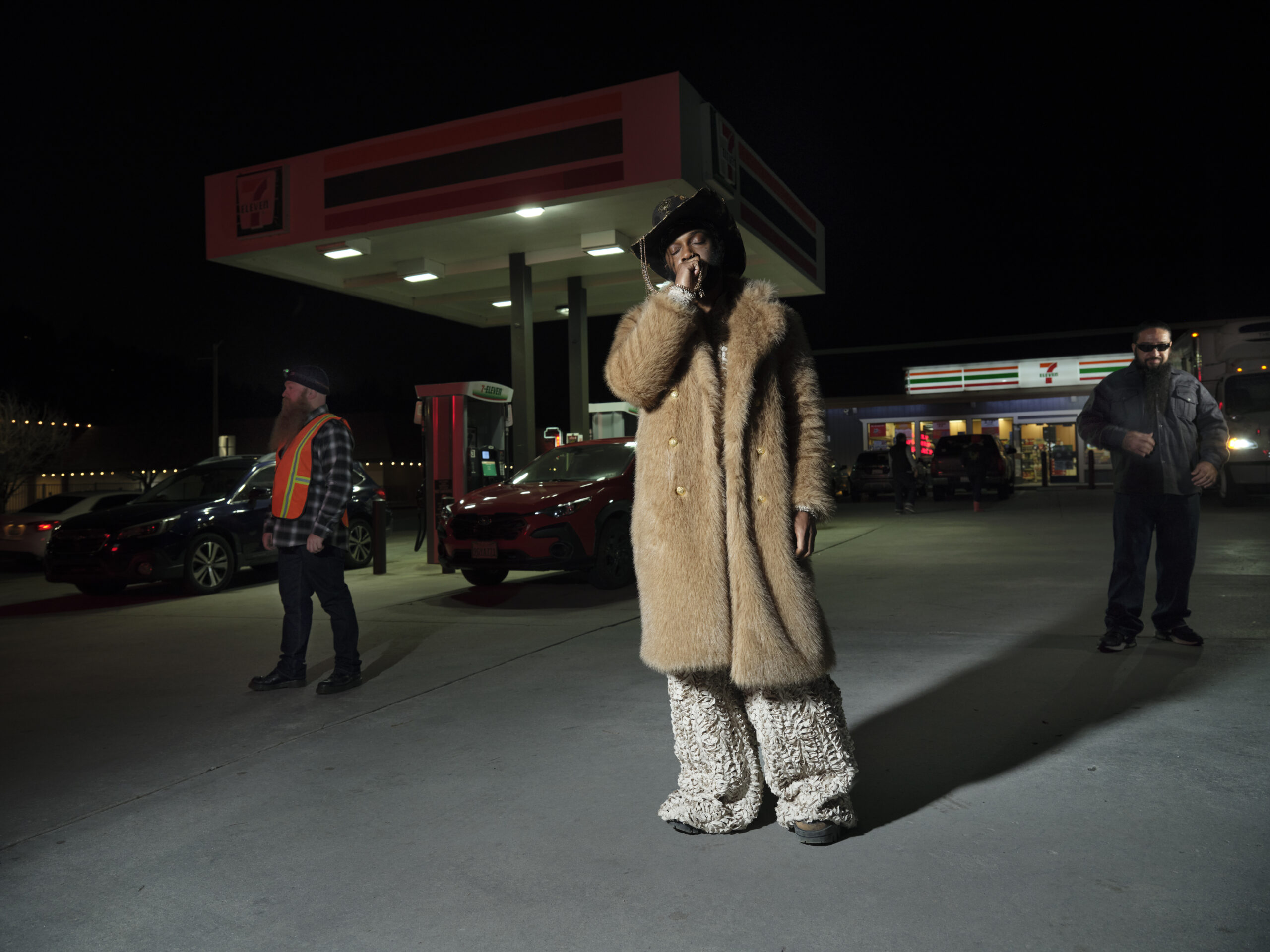
Top and pants TAAKK, coat FACONNER, hat SADIE JAMES
Sometimes confrontation is the only honest register left, and no one works that edge (sonically or otherwise) like JPEGMAFIA. His music is built on friction: metal riffs that scrape raw, drums that sound blown apart, tracks pushed to an overstimulated brink. It’s harsh, but every distortion feels placed, with his palette pulling far and wide, folding in everything from gospel swells to jazz fragments in a calculated harmony. Lyrics and track titles move in a similar fashion (I Just Killed A Cop Now I’m Horny might be our all-time fav). Given that mix, his work is often framed through irony, satire, and nihilism, but that feels more like a deflection than an understanding of its core. What he’s doing isn’t a resort to literary devices or a claim of a radical philosophical stance. The exaggeration, the absurdity, the violence — it’s already there. His work gets abstracted into hyperbole because it’s easier than admitting he’s not really transforming reality at all, just holding it up, unfiltered.
We speak to Peggy at the start of the year, in that strange stretch where a ‘fresh start’ slips quickly from hopeful to fictional. The backdrop: ICE raids are intensifying, Epstein files are bombarded onto us, atrocities sponsored by our tax money are projected on every screen. By the time we return to the interview, the world still doesn’t seem to be in a much better place. But JPEG is mid-rollout for Experimental Rap, throwing shade and picking fights like it’s part of the release strategy (which, at this point, surely it is). Not everyone likes how he plays it, but that’s not really the concern. He understands spectacle, and more importantly, how to bend it — turning the circus back on itself, monetising the very structures he’s critiquing, exposing the rot by staying just loud enough inside it. With music that continuously proves to deserve the bravado, he lands himself, again, at the centre of the culture he openly antagonises. In that spirit, we talk to the self-appointed agitator about nepo babies, resistance as privilege, spirituality, the death of journalism (well, we try), dictatorships, and what it means to operate inside systems that were never designed to fully let you win.
How are you doing today? What’s been on your mind?
Not much. I’m in another country right now, and I’m just trying to get some stuff done over here.
How has it been in LA? Witnessing the ICE crackdowns has been an insane experience.
It’s very interesting to me. I’ll just say what I need to say later, I guess. It’s very good that people are speaking up for that, but I’m not with the performative shit, so I don’t really have anything to say here because it’s not gonna do anything.
How do you separate what is performative and what is meaningful?
Most of this shit is performative, it’s pretty obvious. People are trying to weaponise other people’s trauma for their own little narratives. It’s all over the place. Most of the performative shit shows up with a camera on it so you can see it from afar.
Do you ever see a level of performativity in your own practice?
Mmm, well, I talk about what I’m affected by, so it’s easy for me to talk about it. If I was removed from it or in some kind of privileged situation, I’d probably have to make it up or something. Talking about things in this era, there always seems to be an ulterior motive behind things. But for me, I was born in the 80s, I’m black, and I grew up in America. That’s enough said.
Fair enough. You’ve previously said that hip-hop has become a conservative genre. Do you feel like parts of it have lost their original resistance when it comes to these political topics?
Yeah, all of it. Where is the resistance? You tell me. If you can name someone who’s resisting right now, let me know.
Do you feel like you’re resisting?
I resist naturally. I’ve been resisting before I got into the music industry, and I’ve continued to resist. That’s why people react to me the way they do. It’s not because I get on Twitter and lie. It’s because I’m fucking blaring out the truth. Like I said, I’m black in America, so I resist by existing. And if I don’t resist, someone will make me resist. I don’t really have a choice. When you have a choice, yeah, you can think things like, ‘Am I resisting? Am I not?’ If I wake up tomorrow and I don’t feel like resisting, I’m going to get resisted.
So why do you feel there is a lack of resistance on the scene? There are obviously things to resist still, and a lot of issues hip-hop dealt with in the 90s are still concerningly prevalent today.
Because hip-hop, music in general, has been infiltrated and run by nepo baby kids. If you want me to tell the God-honest truth, it’s because we have people planted by labels to look organic and they don’t have shit to say. Because they’ve never been through shit. So they just log in on the internet and do goofy shit all day until something sticks. They will never talk about something that actually affects people. They can’t because they’re not fucking people. They grew up like rich people. I grew up poor and got rich. It’s different. We used to have NWA, Schoolie D., Grandmaster Flash. There was an era when hip-hop was completely political. In the early 90s, Public Enemy was making it into movies and stuff. It’s not like that now.
Do you see any hope in the underground scene, though? I feel like there are quite a few people speaking out right now.
A hundred percent. I think there are plenty of people like that, and there will always be a swing back in culture. There was Obama, and everybody was very happy that he got in. And what happened right after? Trump, Trump, Trump, Trump, Trump. Like with the ‘Me Too’ movement. And then what happened? Most people are very incel-coded now. Everything swings back. I guess I’m just old enough to have seen it. When you’re younger, you’re like, ‘What the fuck is going on?’ But for me, I’ve seen this shit happen 80 times already.
I haven’t been able to sleep for about a week because every time I open my phone for a night scroll, I go on these crazy rabbit holes of the Epstein files.
I love it. I love the Epstein files. You know what my favorite part about the Epstein files is?
Tell me.
When somebody you know is in it that you like, all of a sudden it’s like, ‘Nah, there’s a reason why they’re not in that. What? What? There’s no. Nah, this is… It was anonymous. What? No, it wasn’t real. No, okay.’
Was there anyone you were surprised or disappointed to see?
There was like a billion people that I’m surprised to see. Some people were just mentioned. But disappointed? Fuck no. I’m in the music industry. I expect nothing from these people but betrayal and hatred. Am I surprised that people who have been rich for a long ass time and don’t know any other way are doing weird shit? Hell no. [laughs] That’s the least surprising shit in the world. But am I rigorously entertained watching people try to dodge and scapegoat accountability? Nothing makes me laugh harder.
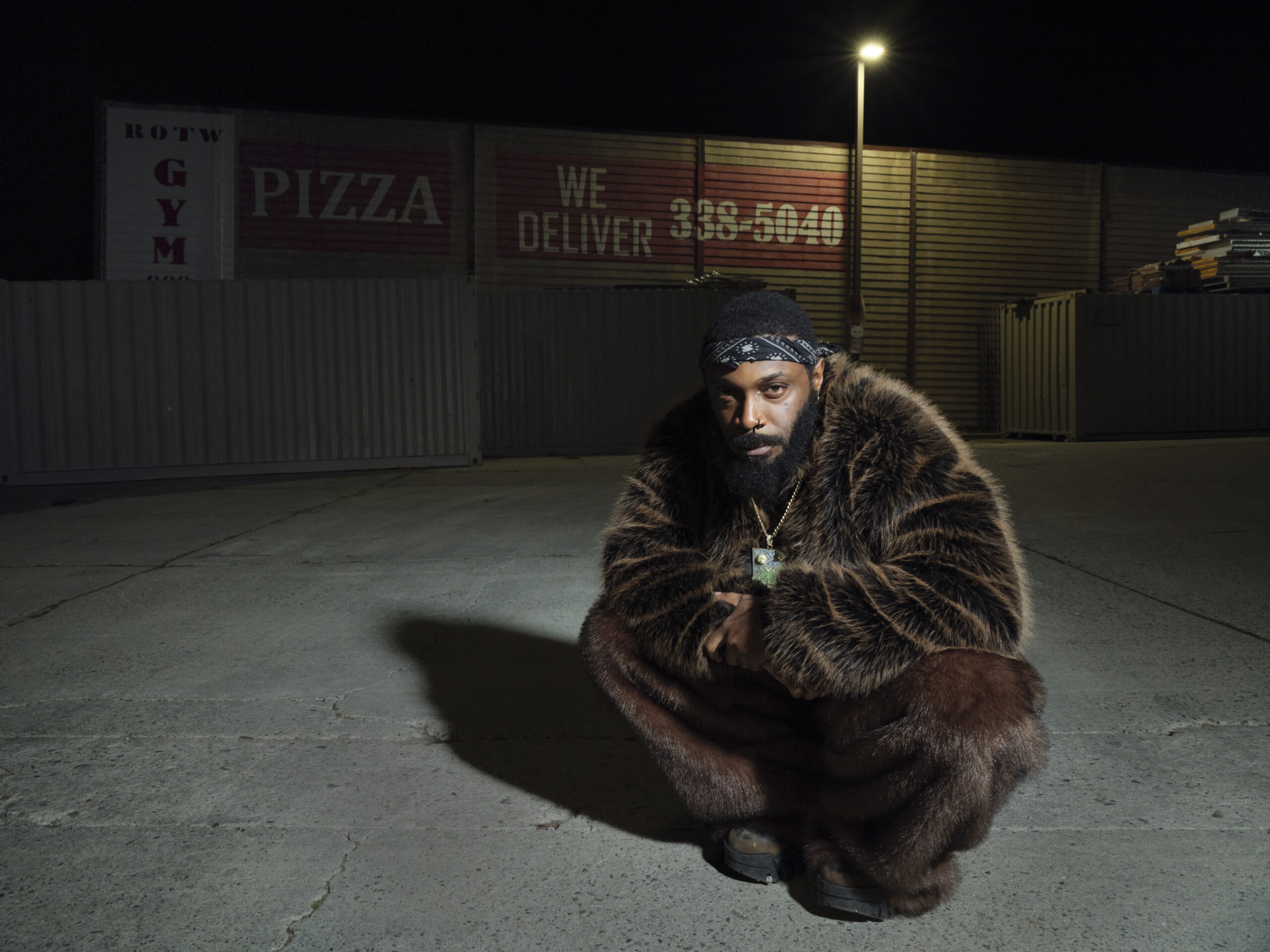
Full look artist’s own
How has it been navigating the industry, being so outspoken? Have you ever been met with hate or some form of suppression?
Yeah. I mean, I’ve been talking about the same thing since I got into the music industry… white supremacy. I haven’t changed what I’m saying at all. As a matter of fact, it’s very funny watching everyone like… twist their backstories. The only person that ain’t changed is me. What I’ve said has not changed once, but it’s really funny watching people pretend I am doing something different from what I was the entire time. [laughs] Like, cause I’m old enough to have seen people phase out and come back in and keep lying. So it’s like, whatever.
Can you give me an example?
I can’t think of one off the top of my head. Because it’s all for promotional use, so I just burn after reading it. I think I said something about Jill Stein once, people came out of the woodwork saying, ‘Well, fuck you, n—, that’s why you fuck white girls, you punk ass bitch.’ And I’m just like, okay, whatever makes you feel better. It’s not really vocal suppression, it’s more people taking your words and trying to twist them. So they can character assassinate you and make you seem as close to some bullshit they made up in their head. But do I feel suppressed? Fuck no. But that’s just me. I don’t let myself be suppressed. Nobody’s going to suppress me. They can feel like they are suppressing me. But there’s a difference between someone feeling some shit and reality.
You’re known to be very blunt and loudmouthed. What are some of the quieter parts of yourselves that people don’t really notice?
Yeah, the parts when I go to protests, donate, or help people, or get them out of bad situations. The shit I don’t post about online — because I don’t need the dick-riding from it. I’d rather just get personal satisfaction in order to help a friend in need or help somebody out with something. So the quieter parts of me are actually very loud, but I’d rather keep them that way.
Let’s get into your music. The title of your latest album, I LAY DOWN MY LIFE FOR YOU, feels like it connotes a certain vulnerability and devotion. What does it mean for you to lay down your life right now?
It’s putting your all into something, and dedicating your life to it by giving it away in an unselfish way. The title is meant to be interpreted, it’s not really directed at anything in particular. When I make music, I don’t watch how others make it. I actually watch athletes — people training, boxers sparring, basketballers shooting. There’s a level of dedication and respect for the craft that you don’t see as much in the music industry. Now it’s not cool to try hard, it’s cool to just be good at something and be nonchalant about it. I really respect and love hard work. It’s very interesting for someone to come out of this iPad baby generation and be like, ‘I laid out my life for anything,’ because most people can’t even pay attention to something for more than two seconds.
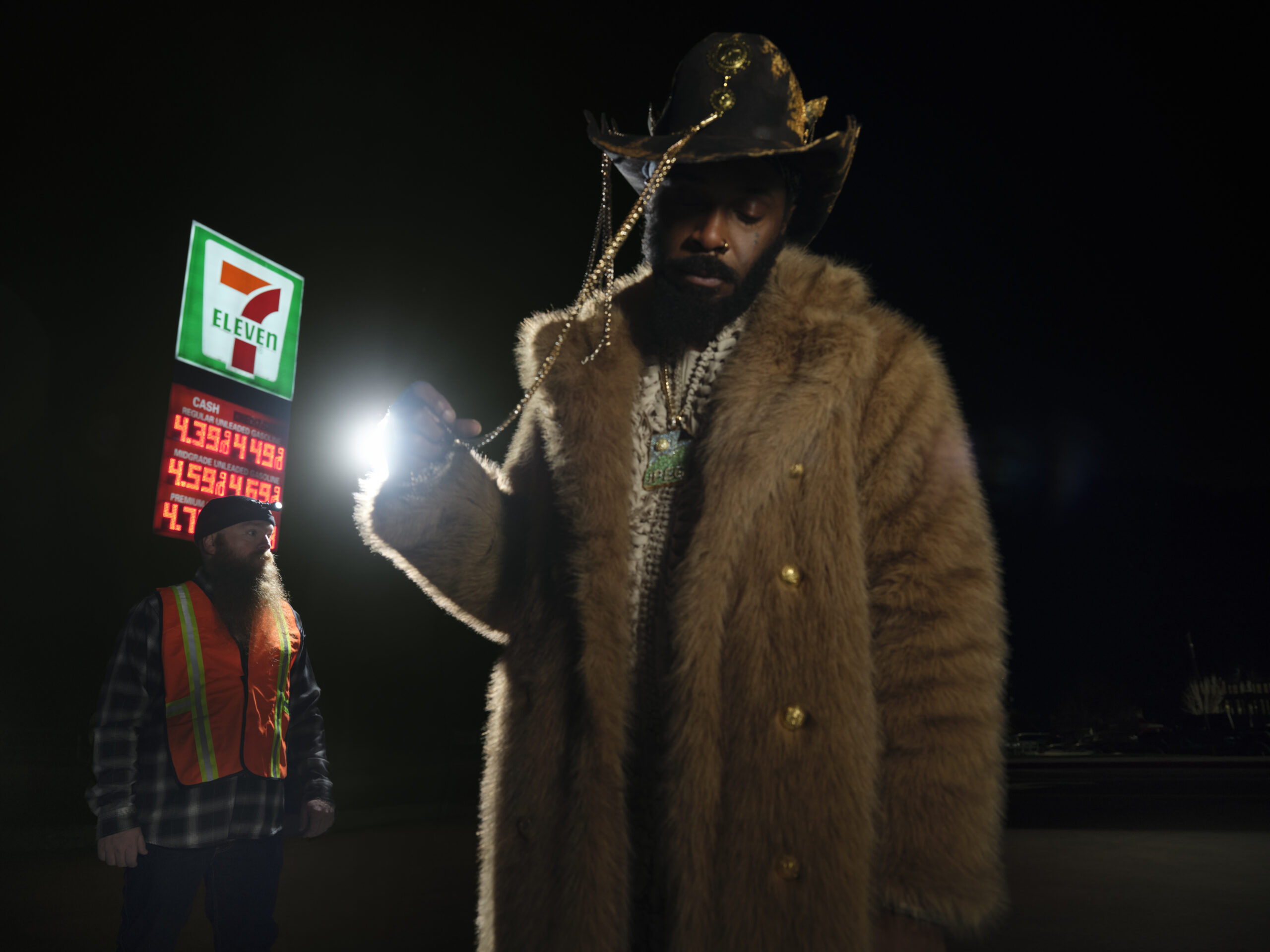
I’m curious about the role of irony and nihilism in your work, these terms get thrown around a lot in relation to your music. Do you even see your approach as that?
There’s nothing ironic about a black man talking about black issues, other than people’s own projection. And again, whatever people want to say, that’s on them, not on me.
But nihilism? No. Am I nihilist, do I feel like that? No, because — again — I’m black. If I’m nihilistic, it’s because I’ve grown up in a place that’s made me like that. It’s like in the DSM-5 [psychological diagnostic manual], you now have to include socioeconomic backgrounds, because you can’t just go into the hood and diagnose a black kid with the trauma they can’t help undergoing. So I don’t really feel like I’m nihilistic, but if somebody removed my blackness from the context, I can understand why they would think I’m ironic and nihilistic. But I’m just talking about my life. It’s hard to understand racism — things that don’t make sense. It was hard for me to understand it when I was a kid, but I’m 36 now, and I don’t struggle to understand it, I just weaponise it and monetise it.
I know it was a long time ago, but I wanted to ask you about your time in the US Air Force. How did that come about?
Back in the day, the ROTC [Reserve Officer Training Corps] would go to these poor neighborhoods, and they’d be like, ‘Hey, do you wanna join the military? Because you’re not doing anything anyway.’ It’s like military school. So, that’s basically how it went.
What happened? You got honourably discharged, right?
Yeah, luckily. It’s interesting because a lot of the music I made earlier in my life was made under a different name around that time. When I first got into the industry, I purposely didn’t talk about the military stuff, because I didn’t want to. But originally, it held me back from pursuing things that other artists got to do.
What was that experience like?
I mean, yeah, it’s pretty rotten. But for somebody who’s in it for reasons out of their control, what else was I supposed to be doing? When I’m in there, I do what I need to do, and then I’m out. I don’t really think of it. The army will try to brainwash you, but it doesn’t work on people who have a strong will. I walked in there, knowing what I was doing. I just got out of there before I think they had time to really put into my head that I need the army and all this shit. That hasn’t changed, though — people are still constantly telling me what I need.
I guess that will never go away. You were making music under Devon Hendryx then, right? Do you see JPEGMAFIA and Devon Hendryx as different alter egos, or do they inform each other somehow?That was a time in my life when I was in a bad situation, and I was trying to get the art out. I don’t really think of it any deeper than that. Do they inform one another? No, it’s a dead thing. I appreciate the appreciation in post, though. In real time, nobody cared. [soft laugh]
And what can you tell us about your upcoming work?
Everything that I make going forward is going to be from a different perspective. I’ve completed the part of my career where I’ve collected the data, I’ve done what I need to do, and now I’m going to regurgitate what I’ve seen and take it to the next level.
What does it mean for you to take it to the next level?
I said this before, but it was in an interview that I got viciously misquoted in. It’s steroids. I feel like steroids is the best way I can describe it. Roids. Like when you take steroids, it just enhances your hard work. So that’s what this is. It’s roids.
How did you get misquoted?
I can’t even tell you. It read as if I’m doing steroids. I’m not doing steroids, but I want to make music that’s like steroids. And I said something about [inaudible]. And then they were like, ‘The legendary basketball player, Barry Bonds.’ And I’m like, ‘I don’t even know who the fuck this is? ‘ I’m not even talking about basketball, motherfucker. I guess whoever transcribed it didn’t understand what I was talking about in general, so they just kind of put whatever.
AI transcribed it.
That’s it!
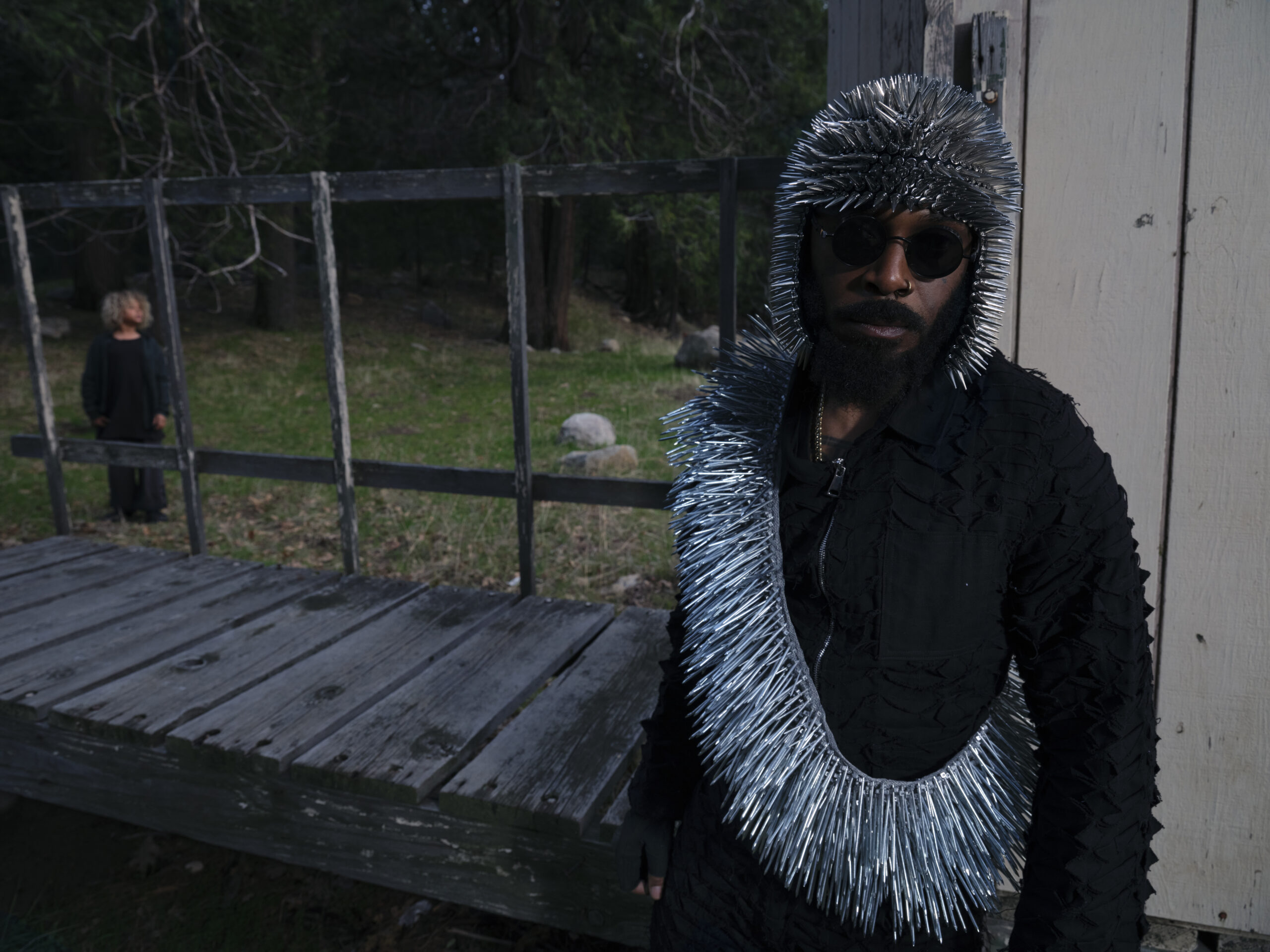
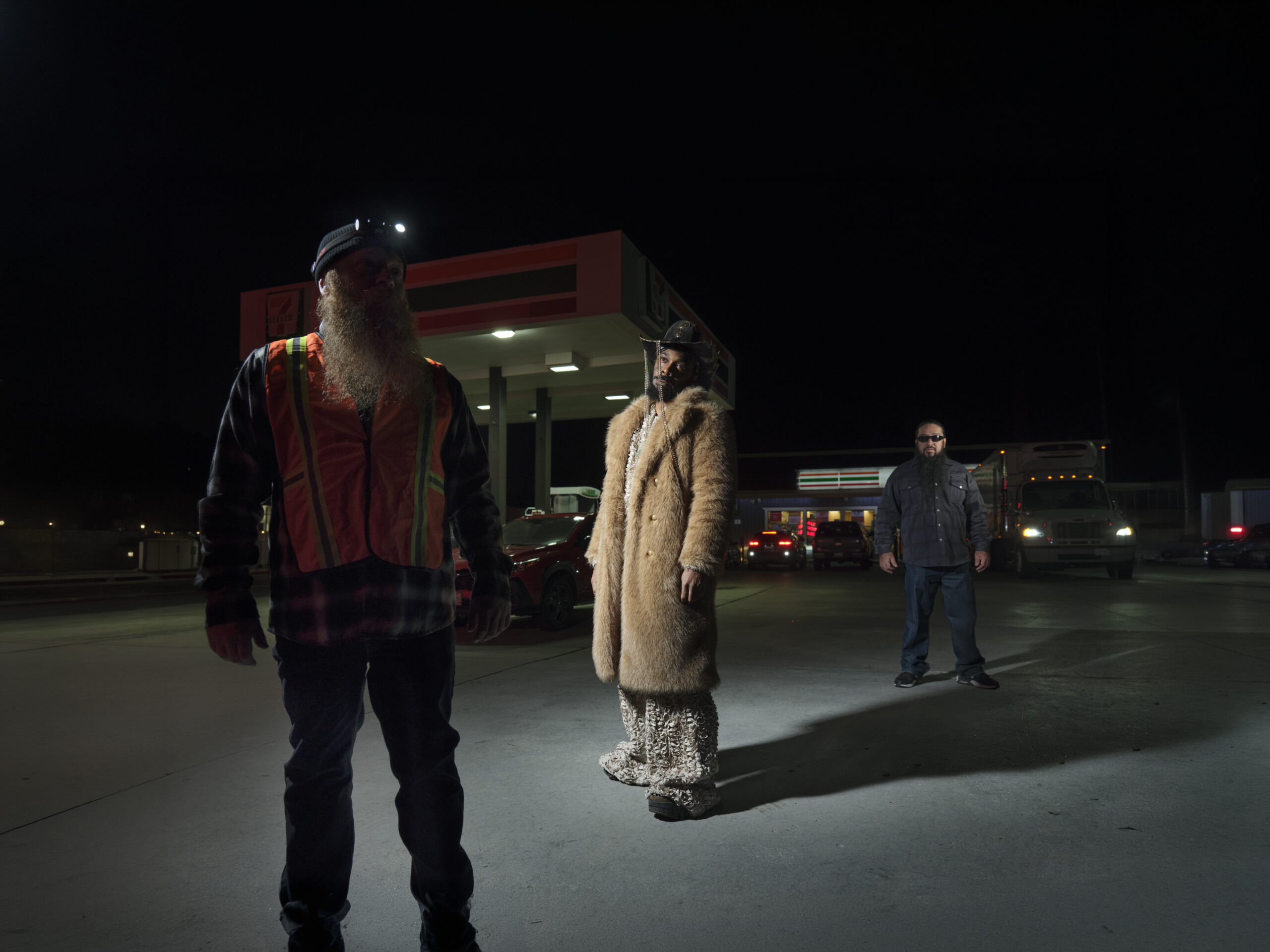
Full look OBSCURANT, headpiece THE RESIDENCY EXPERIENCE, scarf LIABA
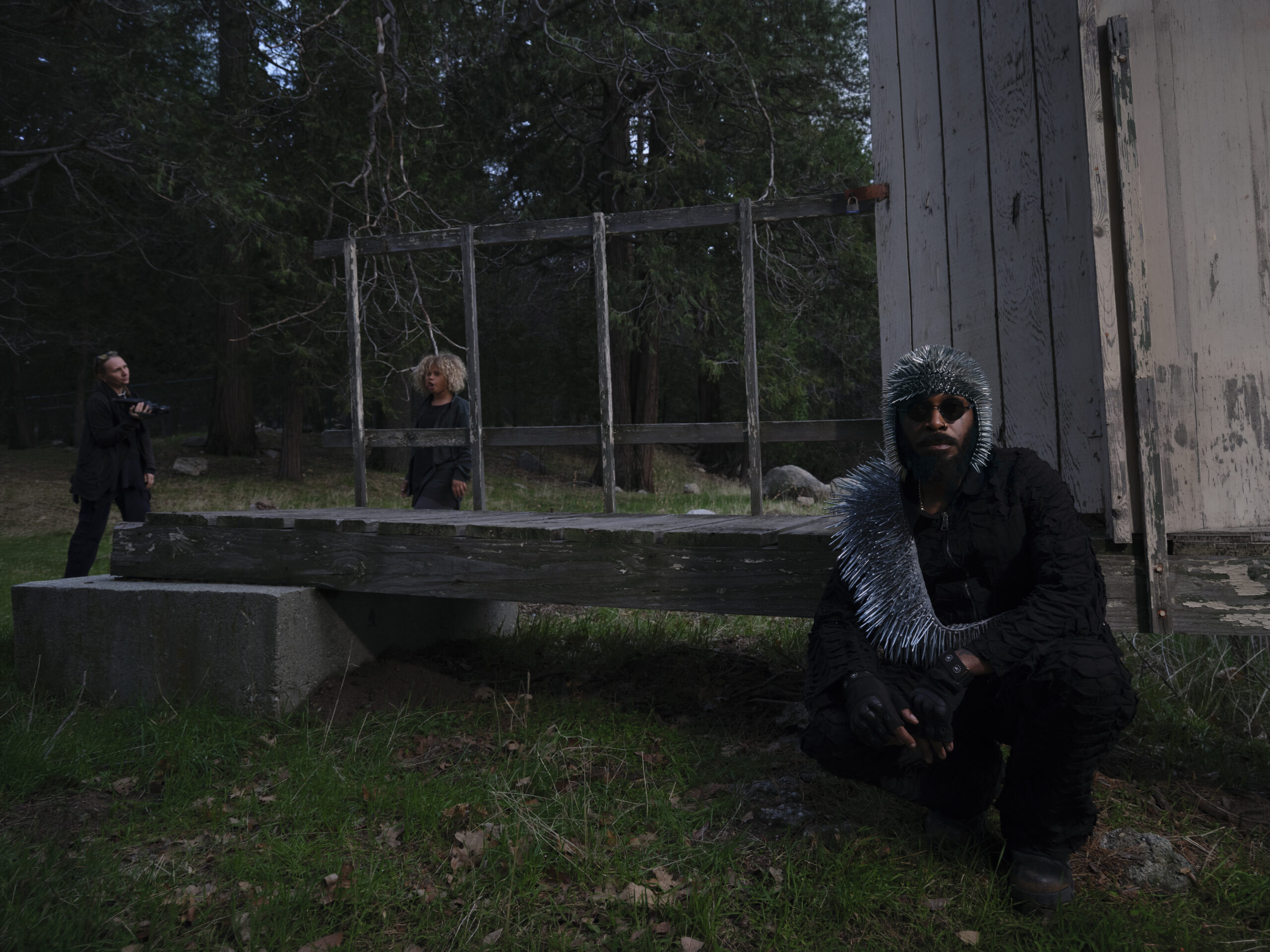
shoes DR. MARTENS
I also read that you studied music journalism briefly. Do you feel like it still impacts how you understand music or the way you observe culture generally?
Mmm, no. I wanted to do music journalism because I love music and I wanted to talk about it, if I couldn’t make it. Now, listen, you’re a music journalist, so I’ll keep it tame here.
Hm? I can take it.
I don’t think you want that.
No, please. Shoot.
There’s been people in music journalism who have tanked the shit out of it. Not all journalists are like this, but the ones that are really out there and in the front, they don’t really represent music journalism well. If there were more respect shown to artists, I feel like there are certain publications that would still be alive, but I guess they just died by the sword.
No, I agree. It’s a pretty backwards industry, but we try. I also wanted to talk to you about your representation of masculinity. I feel like your practice tends to lean away from traditional masculinity that is more associated with hip-hop specifically. Do you see your practice aiming at dismantling that?
I’m not doing that specifically, but indirectly, yes. I don’t subject myself to most masculine boundaries. That’s why I attack it so much, because I just don’t give a fuck. I guess I’m secure enough with myself not to care. People who aren’t secure enough with themselves, they need to defend it like it’s dying — masculinity will never die. But in order for it to die, it probably has to kill itself or be fucking nuked or something. But I’m not participating in masculinity because that would mean that I have to stand next to men that I don’t like, so I’m just over here doing my thing. I’ve never felt the need to come out and explain anything.
I wanted to ask you this earlier, but the question that often seems to come back is whether we aim to dismantle the system completely, or do we learn how to profit off of it. How do you reconcile monetising systems that oppress us?
It depends on the individual. I’m profiting off and monetising racism. And I’ve been doing that since at least 2015. I’m not profiting and monetising off of anything going on currently, not that I know of. Racism, though, 100%. I was doing that before I even got into the music industry. But it’s just all up to the individual. If you’re born into some shit, then it depends on what you do with it. If you sit around thinking like, ‘Oh shit, I’m fucking contributing to this by just existing and shit,’ you’ll never get anything done. With my new stuff, there’s going to be a switch in the way I operate with this music; it has to be… I can’t think of the word. More just dead-eyed. I need to be more tunnel-visioned with what I’m trying to do. Some things go over people’s heads sometimes.
As in, you’ll make it more straightforward or…?
You can either make it easy to understand or you can yell louder.
And what’s your pathway?
No clue. We shall see. I don’t really know right now, but like, it just depends. But yeah, you can tone it down. You can keep it the same, or you can turn it up.
Music-wise, are there any genres or any sonic territories that you’re feeling more drawn to in your next album?
Rap. And a lot of gospel. That’s what I’ve been mostly consuming. I grew up in church, so it’s a very rooted experience for me to launch everything from it. But am I spiritual, in the sense that I believe? Yeah, but I’m not like a super religious person. Music just makes me feel like I’m a child again. And I’m old, so I value that.
And what does spirituality mean to you?
I’ve been interacting with it in the same way since I was a child. I’ve just removed it from its context. I don’t feel the need to be part of anything. I’m not part of anything in rap. I’m not in any group. I have a group, but it’s my group. It’s more like a dictatorship than just a group. It’s not really like a group like Brockhampton is a group.
A dictatorship?
A hundred percent. You have no voice here. While you’re working for me, my word goes.
What kind of dictator are you?
A fair one.
Is there such a thing?
[laughs] In my world, there is, but it’s all relative. Muammar Gaddafi had an all-female bodyguard squad. Does that make him progressive? He’s still a dictator, right? It’s all relative. I feel like I’m fair.
This is going to get misquoted so bad.
I can’t wait. Literally, I cannot wait.
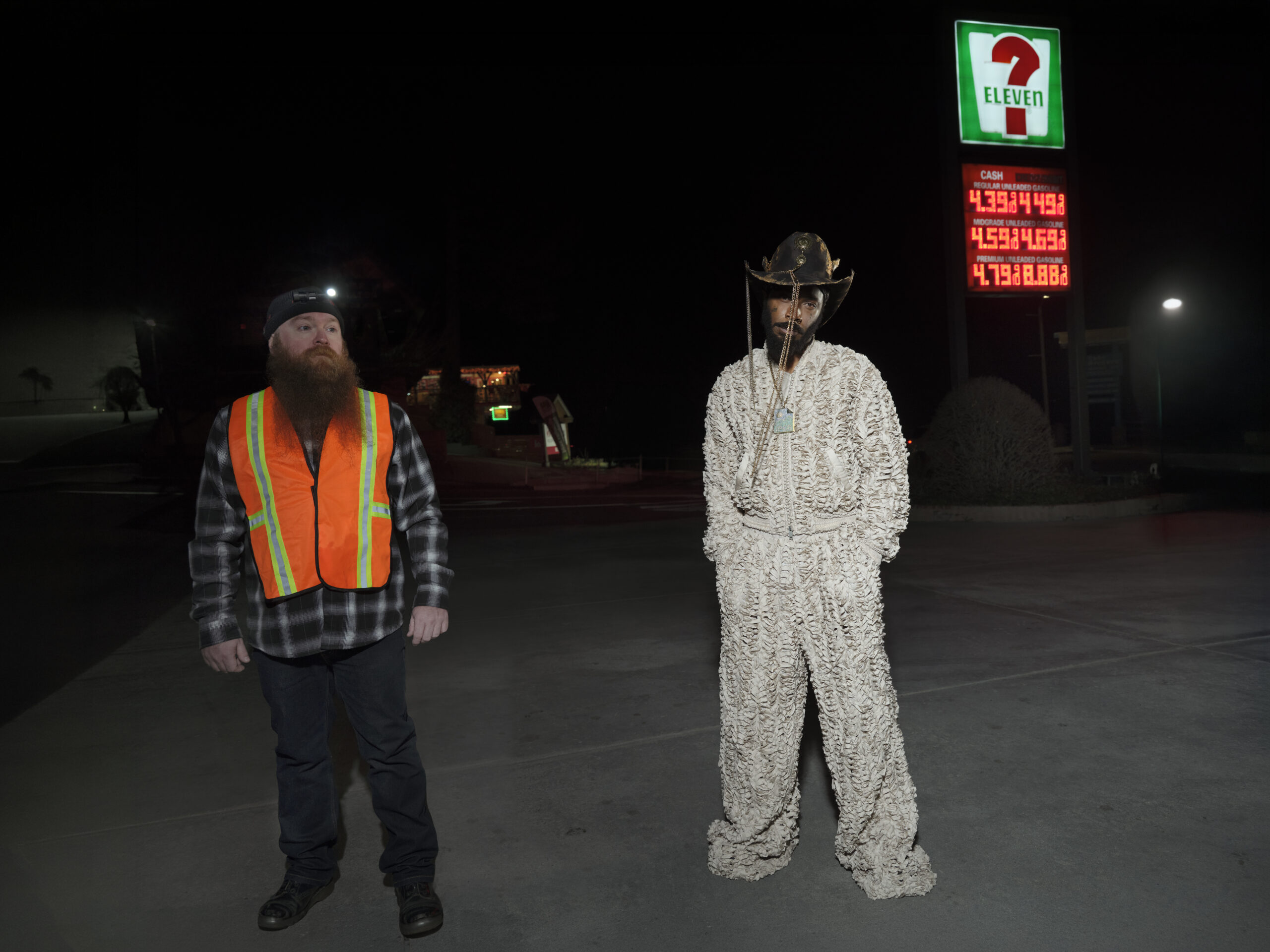
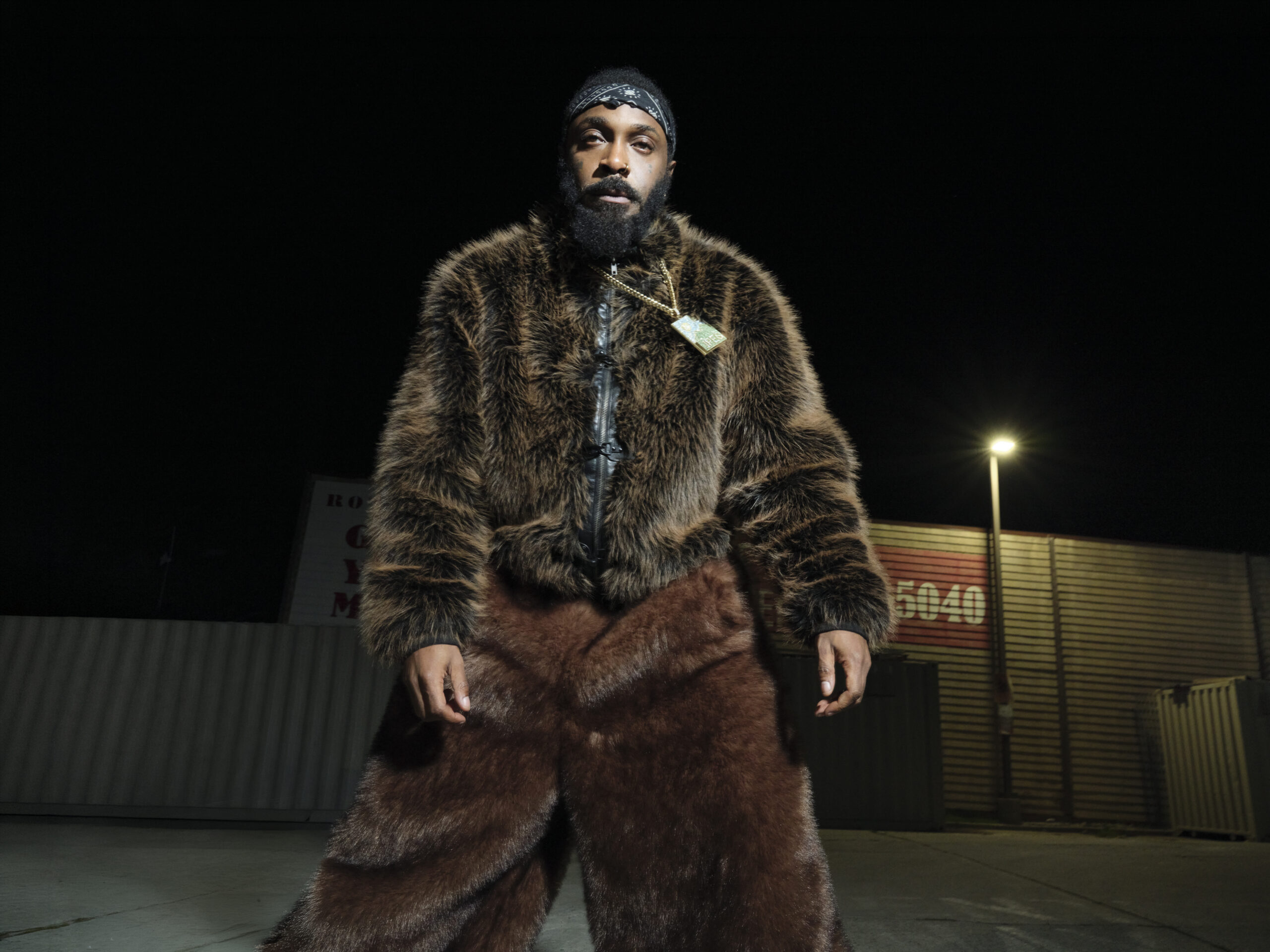
Top and pants TAAKK, hat SADIE JAMES
This interview originally appears in Glamcult #144, THE NOISE ISSUE. Shop the print magazine here.
Words by Evita Shrestha
Photography and creative direction by Hannah De Vries
Styling by Adrian Ramos
Make-up by Victoria Vieira
Photography assistance by Richard Gross, Dylan Thomas
Cinematography by Sid Singh
Styling assistance by Ruben Garcia
Background acting by Jesse Ward, Olga King, Justice King, Caressa Briseno, Celene Briseno, Eddie Briseno