These are the ones asking the uncomfortable questions (and looking good doing it)
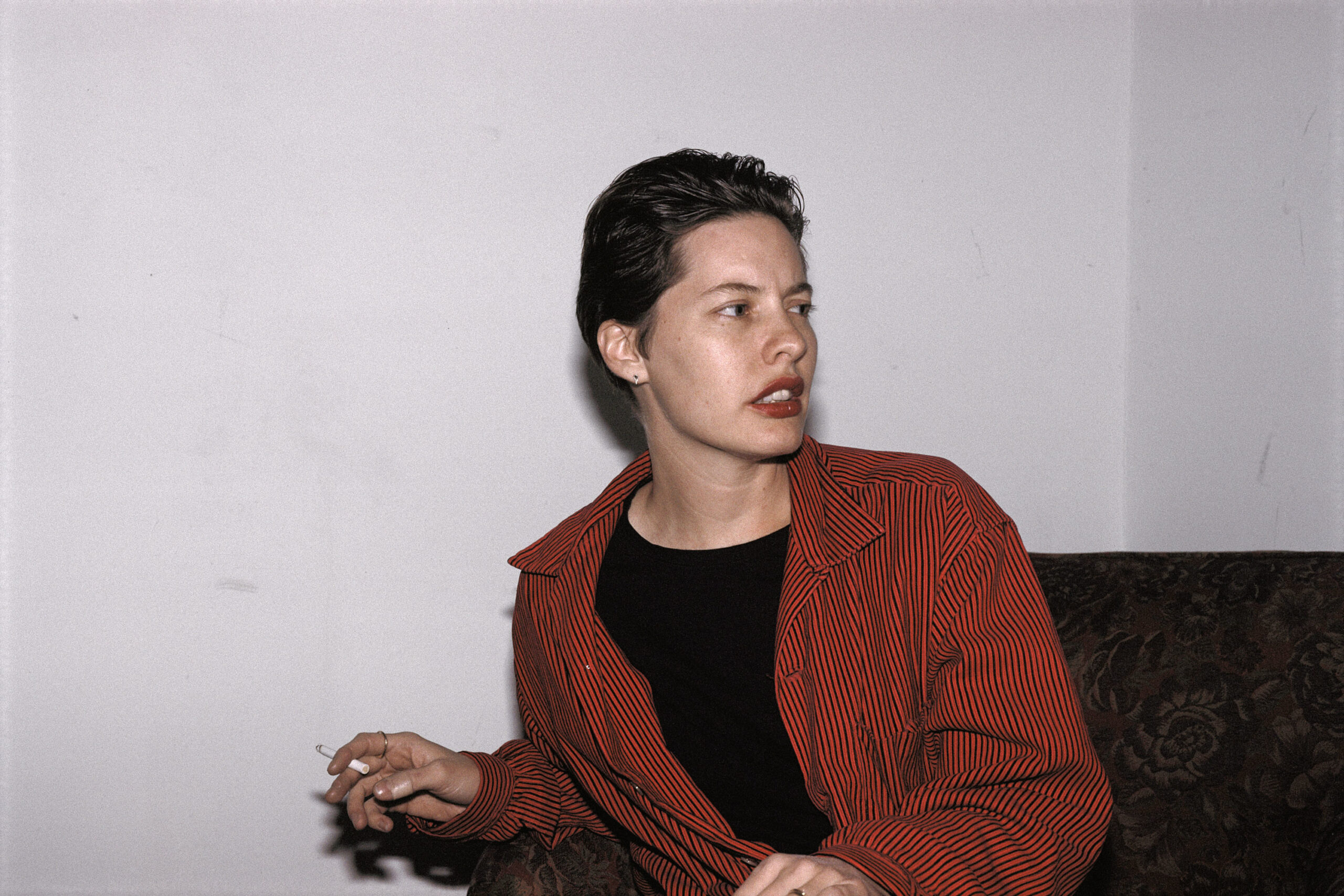
Judie Bamber by Catherine Opie, 1993
There’s nothing like finally going to the exhibition everyone’s been raving about. But what’s even better is when you move beyond the sole pleasure of looking, and you’re made to think a little deeper about what you just saw, and ultimately, you simply can’t stop ruminating about it.
Glamcult is back with our list of exhibitions happening across various European cities that you simply can’t miss. Feeling grim in today’s chaos seems like common sense, but let’s be honest, it’s definitely not entirely helpful. But engaging with the uncomfortable? That’s where it gets interesting. So this time around, the focus shifts toward engagement, activism, and socio-political concerns more broadly. None of these are easy watches, but isn’t that the whole point? Discover, learn, reflect, and talk about it.
From documenting the first Queer visibility, portraying Vulvas, questioning the manosphere, to documenting the world’s unfolding chaos and war on film – Read on to discover the what, the where, and the why.

Karl Pärsimägi, Self-Portrait with Pearls, c. 1935 © Art Museum of Estonia / Photo: Stanislav Stepaško
The First Homosexuals: The Birth of New Identities 1869–1939
Kunstmuseum Basel, Basel, from 7 March–2 August 2026
When you’re quizzed on the year 1869, you can now say it’s the first time the word “homosexual” appeared in print. Kunstmuseum Basel takes the mission further by retracing from then the nascent visibility of same-sex desire and gender diversity in the arts. Think tender paintings tinted in pastel palettes to darker, heavier hues, and exquisitely carved sculptures. You get it all, through the multifaceted perspectives on queer communities, to the colonial entanglements weighing heavily on those times. And surely, this can give us all a bit of knowledge for our gaycyclopedia.

The holy icon next to the Molotov cocktail on the checkpoint near the road turn to Irpin, Kyiv region, March 2022 © Julia Kochetova
Julia Kochetova: War is Personal
Foam, Amsterdam, until 25 May 2026
Ukrainian photographer Julia Kochetova experiences and documents war in her home country firsthand. The title challenges the idea that war can be understood from a distance. It can’t. She turns her lens to the intimate and personal — the homes, the people, the language that remains. And if you’re privileged enough to view war through an art lens and not your own eyeballs, go here.

Self-portrait By Catherine Opie, 1970 © Catherine Opie
Catherine Opie: To Be Seen
National Portrait Gallery, London, until 31 May 2026
A Catherine Opie exhibition is definitely one for the books, and ever more so when you can be blessed by her carefully crafted own audio guide overflowing with her gleeful charm, contagious humour, and, simply-put, great storytelling. Addressing questions of intimacy, politics, identity and power structures, Opie comes to stand as an essential figure in contemporary photography through her portraiture of queer communities, political crowds, children and beyond. She represents a Trump-free (or at least there is no reference to it) America, which is sometimes what we need for a little daydream, and how sweet it is.

Transformer AIDS, 1988 [still]
PAPER TIGER TELEVISION: It’s 8:30. Do you know where your brains are?
Goldsmiths Centre for Contemporary Art, London, until 19 April 2026
If something is certain, it is that we can, and should, always learn from the past. Goldsmith’s Centre of Contemporary Art presents Paper Tiger Television, a US-based collective formed in the 80s, aiming to propose critical readings of the corporate control of the communications industry. Initially unaware of the collective, let us fill you in: PTTV created over 400 programmes broadcast on public access channels, in which they invited artists, theorists, and activists to present a critical reading on a piece of media. Basically, it was left-wing counter-media to the core and we’re here to devour it.
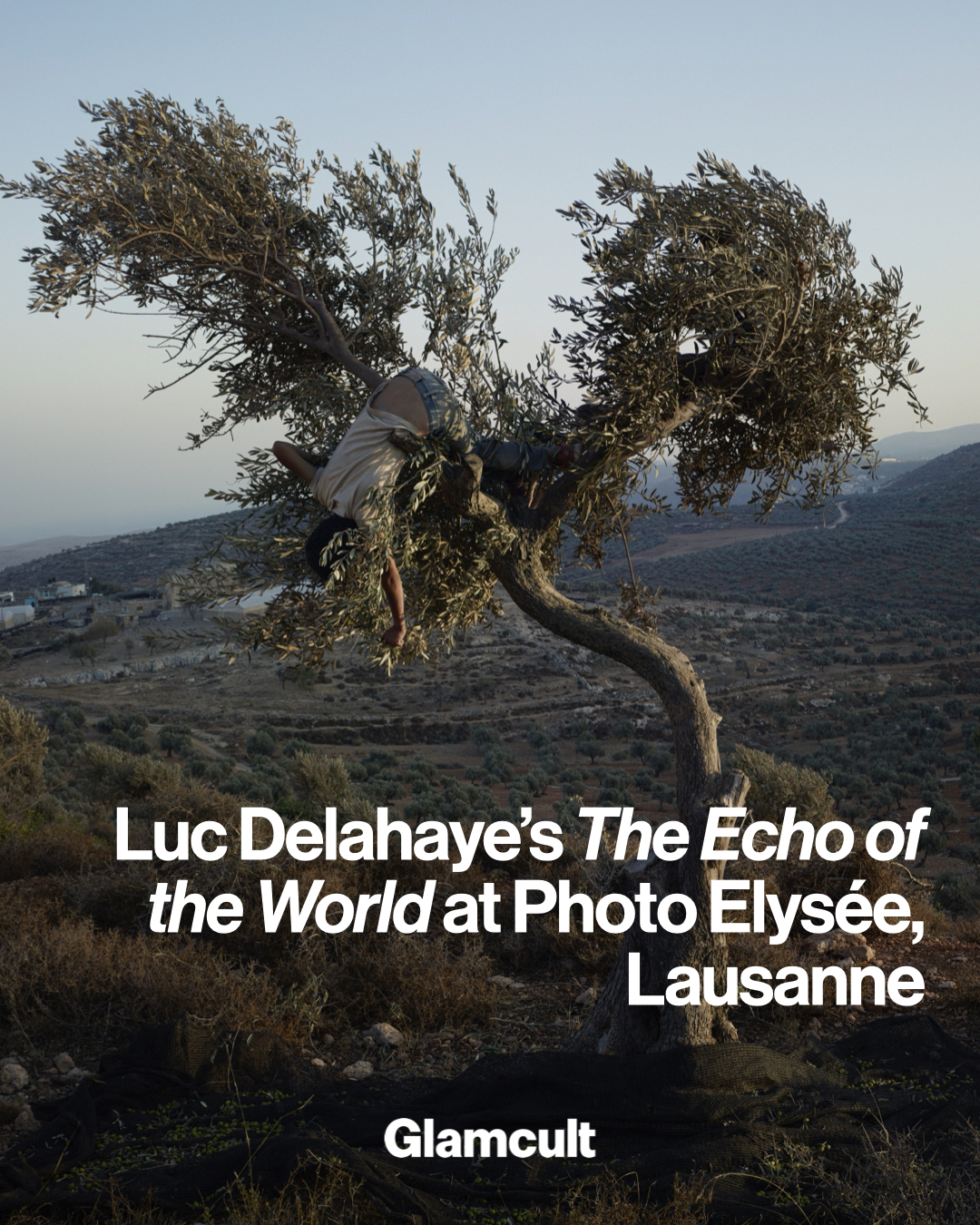
Récolte, 2016 © Luc Delahaye, Courtesy of Luc Delahaye and galerie Nathalie Obadia, Paris-Bruxelles
Luc Delahaye: The echo of the world
Photo Elysée, Lausanne, until 31 May 2026
Photojournalist and fine arts photographer, Luc Delahaye shapes his practice around documenting the permanent disorder of the contemporary world. He turns his lens on conflicts and wars, producing large-format images that are both haunting and visceral, seizing the viewer by the throat. Whether captured in a single shot or crafted through his skillful photo assemblage, his work commands close attention to every little detail. And trust us, you’ll lose hours in front of his work. Spaces of negotiation (think OPEC and COP conferences) also take centre stage through the intricate puzzling of varied shots, crafting awfully eerie yet sardonic views. His work stands as a beautifully alarming representation of the 21st century, thoroughly documented over a quarter-century.

Beyond the Manosphere: Masculinities Today
Stedelijk, Amsterdam, opening 17 April 2026 until 2 August 2026
Patience is a virtue, and the Stedelijk is teaching us this the hard way. Opening in a month, on 17 April, Beyond the Manosphere: Masculinities Today sets a glaring representation of the multiple contemporary masculinities shaping our reality, from agents of power to the conflicting, the banal, and the unsteady. In a digital world (and alas, irl) where a rise in masculinist behaviour and ideology is propagating and flooding our daily lives (currently thinking about our feeds filled with AI fruit sexist storytelling) to the more directly alarming situations we are confronted with. Presenting and asking what masculinity is has never become more urgent. Consider us booked for the occasion at the Stedelijk.

Martin Parr: Global Warning
Jeu de Paume, Paris, until 24 May 2026
Parr doesn’t seek to convince people of anything but simply sheds light on serious topics through entertainment. Through the last half century, Parr has travelled across the five continents documenting the eccentricities of our world: the effects of mass tourism, the frenzy of capitalism and our hyper dependence on technology (and we’re only naming a few of the many more). Parr’s iconic and highly recognisable saturated photography grazes with the imbalance of our world and our modern lifestyles. Let us ponder on.

Hito Steyerl: Humanity Had the Bullet Go In Through One Ear and Out Through the Other
MAK, Vienna, until 12 April 2026
Hito Steyerl is kind of the ultimate polymath of the art world: artist, filmmaker, and author, she dabbles around the various mediums with her loyal interest in technology and media. By linking fiction and reality, history and the present, the analogous with the technological, Steyerel sets her eye on the uncanny of the daily, placing her vigilant political sight in the everyday and in pop culture. Watch AI (or not) fever-dream like videos from golf carts or by sitting on “FUCK DIE” word compound bench-adjacent structures. You decide.
Naakt dat Raakt
Museum Arnhem, Arnhem, until 20 September 2026
In Naakt dat raakt, the naked body is both subject and statement. Across paintings, photographs and performances from 1920 to now, artists show bodies as they actually exist: soft, aging, imperfect, political. Feminist and queer perspectives run throughout the exhibition, where nakedness — especially the vulva — appears not as something to hide, but as something that speaks. Who gets to be seen, and who quietly disappears?
Among the works is the portrait series by Jaimy Gail: a direct, almost disarming study of a body part often hidden, simplified, or turned into symbol. A selection from the project is on view here, marking its first museum presentation.
Finally, some honourable mentions go to: Embroidering Palestine at MoMu, Antwerp, Améfrica. Diasporic Connections in the Jorge M. Pérez Collection at CAAC, Seville, and a cheeky NYC recommendation with the Whitney Biennale 2026, Whitney Museum of American Art, New York.
Words by Lora Lolev