As featured in Glamcult #143, the DEEPREAL issue

Solve Sunsbø, Cover of Tilda Swinton – Ongoing ©, 2025
Designed by Irma Boom, published by Rizzoli Electa & Hannibal
Tilda Swinton’s bizarre, mesmerising universe has long been fuelling our cinephilic fascinations. Not quite a blank canvas (though her gift for transformation might suggest otherwise) and far from a marble statue in the cult of celebrity, Swinton stands apart through sheer artistic integrity. Across her collaborations with Luca Guadagnino, Wes Anderson, and Joanna Hogg, she reveals a rare perceptiveness: an ability to inhabit the dusty corners of the human psyche, to embody, or even conjure, roles so intricate and idiosyncratic that they cling to your skin long after the credits roll.
Now, her enigmatic presence has landed in the physical realm, spreading over the walls of the Eye Filmmuseum. Refusing the fixity of your standard retrospective, Tilda Swinton — Ongoing, both an exhibition and a book, is a map of affinities: the friends, filmmakers, and artists who have shaped her practice across four decades. Among them stands Apichatpong Weerasethakul, the Thai director whose meditative cinema feels more like dreaming than storytelling.
Swinton and Apichatpong have long recognised one another as kin. His films — Tropical Malady, Uncle Boonmee Who Can Recall His Past Lives, Memoria — all mimic sleepwalking, dissolving the borders of physical matter and inviting the viewer to marinate in each scene. Her performances, which span fashion, film, and installation, are, too, uncontainable. She has a way of reshaping every collaboration from within through her gravitational presence, renegotiating the line between performance and authorship. Together, they have built a quiet, luminous friendship founded on unspoken trust and artistic communion.
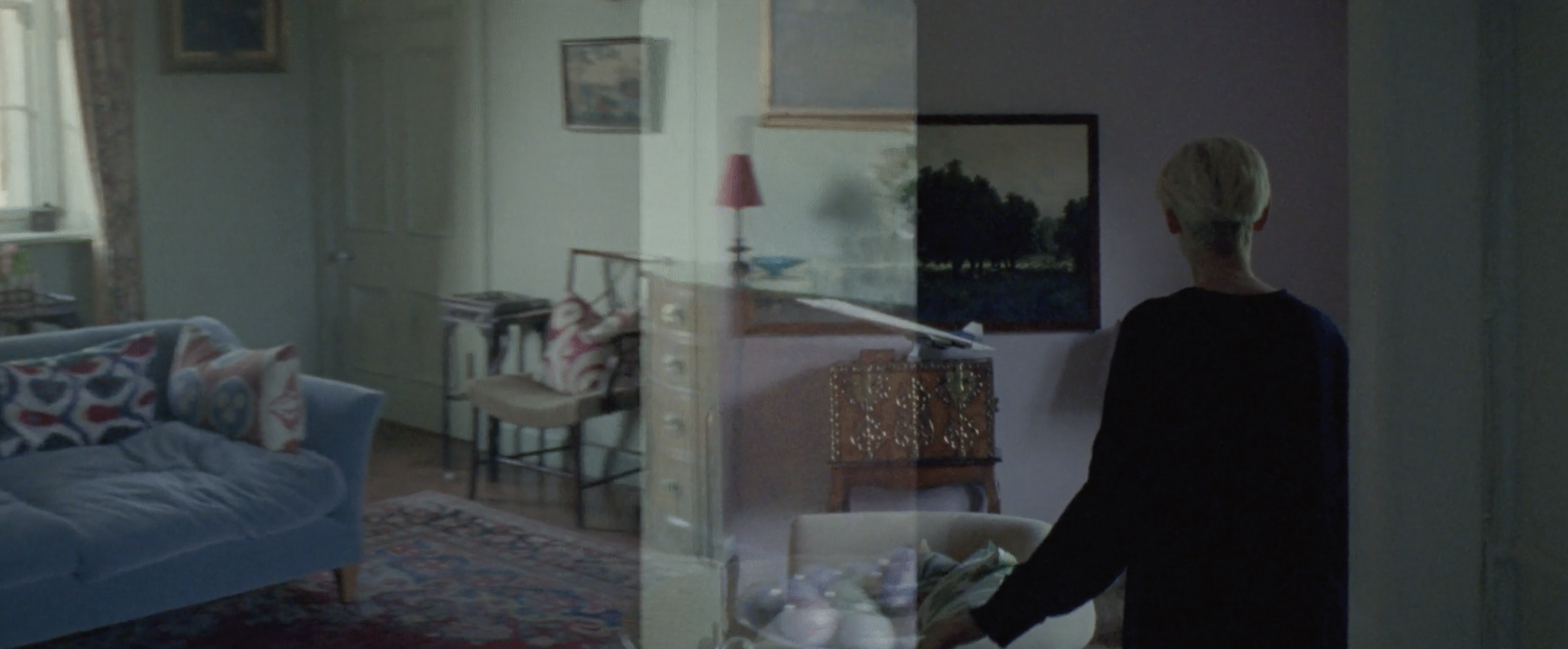
Apichatpong Weerasethakul, Still from double-channel video installation Phantoms, 2025
Commissioned by Eye Filmmuseum, co-produced by Onassis Stegi
So when the two appeared in conversation, it felt like eavesdropping — and you’re welcome to take a peek. It was witnessing a spill of creative genius, when all it was was just a regular Tilda hangout with her friend. The itinerary was simple: The pair “indulged in what [they] love most”, as Tilda proclaims — sharing films that move them beyond reason. They lovingly, and with honour, call each other “film nerds.” Much like the films they discuss, their way of talking is free-flowing and permissive, orbiting around subjects with no intention of a concrete landing. For them, understanding of film is not the goal (yes, we can all finally stop pretending to ‘understand’ an arthouse plot). They talk of cinema as generosity. Cinema as a site to bathe in safety.
Their first offering of the night is Portrait by Scottish poet-filmmaker Margaret Tait — “a real fetish,” of Tilda’s. Then comes Phantoms, their joint film. It’s the first time either of them has seen it projected on a large screen. Filmed in Scotland, in the house where Swinton grew up — and where both her parents died — it is as much an act of bittersweet mourning as of meticulous attention. The walls seem to breathe; the wind, the river, even the old hinges of the door become participants.
Tilda has a glow of someone who is in love, platonically, artistically. She glides through the conversation with warm lightheartedness and incisive curiosity. She lets film pass through her every cell, to fuse with it, to float in it.
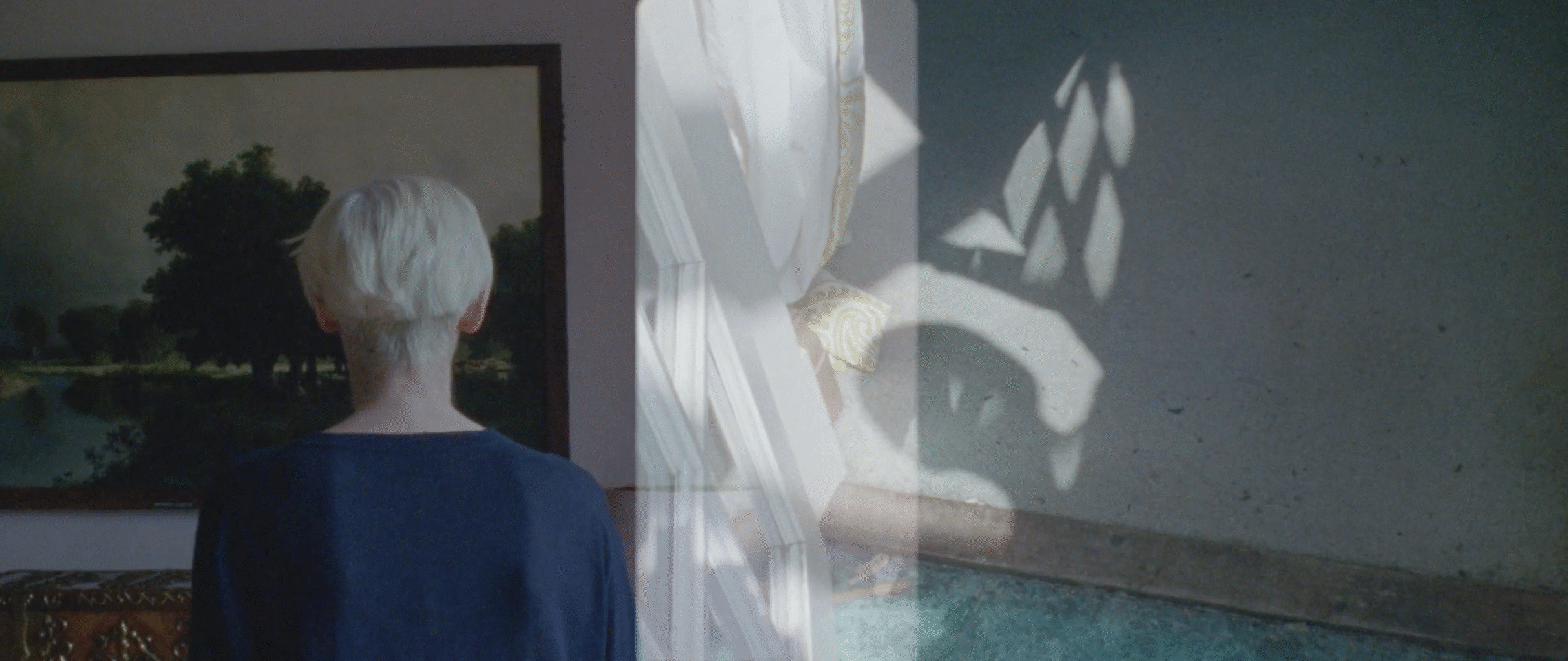
Apichatpong Weerasethakul, Still from double-channel video installation Phantoms, 2025
Commissioned by Eye Filmmuseum, co-produced by Onassis Stegi
Tilda: Can I ask you to expand on the way in which your cinema, which I’ve worshipped for so long, feels like this liminal space? There’s always a sense of being between states, between times. And often, you’re working with traumatic memory, whether it’s a person’s traumatic memory or the traumatic memory of a people, or a village, or a forest.
Apichatpong: I think the cinema has a limit. It’s linear. I work in VR, which is pretty free. I thought it was the future of cinema, that’s why I worked on it. I then discovered that it’s not, it’s its own thing, more similar to theatre. But for cinema, with working with VR, I realised that cinema is so authoritative not only because of the frame and the time, but also the way of looking. You have close-up, you have pan, you force the audience to look a certain way. That’s the question: how to free that in film and to make space for possibilities within that limitation. It’s like in our work for Ongoing — sometimes the story is part of it, but not the main thing. It’s more about being. Even cinema, the togetherness of watching this illusion of light and its phantoms. The light’s off, and it’s gone. It’s non-material.
T: And do you have any clues about how one might navigate a new way of stretching those limits or expanding them? Or does one just make friends with the limits and settle in?
A: We’re all different. Some people really boo my work and walk out. And in the beginning, I remember, I was so upset. And then they’re like, “I want my money back.” I even made a T-shirt saying, “I want my money back.” And I was so shy and apologetic that I would actually return the money.
T: Did he explain what it was that he felt cheated on?
A: He doesn’t understand.
T: And he doesn’t like not understanding.
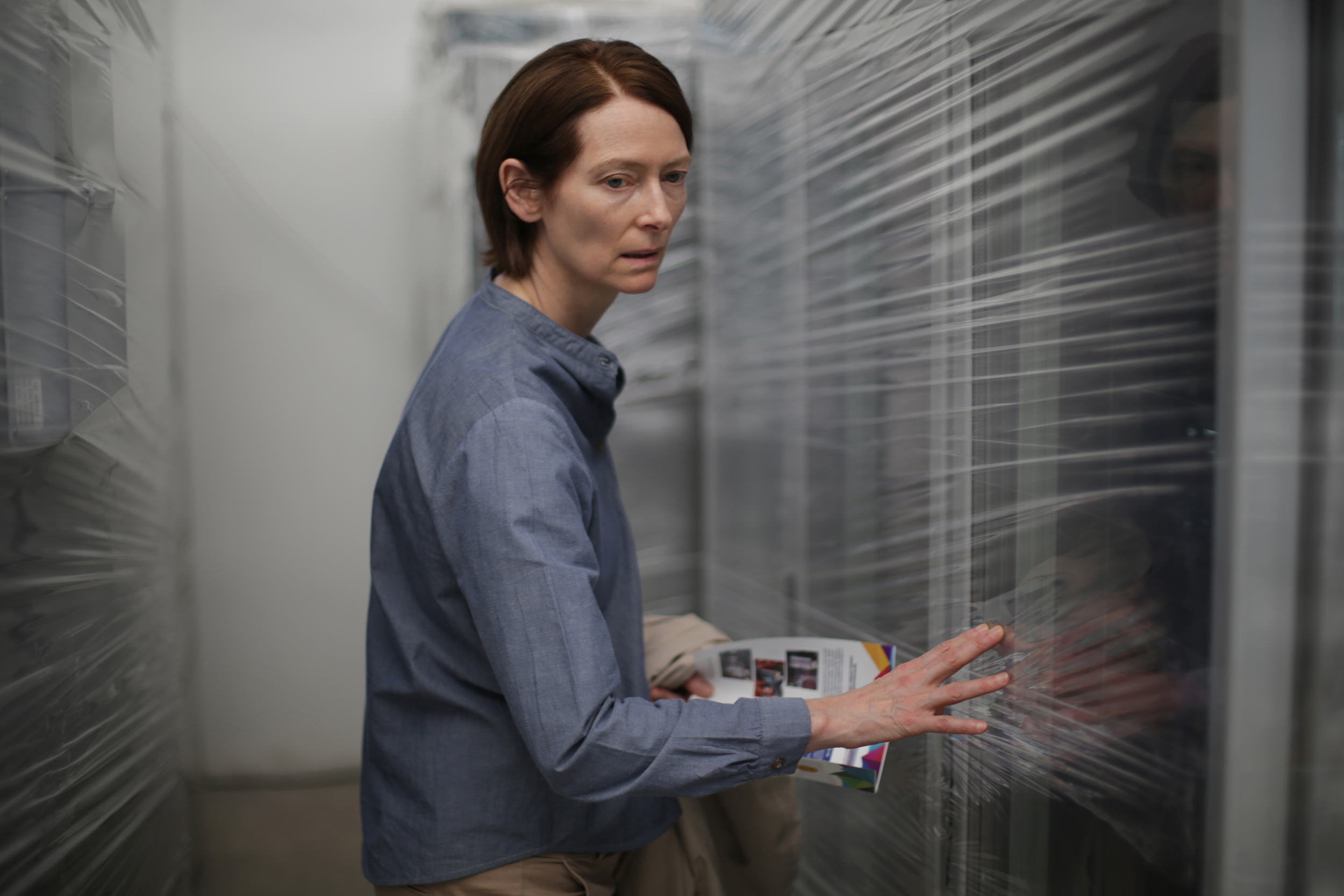
Apichatpong Weerasethakul, Still from Memoria, 2021
A: And actually, that’s another T-shirt. We made two. Another one says, “I don’t understand.” It’s an Experimental Film Festival T-shirt.
T: I don’t understand, and I like it!
A: Over the years, my film always got booed, and maybe your film, too. Because of that, you understand that cinema has its own life. You have to let go. Of course, I’m hurt when someone criticises my work, but I just don’t take it personally. I cannot tell whether the film can work for some people or not. But for me personally, I like people who are really mysterious. So, I think cinema is like a person to discover, sometimes not only one screening, but more.
T: I think that’s really meaningful what you say about those of us who are up for making work that might challenge somebody in such a way that they just reject. They’re not up for the conversation. And of course, in my experience, the more personal the gesture is, the more personal the offering is, the easier it is when someone rejects it. Because you can’t take it personally. If you’re being honest and being open and truthful and authentic, then, as my grandmother would say, it would be a dull world if everyone were the same. And that’s the opportunity of cinema. It’s an invitation to difference. It’s a provocation. I know people who were quite sticklers for not being around difference, who became film fans, with some encouragement from me and others, who learned through cinema to be more open people in their lives because they realised that it was a sort of forum or a bath that they could swim in. Or a jacuzzi, even, that they could swim in with other people. Or like sleeping in a big bed.
A: I always sleep in my films. It’s crazy.
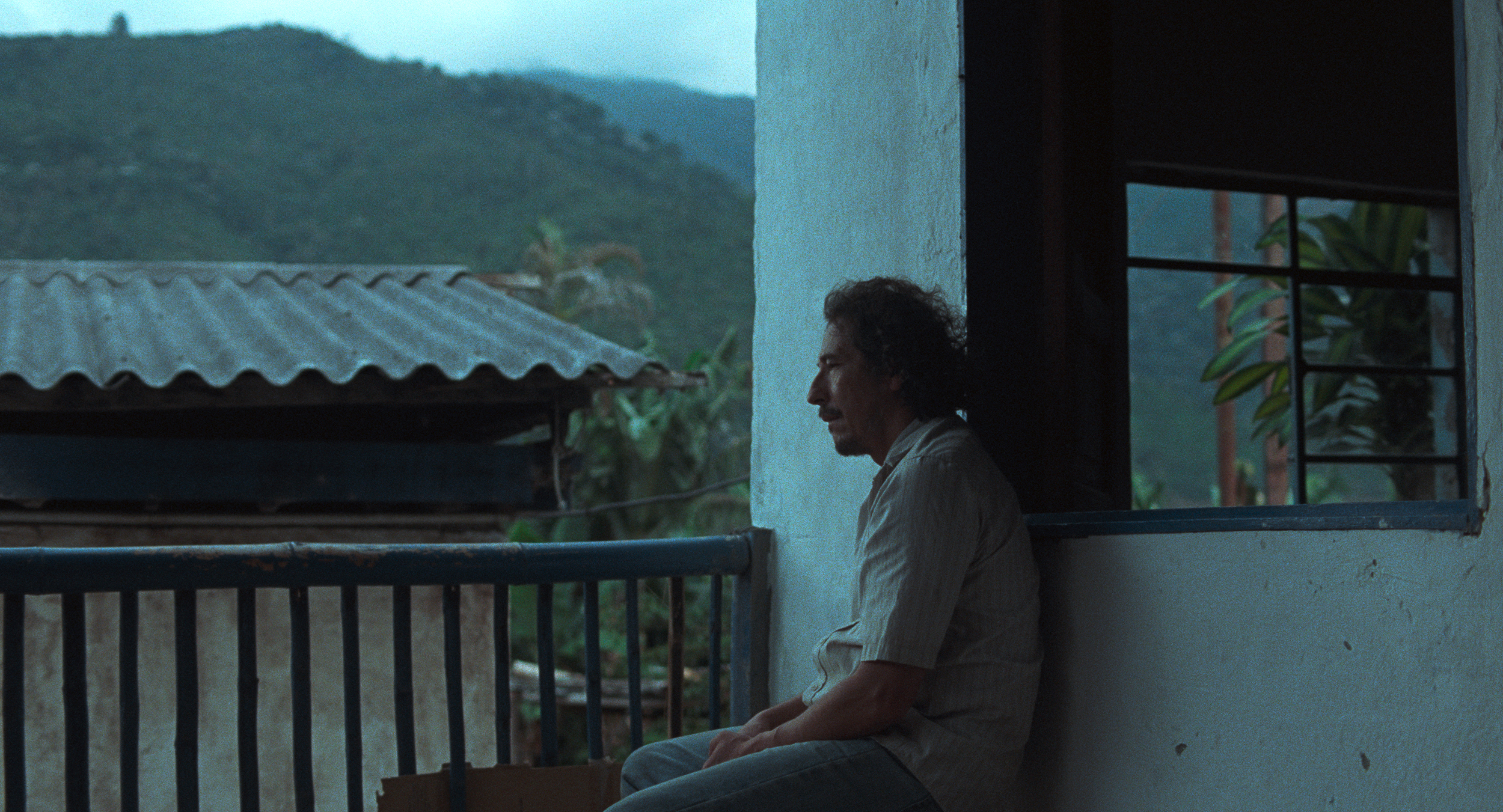
Apichatpong Weerasethakul, Still from Memoria, 2021
T: This is the thing that we first bonded over. I was privileged to see Tropical Malady in Cannes in 2004. I was on the jury, and I loved the film very much, and wrote something about it: that there was something in the film that had a reverie that was an invitation to sleep, and that, in my opinion, it’s a kind of high compliment if someone falls asleep in your films. And you agreed with me.
A: And you’re the one who embraced the middle part. Do you remember it? People were perplexed.
T: Well, I was on the jury with Quentin Tarantino, and when it came to the point where we switched into a different environment entirely. I remember Quentin being very perturbed. He thought that they’d switched the reels, and there’d been a terrible mistake. I remember saying, I’ve got a feeling that this is meant to happen. Just stay with it, stay with it.
A: It’s not broken.
T: It’s not broken. And he stayed with it, and he loved the film very much. He got there in the end.
A: Well, thank you. That’s our first contact.
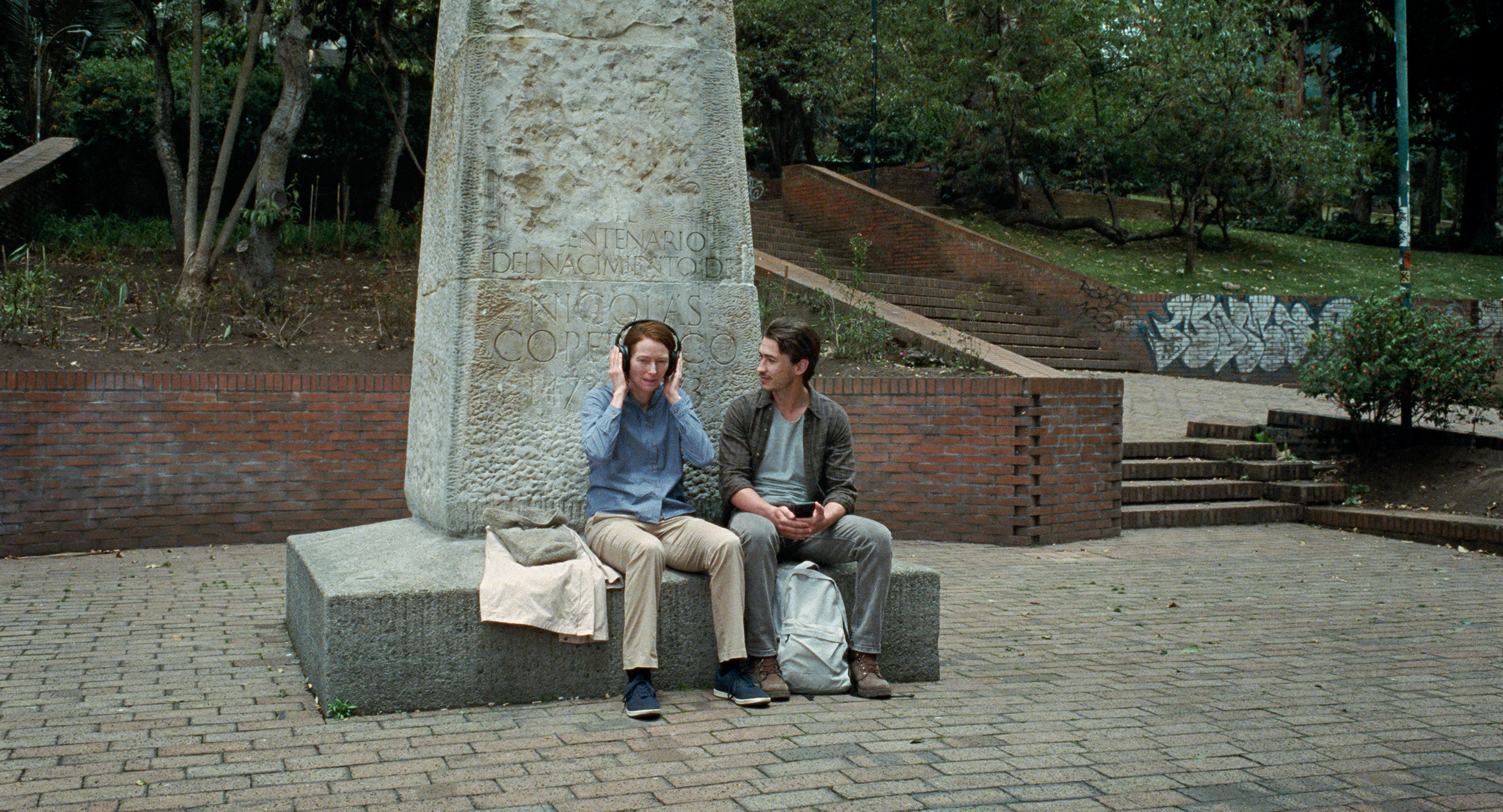
Apichatpong Weerasethakul, Still from Memoria, 2021
T: Yeah, that’s our first contact. But, like I was saying, it’s like a challenge, an offering that you lay before people with a switch like that. Some people baulk, and some people can’t deal because they need a different kind of narrative trail, a kind of security. And other people were just exhilarated by it. There’s no way of second-guessing what happens in any of your films.
A: I love to see films that don’t have a clear structure. It’s like a journey to a foreign place. You don’t have time to stop and ask everything. I think movies like that are a question of trust.
T: You need to trust the filmmaker. You need to go, “OK, I’m strapping in for the ride, and I’ll go wherever you take me.” And that’s our challenge as filmmakers and programmers. And in a sense, as audiences and film lovers, to water that plant of trust.
A: And you see that in your exhibition, no? The different plants that you have had over the years. And different mirrors.
T: I really hope so.
Later, they screen the Brothers Quay’s Rehearsals for Extinct Anatomies. “I don’t understand the thing,” Tilda admits, “but it moved me and it did something to my spine… It’s like black magic.” Attempting to funnel the experience into adjectives, descriptions like “sexual” and “synaesthetic” float around. Ultimately, cinema becomes a surrender, a trust that your confusion is fertile. “My sense of cinema is that it is an opportunity to live without answers and to just rest in the questions or the curiosities, and that that’s a good and nourishing and healthy place to be,” Tilda concludes. It’s a removal of our safety net, a disentangling from the rigid linearity that governs daily life. But when you pull the rug from under someone’s feet, you also have to hold them in that new, undefined, invisible space; to cradle the viewer into a balmy sleep (we are all guilty of taking a cinema nap, but now we know that Tilda approves). That, Swinton suggests, is where both the nuance and the challenge of filmmaking lie. “When we’re shooting, we always think of the audience,” she shares. “It’s a very strange thing, but it’s as if, despite the limit, the frame is four-dimensional. It has to do with taking things at a speed that is not necessarily of this world, not of this temporal strata. It’s an openness and generosity, but also a sort of acceptance of failure. It’s not trying to complete everything; it’s leaving things undone.” Naturally, this had us thinking of our own musings on the state of art today, its drift toward algorithmic overstimulation and frictionless perfection.
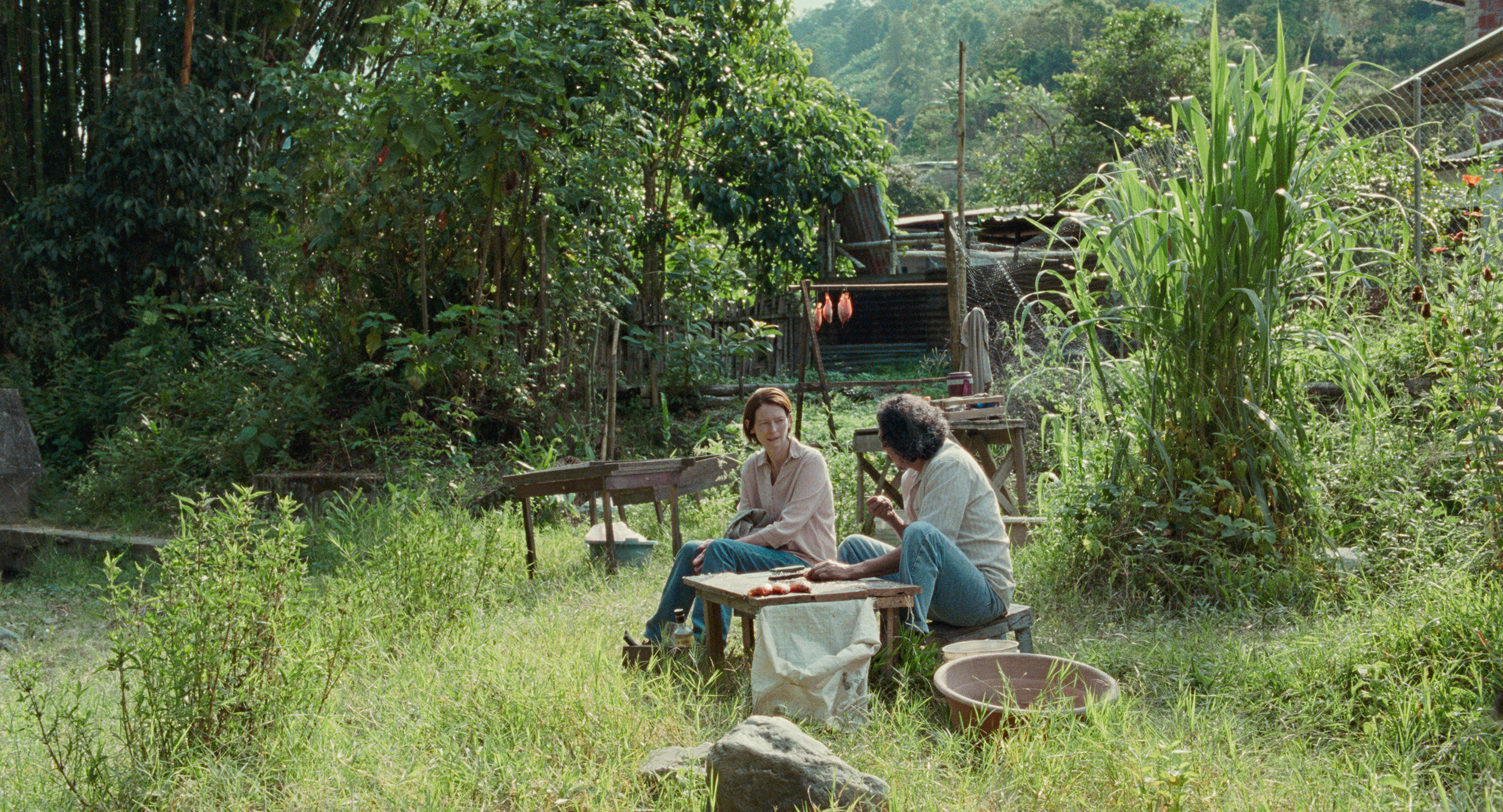
Apichatpong Weerasethakul, Still from Memoria, 2021
GC: I found the part of the conversation where you talked about the limitations of cinema and the future of cinema to be very interesting. Joe, you mentioned you were working with VR because you thought of it as the future of cinema. What do you think the future of cinema is now? How do you think AI and all other tools that are coming in now would interact with these concepts of magic, authenticity, openness, and otherworldliness? Could certain feelings of tactility and materiality be simulated? And does that matter?
A: I don’t know. It’s you — you are the future of cinema. I feel that it’s generational. My nephew sees film differently from me and has different expectations. I recently produced a film, and I went to the set, and I didn’t understand the process. It’s all digital, everyone is so silent because everyone has a monitor by themselves, and they know when the camera is running. In the past, we said “quiet” on set. I loved that ritual. It’s changing the way of making it, but also viewing it. My nephew cannot tell apart film and digital. The culture of image is changing. But cinema for me is collective. The collective, I think, will continue for a while, but the idea of reality in it will change. Tilda, I don’t know what you think, but because of AI, maybe there will be your voice, your image in the future. But the fact is that the next generation accepts it because they don’t care if that figure is real or not, whereas I care. This idea of intangibility, and the origin of how you capture that, has changed. The value of knowledge has changed now with AI.
T: And maybe evolution being what it is, there will be a whole love affair with this kind of fakery, and then people will get over it. They may. Or they may develop the capacity to enjoy both and find value in both. I personally can’t see an end date to the kind of experiential work that we’re talking about. I don’t see why humans would not want that ever. I think it’s always going to be nourishing and good for people to sit in the dark, to see things made by other humans, trying to be inarticulate and share their inarticulacy. I remember, this is already a slightly arcane example, but when 3D glasses came in. My children were about 10. They were the absolute key demographic. And I remember taking them, my son, who’s a big cine nerd, after two films said, “No, don’t like it anymore.” I asked why. And he said, “Because I want to feel that I could have made it myself.” I thought, “Okay, the evolution’s doing her job.” He just played with it and then got off it. So I don’t know. I can’t see cinema not always having that capacity to give people an existential nourishment.
A: I think as long as we dream, we still need cinema, because it’s related. And that reminds me of your son’s question. Can you share it?
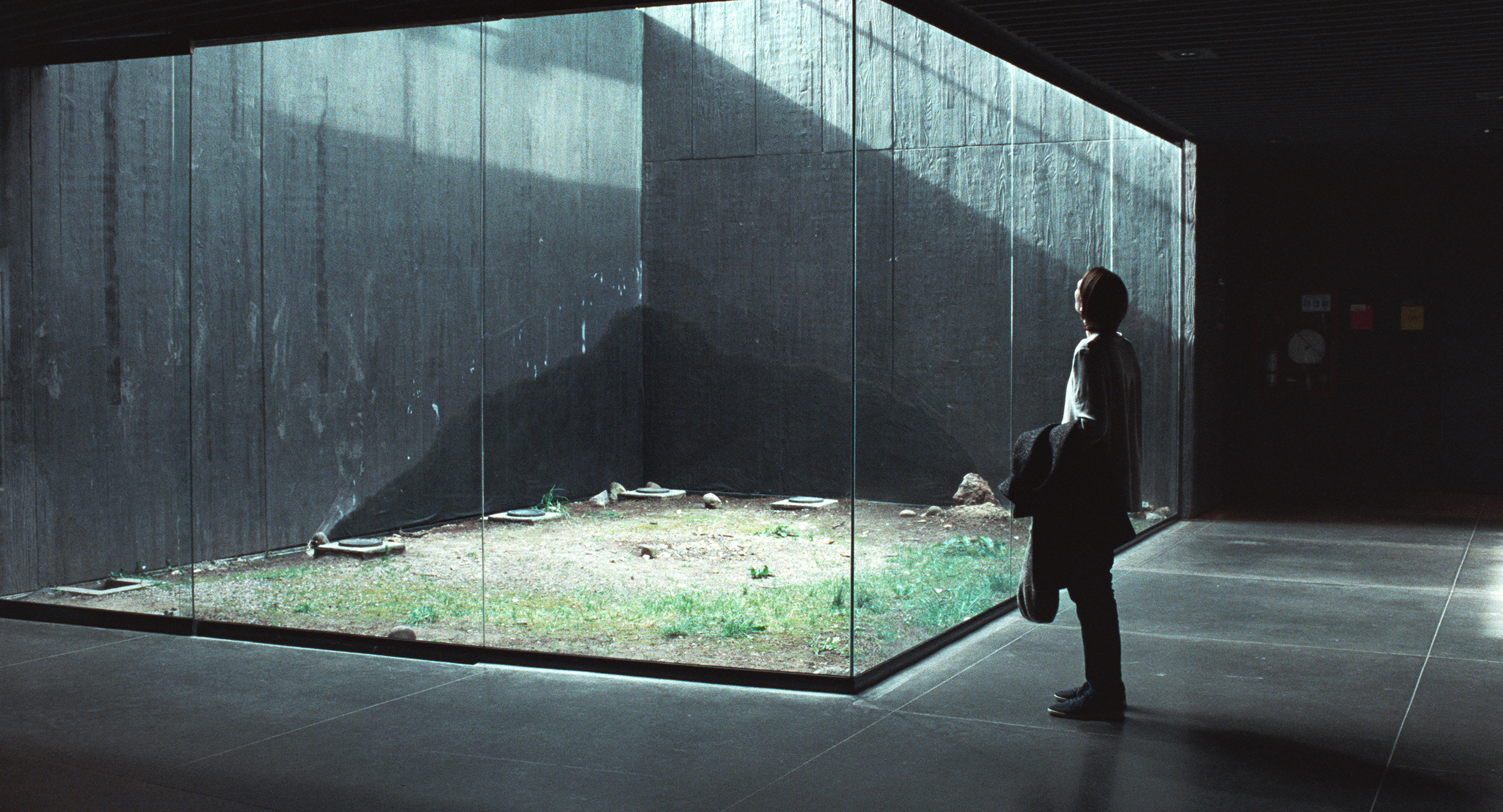
Apichatpong Weerasethakul, Still from Memoria, 2021
T: The same son, when he was eight and a half (a great age for a cine nerd), I was putting him to bed one night, and I always used to do this thing with them and say, “Here’s a dream.” And he was half asleep and just said to me, “Mama, what were people’s dreams like before cinema was invented?” And it blew my mind. Such a good question. I mean, really.
A: Another t-shirt.
T: We’re gonna have a line. MERCH!
A: But also, to add to that, I just remember the end of COVID-19, and we screened Memoria. Everyone had to wear a mask in the theatre of a thousand seats. But what a joy to be together after a year of not being together and see this light. It’s amazing and it proves it.
T: It was one of the beautiful things that came out of the pandemic. In those days, when everybody was being asked what they really missed the most, it was like a list of four. It was friends and family. Going to the pub, probably. And it was also cinema. People were saying cinema, who weren’t cine nerds. Everybody just remembered how incredibly invaluable it was. When we screened Memoria, we were very blessed that Neon, who distributed it in the States, allowed us to distribute it cinema by cinema. It was not streamed or made available in any other way for a good year. It was only ever on in one cinema at a time. It felt like a rock tour. When a band’s coming, you buy a ticket, you stick it on the fridge, and you wait. And the Memoria tour was like that.
The discussion wouldn’t be complete without addressing the role of creation in the current political climate. “I feel that the more personal I get, the more comfortably, safely representative I can be about my political impulses. There’s certainly no acting in what you’re going to see in the exhibition next door, and yet it feels more clearly political,” Tilda says. “What we have to do is just be honest and believe that our honesty will connect with somebody else. It’s just remembering that we’re humans and everything else is not really that important.” Apichatpong adds: “In Colombia, the memory of the city is so heavy with violence and conflict… but it’s not my memory, it’s another’s. But so it becomes the personal noise that I have, and then I try to relate to what you hear.”
He’s talking about Memoria, their film that was in conception for 17 years prior to its shooting. “We wanted to make a film about a woman in an alien situation. It needed to be somewhere that both of us felt alien in,” Tilda recalls. “When we discovered Colombia, very soon we realised that it was simply another human-occupied landscape, and there were similarities of kind of resonance with your experience of living in Thailand with inherited trauma of violence in that country, or me living brought up in the borders of Scotland, which are completely blood-soaked for generations. That feeling of compassion and recognition of similarity, and it being just simply a human experience, not a national experience, I think, is really what drove that film.”
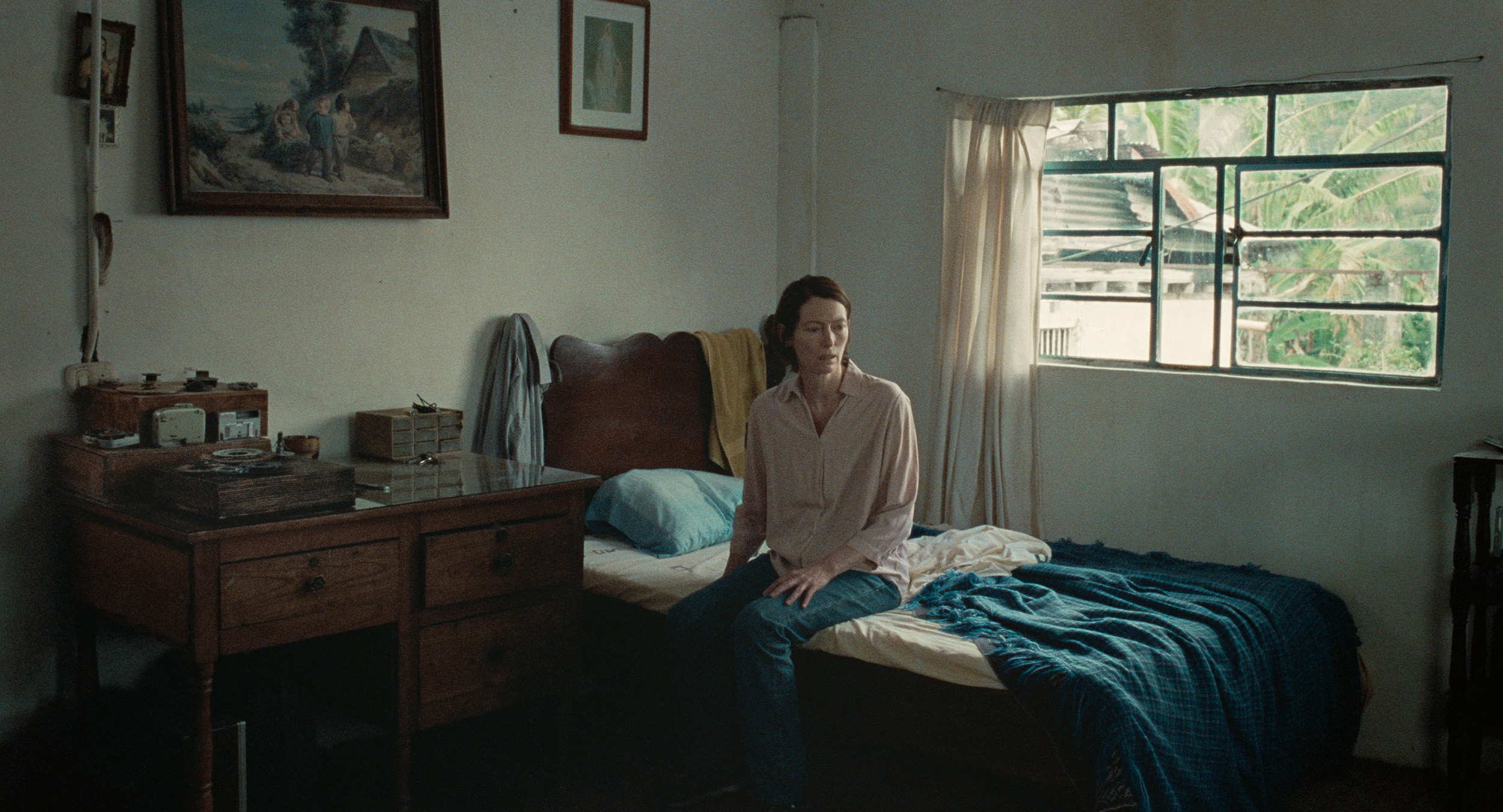
Apichatpong Weerasethakul, Still from Memoria, 2021
T: I’m very privileged to be having these conversations with my beloved comrades over the next months, and I’m going to ask the same question to everybody at the end. You’re the first, so no pressure. In terms of your working practice in present times, what do you find yourself relying on that will keep you ongoing?
A: It sounds really cliché, but it’s this not knowing. I’m really inspired by this thinker, Krishnamurti, who said, “When there’s any place with fear, there’s no love.” I think to confront the unknown is to confront our fear, and to accept that everything changes. And making a film is such a conflicting thing, because you need to plan. 100 people, a limited budget, you have to make three shots in one day. It’s hard to be free. So that keeps me going, too, to navigate it, and find the right comrades to understand this flow — not only for film, but for living, too. And in that, I learned a lot from my dog. They really don’t think; they don’t project. And lately, I discovered this researcher in Japan who studied slime mold. It’s not a plant, it’s not a fungus, it’s like a cell, like an amoeba. If they come together, they move, and they find food within a short distance. It becomes intelligent. You don’t need to think, but together, you can move. It’s this collective intelligence that really fascinates me now, like how to use your brain in a different way, let’s say.
T: It’s a beautiful answer. Thank you, Joe, so much for this. I love you, and I’m so honoured to be your comrade.
Words by Evita Shrestha
Special thanks to Eye Filmmuseum