Heritage as the method
as featured in Glamcult #143, the DEEPREAL issue

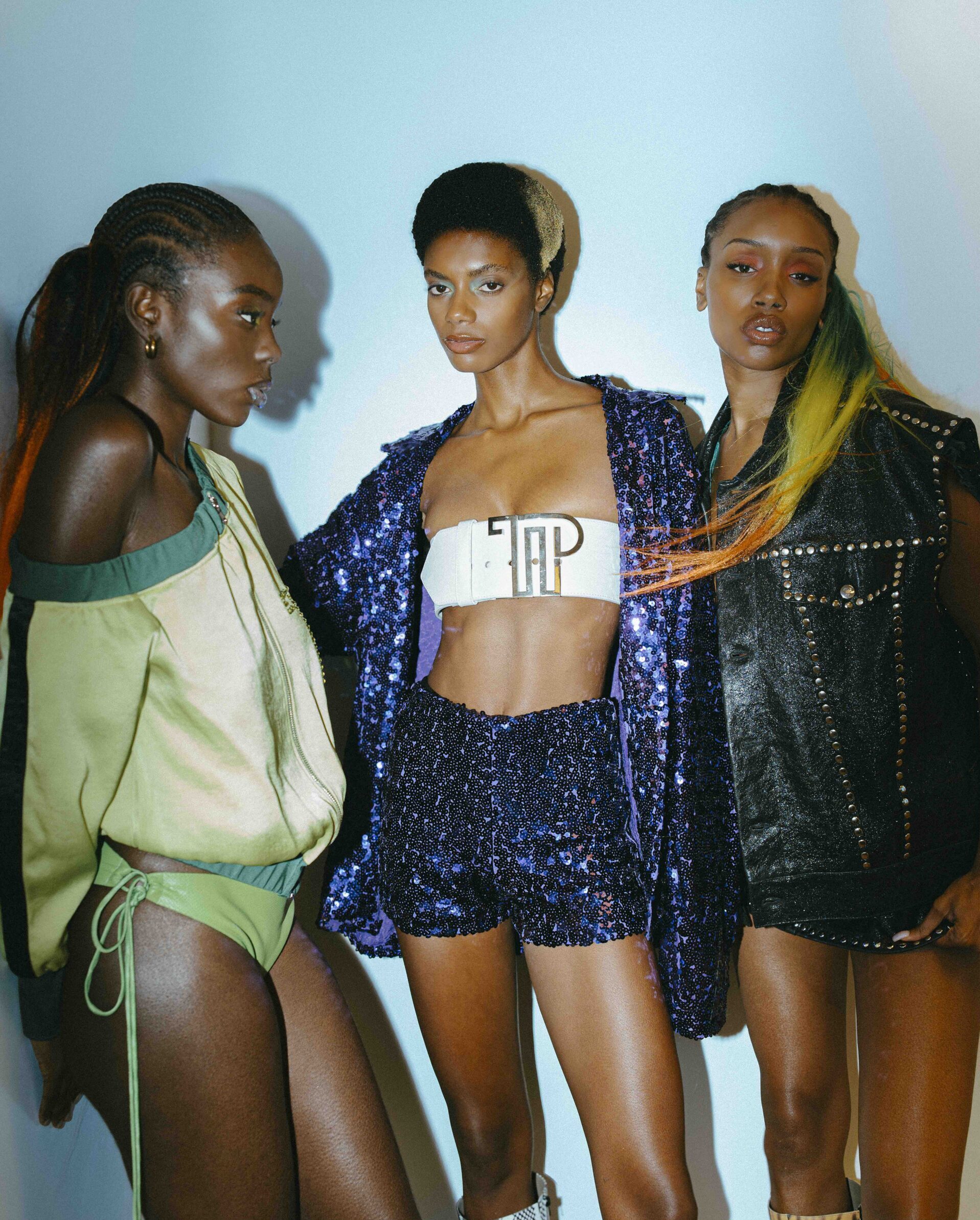
Theophilio builds collections around those joyfully intangible moments: long drives with friends, sparklingly sweaty dancefloors, and steamy beach nights. Founded in 2016, Brooklyn-based brand Theophilio began as the partial biographical project of Jamaican designer Edwin Thompson. Inspired by his Caribbean roots, dynamic prints, tropical colour stories, and sequined silhouettes decorate Theophilio’s signature markings. It’s celebratory, proud, and dancehall-afflicted. An archive of memories and nights continentally separated, Theophilio stands at the intersection of design and diaspora, reconstructing heritage into a “design system” that guides “proportion, casting, music, and storytelling season after season.” Through his collections, Thompson “carries Jamaica through colour, rhythm, and ritual greens, golds, reds.” This translates directly to his tailoring, where “the cadence of dancehall” hangs central to his discipline. Like the deejay toasts over resounding dub, Thompson operates on a similar toolkit in his studio, informed by the bass and its ever-rolling reverberations, each action building upon the last: “tightening a shoulder, dropping a hem, adding shine where the light will catch.” For Theophilio, “heritage isn’t a moodboard,” it is the method.


Over the years, Theophillo has developed from “proving where [Thompson] is from, to building where [Theophillo] is going.” Beginning as a personal puzzle of Thompson’s heritage, as the brand has evolved and formed community, Thompson‘s “work has shifted from autobiography to infrastructure, creating space, jobs, and narratives that let Caribbean excellence feel inevitable, not exceptional… memories remain, but the lens is wider: community as collaborators, not just muses.” Thompson shines a new light on his home island, illuminating a culture tied to vibrancy, joy, and music. With a touch of newfound New York City grit, Thompson brings the iconography and spirit of Jamaica to the runway, as quintessentially rasta motifs meet city street style. Knit and crochet intrinsically adorn heads and busts alike, reminiscing on the textures and materials that make Thompson feel closer to home. There’s a tactile intimacy in every stitch, a clear signal that memory isn’t only visual, but also deeply sensory. The garments carry salt, sweat, and sunlight in their DNA. Always “honouring spectacle and skill equally,” Theophilio earned the CDFA award for designer of the year in 2021, affirming Thompson’s mission. What keeps him steady, though, is “the process of showing up in the studio daily,” not awards. Even so, with more and more eyes on his work, Thompson never falters on his vision, instead embracing it to the fullest, like inviting guests to his SS21 show titled Migration with Jamaica Air stylised plane tickets.
In Theophillo’s newest collection, RIDDIM, it is still the very same tangible details that have always brought Thompson’s letters back home to life. Vibrantly painted bodies and airbrushed accessories graced models’ skin on the runway this fall. Like a carnival in the street, models arose from a RIDDIM-wrapped VW bus, headphones atop their patterned heads, amplifying this RIDDIM’s unique pulse. As Thompson explained, “ airbrushing, body paint, and hand-finished surfaces turn digital speed into physical heat.” Designing “for distance and for a phone screen,” Theophilio recognises how their garments need to translate equally to “the front-row eye and the back-row camera in the same breath.” There’s an acknowledgement here, an understanding that fashion now exists in a liminal space: half IRL, half URL.

In 2025, fluctuating consumer behaviour, fast fashion, and rapidly spinning trend cycles have created pressure for brands to move further and faster than ever. Traditional 12-18-month trend cycles can no longer keep up with rumbling algorithmic consumption, begging designers to reassess their production methods. Thompson envisions that “the designer of the future will be multilingual — fluent in craft, culture, and technology.” Using Raspberry AI’s Sketch to Render and On-body workflows to visualise garments without actually producing them, Thompson found that by setting “strict guardrails,” he could define silhouette, fabric, and construction first. “I feed it my own archive cuts, palettes, motifs, so outputs are anchored in our vocabulary. Memory sets the brief; AI speeds the sketch; human craft seals the result. That triangle keeps the work honest.”
Importantly, technology opens pathways to possibilities beyond what can be realised physically. As he assures, “AI helps explore variations, but never the thesis.” According to Thompson, finding a medium, a push and pull between human and machine, is key to AI-enhanced creativity. In this current age of accessible simulation, authenticity can only be reached through accountability, as Thompson explains, “Being real is crediting your references, paying your team, and making clothes that honour bodies.” For all of us concerned with the roots of creativity, what truly matters is cultivating your own vision while caring for those around you — recognising the networks, histories, and minds that shape what you create. “Tools will evolve; integrity shouldn’t.” he continues. “If the work doesn’t honour where I’m from and invest in where we’re going, it’s not real to me.”
Words by Gabriella Meshako
Interview by Nabi Williams
Photography by Breanna Nichelle
All clothing by Theophilio